


CHILDREN

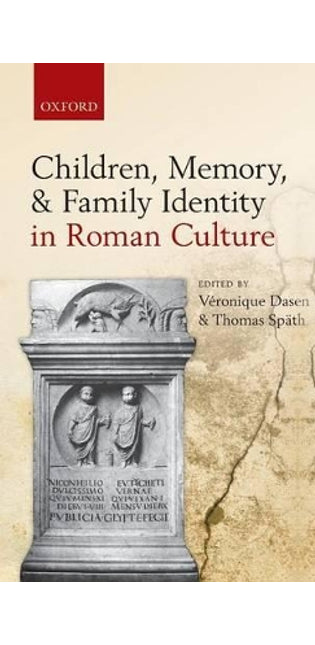
Children, Memory, and Family Identity in Roman Culture
Investigations into the daily life of Roman families show that children were key actors in the process of the construction of social memory: they were the pivotal point of the transmission of family tradition and values in both elite and non-elite families. This collection of essays draws together the perspectives of various disciplines to provide a multifaceted picture of the Roman family based on a wide range of evidence drawn from the 1st century BCE to LateAntiquity and the Christian period. The contributors define the notion of memory, discuss the role of children in the transmission of social memory and social identities, and also deal with threats to familial memory, in the cases of children deliberately or accidentally excluded from tradition, longbelieved to be invisible, such as those born at home to slaves, or outcast because of illness or their unusual status, for example as the offspring of an incestuous relationship.
R 8,057.00
Children, Families, and Health Care Decision-Making
ISSUES IN BIOMEDICAL ETHICS General Editors: John Harris, University of Manchester; S(ren Holm, University of Copenhagen. Consulting Editor: Ranaan Gillon, Director, Imperial College Health Service, London. North American Consulting Editor: Bonnie Steinbock, Professor of Philosophy, SUNY, Albany. The late twentieth century has witnessed dramatic technological developments in biomedical science and the delivery of health care, and these developments have brought with them important social changes. All too often ethical analysis has lagged behind these changes. The purpose of this series is to provide lively, up-to-date, and authoritative studies for the increasingly large and diverse readership concerned with issues in biomedical ethics—not just health care trainees andprofessionals, but also social scientists, philosophers, lawyers, social workers, and legislators. The series will feature both single-author and multi-author books, short and accessible enough to be widely read, each of them focused on an issue of outstanding current importance and interest. Philosophers,doctors, and lawyers from several countries already feature among the contributors to the series. It promises to become the leading channel for the best original work in this burgeoning field. this book: Lainie Friedman Ross presents an original and controversial examination of the moral principles that guide parents in making health care decisions for their children, and the role of children in the decision-making process. She opposes the current movement to increase child autonomy, in favour of respect for family autonomy. She argues that children should be included in the decision-making process but that parents should be responsible for their children's healthcare even after the children have achieved some threshold level of competency. The first half of the book presents and defends a model of decision-making for children's health care; the second half shows how it works in various practical contexts, considering children as research subjects and as patients, organ donorship, and issues relating to adolescent sexuality. Implementation of Ross's model would result in significant changes in what informed consent allows and requires for paediatric health care decisions. This is the first systematic medical ethics book that focuses specifically on children's health care. It has important things to say to health care providers who work with children, as well as to ethicists and public policy analysts.
R 7,959.00
Children, Family and Communities
Children, Families and Communities is an essential resource that will help you to understand child development in the context of the vital roles that families and the community play in educating children.It acknowledges and discusses the profound inequities that exist in child health, education and wellbeing in Australia, while presenting an optimistic focus on the role of families and communities, including governments, in allowing children to explore andthrive. The sixth edition continues to focus on Australian issues and research while also drawing on international bodies of work. Alongside the nine new chapters, all chapters have been significantly revised to reflect current research evidence and theory development. In-text case studies with specific research information help you to understand the link between practice and theory, and a diverse collective of authors brings exceptional academic, policy and practical experience to thetext.
R 2,578.00