Proudly South African

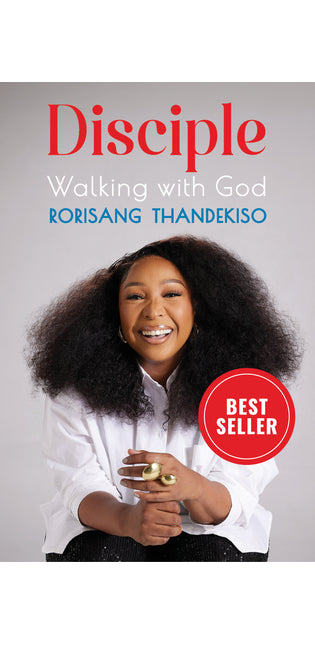
Disciple: Walking with God
Disciple: Walking with God is an open-hearted, humorous, vulnerable look into the life of a young woman whose love for God spills over into the world.Rorisang Thandekiso is one of South Africa’s most beloved media personalities.She has contributed to the arts industry in an authentic, memorable way.In Disciple Rorisang takes the reader deeper into her relationship with faith, describing her love for the Word of God and for Jesus. She lays out some of the defining stories of her life, contextualising them through the teachings gleaned from what she calls her “blueprint scripture”: 1 Timothy 4:12-15.In this passage, she believes all Christians can find a guideline for studying the Word and living a dedicate Christ-like life.By guarding your speech, faith, conduct, love and purity in all aspects, you can meet the requirements for honoring your salvation, being guided by grace in every area of your life.
R 290.00
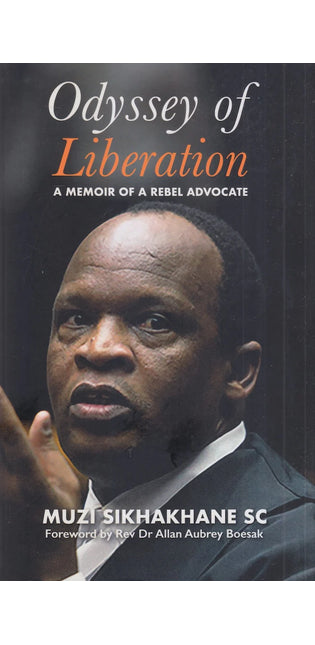
Odyssey of Liberation
Sikhakhane masterfully unveils a prism through which the social injustices shaping South Africa today are starkly revealed. Drawing from his remarkable career as a Black man navigating the complexities of life in South Africa, he explores the unresolved historical injustices and conflicting interests that have led the nation to its precarious state. He delves into the paradox of liberation, where the pursuit of change is consistently undermined by an entrenched desire to preserve the status quo. Sikhakhane argues that this approach prioritizes safeguarding White privilege and the interests of White capital, often at the expense of true progress. With fervor, he critiques the pervasive hold of White power, the fractured promise of liberation, and the insidious narratives that vilify the oppressed while absolving the real perpetrators of systemic injustice. Rooted in activism and philosophical insight, this thought-provoking and inspirational book offers a captivating exploration of South Africa’s socio-political landscape. Sikhakhane’s journey is as enlightening as it is motivational, providing invaluable lessons for anyone who loves South Africa or seeks a deeper understanding of the intricate power dynamics shaping modern Africa.
How Did We Get Here?
When women heal, generations heal. To her thousands of fans, Wisdom & Wellness founder, speaker and influencer Mpoomy Ledwaba is a symbol of strength and women empowerment. But going from university dropout to Forbes magazine’s list of 30 Under 30 wasn’t always easy – it took courage and a commitment to personal growth. How Did We Get Here? is her coming-of-age story. Looking back on her upbringing, major milestones and the challenges she’s faced, Mpoomy takes us on her journey of self-discovery. Behind the Instagram likes and millions of views on YouTube is a driven woman who sometimes bit o more than she could chew. This mother of two, who is married to an award-winning musician, didn’t always have a plan and rarely fitted the mould of ‘the good wife’. Mpoomy writes openly not only about the mistakes she’s made, the hurt she’s experienced and some of the hard truths she’s had to learn about life, but also about how her faith has been a guiding light. As a firm believer in the power of stories, she uses her personal history to show how to live a purposeful life on all levels. ‘I share to normalise talking about those shameful, hurtful things we keep hidden. I share because shame loses its power when we find safe spaces to share our truth’
R 305.00
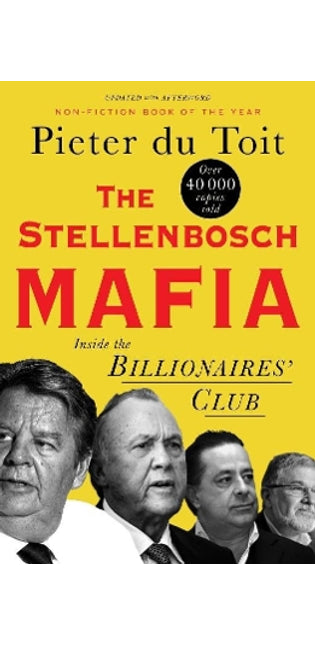
The Stellenbosch Mafia
About 50km outside of Cape Town lies the beautiful town of Stellenbosch, nestled against vineyards and blue mountains that stretch to the sky. Here reside some of South Africa’s wealthiest individuals: all male, all Afrikaans – and all stinking rich. Johann Rupert, Jannie Mouton, Markus Jooste and Christo Weise, to name a few. Julius Malema refers to them scathingly as ‘The Stellenbosch Mafia’, the very worst example of white monopoly capital. But who really are these mega-wealthy individuals, and what influence do they exert not only on Stellenbosch but more broadly on South African society? Author Pieter du Toit begins by exploring the roots of Stellenbosch, one of the wealthiest towns in South Africa and arguably the cradle of Afrikanerdom. This is the birthplace of apartheid leaders, intellectuals, newspaper empires and more. He then closely examines this ‘club’ of billionaires. Who are they and, crucially, how are they connected? What network of boardroom membership, alliances and family connections exist? Who are the ‘old guard’ and who are the ‘inkommers’, and what about the youngsters desperate to make their mark? He looks at the collapse of Steinhoff: what went wrong, and whether there are other companies at risk of a similar fate. He examines the control these men have over cultural life, including pulling the strings in South Africa rugby.
R 290.00
I Write What l Like
I Write What I Like features the writing of the famous activist and Black Consciousness leader, Steve Biko. Before his untimely death in detention at age 30, he was instrumental in uniting Black Africans in the struggle against the apartheid government in South Africa. This 40th anniversary edition includes a Foreword by Njabulo S. Ndebele, personal reflections on Steve Biko and Black Consciousness, as well as Biko’s first known published piece of writing. In addition, it features all the material of the original Picador Africa edition: a collection of Biko’s columns entitled I Write What I Like published in the journal of the South Africa Student Organisation under the pseudonym of ‘Frank Talk’; other journal articles, interviews and letters written by Steve Biko at the time; an Introduction by Nkosinathi Biko; a preface by Archbishop Desmond Tutu; and a moving memoir by Father Aelred Stubbs, which pays tribute to the courage and power of this young leader, who was to become one of Africa’s heroes.
R 270.00
R 360.00
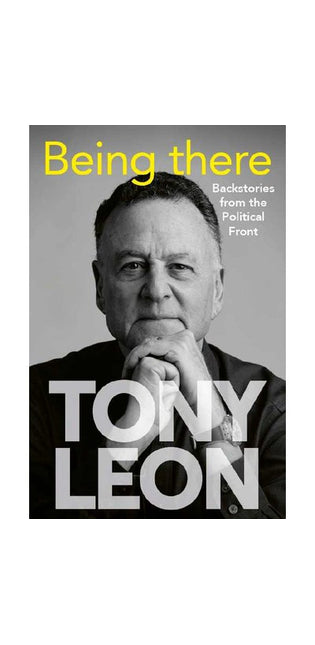
Being There
Tony Leon, longest serving leader of the opposition in democratic SA and acclaimed columnist and analyst, goes behind the scenes of what happened when history was being made in this country and around the world. His first-hand account from a front-row seat at critical moments provides frank and informed opinion. He ranges in this book: his ringside role in the formation of the recent Government of National Unity following the 2024 elections a reappraisal – based on close encounters – of some of the giants who made modern South Africa and the wider world, including FW de Klerk, Nelson Mandela, Harry Oppenheimer Ariel Sharon, Yassir Arafat, Boris Johnson, and the leaders of Argentina. He writes of life in modern politics, from the purgatory of social media to the perils of fundraising in tough times and the leaderless world led often by mediocre or populist grifters, far removed from the statesmen and women these times demand. In Being There, Leon reflects, too, on the nostalgia we often feel, through pain and pride, of childhood, school and the many ‘what ifs’ which inform a well-lived and varied life on the frontlines of South Africa and its history-in-the-making. And how a wrong turn, or too few votes, can change the course of one life. Written with his customary blend of humour and flair and with an eye on the future and what the present and the past foretell about it, Leon’s new book is both important and highly readable.
R 360.00
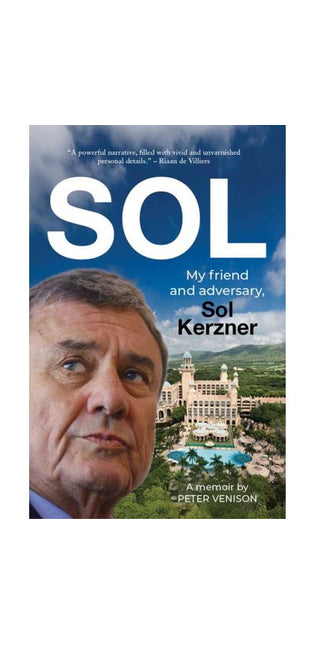
Sol
Sol Kerzner, the controversial and charismatic business tycoon, oncedominated the Southern African tourism landscape. He left an indelible mark by developing dream destinations like Sun City, The Palace, and the Atlantis developments in the Bahamas and Dubai. In this riveting memoir, Venison – Sol’s longtime associate, confidante, and eventual adversary – offers an intimate, behind-the scenes look at the life of Kerzner whose legacy has long been shrouded in mystery, with no comprehensive biography until now. Venison fills in the gaps with vivid personal anecdotes and exclusive details, including the little-known relationship between Kerzner and Mandela, which played a crucial role in South Africa’s political transition in the early 1990s. This tour de force unveils the true Kerzner – the brilliant, magnetic, chain-smoking, whiskey-drinking workaholic – who transcended borders and became a key player in the international hospitality industry and South Africa’s own Sun King.
R 360.00
Indaba, My Children: African Tribal History, Legends, Customs And Religious Beliefs
First published in 1964, Indaba, My Children is an internationally acclaimed collection of African folk tales that chart the story of African tribal life since the time of the Phoenicians. It is these stories that have shaped Africa as we know it.
R 370.00
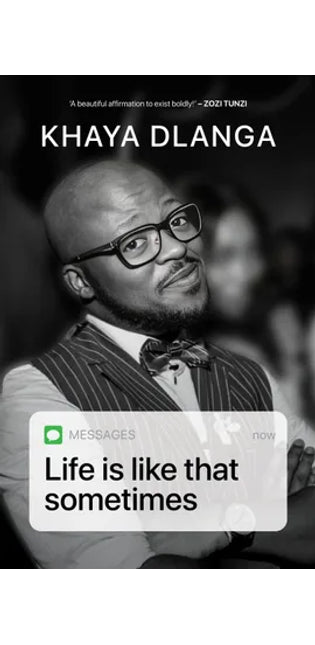
Life is Like That Sometimes
Life is like that sometimes draws readers into the unforgettable personal experiences that have shaped Khaya Dlanga’s world. Weaving heartfelt and often hilarious tales, from his rural Eastern Cape childhood to the profound losses he has faced as an adult, Khaya reflects on life’s unpredictability with warmth and wit. The vivid stories explore love, loss, loyalty, forgiveness, tradition, chance, mischief, justice, responsibility and resilience, offering insights on relationships, identity and the lessons found in life’s toughest moments. Both deeply moving and laugh-out-loud funny, Life is like that sometimes is an exploration of personal growth, faith and the power of storytelling to find meaning in it all.
R 340.00
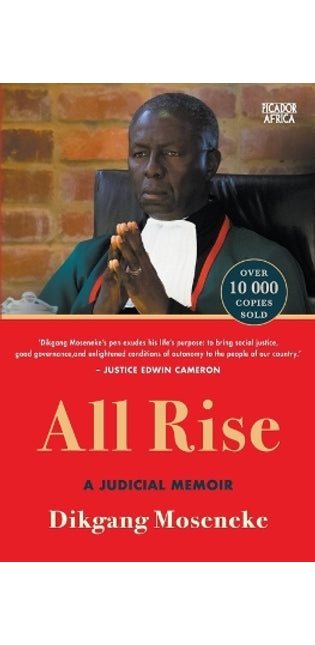
All Rise
Law as a profession was not Dikgang Moseneke’s first choice. As a small boy he told his aunt that he wanted to be a traffic officer, but life had other plans for him. At the young age of 15, he was imprisoned for participating in anti-apartheid activities. During his ten years of incarceration, he completed his schooling by correspondence and earned two university degrees. Afterwards he studied law at the University of South Africa. Practising law during apartheid South Africa brought with it unique challenges, especially to professionals of colour, within a fraught political climate. After some years in general legal practice and at the Bar, and a brief segue into business, Moseneke was persuaded that he would best serve the country’s young democracy by taking judicial office. All Rise covers his years on the bench, with particular focus on his 15-year term as a judge at South Africa’s apex court, the Constitutional Court, including as the deputy chief justice. As a member of the team that drafted the interim Constitution, Moseneke was well placed to become one of the guardians of its final form. His insights into the Constitutional Court’s structures, the personalities peopling it, the values it embodies, the human dramas that shook it and the cases that were brought to it make for fascinating reading. All Rise offers a unique, insider’s view of how the judicial system operates at its best and how it responds when it is under fire. From the Constitutional Court of Arthur Chaskalson to the Mogoeng Mogoeng era, Moseneke’s understated but astute commentary is a reflection on the country’s ongoing but not altogether comfortable journey to a better life for all.
R 290.00
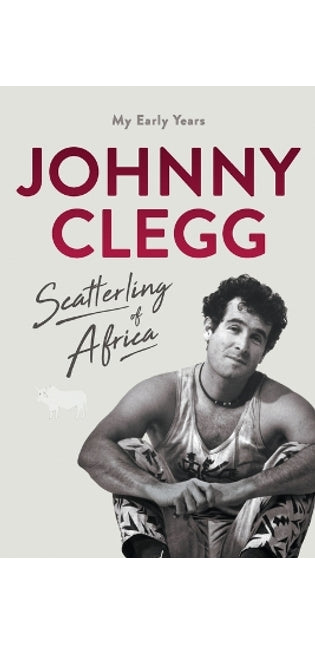
Scatterling of Africa
There are moments in life that are pure, and which seem to hang in the air, unhitched from the everyday world as we know it. Suspended for a few seconds, they float in their own space and time with their own hidden prospects. For want of a better term, we call these moments “magical” and when we remember them they are cloaked in a halo of special meaning.’ For 14-year-old Johnny Clegg, hearing Zulu street music as plucked on the strings of a guitar by Charlie Mzila one evening outside a corner café in Bellevue, Johannesburg, was one such ‘magical’ moment. The success story of Juluka and later Savuka, and the cross-cultural celebration of music, language, story, dance and song that stirred the hearts of millions across the world, is well documented. Their music was the soundtrack to many South Africans’ lives during the turbulent 70s and 80s as the country moved from legislated oppression to democratic freedom. It crossed borders, boundaries and generations, resonating around the world and back again. Less known is the story of how it all began and developed. Scatterling of Africa is that origin story, as Johnny Clegg wrote it and wanted it told. It is the story of how the son of an unconventional mother, grandson of Jewish immigrants, came to realise that identity can be a choice, and home is a place you leave and return to as surely as the seasons change.
R 370.00
Love and Fury
‘This book kept me alive.’ Love and Fury is the compelling and intimate account of the life, loves and furies of Margie Orford. In this brave memoir, the renowned South African crime writer divulges some of the harrowing experiences that have shaped her life and influenced her writing. Through sexual assault, divorce, depression and personal loss, Orford illuminates the trauma she has navigated. Tender and courageous chapters vividly recall memories of what she has been through as a woman, mother, wife, feminist and ambitious writer. Love and Fury shows why trauma in our past can have such an enduring and debilitating effect on women’s lives. It also unpacks the healing power of love, creativity, courage and self-reflection, ultimately offering a profound message of hope and joy for any woman who has ever questioned themselves, their trauma and who they are in the world. This book is every woman’s love and fury.
R 310.00
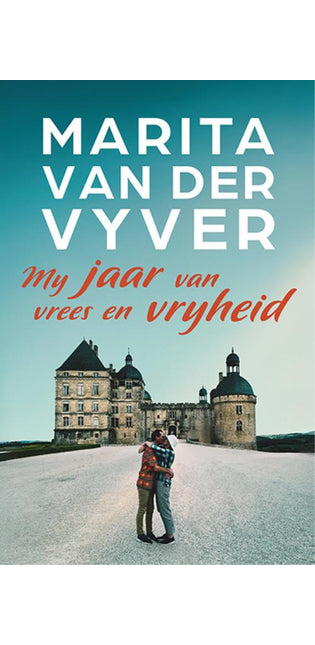
My jaar van vrees en vryheid
Toe Covid-19 die mat onder Marita van der Vyver en haar Fransman se voete uitruk en hulle noodgedwonge hul ou groot huis op die Franse platteland moes verkoop, besluit hulle om die meeste van hulle aardse besittings ontslae te raak en ver in die wêreld te gaan reis. In hierdie reis, wat oor drie vastelande strek, word ’n hele leeftyd se herinneringe ontgin. Want soms moet mens baie verloor, en ook bereid wees om self verlore te raak, voor mens regtig vryheid kan wen.
R 360.00
R 350.00
Born A Crime And Other Stories
‘A terrific book … His comedy is so universal that it has the power to transcend borders.’ – BILL GATES ‘… this is a moving, intimate story of growing up in South Africa from 1984. It stands as an archetypal rite-of-passage and coming-to-maturity tale, with unflinching and vivid accounts of home and school life in township and city, domestic violence, enterprising young men in Alex scrabbling to make the barest of livings …’ – MAIL & GUARDIAN Trevor Noah’s path from apartheid South Africa to the desk of The Daily Show in New York and beyond began with a criminal act: his birth. Trevor was born to a white Swiss father and a black Xhosa mother at a time when such a union was punishable by five years in prison. Born a Crime is the story of a mischievous young boy who grows into a restless young man as he struggles to find himself in a world where he was never supposed to exist. It is also the story of his relationship with his fearless, rebellious and fervently religious mother – his teammate, a woman determined to save her son from the cycle of poverty, violence and abuse that would ultimately threaten her own life. The eighteen personal essays collected here are by turns hilarious, dramatic and deeply affecting. Whether being thrown from a moving car during an attempted kidnapping or simply trying to survive the life-and-death pitfalls of dating in high school, Trevor illuminates his world with an incisive wit and an unflinching honesty.
R 270.00
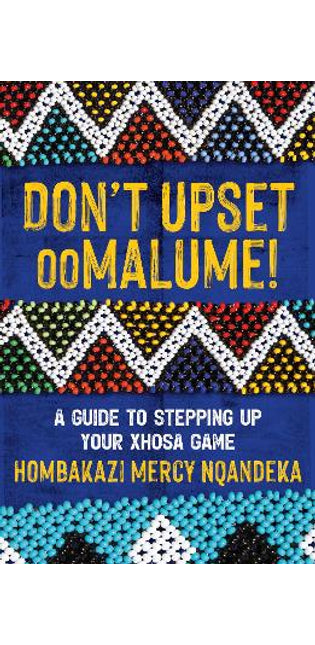
Don't Upset ooMalume!
Returning to the family homestead in the Eastern Cape these holidays, and worried that your city ways and less than perfect knowledge of Xhosa culture will get you a wagging finger in the face from oomalume - the uncles? No need to fret, Don't Upset ooMalume! offers an easy solution. This book, written by Xhosa ambassador and agriculturalist Hombakazi Mercy Nqandeka, aims to capture the essence of Xhosa heritage and culture and explores the many unique characteristics of village life. It covers a range of topics, from basic greetings and major Xhosa life ceremonies to traditional clothing, what to expect in and around the rondavel and Xhosa cuisine. Mercy interweaves her descriptions of Xhosa culture with references to her childhood and lessons taught to her by her grandmother and mother, who was the inspiration for this book. She also identifies edible forage and medicinal plants and even shares recipes for how these plants can be used. Furthermore, Mercy shares stories about the central role nature and different animals hold in Xhosa culture. The book was born from the author's concern that knowledge of Xhosa heritage and culture will be lost to future generations. In writing this book, she hopes to help reconnect Xhosa people to their roots.
R 280.00
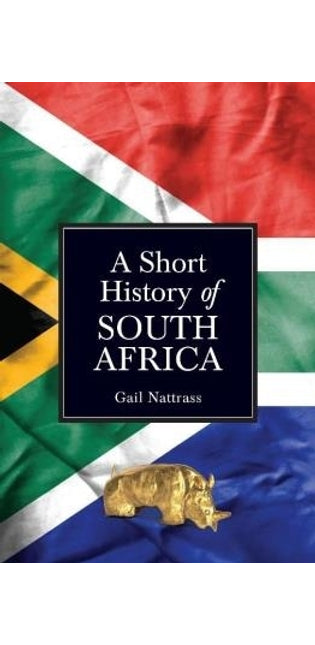
A Short History of South Africa
In A Short History of South Africa, Gail Nattrass, historian and educator, presents the reader with a brief, general account of South Africa's history, from the very beginning to the present day, from the first evidence of hominid existence, early settlement pre- and post-European arrival and the warfare through the 18th and 19th centuries that lead to the eventual establishment of modern South Africa. This readable and thorough account, illustrated with maps and photographs, is a culmination of a lifetime of researching and teaching the broad spectrum of South African history, collecting stories, taking students on tours around the country, and working with distinguished historians. Nattrass's passion for her subject shines through, whether she is elucidating the reader on early humans in the cradle of humankind, or the tumultuous twentieth-century processes that shaped the democracy that is South Africa today. A must for all those interested in South Africa, within the country and abroad.
R 305.00
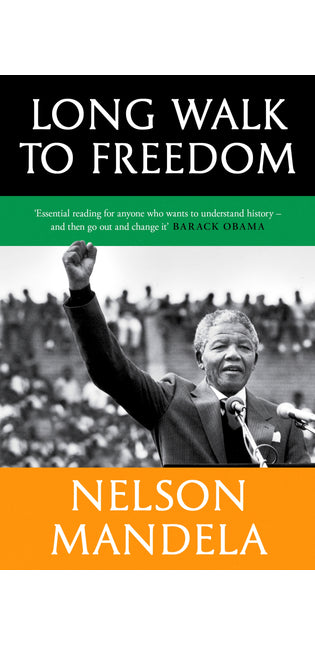
Long Walk To Freedom
'Essential reading for anyone who wants to understand history - and then go out and change it' Barack Obama 'The authentic voice of Mandela shines through this book' The Times'Burns with the luminosity of faith in the invincible nature of human hope and dignity' Andre Brink'Splendid... This is his story and the story of that struggle and a people's victory' Desmond Tutu. The riveting memoirs of the outstanding moral and political leader of our time, Long Walk to Freedom brilliantly re-creates the drama of the experiences that helped shape Nelson Mandela's destiny. Emotive, compelling and uplifting, Long Walk to Freedom is the exhilarating story of an epic life; a story of hardship, resilience and ultimate triumph told with the clarity and eloquence of a born leader.
R 450.00
R 298.00
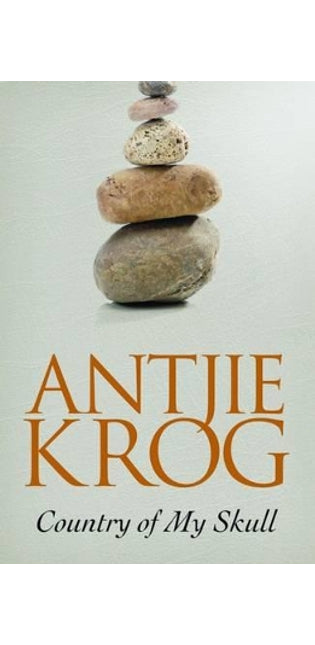
Country of My Skull
‘This is Antjie Samuel reporting from Ladybrand …’ For more than two years, Antjie Krog worked in acute engagement with the many voices that arose in and around South Africa’s Truth and Reconciliation Commission. From the legislative genesis of the Commission, through the testimonies of victims of abuse and violence, the revelations from apartheid’s operatives, the appearance of Winnie Madikizela-Mandela and former president PW Botha’s courthouse press conference, to the Commission’s meeting with the media on Robben Island early in 1998 – this award-winning poet leads us on an extraordinary odyssey. Country of My Skull captures the complexity of the Truth Commission’s work in a uniquely personal narrative which is harrowing, illuminating and provocative. Krog’s powerful prose lures the reader actively and inventively through a mosaic of insights, impressions and secret themes, taking us beneath the big movements of the Truth Commission – and beyond … into the very heart of what it means to be a South African today.
R 400.00
R 360.00
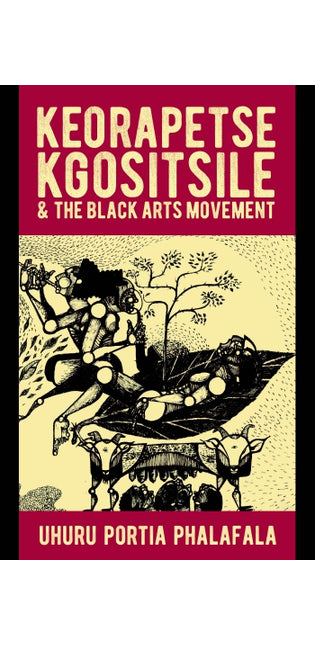
Keorapetse Kgositsile and the Black Arts Movement
The cultural configurations of the Black Atlantic cannot be fully understood without recognising the significant presence of writers and artists from the African continent itself. Among the most influential was South African poet laureate Keorapetse Kgositsile, or Bra Willie, as he was affectionately known. Yet, until now, there has been no full-length study of his work. Uhuru Portia Phalafala’s wide-ranging book reveals the foundational influence of Kgositsile’s mother and grandmother on his craft and unveils the importance of Tswana oral and aural traditions, indigenous knowledge systems, and cosmologies he carried with him into and after exile. The book illuminates a southern African modernity that was strongly gendered and expressed robust anti-imperialist, anti-colonial, anti-apartheid, and civil rights struggles. Using the original concept of ‘elsewhere’, the author maps the sources of Kgositsile’s transformative verse, which in turn generated a ‘poetics of possibility’ for his contemporaries in the Black Arts and Black Power Movements, and beyond - among them Maya Angelou, Larry Neal, Gwendolyn Brooks, Tom Dent, members of The Last Poets, Otabenga Jones & Associates, and rapper Earl Sweatshirt – who all looked to his work to model their identities, cultural movements and radical traditions.
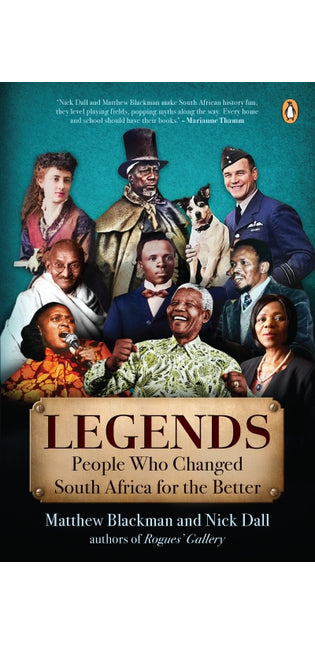
Legends
We have a lot to be positive about in South Africa. With all our problems, it’s easy to feel bleak. But hold those thoughts, because Legends might be just the tonic you need to drive off the gloom. This book tells the stories of a dozen remarkable people – some well known, others largely forgotten – who changed Mzansi for the better. Most South Africans are proud of Nelson Mandela – and rightly so. His life was truly astounding, but he’s by no means the only person who should inspire us. There’s King Moshoeshoe, whose humanity and diplomatic strategies put him head and shoulders above his contemporaries, both European and African. And John Fairbairn, who brought non-racial democracy to the Cape in 1854. Olive Schreiner was a bestselling international author who fought racism, corruption and chauvinism. And Gandhi spent twenty years here inventing a system of protest that would bring an Empire to its knees. Legends also celebrates Eugène Marais’s startling contributions to literature and natural history (despite a lifelong morphine addiction); Sol Plaatje’s wit, intelligence and tenacity in the face of racial zealots; Cissie Gool’s lifetime fighting for justice and exposing bigots; and Sailor Malan’s battles against fascists in the skies of Europe and on the streets of South Africa. Legends also celebrates Eugène Marais’s startling contributions to literature and natural history (despite a lifelong morphine addiction); Sol Plaatje’s wit, intelligence and tenacity in the face of racial zealots; Cissie Gool’s lifetime fighting for justice and exposing bigots; and Sailor Malan’s battles against fascists in the skies of Europe and on the streets of South Africa. And then there’s Miriam Makeba, who began her life in prison and ended it as an international singing sensation; Steve Biko, who shifted the minds of an entire generation; and Thuli Madonsela (the book’s only living legend), who gracefully felled the most powerful man in the land. Engagingly written and meticulously researched, Legends reminds South Africans that we have a helluva lot to be proud of.
R 360.00
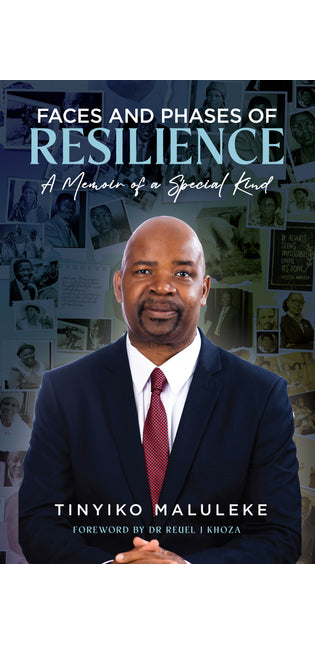
Faces and Phases of Resilience
In this captivating collection of essays, Tinyiko Maluleke invites his readers on a journey that begins with his eventful boyhood in Soweto and his life-changing upbringing in Limpopo. His heartfelt reflections on the roles of his mother, maternal grandmother and aunts in his childhood will resonate deeply with readers. In the truest sense, this is a ‘feminist’ book – one that powerfully highlights and celebrates the vital contributions of women to national development. This memoir traces Maluleke’s journey through academia, his rise through the ranks, and the invaluable lessons he learned along the way. Woven into his personal narrative is a broader reflection on the South African experience, inviting readers to reconsider the history of the country – its villages, townships and even their own identities. Maluleke delivers unflinching analysis of critical issues facing South Africa, blending rigorous scholarship with a masterful command of diverse literary genres and writing styles. More than just a memoir, this book is both a tribute and a testament to the moments, places, and people – both celebrated and unsung – that have shaped hisperspective. His incisive profiles of fellow university leaders are particularly compelling. Faces and Phases of Resilience will make you think, laugh, yell, and cry. More than just a personal memoir, it is the memoir of a country, a historical epoch, and a people – an invitation into the tragedy, beauty and hope that define South Africa.
R 390.00
Chris van Wyk – Irascible Genius
When he died in 2014, author Chris van Wyk left behind an impressive literary legacy. The scope of his work was broad – poetry, children’s books, short stories and biographies. But perhaps he is best remembered for his memoir Shirley, Goodness & Mercy, which chronicles his growing up in Riverlea and introduces us to the colourful characters who helped to shape his life and inform the stories he wrote.The public persona of this witty and wise raconteur was well known, but behind it was a family man, who liked nothing better than to spend time with his two sons Kevin and Karl, his wife and childhood sweetheart Kathy, and the friends and family who were his primary sources of inspiration.Using the unique vantage point of oldest son, Kevin van Wyk’s astute observations of his father and the strong bond they enjoyed throughout Chris’s life have resulted in a memoir that is as affectionate as it is entertaining. In taking us behind the scenes into the Van Wyk household, we witness the inner workings of the mind of a storyteller, from the flowering of his father’s activism, wit and wisdom to the sources of his occasional quirky outbursts. If storytelling runs in the genes, Kevin may just be proof that his father’s spirit lives on.
R 370.00