Search results for "Colin Stuart"
Items we need to order for you

Speed of Starlight
Designed to present physics in a totally new light, this science book explores the topics of physics, light and sound alongside incredible artwork from surrealist artist Ximo Abadía. Visualise sonar sound, discover the speed of light and understand basic quantum physics with easy to understand, engaging text by acclaimed science writer Colin Stuart.Impressive design meets exciting content in this physics title that will truly captivate and inspire.
R 464.00
Time
'A gripping exploration of one of the most fundamental, but also perplexing aspects of existence.' PROF. LEWIS DARTNELL, author of Origins'Such an enjoyable read...full of delightful nuggets that you will want to impress your friends and family with.' PROF. JIM AL-KHALILI, NYT bestselling author of The World According to Physics'This is a lovely, fascinating book. It blends history, geology, chemistry, philosophy and, of course, physics in a way that's delightful to read.' - ABIGAIL BEALL, author of The Art of Urban Astronomy--------Discover the secrets of one of the biggest puzzles in our history - Time. As a subject, it has perplexed and fascinated generations of scientists, historians and more, and continues to spark the most intriguing questions being asked in science today. Can time be stopped? Is time travel possible? Does time even exist...? In these ten bite-sized essays, Colin Stuart delves into these big questions and uncovers the most awe-inspiring and revealing things we should all know about time. Perfect for readers of Carlo Rovelli and anyone fascinated by space and the universe, this is a must-read for those short on time, but not curiosity.
R 402.00
Rebel Star
A fascinating and comprehensive guide to the sun – our home star – which remains the greatest mystery in the solar system, and why understanding it is pivotal to our future existence here on Earth.In 1869, a great mystery was born. As astronomers observed a total solar eclipse, for the first time they saw the faint glow of the solar corona, the sun’s outer atmosphere. Measurements of a previously unknown wavelength that made up this solar light sparked hot debate among scientists, but it was another sixty years before they discovered that this wavelength was in fact iron being burned at a staggering 3 million degrees Celsius. With the sun’s surface only 6,000 degrees, this shouldn’t be possible. What we now knew about the sun appeared to defy the laws of physics – and nature.But as well as being shrouded in intriguing mystery, the unpredictable nature of the sun’s corona poses a serious threat to our life here on earth – the destructive potential of solar storms, caused by solar material travelling out into space at around 1 million miles an hour, is huge. Remaining beyond our reach until now, a new generation of ambitious solar missions are currently travelling closer to the sun than any previous spacecraft in history. As we enter this unprecedented era of heliophysics, there has never been a better time to get to grips with the workings of our home star.
R 526.00
Extraordinary Elements
With the help of Alice Cooper, Freddie Mercury, Kurt Cobain and a whole host of weird and wonderful characters both real and imagined, The Extraordinary Elements presents the periodic table as you have never seen before. Gripping facts and easy-to-access information accompany stunning infographics and the personified elements, as well as chemistry basics
R 402.00
R 411.00
Great Rebuildings Of Tudor And Stuart England
One of the country's foremost architectural historians presents a wide-ranging and challenging analysis of the revolution in architectural tastes that characterized the great rebuildings of the 16th and 17th centuries. Colin Platt's other book include: "The English Medieval Town", "Medieval England: A Social History and Archaeology from the Conquest to 1600" and "The Architecture of Medieval Britain: A Social History" which won the prestigious Wolfson Prize for 1990. This book is intended for undergraduate/6th form, courses on Elizabethan/early modern England with a cultural/architectural dimension at "A"-level, broad-based chronological courses at university level, and specialized courses in urban and architectural history.
R 2,712.12
Rethinking Mill's Ethics
Discussion of John Stuart Mill's ethics has been dominated by concern with right and wrong action as determined by the principle of utility. Colin Heydt's book unearths the rich context of moral and socio-political debate that Mill did not have to make explicit to his Victorian readers, in order to enrich the philosophical analysis of his ethics and to show a famous and misunderstood moralist in a new light.
R 6,768.00
Cone Stories
Colin is an ordinary orange and white road traffic cone. He and his friends at the motorway maintenance yard close to the M4 motorway are bored with standing around at the edge of a road. When people are not watching them they cause michief and mayhem on the roads and motorways. See Colin make people laugh when he sits on top of a statue in the local park. Find out how brave a good little cone can be. Read about the adventures and the fun the cones from the maintenance yard close to the M4 have whenever they can. The Cone Stories are a collection of fourteen stories, they will make you laugh and sometimes make you cry. These fun stories also have delightful illustrations to bring the cones from the yard to life. Never again will you see an ordinary orange and white traffic cone without wondering what he is doing, on top of a garage roof or lurking in the shadows.
R 406.00
Global Television and Film
Global Television and Film is the first non-specialist introduction to the economics of the contemporary film and television business. The industry is highly significant, economically and culturally and the political economy of its trade is an extremely sensitive issue. Are cultural goods merely entertainment goods? Why does the US dominate? This book provides a systematic and structured economic explanation of how the global markets for television and films operate, and the implications for public policy and business strategy. By explaining the economic and cultural characteristics relevant to trade, thereader is provided with the tools necessary to evaluate international communication issues. The book stresses the uniqueness of cultural products and develops the argument that the economic and cultural development approaches to cultural issues can be largely reconciled. The authors point out that the mainstream economics approach has been under-represented in communications and explains to a very great extent the underlying reasons for the prevalence of American based media across the world.
R 2,552.00
R 274.00
R 834.00
Stuart
‘Stuart does not like the manuscript. He’s after a bestseller, “like what Tom Clancy writes”. “But you are not an assassin trying to frazzle the president with anthrax bombs,” I point out. You are an ex-homeless, ex-junkie psychopath, I do not add.’ This is the story of a remarkable friendship between a reclusive writer (‘a middle-class scum ponce, if you want to be honest about it, Alexander’), and Stuart Shorter, a homeless, knife-wielding thief. Told backwards – Stuart’s idea – it starts with a deeply troubled thirty-two-year-old and ends with a ‘happy-go-lucky little boy’ of twelve. This brilliant biography, winner of the Guardian First Book Award, presents a humbling portrait of homeless life, and is as extraordinary and unexpected as the man it describes.
R 402.00
R 1,367.36
Cinema, Culture, Scotland
This book anthologises selected key works from the oeuvre of Colin McArthur, a pioneering figure within Anglophone Film and Scottish cultural studies since the 1960s.Collecting together thirty-seven essays written between 1966 and 2022, twenty-one of which were hitherto out-of-print, the book identifies and illustrates the central strands of scholarly interest that have defined one of British Film Studies and Scottish Cultural Studies' most influential careers: critical investigation and legitimisation of mid-twentieth-century Hollywood cinema and popular American film genres; the cinematic representation of Scotland and the gradual development of a Scottish film production sector; and Scotland's status as a distinctive visual and material cultural signifier within a diverse range of international popular cultures from the eighteenth century to the present.
R 1,545.00
R 521.00
R 429.53
Media Economics
"Hoskins, McFadyen and Finn de-dismalise economics. Their book is clearly written, full of cogent and apposite examples and analyses persuasively what makes media and communications like, and unlike, other economic sectors. From network externality to public good, from experience goods to superstars, from dumping to quotas they lucidly guide the reader through the tangles of the new economy and why it now matters less if maids burn books. Eat your heart out Thomas Carlyle." -Richard E. Collins, The Open University, U.K. How does the Internet affect the supply of information-based entertainment and cultural goods? Why do telephone companies have peak and off-peak prices for long-distance calls? Why is broadcasting, but not newspaper publishing, usually regulated and sometimes subsidized? Media Economics: Applying Economics to New and Traditional Media provides a thorough foundation of the microeconomic principles and concepts needed to understand media industries and issues in the converging media environment. Media Economics differs from ordinary media economic texts by taking a conceptual approach to economic issues. As the book progresses through economic principles, authors Colin Hoskins, Stuart McFadyen, and Adam Finn use cases and examples to demonstrate how these principles can be used to analyze media issues and problems. Media Economics emphasizes economic concepts that have distinct application within media industries, including corporate media strategies and mergers, public policy within media industries, how industry structure and changing technologies affect the conduct and performance of media industries, and why the United States dominates trade in information and entertainment. Key Features Chapter opening vignettes introduce the issues analyzed in each chapter Concise definitions of key terms for a clear understanding of basic microeconomic and managerial economic concepts Examples from a variety of media industries including those in the United States, Canada, the United Kingdom, and Australia A concept-driven approach enabling a longer shelf-life as technologies, structures, and revenues change A recognition of the reality of convergence and consolidation in media industries rather than addressing each media outlet individually Media Economics assumes no prior background in economics and is designed for undergraduate and graduate students studying media economics and media industries. The book is an ideal text for public policy and the media as well as media and society courses with an economic perspective taught in Media Studies, Communication, Business, Journalism, Film Studies, Political Studies, and Economics programs.
R 4,930.24
Bloody Dangerous
Flight-Lieutenant Colin Bell's Bloody Dangerous is a powerful and inspiring portrait of bravery in action, full of touching admiration for his RAF comrades - one in four of whom were killed. He paints an extraordinarily vivid picture of what it was like to fly a Mosquito - the wooden wonder - in 50 raids over Germany, 13 of them to Berlin itself. There, coned by searchlights, he experienced the terror of being tracked by devastatingly effective 88 mm radar-controlled anti-aircraft guns when he wasn't being chased by night-fighting Messchersmitt 262s - the only aircraft in the German armoury capable of outrunning the Mosquito. Bell suffered engine failures, fuel starvation, near fatal ice, numerous hits to his plane and, on one occasion, an explosion so close there was shrapnel in his parachute and burn marks on his navigator's flying suit.Bell takes us from pre-war London, where he wooed his girlfriend with tickets to see a new film opening in Leicester Square (it was Gone with the Wind), to terrifying scenes of the Blitz itself - he joined up after seeing a bomb fall on the other side of the street on which he was walking. As a member of the elite Pathfinder 608 squadron he was part of the force that, arguably, did more than any other bombing unit to bring about the Nazis' final surrender.
R 680.00
Media Economics
"Hoskins, McFadyen and Finn de-dismalise economics. Their book is clearly written, full of cogent and apposite examples and analyses persuasively what makes media and communications like, and unlike, other economic sectors. From network externality to public good, from experience goods to superstars, from dumping to quotas they lucidly guide the reader through the tangles of the new economy and why it now matters less if maids burn books. Eat your heart out Thomas Carlyle." -Richard E. Collins, The Open University, U.K. How does the Internet affect the supply of information-based entertainment and cultural goods? Why do telephone companies have peak and off-peak prices for long-distance calls? Why is broadcasting, but not newspaper publishing, usually regulated and sometimes subsidized? Media Economics: Applying Economics to New and Traditional Media provides a thorough foundation of the microeconomic principles and concepts needed to understand media industries and issues in the converging media environment. Media Economics differs from ordinary media economic texts by taking a conceptual approach to economic issues. As the book progresses through economic principles, authors Colin Hoskins, Stuart McFadyen, and Adam Finn use cases and examples to demonstrate how these principles can be used to analyze media issues and problems. Media Economics emphasizes economic concepts that have distinct application within media industries, including corporate media strategies and mergers, public policy within media industries, how industry structure and changing technologies affect the conduct and performance of media industries, and why the United States dominates trade in information and entertainment. Key Features Chapter opening vignettes introduce the issues analyzed in each chapter Concise definitions of key terms for a clear understanding of basic microeconomic and managerial economic concepts Examples from a variety of media industries including those in the United States, Canada, the United Kingdom, and Australia A concept-driven approach enabling a longer shelf-life as technologies, structures, and revenues change A recognition of the reality of convergence and consolidation in media industries rather than addressing each media outlet individually Media Economics assumes no prior background in economics and is designed for undergraduate and graduate students studying media economics and media industries. The book is an ideal text for public policy and the media as well as media and society courses with an economic perspective taught in Media Studies, Communication, Business, Journalism, Film Studies, Political Studies, and Economics programs.
R 7,089.01
R 367.00
Diary of a Decorator
In the years after the Second World War Colin Douglas-Fairhurst turned the modest decorating business founded by his father into a national leader in the field. FWA, as it became known, won contracts to repaint many of Britain's most prominent buildings, from Buckingham Palace to Waterloo Station and from Hammersmith Bridge to the National Gallery. Along the way Colin raised a family, saw the world, owned and drove more than 70 cars and had a great deal of fun amid all the hard work. This is the story of his life, his family and his business.
R 466.00
Myth of Social Action
The Myth of Social Action, first published in 1996, is a powerful critique of the sociology of the time and a call to reject the prevailing orthodoxy. Arguing that sociological theory had lost its way, Colin Campbell mounts a case for a new 'dynamic interpretivism' a perspective on human conduct which is more inkeeping with the spirit of traditional Weberian action theory. Discussing and dismissing one by one the main arguments of those who reject individualistic action theory, he demonstrates that this has been wrongly rejected in favour of the interactional, social situationalist approach now dominating sociological thought.
R 1,748.53
Crooked, but Never Common
In a burst of creativity unmatched in Hollywood history, Preston Sturges directed a string of all-time classic comedies from 1939 through 1948—The Great McGinty, The Lady Eve, Sullivan’s Travels, The Palm Beach Story, and The Miracle of Morgan’s Creek among them—all from screenplays he alone had written. Cynical and sophisticated, romantic and sexually frank, crazily breakneck and endlessly witty, his movies continue to influence filmmakers and remain popular to this day. Yet despite this acclaim, Sturges’s achievements remain underappreciated: he is too often categorized as a dialogue writer and plot engineer more than a director, or belittled as an irresponsible spinner of laughs.In Crooked, but Never Common, Stuart Klawans combines a critic’s insight and a fan’s enthusiasm to offer deeper ways to think about and enjoy Sturges’s work. He provides an in-depth appreciation of all ten of the writer-director’s major movies, presenting Sturges as a filmmaker whose work balanced slapstick and social critique, American and European traditions, and cynicism and affection for his characters. Tugging at loose threads—discontinuities, puzzles, and allusions that have dangled in plain sight—and putting the films into a broader cultural context, Klawans reveals structures, motives, and meanings underlying the uproarious pleasures of Sturges’s movies. In this new light, Sturges emerges at last as one of the truly great filmmakers—and funnier than ever.
R 1,030.00
Navy and Anglo-Scottish Union, 1603-1707
Examines the union of England and Scotland by weaving the navy into a political narrative of events between the regal union in 1603 and the parliamentary union in 1707.This book examines the union of England and Scotland by weaving the navy into a political narrative of events between the regal union in 1603 and the parliamentary union in 1707. For most of the century the Scottish crown had no separate naval force which made the Stuart monarchs' navy, seen by them as a personal not a state force, unusual in being an institution which had a relationship with both kingdoms. This did not necessarily make the navy a shared organisation, as it continued to be financed from and based in England and was predominantly English. Nevertheless, the navy is an unusually good prism through which the nature of the regal union can be interrogated as English commanded ships interacted with Scottish authorities, and as Scots looked to the navy for protection from foreign invaders, such as the Dutch in the Forth in 1667, and for Scottish merchant ships trading with the Baltic and elsewhere. These interactions were often harmonious, but there were also many instances of tensions, particularly in the 1690s. The book illustrates both the ambiguous relationship between England and Scotland in the seventeenth century and also the navy's under-appreciated role in creating the political union of Britain.
R 2,992.41
Britain and the Weimar Republic
Between the two world wars, Germany managed, despite all the political upheavals it was experiencing, to attract extremely large numbers of British travellers and tourists. During the Weimar period in particular, Germany attracted visitors from virtually every section of British society.Based on original research and using striking examples from intellectual life and literature, Colin Storer moves beyond the traditional scholarly focus on figures such as Christopher Isherwood and John Maynard Keynes to provide the first broad comparative study of British intellectual attitudes towards Weimar Germany. This book highlights the diversity of British attitudes, challenges received opinions on areas such as the 'inevitable collapse' of the Republic, and seeks to establish why Weimar Germany was so appealing to such a variety of individuals.
R 1,382.00
Wild Houses
The remarkable, funny and thrilling debut novel from the acclaimed, prize-winning author of the short story collections, Young Skins and HomesicknessAs Ballina prepares for its biggest weekend of the year, the simmering feud between small-time dealer, Cillian English, and County Mayo's fraternal enforcers, Gabe and Sketch Ferdia, spills over into violence and an ugly ultimatum.When the reclusive Dev answers his door on Friday night he finds Doll - Cillian's bruised, sullen, teenage brother - in the clutches of Gabe and Sketch. Jostled by his nefarious cousins, goaded by his dead mother's dog and struck by spinning lights, Dev is unwillingly drawn headlong into the Ferdias' revenge fantasy.Meanwhile, seventeen-year-old Nicky can't shake the feeling something bad has happened to her boyfriend Doll. Hungover, reeling from a fractious Friday night and plagued by ghosts of her own, Nicky sets out on a feverish mission to save Doll, even as she questions her future in Ballina.The beautifully crafted, thrillingly-told story of two outsiders striving to find themselves as their worlds collapse in chaos and violence, Wild Houses is the long-anticipated debut novel from award-winning and critically-acclaimed short story writer, Colin Barrett.PRAISE FOR HOMESICKNESS------------'A mesmerizingly powerful book, full of the strangeness and beauty of life'SALLY ROONEY, author of NORMAL PEOPLE'A masterwork - by turns hilarious and heart-breaking... What fierce, tender stories. Totally unforgettable'BRANDON TAYLOR, author of REAL LIFE'Homesickness is one of the finest collections I've read this year. There is so much life in these pages, captured through the sharpest observations but the lightest touch. Superb'DOUGLAS STUART, author of SHUGGIE BAIN'Barrett is already one of the leading writers of the Irish short story... He just kills it'ANNE ENRIGHT, author of THE GATHERING'Addictive, stylish and violently funny stories, with riches on every page - an outstanding collection'KEVIN BARRY, author of NIGHT BOAT TO TANGIER'Edgy, sharp and utterly original, Homesickness is an utterly compelling collection and Barrett is meticulous'ELAINE FEENEY, author of HOW TO BUILD A BOAT
R 526.00
Proverbs in the Patter
Money, power, marriage, friendship, health, sleep, jealousy, war, peace, eternity: the ancient wisdom of Solomon in the 21st-century language of the Scottish patter. Full-to-the-brim of pithy wisdom, this expressive book will appeal to all who enjoy the richness of the Scots tongue. Injecting life into these ancient wise words, Jamie Stuart’s language of the people connects the down-to-earth Scots character with the practical relevance today of the wisdom of Solomon.
R 297.00
Subverting Scotland's Past
This book examines how the dramatic intellectual developments of the Scottish Enlightenment undermined a patriotic reading of Scotland's history, and shows how this had long-term consequences in the failure of the nineteenth-century Scottish intelligentsia to mount a nationalist movement comparable to the romantic nationalisms of other European peoples. The volume sheds fresh light on several important areas of Scottish history and literature: on the parliamentary Union with England of 1707, the ideological conflicts between whigs and Jacobites, and the literary mythmaking of James Macpherson's Ossian and Sir Walter Scott's Waverley novels. It also addresses the broader questions of the impact of the Scottish Enlightenment on British political culture, and the enigma of British national identity itself.
R 2,236.62
Stuart Academic Drama
Although not much is known about the three Stuart plays in this edition, which was first published in 1987, we can ascribe them to one of the English universities, and each is indicative of a distinctly different influence on the Renaissance academic drama. Heteroclitanomalonomia is part of a minor subgenre referred to as the academic play. It demonstrates the predominance of language or rhetoric studies in the period and its very subject is of purely academic interest. Gigantomachia displays the continuing interest of the Renaissance in classical mythology. And A Christmas Messe follows a more homely tradition, a farcical personification of the mundane. This title will be of interest to students of English Literature, Drama and Performance.
R 1,442.75
R 813.00
R 1,212.48
Forty Years on the Frontier
When originally published in 1925, one reviewer called Forty Years on the Frontier "the odyssey of a nineteenth-century Ulysses." In 1852, Granville Stuart (1834–1918) traveled with his brother and their father to the Sacramento Valley of California, where they spent five years mining for gold and served in the Rogue River War. In 1857 he and his brother started back to Iowa but were delayed by the outbreak of war between the Utah Mormons and the United States. After relocating to Montana’s Deer Lodge Valley, the Stuarts found gold, and news of their discovery sparked the first Montana gold rush in 1862. Stuart was instrumental in developing the Montana cattle industry and was a leader of the vigilantes who captured and executed numerous horse thieves in the summer of 1884. Stuart's edited reminiscences are a priceless and authentic account of pioneering, prospecting, and community building in the northern Rockies and Great Plains.
R 569.00
Stuart Britain: A Very Short Introduction
Originally published as part of "The Oxford Illustrated History of Britain", John Morrill's description of Stuart Britain sets the Revolution into its political, religious, social, economic, intellectual and cultural contexts. It thus seeks to integrate what most other surveys pull apart. It gives a graphic account of the effects of a century-long period during which population was growing inexorably and faster than both the food supply and the employment market. It looks at the failed attempts of successive governments to make all those under their authority obedient members of a unified national church; it looks at how Charles I blundered into a civil war which then took on a terrifying momentum of its own. The result was his trial and execution, the abolition of the monarchy, the House of Lords, the bishops, the Prayer Book and the celebration of Christmas. As a result everything else that people took for granted came up for challenge, and this book shows how painfully and with what difficulty order and obedience was restored. The text is intended for the general reader or students of the Stuart period of British history.
R 309.00
Union and Unionisms
Although the dominant political ideology in Scotland between 1707 and the present, unionism has suffered serious neglect. One of the most distinguished Scottish historians of our time looks afresh at this central theme in Britain's history, politics and law, and traces the history of Scottish unionist ideas from the early sixteenth century to the present day. Colin Kidd demonstrates that unionism had impeccably indigenous origins long predating the Union of 1707, and that it emerged in reaction to the English vision of Britain as an empire. Far from being the antithesis of nationalism, modern Scottish unionism has largely occupied a middle ground between the extremes of assimilation to England or separation from it. At a time when the future of the Scottish union is under scrutiny as never before, its history demands Colin Kidd's lucid and cogent examination, which will doubtless generate major debate, both within Scotland and beyond.
R 3,885.56
Hardscrabble Diamonds
Part history, part memoir, part statistical analysis, this book tells the remarkable and largely forgotten story of how the baseball hotbed of Canada's northeastern Maritime provinces evolved into "NCAA North" during the 1940s and 1950s. A summer training ground for players from leading U.S. college programs, the region attracted talented players seeking higher salaries than they could get in the American minor league system.Major league organizations came to scout blue-chip prospects. In this competitive environment, only the best were able to crack the rosters of town teams in Nova Scotia, New Brunswick and Maine. A Quality of Competition Index for various northeast leagues provides major league equivalencies for selected players.
R 1,030.00
A/AS Level History for AQA Stuart Britain and the Crisis of Monarchy, 1603–1702 Student Book
A new series of bespoke, full-coverage resources developed for the AQA 2015 A/AS Level History. Written for the AQA A/AS Level History specifications for first teaching from 2015, this print Student Book covers the Stuart Britain and the Crisis of Monarchy, 1603-1702 Breadth component. Completely matched to the new AQA specification, this full-colour Student Book provides valuable background information to contextualise the period of study. Supporting students in developing their critical thinking, research and written communication skills, it also encourages them to make links between different time periods, topics and historical themes.
R 2,138.40
Invisible College - The Great European Secret
"You know, an all-out battle on land, and heavy battles in the sea, and this total bombardment over Rotterdam and over London, the High Cabal is operating here." Sir Winston Churchill High finance, the High Cabal, has been running the Brotherhood of Light very secretly for over 1500 years. It has grown stronger. From this Cabal of the Roman Empire, fashioned again in Venice in 697AD, white slaving and currency manipulation in the Eastern Mediterranean arose. It became the ruthless mask of the Knights Templar, who invaded Europe and Britain in AD 1150. The Red lodges that resulted from that period still exist today. By the mid-16th century the Cabal was back again, this time smashing the monasteries, introducing slavery, large houses and currency manipulation, and controlling the East India Company that held power over a fifth of the world's population. So we trace here the Cabal's hoof prints into the still existing and unsolved Templar mysteries, into the Round Table, Council on Foreign Relations, Bilderberg and Trilateral Commission of today. And we review the world of central banking and of the scientific frauds, such as Darwin's theories and the man-made global warming nonsense from the Club of Rome. After reading this there is no need to ask who started the American Civil War or Russian Revolution, melted the gold teeth from Auschwitz into the gold bars of the Bank of International Settlements as it resisted closure at Bretton Woods and moved towards World Bank. No need to ask who plans to move democracy into a commune of the oligarchy in which ALL but the bankers will be the peasants of a new political system called "Nazi-Communism". This is the story of the High Cabal, Brotherhood of Light and Seven Churches of Asia. But it is also the hardheaded story of the European Union, who designed it and what it really is. The Great European Secret remains secret until these words are read, and it is still the Invisible College; until good people ensure it is otherwise.
R 847.00
R 973.90
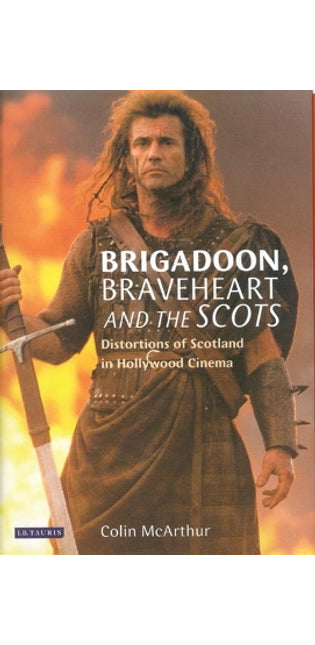
"Brigadoon", "Braveheart" and the Scots
The films "Brigadoon" and "Braveheart" have an enormous resonance both for Scots throughout the world and the wide audience of non-Scots for whom such films provide general impressions of "Scottishness". This provocative book discusses the films' representations of Scotland and the Scots, looking at that cluster of images and stories whereby Scotland is (mis)recognized and yet often comes to be "known". Colin McArthur explores "Brigadoon" and documents the contempt the film has elicited, particularly from the Scots intelligentsia. He succumbs to "Brigadoon's" charm, but finds no such mitigating features in "Braveheart". Tracing the film's appropriation by political, touristic and sporting figures, he argues that, far from being "about" Scottish history, it is primarily "about" Hollywood and its cinematic traditions. He looks at the way film distorts history and examines "Braveheart's" sinister appeal to the proto-fascist psyche.
R 5,150.00
Evolutionary Leap
When the existential philosopher Colin Wilson died in December 2013, it was suggested by one perceptive obituary writer that, despite the seemingly diverse subject matter of his books, his true legacy lay in the field of Consciousness Studies. This is particularly apparent when studying his many essays and books on psychology and taking into consideration his close association with the celebrated American psychologist Abraham Maslow whose concept of 'Peak Experiences'(PEs) became, for Wilson, an important link to experiencing enhanced consciousness. Maslow, however, felt that PEs could not be induced at will; Wilson thought otherwise and through his work sought to encourage his readers and students to live more vital and appreciative lives thereby paving the way toward an evolutionary leap for mankind in consciousness-indeed, a change in consciousness that would potentially change everything.In this study, Colin Stanley, Wilson's bibliographer and author of Colin Wilson's 'Outsider Cycle': A Guide for Students and Colin Wilson's 'Occult Trilogy': A Guide for Students, provides an illuminating essay on each of Wilson's nine major books on psychology. Also included is Wilson's 'Notes on Psychology' to the psychiatrist George Pransky and 'Remembering the Outsider', Stanley's Colin Wilson obituary.
R 1,629.14
R 1,638.49
Union and Unionisms
Although the dominant political ideology in Scotland between 1707 and the present, unionism has suffered serious neglect. One of the most distinguished Scottish historians of our time looks afresh at this central theme in Britain's history, politics and law, and traces the history of Scottish unionist ideas from the early sixteenth century to the present day. Colin Kidd demonstrates that unionism had impeccably indigenous origins long predating the Union of 1707, and that it emerged in reaction to the English vision of Britain as an empire. Far from being the antithesis of nationalism, modern Scottish unionism has largely occupied a middle ground between the extremes of assimilation to England or separation from it. At a time when the future of the Scottish union is under scrutiny as never before, its history demands Colin Kidd's lucid and cogent examination, which will doubtless generate major debate, both within Scotland and beyond.
R 1,695.34