


Search results for "9780718187279"
Items we need to order for you

R 374.00
R 1,271.00
Seventy Eight Degrees of Wisdom
This classic book is a complete but concise guide to the origins, meaning and psychological applications of the Tarot. Its aim is to demystify and to make Tarot symbolism an effective and accessible means of self-enlightenment. Volumes 1 and 2 have now been combined and completely updated into one volume.
R 479.00
R 183.00
R 715.00
R 665.00
R 732.00
R 797.00
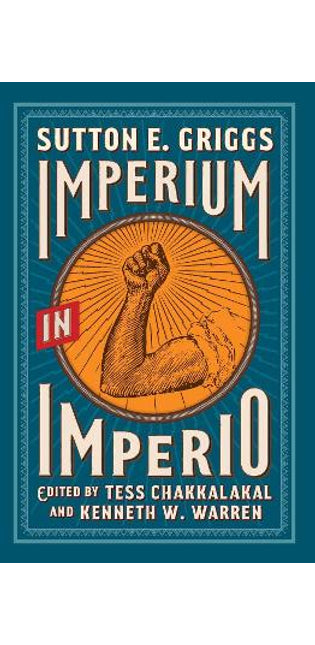
Imperium in Imperio
A new critical edition of Sutton Griggs’s turn-of-the-twentieth-century novel, which continues to shed light on understandings of Black politics. Sutton E. Griggs’s first novel, originally published in 1899, paints a searing picture of the violent enforcement of disfranchisement and Jim Crow racial segregation. Based on events of the time, including US imperial policies, revolutionary movements, and racial protests, Imperium in Imperio introduces the fictional Belton Piedmont and Bernard Belgrave as “future leaders of their race” and uses these characters to make sense of the violence that marked the dawn of the twentieth century. Taking on contemporary battles over separatism and integration, Griggs’s novel continues to play a crucial role in understandings of Black politics.Edited and introduced by Tess Chakkalakal and Kenneth W. Warren, this new critical edition offers not only an incisive biographical and historical introduction to the novel and its author but also a wealth of references that make the events and characters of Griggs’s Imperium in Imperio, and its aftermath, accessible to readers today.
R 998.00
R 664.00
R 665.00
R 1,151.00
R 717.00
Epistemic Explanations
Epistemic Explanations develops an improved virtue epistemology and uses it to explain several epistemic phenomena. Part I lays out a telic virtue epistemology that accommodates varieties of knowledge and understanding particularly pertinent to the humanities. Part II develops an epistemology of suspension of judgment, by relating it to degrees of confidence and to inquiry. Part III develops a substantially improved telic virtue epistemology by appeal to default assumptions important in domains of human performance generally, and in our intellectual lives as a special case. This reconfigures earlier virtue epistemology, which now seems a first approximation. This part also introduces a metaphysical hierarchy of epistemic categories and defends in particular a category of secure knowledge.
R 988.00
R 311.00
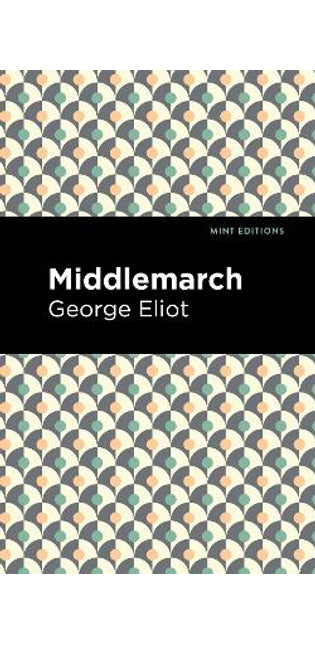
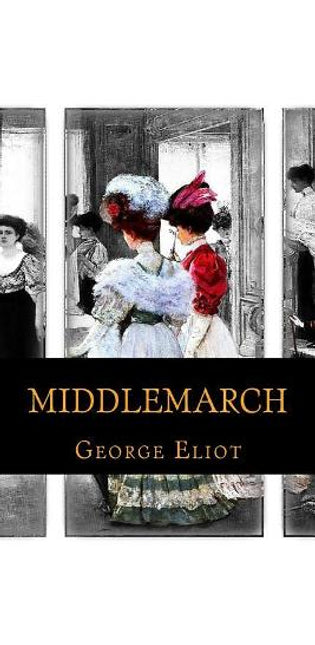
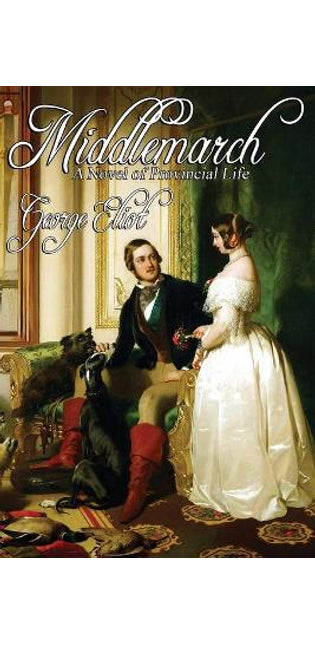
Middlemarch
George Eliot’s most acclaimed work, Middlemarch displays the author at the peak of her powers, weaving multiple plotlines and a memorable collection of characters together to create a wide-ranging novel of remarkable insight. First appearing in 1871, Middlemarch is a historical novel set 42 years before its publication. Political and social concerns of the era are present but serve as background and contrast to four compelling plotlines focused on a set of unforgettable characters striving against circumstance, each other, and themselves. Powerful themes, religion, love, marriage, education, society’s treatment of women and much more, are dealt with as fully fused elements of the story and integral parts of the lives of the characters. The author conveys a sweeping vision of small-town England in the Victorian era, the rich and the poor, the people of the countryside and the people of the city, while unspooling several interlocked storylines full of passion, uncertainty and suspense. Middlemarch received a mixed reaction upon its initial appearance, but has gained in standing among critics and general readers until it is now commonly considered one of the high points of 19th century fiction and even of English literature as a whole.With an eye-catching new cover, and professionally typeset manuscript, this edition of Middlemarch is both modern and readable.
R 1,001.00
R 281.00
R 505.00
R 1,163.00
R 405.00
R 343.00
R 1,329.00
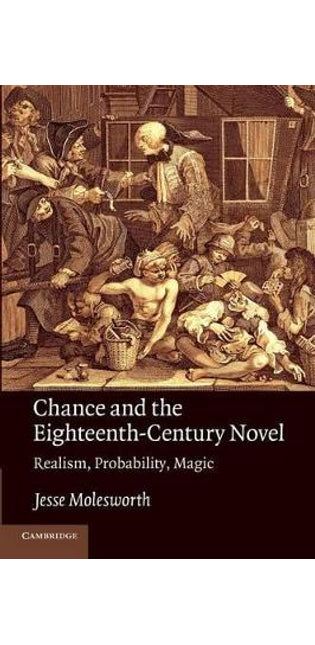
Chance and the Eighteenth-Century Novel
The rise and popular awareness of the science of probability in the eighteenth century was accompanied by an equally great interest in the anti-probable: lotteries, tarot readings, and gambling. In this study, Jesse Molesworth analyses the relationship between realism, probability and chance in eighteenth-century fiction. In a variety of readings, both literary and cultural, he investigates works by Daniel Defoe, Henry Fielding and Laurence Sterne, in the context of the rise of lottery addiction, Hoyle's whist, and tarot cartomancy. Both a reassessment of the early development of the novel and a contribution to recent work on realism and fiction, this book suggests connections between narrative and mathematics that reveal a darker, more transgressive, side to the novel. Rather than a rational expression of Enlightenment truths, the novel reaches out to older, more superstitious views as it tries to combine the attractions of chance with the consolations of reason.
R 1,979.00
R 373.00
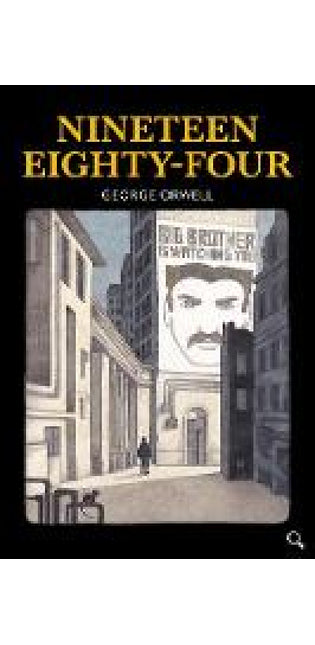
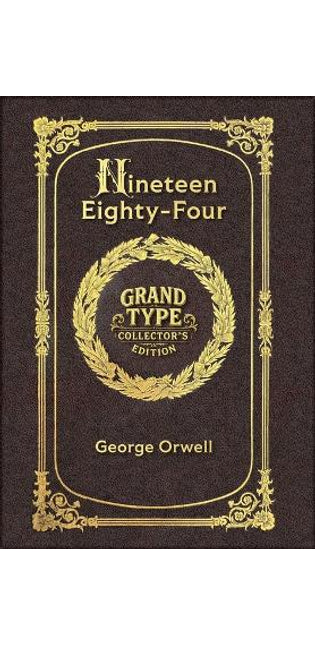
Nineteen Eighty-Four
Winston Smith lives in a nightmare world where the Thought Police spy on everyone and children are taught to betray their parents. Even the smallest sign of disagreement with the Party results in torture, imprisonment, or death. Big Brother oversees everything – but who is he? Winston tries hard to keep his thoughts and fears to himself. But then he meets Julia, a strong-minded young woman who is willing to run the terrible risk of their being found together. Will kindly Mr Charrington keep their secret? Can Winston and Julia find happiness despite the dangers that threaten them?
R 319.00
R 599.00
R 280.00
R 1,275.00
R 302.00
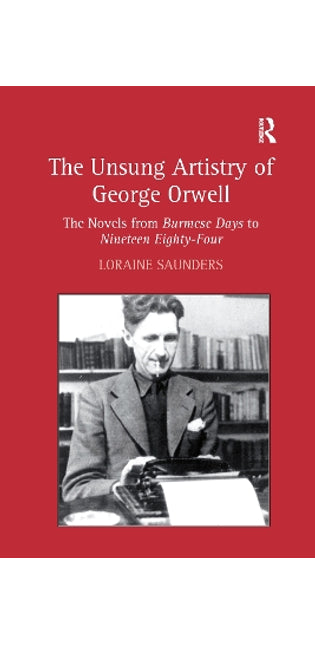
Unsung Artistry of George Orwell
In a timely and radically new reappraisal of George Orwell's fiction, Loraine Saunders reads Orwell's novels as tales of successful emancipation rather than as chronicles of failure. Contending that Orwell's novels have been undervalued as works of art, she offers extensive textual analysis to reveal an author who is in far more control of his prose than has been appreciated. Persuasively demonstrating that Orwell's novels of the 1930s such as A Clergyman's Daughter and Keep the Aspidistra Flying are no less important as literature than Animal Farm and Nineteen Eighty-Four, Saunders argues they have been victims of a critical tradition whose practitioners have misunderstood Orwell's narrative style, failed to appreciate Orwell's political stance, and were predisposed to find little merit in Orwell's novels. Saunders devotes significant attention to George Gissing's influence on Orwell, particularly with regard to his representations of women. She also examines Orwell's socialism in the context of the political climate of the 1930s, finding that Orwell, in his successful negotiation of the fine balance between art and propaganda, had much more in common with Charlie Chaplin than with writers like Stephen Spender or W. H. Auden. As a result of Saunders's detailed and accessible analysis, which illuminates how Orwell harmonized allegory with documentary, polyphonic voice with monophonic, and elegy with comedy, Orwell's contributions to the genre of political fiction are finally recognized.
R 2,319.00
R 432.00
R 749.00
R 718.00
R 604.00
R 811.00
R 931.00
R 1,296.00
R 460.00
R 442.00
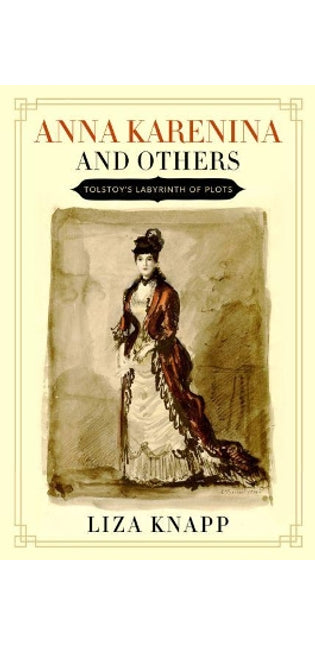
Anna Karenina and Others
With its complex structure, Anna Karenina places special demands on readers who must follow multiple plotlines and discern their hidden linkages. In her well-conceived and accessible analysis, Liza Knapp offers a fresh approach to understanding how the novel is constructed, how it creates patterns of meaning, and why it is much more than Tolstoy's version of an adultery story.Knapp provides a series of readings of Anna Karenina that draw on other works that were critical to Tolstoy's understanding of the interconnectedness of human lives. Among the texts she considers are The Scarlet Letter, a novel of adultery with a divided plot; Middlemarch, a multiplot novel with neighborly love as its ideal; and Blaise Pascal's Pensées, which fascinated Tolstoy during his own religious crisis. She concludes with a tour-de-force reading of Mrs. Dalloway that shows Virginia Woolf constructing this novel in response to Tolstoy's treatment of Anna Karenina and others.
R 660.00
R 396.00