



Search results for "Capitant"
Items in stock - 4 working days delivery time

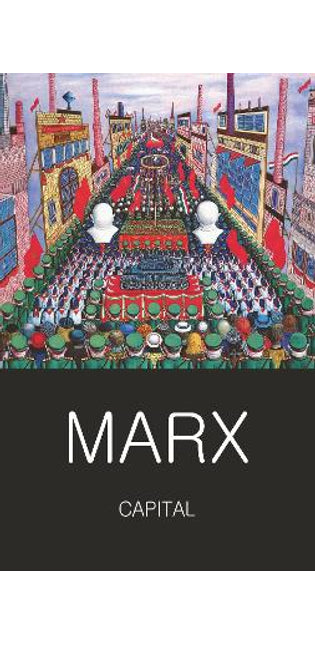
Capital
Few writers have had a more demonstrable impact on the development of the modern world than has Karl Marx (1818-1883). Born in Trier into a middle-class Jewish family in 1818, by the time of his death in London in 1883, Marx claimed a growing international reputation. Of central importance then and later was his book Das Kapital, or, as it is known to English readers, simply Capital. Volume One of Capital was published in Paris in 1867. This was the only volume published during Marx’s lifetime and the only to have come directly from his pen. Volume Two, published in 1884, was based on notes Marx left, but written by his friend and collaborator, Friedrich Engels (1820-1895). Readers from the nineteenth century to the present have been captivated by the unmistakable power and urgency of this classic of world literature. Marx’s critique of the capitalist system is rife with big themes: his theory of ‘surplus value’, his discussion of the exploitation of the working class, and his forecast of class conflict on a grand scale. Marx wrote with purpose. As he famously put it, ‘Philosophers have previously tried to explain the world, our task is to change it.’
R 194.00
Capital
Marx for the twenty-first centuryThe first new English translation in fifty years—and the only one based on the last German edition revised by Marx himselfFeaturing extensive original commentary, including a foreword by acclaimed political theorist Wendy Brown“An astounding achievement.”—China Miéville, author of October: The Story of the Russian RevolutionKarl Marx (1818–1883) was living in exile in England when he embarked on an ambitious, multivolume critique of the capitalist system of production. Though only the first volume saw publication in Marx’s lifetime, it would become one of the most consequential books in history. This magnificent new edition of Capital is a translation of Marx for the twenty-first century. It is the first translation into English to be based on the last German edition revised by Marx himself, the only version that can be called authoritative, and it features extensive commentary and annotations by Paul North and Paul Reitter that draw on the latest scholarship and provide invaluable perspective on the book and its complicated legacy. At once precise and boldly readable, this translation captures the momentous scale and sweep of Marx’s thought while recovering the elegance and humor of the original source.For Marx, our global economic system is relentlessly driven by “value”—to produce it, capture it, trade it, and, most of all, to increase it. Lifespans are shortened under the demand for ever-greater value. Days are lengthened, work is intensified, and the division of labor deepens until it leaves two classes, owners and workers, in constant struggle for life and livelihood. In Capital, Marx reveals how value came to tyrannize our world, and how the history of capital is a chronicle of bloodshed, colonization, and enslavement.With a foreword by Wendy Brown and an afterword by William Clare Roberts, this is a critical edition of Capital for our time, one that faithfully preserves the vitality and directness of Marx’s German prose and renders his ideas newly relevant to modern readers.
R 425.00

Items we need to order for you
Capital
'A groundbreaking work of economic analysis. It is also a literary masterpice' Francis Wheen, GuardianOne of the most notorious and influential works of modern times, Capital is an incisive critique of private property and the social relations it generates. Living in exile in England, where this work was largely written, Marx drew on a wide-ranging knowledge of its society to support his analysis. Arguing that capitalism would cause an ever-increasing division in wealth and welfare, he predicted its abolition and replacement by a system with common ownership of the means of production. Capital rapidly acquired readership throughout the world, to become a work described by Marx's collaborator Friedrich Engels as 'the Bible of the working class'.Translated by BEN FOWKES with an Introduction by ERNEST MANDEL
R 619.00
Capital
Marx for the twenty-first centuryThe first new English translation in fifty years—and the only one based on the last German edition revised by Marx himselfFeaturing extensive original commentary, including a foreword by acclaimed political theorist Wendy Brown“An astounding achievement.”—China Miéville, author of October: The Story of the Russian RevolutionKarl Marx (1818–1883) was living in exile in England when he embarked on an ambitious, multivolume critique of the capitalist system of production. Though only the first volume saw publication in Marx’s lifetime, it would become one of the most consequential books in history. This magnificent new edition of Capital is a translation of Marx for the twenty-first century. It is the first translation into English to be based on the last German edition revised by Marx himself, the only version that can be called authoritative, and it features extensive commentary and annotations by Paul North and Paul Reitter that draw on the latest scholarship and provide invaluable perspective on the book and its complicated legacy. At once precise and boldly readable, this translation captures the momentous scale and sweep of Marx’s thought while recovering the elegance and humor of the original source.For Marx, our global economic system is relentlessly driven by “value”—to produce it, capture it, trade it, and, most of all, to increase it. Lifespans are shortened under the demand for ever-greater value. Days are lengthened, work is intensified, and the division of labor deepens until it leaves two classes, owners and workers, in constant struggle for life and livelihood. In Capital, Marx reveals how value came to tyrannize our world, and how the history of capital is a chronicle of bloodshed, colonization, and enslavement.With a foreword by Wendy Brown and an afterword by William Clare Roberts, this is a critical edition of Capital for our time, one that faithfully preserves the vitality and directness of Marx’s German prose and renders his ideas newly relevant to modern readers.
R 911.00
R 1,529.00
Capitalism
As our great economic machine grinds relentlessly forward into a future of declining fossil fuel supplies, climate change and ecosystem failure, governments are at long last beginning to question the very structure of the global economy. In this fresh, politically charged analysis, Jonathon Porritt wades in on the most pressing question of the 21st century: can capitalism, as the only real economic game in town, be retooled to deliver a sustainable future? Porritt argues that indeed it can, and it must, as he lays out the framework for a new ?sustainable capitalism? that cuts across the political divide and promises a prosperous future of wealth, equity and ecosystem integrity.
R 3,297.00
Capital
A classic of early modernism, Capital combines vivid historical detail with economic analysis to produce a bitter denunciation of mid-Victorian capitalist society. It has also proved to be the most influential work in social science in the twentieth century; Marx did for social science what Darwin had done for biology. Millions of readers this century have treated Capital as a sacred text, subjecting it to as many different interpretations as the bible itself. No mere work of dry economics, Marx's great work depicts the unfolding of industrial capitalism as a tragic drama - with a message which has lost none of its relevance today. This is the only abridged edition to take account of the whole of Capital. It offers virtually all of Volume 1, which Marx himself published in 1867, excerpts from a new translation of `The Result of the Immediate Process of Production', and a selection of key chapters from Volume 3, which Engels published in 1895. ABOUT THE SERIES: For over 100 years Oxford World's Classics has made available the widest range of literature from around the globe. Each affordable volume reflects Oxford's commitment to scholarship, providing the most accurate text plus a wealth of other valuable features, including expert introductions by leading authorities, helpful notes to clarify the text, up-to-date bibliographies for further study, and much more.
R 309.00
Capital
** From the author of The Wall **'Effortlessly brilliant . . . hugely moving and outrageously funny.' Observer'A treat to read.' The Times'The great London novel of the twenty-first century.' New Statesman'Brimming with perception, humane empathy and relish . . . a capital achievement.' Sunday TimesA moving, funny and insightful story of one London street, its inhabitants, and a world-changing event.The residents of Pepys Road, London - a banker and his shopaholic wife, an elderly woman dying of a brain tumour, the Pakistani family who run the local shop, the young football star from Senegal and his minder - all receive anonymous postcards with a simple message: We Want What You Have. Who is behind it? What do they want?As the mystery of the postcards deepens, the world around Pepys Road is turned upside down by the financial crash and all of its residents' lives change beyond recognition over the course of the next year.From the bestselling author of Whoops! and How to Speak Money comes a post-financial crisis, state-of-the-nation novel told with compassion, humour and unflinching truth.Adapted into a major BBC One drama.
R 340.00
R 794.00
R 1,226.00
R 303.00
Capitalism, Power and Innovation
In contemporary global capitalism, the most powerful corporations are innovation or intellectual monopolies. The book’s unique perspective focuses on how private ownership and control of knowledge and data have become a major source of rent and power. The author explains how at the one pole, these corporations concentrate income, property and power in the United States, China, and in a handful of intellectual monopolies, particularly from digital and pharmaceutical industries, while at the other pole developing countries are left further behind.The book includes detailed empirical mappings of how intellectual monopolies develop and transform knowledge from universities and open-source collaborations into intangible assets. The result is a strategy that combines undermining the commons through privatization with harvesting from the same commons. The book ends with provoking reflections to tilt the scale against intellectual monopoly capitalism and arguing that desired changes require democratic mobilization of workers and citizens at large.This book represents one of the first attempts to capture the contours of an emerging new era where old perspectives lead us astray, and the old policy toolbox is hopelessly inadequate. This is true for the idea that the best, or only, way to promote innovation is to transform knowledge into private property. It is also true for anti-trust policies focusing exclusively on consumer prices. The formation of global infrastructures that lead to natural monopolies calls for public rather than private ownership.Scholars and professionals from the social sciences and humanities (in particular economics, sociology, political science, geography, educational science and science and technology studies) will enjoy a clear and all-embracing depiction of innovation dynamics in contemporary capitalism, with a particular focus on asymmetries between actors, regions and topics. In fact, its topical issue broadens the book’s scope to those curious about how innovation networks shape our world.
R 7,583.37
Capitalism
This provocative book challenges many of our ingrained assumptions about the direction of contemporary capitalism and offers fresh perspectives that will inform the development of a new and relevant political economy for our times. The complex and often contradictory world within which modern commodities are produced, sold and consumed is set within the larger context of transnational business and economic developments. The importance of factors such as profitability and globalization is highlighted, and a sophisticated analysis of the contradictions and ironies of the world of modern commodities emerges. Trinidad provides an ideal setting for this study, given its recent oil boom and recession and the subsequent experience of both wealth and poverty.
R 9,330.54
Capitalism
Exploring the life of the world-shaping system of capitalism and the writings of leading thinkers, this book gives an account of recent developments of capitalism, including the impact of the global Climate Crisis, questions around democracy and capitalism, and the impact of COVID-19. Capitalism stands unrivalled as the most enduring economic system of our times. Since the collapse of the Soviet bloc the world has become a new stage for capital, and yet despite this dominance capitalism is still not widely understood. In this volume Paul Bowles addresses some of the key questions around the history of capitalism; What are the central, unchanging features of capitalism? How does capitalism vary from place to place and over time? Does capitalism improve our lives? Is capitalism a system which is ‘natural’ and ‘free’? Or is it unjust and unstable? What about today’s global capitalism? Will capitalism destroy or liberate us? This updated edition of a classic text includes updates to all chapters with the inclusion of more global material, as well as a new chapter focussing on the future of capitalism, the clash of different capitalisms including neoliberal versus state capitalism, and whether we are seeing the end of capitalism and, if so, what post-capitalism might look like.
R 9,356.18
Capitalism
Exploring the life of the world-shaping system of capitalism and the writings of leading thinkers, this book gives an account of recent developments of capitalism, including the impact of the global Climate Crisis, questions around democracy and capitalism, and the impact of COVID-19. Capitalism stands unrivalled as the most enduring economic system of our times. Since the collapse of the Soviet bloc the world has become a new stage for capital, and yet despite this dominance capitalism is still not widely understood. In this volume Paul Bowles addresses some of the key questions around the history of capitalism; What are the central, unchanging features of capitalism? How does capitalism vary from place to place and over time? Does capitalism improve our lives? Is capitalism a system which is ‘natural’ and ‘free’? Or is it unjust and unstable? What about today’s global capitalism? Will capitalism destroy or liberate us? This updated edition of a classic text includes updates to all chapters with the inclusion of more global material, as well as a new chapter focussing on the future of capitalism, the clash of different capitalisms including neoliberal versus state capitalism, and whether we are seeing the end of capitalism and, if so, what post-capitalism might look like.
R 2,161.00
Capitalism
In this important new book, Nancy Fraser and Rahel Jaeggi take a fresh look at the big questions surrounding the peculiar social form known as “capitalism,” upending many of our commonly held assumptions about what capitalism is and how to subject it to critique. They show how, throughout its history, various regimes of capitalism have relied on a series of institutional separations between economy and polity, production and social reproduction, and human and non-human nature, periodically readjusting the boundaries between these domains in response to crises and upheavals. They consider how these “boundary struggles” offer a key to understanding capitalism’s contradictions and the multiple forms of conflict to which it gives rise. What emerges is a renewed crisis critique of capitalism which puts our present conjuncture into broader perspective, along with sharp diagnoses of the recent resurgence of right-wing populism and what would be required of a viable Left alternative. This major new book by two leading critical theorists will be of great interest to anyone concerned with the nature and future of capitalism and with the key questions of progressive politics today.
R 2,563.00
Capitalism
Neoclassical economical theory uses aspects of perfect functioning of markets as part of its basic assumptions and introduces imperfections as analysis proceeds forward. Many types of heterodox economics insist on dealing with imperfect competition but project backwards to a previous perfect state. In Capitalism, Anwar Shaikh demonstrates that most of the central propositions of economic analysis can be derived without any reference to hyperrationality, optimization, perfect competition, perfect information, representative agents or so-called rational expectations. These include the laws of demand and supply, the determination of wage and profit rates, technological change, relative prices, interest rates, bond and equity prices, exchange rates, terms and balance of trade,growth, unemployment, inflation, and long booms culminating in recurrent general crises. In every case, Shaikh's theory is applied to modern empirical patterns and contrasted with neoclassical, Keynesian, and Post Keynesian approaches to the same issues. The object of analysis is the economics of capitalism, and economic thought on the subject is addressed in that light. This is how the classical economists, as well as Keynes and Kalecki, approached the issue. Anyone interested in capitalism and economics in general can gain a wealth of knowledge from this ground-breakingtext.
R 4,641.00
Capitalism
Capitalism has been a controversial concept. In the second half of the 20th century, many historians have either not used the concept at all, or only in passing. Many regarded the term as too broad, holistic and vague or too value-loaded, ideological and polemic. This volume brings together leading scholars to explore why the term has recently experienced a comeback and assess how useful the term can be in application to social and economic history.The contributors discuss whether and how the history of capitalism enables us to ask new questions, further explore unexhausted sources and discover new connections between previously unrelated phenomena. The chapters address case studies drawn from around the world, giving attention to Europe, Africa and beyond. This is a timely reassessment of a crucial concept, which will be of great interest to scholars and students of economic history.
R 5,591.00
Kinship, Capitalism, Change
First Published in 1998. Part of the Native Americans Interdisciplinary Perspectives series, this volume looks at the informal economy of the Navajo from 1868 to 1995. In this study Dine is used in place of Navajo when referring to the people. Since 1868 three major revolutions have integrated the Dine into the world capitalist system: the establishment of military peace, resulting in political control by the U.S. Government, which then guaranteed the establishment of trading posts; the stock reduction of the 1930's, which resulted in money becoming central to economic life; and the importation of highly capital-intensive extractive industries onto the Navajo Reservation.
R 2,995.91
Capitalism
This provocative book challenges many of our ingrained assumptions about the direction of contemporary capitalism and offers fresh perspectives that will inform the development of a new and relevant political economy for our times. The complex and often contradictory world within which modern commodities are produced, sold and consumed is set within the larger context of transnational business and economic developments. The importance of factors such as profitability and globalization is highlighted, and a sophisticated analysis of the contradictions and ironies of the world of modern commodities emerges. Trinidad provides an ideal setting for this study, given its recent oil boom and recession and the subsequent experience of both wealth and poverty.
R 2,495.90
Capitalism
This imaginative and ambitious book rethinks the nature of capitalism. Lippit, a leading heterodox economist in the USA, here delivers a comparative study of different forms of capitalism. He first critically examines the three main capitalist prototypes: * the Anglo-American, market-driven version* the welfare-state capitalism of continental Europe* the state-led capitalism of East Asia.After investigating their various intricacies, he then goes on to analyze the common weaknesses of each different strand. A provocative and stimulating read, this book will be welcomed by postgraduates and professionals in the fields of economics and political economy.
R 2,786.15
Capitalism
Now with a substantial new postscript on the financial crisis This book provides a basic introduction to the 'nuts and bolts' of capitalism. It starts by examining the classic accounts of capitalism found in the works of Adam Smith, Karl Marx, Max Weber, Joseph Schumpeter, and John Maynard Keynes. Each placed emphasis on different institutional elements of capitalism - Smith on the market's 'invisible hand'; Marx on capital's exploitation of labour; Weber on the foundations of economic rationality; and Schumpeter and Keynes on the instability that results from capitalism's essentially monetary and financial character. Drawing on these classic accounts, Ingham then offers a succinct analysis of capitalism's basic institutions and their interconnections. Market exchange, the monetary system, the enterprise, capital and financial markets, and the role of the state are dealt with in separate chapters which make use of contemporary material on the recent history of the capitalist system - including the great inflation of the 1970s and the neo-liberal backlash; the 'dot.com' bubble of the late 1990s; and the collapse of Enron and other US corporations. This revised version includes a substantial new postscript on the financial crisis of 2007-8 and its aftermath. The result is a concise, masterly and up-to-date account of the world's most powerful economic system, written in a way that is accessible to students and general readers alike.
R 2,858.00
Capitalism
In the most complete, accurate and accessible presentation of Karl Marx’s theory of capitalism to date, Johan Fornäs presents a guide for anyone who wants to understand how today’s crisis-ridden society has emerged and is able to sustain and intensify its own deep inner contradictions. Capitalism clearly explains these contradictions, which are so relevant again today in the wake of the financial crisis.This clear and engaging guide explains capitalism for absolute beginners. Fornäs situates Marx’s ideas in context, remaining faithful to the concepts and structure of his work. This complete introduction to Marx’s economy critique covers all three volumes of Capital. It explores all the main aspects of Marx’s work – including his economic theory, his philosophical sophistication and his political critique – introducing the reader to Marx’s typical blend of sharp arguments, ruthless social reportage and utopian visions.This book will be of interest to students throughout the social sciences and humanities, including those studying sociology, social theory, economics, business studies, history, cultural studies, and politics.
R 9,329.09
R 592.00
R 550.00
R 1,220.00
Capitalism, Citizenship and the Arts of Thinking
Capitalism, Citizenship and the Arts of Thinking proposes a historical materialist ethic of human flourishing understood in terms of the practice of citizenship. It focuses on the ways in which capitalism’s necessary mode of thinking – analytical thinking – impedes the nurturing of capabilities for citizenship as understood from a Marxian-Aristotelian point of view. It includes a systematic discussion of the Aristotelian resonances in Marx’s critique of capitalism, as well as an elaboration and critique of Alfred Sohn-Rethel’s account of the origins of analytical thinking in his book Intellectual and Manual Labor: A Critique of Epistemology. Dean's critique of this book draws on the language theories of Lev Vygotsky, Alexander Luria, Jack Goody, Eric Havelock and Walter Ong, so as to identify the origins of analytical thinking in literacy rather than in monetised exchange relations, as claimed by Sohn-Rethel. Having traced the development of analytical thinking so as to bring out the ways in which this thinking was a condition of possibility for the division of head and hand in nineteenth-century England, Dean brings the analysis into the contemporary world by examining the changes effected by digitalised communication in terms citizenship capabilities now, drawing on the work of Michael Hardt and Antonio Negri in order to do so.The book's ground-breaking content is in the fusion of Marxian, Aristotelian and linguistic elements to develop a critique of capitalism’s hegemonic mode of thinking (analytical thinking) as manifested in the modern sciences and to show how the draining of intelligibility from the everyday world permitted by this thinking becomes an obstacle to the practice of meaningful citizenship.Its main appeal will be to Marxist thinkers whose main concern is with the alienating, as opposed to exploitative, character of capitalist modes of life. It is written to complement the work of such Marxists, these being, in the main, writers such as Michael Hardt and Antonio Negri and is pitched at researchers in the field. It could be used on post-graduate courses in political theory, as well as social and cultural theory.
R 2,675.69
Capitalism, Power and Innovation
In contemporary global capitalism, the most powerful corporations are innovation or intellectual monopolies. The book’s unique perspective focuses on how private ownership and control of knowledge and data have become a major source of rent and power. The author explains how at the one pole, these corporations concentrate income, property and power in the United States, China, and in a handful of intellectual monopolies, particularly from digital and pharmaceutical industries, while at the other pole developing countries are left further behind.The book includes detailed empirical mappings of how intellectual monopolies develop and transform knowledge from universities and open-source collaborations into intangible assets. The result is a strategy that combines undermining the commons through privatization with harvesting from the same commons. The book ends with provoking reflections to tilt the scale against intellectual monopoly capitalism and arguing that desired changes require democratic mobilization of workers and citizens at large.This book represents one of the first attempts to capture the contours of an emerging new era where old perspectives lead us astray, and the old policy toolbox is hopelessly inadequate. This is true for the idea that the best, or only, way to promote innovation is to transform knowledge into private property. It is also true for anti-trust policies focusing exclusively on consumer prices. The formation of global infrastructures that lead to natural monopolies calls for public rather than private ownership.Scholars and professionals from the social sciences and humanities (in particular economics, sociology, political science, geography, educational science and science and technology studies) will enjoy a clear and all-embracing depiction of innovation dynamics in contemporary capitalism, with a particular focus on asymmetries between actors, regions and topics. In fact, its topical issue broadens the book’s scope to those curious about how innovation networks shape our world.
R 2,566.27
R 1,220.00
R 1,678.00
R 630.70
Capital
Over one hundred and fifty thousand cycles in the past the Phoer Federation won their freedom from the oppressive Upmanc Conglomerate. In celebration, the Federation Environmental Awareness Course was created. Abey Doris along with her fellow students from Retros Academy compete against the other Academies from across the Federation to see which will take first place on the Course. Unbeknownst to all, the Upmanc have returned, and their arrival will alter Abey's life forever!
R 748.00
R 913.00
R 660.82
Capital Women
How women increasingly became economic agents in early modern Europe is the focus of this stimulating book, which highlights how female agency was crucial for understanding the development of the Western European economy and sheds light on economic development today.Jan Luiten van Zanden, Tine De Moor and Sarah Carmichael argue that over centuries a "European Marriage Pattern" developed, characterized by high numbers of singles among men and women, high marriage ages among men and women, and neolocality, where the couple forms a new nuclear household and did not co-reside with the parents of either bride or groom. This was due to the influence of the Catholic Church's teachings of marriage based on consensus, the rise of labor markets, and institutionsconcerning property transfers between generations that enhanced wage labor by women. Over time an unprecedented demographic regime was created and embedded in a highly commercial environment in which households interacted frequently with labor, capital and commodity markets. This was one of the maincauses of the gradual move away from a Malthusian state towards an economy able to generate long-term economic growth.The authors explore how the pattern was influenced by and influenced female human capital formation, access to the capital market, and participation in the labor market. They use numerous measures of economic activity, including the unique "Girlpower-Index" that measures the average age at first marriage of women minus the spousal age gap, with higher absolute age at marriage and lower spousal age gap both indicating greater female agency and autonomy. The book also examines how this measure can increase understanding of contemporary dynamics of women and the economy. The authors thus shed light on the degree to which women are allowed to play an influential role in and on the economy and society, which varies greatly from one society to another.
R 3,778.31
Capitalism
In the most complete, accurate and accessible presentation of Karl Marx’s theory of capitalism to date, Johan Fornäs presents a guide for anyone who wants to understand how today’s crisis-ridden society has emerged and is able to sustain and intensify its own deep inner contradictions. Capitalism clearly explains these contradictions, which are so relevant again today in the wake of the financial crisis.This clear and engaging guide explains capitalism for absolute beginners. Fornäs situates Marx’s ideas in context, remaining faithful to the concepts and structure of his work. This complete introduction to Marx’s economy critique covers all three volumes of Capital. It explores all the main aspects of Marx’s work – including his economic theory, his philosophical sophistication and his political critique – introducing the reader to Marx’s typical blend of sharp arguments, ruthless social reportage and utopian visions.This book will be of interest to students throughout the social sciences and humanities, including those studying sociology, social theory, economics, business studies, history, cultural studies, and politics.
R 3,363.72
R 1,572.21


