Search results for "E. Steinhart"
Items in stock - 4 working days delivery time

East of Eden
California's fertile Salinas Valley is home to two families whose destinies are fruitfully, and fatally, intertwined. Over the generations, between the beginning of the twentieth century and the end of the First World War, the Trasks and the Hamiltons will helplessly replay the fall of Adam and Eve and the murderous rivalry of Cain and Abel.East of Eden was considered by Steinbeck to be his magnum opus, and its epic scope and memorable characters, exploring universal themes of love and identity, ensure it remains one of America's most enduring novels. This edition features a stunning new cover by renowned artist Bijou Karman.
R 318.00
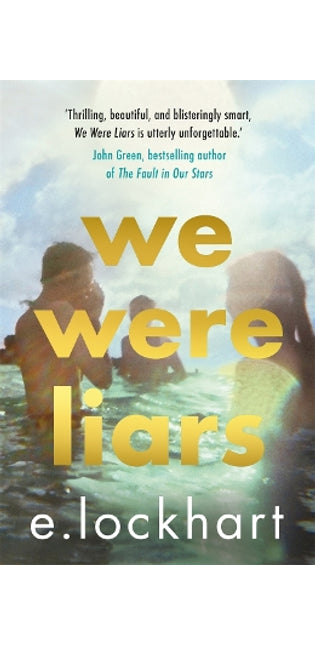
We Were Liars
The TikTok phenomenon and #1 New York Times bestseller.A beautiful and distinguished family.A private island.A brilliant, damaged girl; a passionate, political boy.A group of four friends-the Liars-whose friendship turns destructive.A revolution. An accident. A secret.Lies upon lies.True love.The truth.We Were Liars is a modern, sophisticated suspense novel from New York Times bestselling author, National Book Award finalist, and Printz Award honouree E. Lockhart. Read it.And if anyone asks you how it ends, just LIE.Don't miss FAMILY OF LIARS, the thrilling prequel to We Were Liars - out now!
R 290.00

Items we need to order for you
Your Digital Afterlives
Digitalism is a philosophical strategy that uses new computational ways of thinking to develop naturalistic but meaningful ways of thinking about bodies, souls, universes, gods, and life after death. Your Digital Afterlives examines four recently developed and digitally inspired theories of life after death.
R 1,552.25
Your Digital Afterlives
Digitalism is a philosophical strategy that uses new computational ways of thinking to develop naturalistic but meaningful ways of thinking about bodies, souls, universes, gods, and life after death. Your Digital Afterlives examines four recently developed and digitally inspired theories of life after death.
R 1,551.22
R 420.55
R 549.03
Holocaust and the Germanization of Ukraine
The German invasion of the Soviet Union during the Second World War was central to Nazi plans for territorial expansion and genocidal demographic revolution. To create 'living space', Nazi Germany pursued two policies. The first was the systematic murder of millions of Jews, Slavs, Roma, and other groups that the Nazis found undesirable on racial, religious, ethnic, ideological, hereditary, or behavioral grounds. It also pursued a parallel, albeit smaller, program to mobilize supposedly Germanic residents of Eastern Europe and the Soviet Union - so-called Volksdeutsche or ethnic Germans - as the vanguard of German expansion. This study recovers the intersection of these two projects in Transnistria, a portion of southern Ukraine that, because of its numerous Volksdeutsche communities, became an epicenter of both Nazi Volksdeutsche policy and the Holocaust in conquered Soviet territory, ultimately asking why local residents, whom German authorities identified as Volksdeutsche, participated in the Holocaust with apparent enthusiasm.
R 4,847.43
Believing in Dawkins
Dawkin's militant atheism is well known; his profound faith less well known In this book, atheist philosopher Eric Steinhart explores the spiritual dimensions of Richard Dawkins’ books, which are shown to encompass:· the meaning and purpose of life· an appreciation of Platonic beauty and truth· a deep belief in the rationality of the universe· an aversion to both scientism and nihilism As an atheist, Dawkins strives to develop a scientific alternative to theism, and while he declares that science is not a religion, he also proclaims it to be a spiritual enterprise. His books are filled with fragmentary sketches of this ‘spiritual atheism’, resembling a great unfinished cathedral. This book systematises and completes Dawkins’ arguments and reveals their deep roots in Stoicism and Platonism. Expanding on Dawkins’ ideas, Steinhart shows how atheists can develop powerful ethical principles, compelling systems of symbols and images, and meaningful personal and social practices. Believing in Dawkins is a rigorous and potent entreaty for the use of science and reason to support spiritually rich and optimistic ways of thinking and living.
R 1,239.61
Logic of Metaphor
1. Metaphors and Logic Metaphors are among the most vigorous offspring of the creative mind; but their vitality springs from the fact that they are logical organisms in the ecology of l- guage. I aim to use logical techniques to analyze the meanings of metaphors. My goal here is to show how contemporary formal semantics can be extended to handle metaphorical utterances. What distinguishes this work is that it focuses intensely on the logical aspects of metaphors. I stress the role of logic in the generation and int- pretation of metaphors. While I don't presuppose any formal training in logic, some familiarity with philosophical logic (the propositional calculus and the predicate c- culus) is helpful. Since my theory makes great use of the notion of structure, I refer to it as the structural theory of m etaphor (STM). STM is a semant ic theory of m etaphor : if STM is correct, then metaphors are cognitively meaningful and are n- trivially logically linked with truth. I aim to extend possible worlds semantics to handle metaphors. I'll argue that some sentences in natural languages like English have multiple meanings: "Juliet is the sun" has (at least) two meanings: the literal meaning "(Juliet is the sunkIT" and the metaphorical meaning "(Juliet is the sun)MET". Each meaning is a function from (possible) worlds to truth-values. I deny that these functions are identical; I deny that the metaphorical function is necessarily false or necessarily true.
R 3,032.90
R 1,255.76
R 886.23
R 821.00
Holocaust and the Germanization of Ukraine
The German invasion of the Soviet Union during the Second World War was central to Nazi plans for territorial expansion and genocidal demographic revolution. To create 'living space', Nazi Germany pursued two policies. The first was the systematic murder of millions of Jews, Slavs, Roma, and other groups that the Nazis found undesirable on racial, religious, ethnic, ideological, hereditary, or behavioral grounds. It also pursued a parallel, albeit smaller, program to mobilize supposedly Germanic residents of Eastern Europe and the Soviet Union - so-called Volksdeutsche or ethnic Germans - as the vanguard of German expansion. This study recovers the intersection of these two projects in Transnistria, a portion of southern Ukraine that, because of its numerous Volksdeutsche communities, became an epicenter of both Nazi Volksdeutsche policy and the Holocaust in conquered Soviet territory, ultimately asking why local residents, whom German authorities identified as Volksdeutsche, participated in the Holocaust with apparent enthusiasm.
R 1,759.24
Black Poachers, White Hunters
For centuries, Kenya's game-laden plains and forests were the rewarding hunting grounds of her native African population. Black Poachers, White Hunters traces the history of hunting there in the colonial era, describing the British attempt to impose the practices and values of nineteenth-century European aristocratic hunts. This both created and enforced an image of African inferiority and subordination. Ultimately conservationists came to claim sovereignty over African wildlife, completing the transformation of indigenous hunters into criminal poachers and seeking to eliminate them altogether from the "sportsman's paradise" of Kenya.ABOUT THE AUTHOR---Edward I. Steinhart is an associate professor of history at Texas Tech University, Lubbock.
R 955.00
R 344.12
R 594.67
R 737.00
R 597.02
R 1,850.03
R 1,247.68
Atheistic Platonism
Atheistic Platonism is an alternative to both theism and nihilistic atheism. It shows how any jobs allegedly done by God are better done by impersonal Platonic objects. Without Platonic objects, atheism degenerates into an illogical nihilism. Atheistic Platonism instead provides reality with foundations that are eternal, necessary, rational, beautiful, and utterly mindless. It argues for a plenitude of mathematical objects, and an infinite plurality of possible universes. It provides mindless rational grounds for objective values, and for objective moral laws for the persons who evolve in universes. It defines a meaningful way of life, which facilitates self-improvement. Atheistic Platonists argue for computational theories of life after death. Atheistic Platonism includes a rich system of spiritual symbols. It values transformational practices and ecstatic experiences. Where atheisms based on materialism fail, atheisms based on Platonism succeed.
R 5,425.66
Logic of Metaphor
1. Metaphors and Logic Metaphors are among the most vigorous offspring of the creative mind; but their vitality springs from the fact that they are logical organisms in the ecology of l- guage. I aim to use logical techniques to analyze the meanings of metaphors. My goal here is to show how contemporary formal semantics can be extended to handle metaphorical utterances. What distinguishes this work is that it focuses intensely on the logical aspects of metaphors. I stress the role of logic in the generation and int- pretation of metaphors. While I don't presuppose any formal training in logic, some familiarity with philosophical logic (the propositional calculus and the predicate c- culus) is helpful. Since my theory makes great use of the notion of structure, I refer to it as the structural theory of m etaphor (STM). STM is a semant ic theory of m etaphor : if STM is correct, then metaphors are cognitively meaningful and are n- trivially logically linked with truth. I aim to extend possible worlds semantics to handle metaphors. I'll argue that some sentences in natural languages like English have multiple meanings: "Juliet is the sun" has (at least) two meanings: the literal meaning "(Juliet is the sunkIT" and the metaphorical meaning "(Juliet is the sun)MET". Each meaning is a function from (possible) worlds to truth-values. I deny that these functions are identical; I deny that the metaphorical function is necessarily false or necessarily true.
R 3,032.01
Atheistic Platonism
Atheistic Platonism is an alternative to both theism and nihilistic atheism. It shows how any jobs allegedly done by God are better done by impersonal Platonic objects. Without Platonic objects, atheism degenerates into an illogical nihilism. Atheistic Platonism instead provides reality with foundations that are eternal, necessary, rational, beautiful, and utterly mindless. It argues for a plenitude of mathematical objects, and an infinite plurality of possible universes. It provides mindless rational grounds for objective values, and for objective moral laws for the persons who evolve in universes. It defines a meaningful way of life, which facilitates self-improvement. Atheistic Platonists argue for computational theories of life after death. Atheistic Platonism includes a rich system of spiritual symbols. It values transformational practices and ecstatic experiences. Where atheisms based on materialism fail, atheisms based on Platonism succeed.
R 5,426.56
Conflict and Collaboration
Comic elements in Shakespeare's tragedies have often been noted, but while most critics have tended to concentrate on humorous interludes or on a single play, Susan Snyder seeks a more comprehensive understanding of how Shakespeare used the conventions, structures, and assumptions of comedy in his tragic writing. She argues that Shakespeare's early mastery of romantic comedy deeply influenced his tragedies both in dramaturgy and in the expression and development of his tragic vision. From this perspective she sheds new light on Romeo and Juliet, Hamlet, Othello, and King Lear.The author shows Shakespeare's tragic vision evolving as he moves through three possibilities: comedy and tragedy functioning first as polar opposites, later as two sides of the same coin, and finally as two elements in a single compound.In the four plays examined here, Professor Snyder finds that traditional comic structures and assumptions operate in several ways to shape the tragedy: they set up expectations which when proven false reinforce the movement into tragic inevitability; they underline tragic awareness by a pointed irrelevance; they establish a point of departure for tragedy when comedy's happy assumptions reveal their paradoxical "shadow" side; and they become part of the tragedy itself wehen the comic elements threaten the tragic hero with insignificance and absurdity.Susan Snyder is Professor of English at Swarthmore College.Originally published in 1978.The Princeton Legacy Library uses the latest print-on-demand technology to again make available previously out-of-print books from the distinguished backlist of Princeton University Press. These editions preserve the original texts of these important books while presenting them in durable paperback and hardcover editions. The goal of the Princeton Legacy Library is to vastly increase access to the rich scholarly heritage found in the thousands of books published by Princeton University Press since its founding in 1905.
R 2,341.90
Conflict and Collaboration
Comic elements in Shakespeare's tragedies have often been noted, but while most critics have tended to concentrate on humorous interludes or on a single play, Susan Snyder seeks a more comprehensive understanding of how Shakespeare used the conventions, structures, and assumptions of comedy in his tragic writing. She argues that Shakespeare's early mastery of romantic comedy deeply influenced his tragedies both in dramaturgy and in the expression and development of his tragic vision. From this perspective she sheds new light on Romeo and Juliet, Hamlet, Othello, and King Lear.The author shows Shakespeare's tragic vision evolving as he moves through three possibilities: comedy and tragedy functioning first as polar opposites, later as two sides of the same coin, and finally as two elements in a single compound.In the four plays examined here, Professor Snyder finds that traditional comic structures and assumptions operate in several ways to shape the tragedy: they set up expectations which when proven false reinforce the movement into tragic inevitability; they underline tragic awareness by a pointed irrelevance; they establish a point of departure for tragedy when comedy's happy assumptions reveal their paradoxical "shadow" side; and they become part of the tragedy itself wehen the comic elements threaten the tragic hero with insignificance and absurdity.Susan Snyder is Professor of English at Swarthmore College.Originally published in 1978.The Princeton Legacy Library uses the latest print-on-demand technology to again make available previously out-of-print books from the distinguished backlist of Princeton University Press. These editions preserve the original texts of these important books while presenting them in durable paperback and hardcover editions. The goal of the Princeton Legacy Library is to vastly increase access to the rich scholarly heritage found in the thousands of books published by Princeton University Press since its founding in 1905.
R 6,112.58
Runaway Hollywood
After World War II, as cultural and industry changes were reshaping Hollywood, movie studios shifted some production activities overseas, capitalizing on frozen foreign earnings, cheap labor, and appealing locations. Hollywood unions called the phenomenon “runaway” production to underscore the outsourcing of employment opportunities. Examining this period of transition from the late 1940s to the early 1960s, Runaway Hollywood shows how film companies exported production around the world and the effect this conversion had on industry practices and visual style. In this fascinating account, Daniel Steinhart uses an array of historical materials to trace the industry’s creation of a more international production operation that merged filmmaking practices from Hollywood and abroad to produce movies with a greater global scope.
R 2,754.00
R 801.00
Runaway Hollywood
After World War II, as cultural and industry changes were reshaping Hollywood, movie studios shifted some production activities overseas, capitalizing on frozen foreign earnings, cheap labor, and appealing locations. Hollywood unions called the phenomenon “runaway” production to underscore the outsourcing of employment opportunities. Examining this period of transition from the late 1940s to the early 1960s, Runaway Hollywood shows how film companies exported production around the world and the effect this conversion had on industry practices and visual style. In this fascinating account, Daniel Steinhart uses an array of historical materials to trace the industry’s creation of a more international production operation that merged filmmaking practices from Hollywood and abroad to produce movies with a greater global scope.
R 868.00
R 938.75
R 833.00
R 496.93
R 600.00
R 337.00
R 451.00
R 2,053.00
R 301.00
R 875.00
E. M. Stein Lectures on Hardy Spaces
The book The E. M. Stein Lectures on Hardy Spaces is based on a graduate course on real variable Hardy spaces which was given by E.M. Stein at Princeton University in the academic year 1973-1974. Stein, along with C. Fefferman and G. Weiss, pioneered this subject area, removing the theory of Hardy spaces from its traditional dependence on complex variables, and to reveal its real-variable underpinnings.This book is based on Steven G. Krantz’s notes from the course given by Stein. The text builds on Fefferman's theorem that BMO is the dual of the Hardy space. Using maximal functions, singular integrals, and related ideas, Stein offers many new characterizations of the Hardy spaces. The result is a rich tapestry of ideas that develops the theory of singular integrals to a new level. The final chapter describes the major developments since 1974.This monograph is of broad interest to graduate students and researchers in mathematical analysis. Prerequisites for the book include a solid understanding of real variable theory and complex variable theory. A basic knowledge of functional analysis would also be useful.
R 2,740.33
R 786.00
R 769.00
R 1,357.15