Search results for "Gardner Read"
Items in stock - 4 working days delivery time

Rule Breaker Investing
'A delight to read, easy to understand, and packed with wisdom.' —Morgan Housel, bestselling author, The Psychology of Money'One of the very best books on investing.' —John Mackey, Former CEO, Whole Foods Market'Time-tested habits to make wise, safe investments.' —Arthur C. Brooks, #1 New York Times bestselling authorWant to know the real secret to investing success?It’s not 'buy low, sell high,' picking 'undervalued' stocks, or rebalancing winners ... just as they start to win big. Those are old rules, often repeated – and often wrong.The secret is to break those rules!For over thirty years, David Gardner, the Motley Fool’s Co-Founder and Chief Rule Breaker, has led millions of investors worldwide to market-beating returns through unconventional choices. His greatest stock picks have helped investors make 100+ times their money on companies including Amazon.com, Starbucks, Nvidia, Netflix, Booking Holdings, MercadoLibre, and Tesla. They look like obvious winners today, but to truly win big, you have to spot them before they're obvious.Now, for the first time, David shares his complete playbook, giving you everything you need to apply his proven process for yourself.Over eighteen engaging, practical chapters, you’ll discover:How to adopt winning investing habits and behaviours.How to spot the best stocks of tomorrow, today.How to build and manage a purpose-driven portfolio that reflects your best vision for our future.David’s core message is clear: Everyone is an investor. With Rule Breaker Investing, you’ll gain the tools, insights, and confidence to invest smarter, happier, and richer.Stop following the market. Start breaking the rules – and lead the way. Your financial future begins here.
R 409.00

Items we need to order for you
Gardner Read
Drawing on primary documents as well as interviews and letters, the authors have created a fascinating portrait of one of America's most distinguished and prolific composers whose creative output spans more than half a century. With its well organized, carefully annotated and indexed bibliography, the book is not only a pleasure to read, but a valuable research tool. Read's notable accomplishments include an extensive catalog of 150 opus numbers that run the gamut of instrumental combinations and musical genres, plus nine scholarly books dealing with various aspects of notation, orchestral devices, and instrumental techniques.The biography describes Read's family background, his early years growing up in Evanston, Illinois, his high school education, his years at the Eastman School of Music, his Cromwell fellowship to Europe, and his marriage to accomplished teacher/pianist, Margaret Vail Payne. Major events are highlighted during his years at St. Louis, Kansas City, Cleveland, and, finally, Boston. Interlochen, Tanglewood, the MacDowell Colony, the Huntington Hartford Foundation, as well as official visits to Mexico, are explored in terms of the role they played in the creative life of the composer. A major portion of the biography is devoted to Read's opera, ^IVillon^R. Readers will be interested in the completely annotated bibliography, which includes a complete listing of works, performances, reviews, discography, and literary writings. Appendixes include classified lists of instrumentation, commissions, awards, honors, positions, text sources, dedications, and manuscript locations.
R 2,207.00
Pictographic Score Notation
This text provides the first comprehensive examination of pictographic notation. Pictographic musical notation represents the relevant instruments themselves rendered visually rather than verbally. Used most extensively in contemporary publications between the 1950s and 1980s, its popularity has waned in recent years. This expertly researched work displays the resourcefulness and inventiveness of 20th century orchestrators.Providing a detailed examination of pictographic score notation, this unique book passes over 60 years of contemporary composition and score publications. Divided into three sections, this work describes instrumental pictographs, stage diagrams, and pictographic performance directives. In addition to the thoroughly researched information and extensive technique illustrations, commentary on individual examples and frequent cross-referencing of related examples, differentiate this work from other journal articles and notation texts.
R 2,207.00
Modern Rhythmic Notation
Twentieth-century music has significantly advanced the role of rhythm. The many variants of rhythmic notation, standard and experimental alike, encountered in contemporary music frequently demand explanation and interpretation. This book catalogs and clarifies the numerous ways of notating syncopation and alternative standard rhythmic figures, new time signatures, irrational rhythmic groupings within regular and irregular meters, experimental metrical concepts and techniques, analogs, and, finally, polymeters. Read compares traditional and present-day methods of delineating the same musical expressions, from fairly simple combinations to extremely complicated patterns.
R 1,176.00
Compendium of Modern Instrumental Techniques
An important characteristic of contemporary art music has been the use of conventional instruments in unconventional ways, achieving effects undreamed of or thought impossible in the early twentieth century. This compendium codifies these techniques, explains their production and effects, cites representative scores, and provides numerous example from an international selection of composers. Part One considers techniques and procedures that apply to all instruments; Part Two takes up idiomatic techniques with specific instruments in all orchestral categories. This monumental survey is essential for any music library or serious musician.An important characteristic of contemporary art music has been the use of conventional instruments in unconventional ways, achieving effects undreamed of or thought impossible in the early twentieth century. Yet many of these techniques remain poorly understood with respect to both the physical procedures involved and the results in sound output. This compendium codifies these techniques, explains their production in terms of idiomatic peculiarity and limitations, and cites representative scores in which the new devices form an integral part of the composer's sonoric concepts. Citations and numerous printed examples are taken from an international selection of works by the most advanced and significant composers. Part One considers techniques and procedures that, with only slight modification, apply to all instruments: extended ranges, muting, glissandi, harmonics, percussive effects, microtones, amplification, and extramusical devices. Part Two is devoted to idiomatic techniques with specific instruments in the categories of woodwinds and brasses, percussion, harp and other plucked instruments, keyboard instruments, and strings. While demonstrating recent and radical innovations, references are made to historical beginnings of such devices in our classical music heritage.An earlier version of this volume, Contemporary Instrumental Techniques (1976), was widely acclaimed by musicians and educators, recognized as a significant achievement in cataloging and organization and as an invaluable reference tool. Now extensively expanded, with additional techniques, new and revised explanations, and hundreds of recent citations and examples, this monumental survey is essential for any music library or serious musician. An indispensable guide for composers and orchestrators, it will also be valuable as a sourcebook for performers and teachers and as a textbook for courses in composition.
R 3,237.00
R 5,495.00
R 495.00
R 422.61
20th-Century Microtonal Notation
No other book has covered the subject of 20th-century microtonal notation in such depth as this comprehensive guide book. 20th-Century Microtonal Notation surveys the many attempts to notate various microtonal divisions of the octave in our western music. The concerts, festivals, and journals devoted exclusively to microtonal composition evince the widespread interest and involvement in microtonal music today. Activity in the specialized field of microtonalism is also supported by the design and construction of a number of novel instruments capable of producing various fractional pitches in the octave, including the digital synthesizer. However, despite the developing interest and activity, no consensus has yet been reached about the clearest and most logical notation for each degree of microtonal division of the half and whole step. This lack of an essential consensus on a suitable, standardized notation system has, in some cases, hampered the complete integration of microtonalism into western music.Bringing considerable expertise to bear, Read divides the volume into five sections, each addressing the notation of specific microtones. This volume is a comprehensive repository of the many attempts to find a logical notation for all degrees of microtonality. It represents an invaluable resource to anyone interested in studying the history and development of music notation, or in evaluating the many forms of microtonal notation in terms of their potential for contemporary notation. 20th-Century Microtonal Notation will be an important addition to the library collections of colleges and universities and will be of interest to composers, theorists, performers, and musicologists.
R 3,384.00
R 1,432.00
New Directions
New Directions Second edition is a thematic reading and writing-skills text for advanced learners that bridges the gap between ESL and college writing courses. New Directions is a thematic reading/writing book aimed at the most advanced learners. It prepares students for the rigors of college-level writing by having them read long, challenging, authentic readings. This emphasis on multiple longer readings as a precursor to writing gives New Directions its distinctive character. The book also contains a handbook reference section on the essentials of writing.
R 1,681.00
R 868.67
R 763.00
R 958.89
R 751.40
R 353.00
R 1,288.56
R 1,098.59
R 418.78
R 489.00
R 397.00
R 885.36
R 580.00
R 947.00
R 458.00
Reviewing the South
The American South received increased attention from national commentators during the interwar era. Beginning in the 1920s, the proliferation of daily book columns and Sunday book supplements in newspapers reflected a growing audience of educated readers and its demand for books and book reviews. This period of intensified scrutiny coincided with a boom in the publishing industry, which, in turn, encouraged newspapers to pay greater attention to the world of books. Reviewing the South shows how northern critics were as much involved in the Southern Literary Renaissance as Southern authors and critics. Southern writing, Gardner argues, served as a litmus to gauge Southern exceptionalism. For critics and their readers, nothing less than the region's ability to contribute to the vibrancy and growth of the nation was at stake.
R 2,580.62
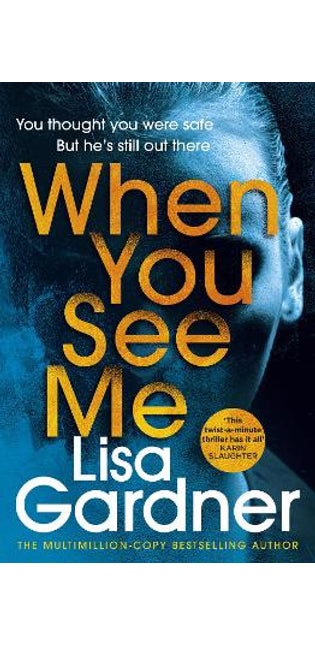
When You See Me
FROM THE INTERNATIONAL #1 BESTSELLING AUTHOR'This twist-a-minute thriller has it all.' KARIN SLAUGHTER'A twisty-turny psycho-thriller with a plot and characters that won't let you go. Lisa Gardner is at the top of her game!' KATHY REICHS'When You See Me is another rocket-fuel-propelled thriller from Lisa Gardner.' GREGG HURWITZA body is found in the hills - but the truth still lies buried...In a small town in the Deep South, Flora Dane is part of a task force committed to hunting down every last trace of notorious serial kidnapper Jacob Ness. As his last victim, imprisoned by Ness in a small box for over a year, she knew him better than most. Even after his death, his evil still lingers.But this is the kind of town that doesn't take kindly to strangers asking questions.The kind of town where dark secrets lurk just beneath the surface.The kind of town she might not leave alive.Featuring Detective D.D. Warren and FBI Special Agent Kimberley QuincyReaders love WHEN YOU SEE ME:***** 'This is one of those books I want to tell everyone to read. Just say READ IT. End of Story.'***** 'I have never ever read anything so beautiful.'***** 'A fantastic nail biting read, you are always in safe hands when it comes to Lisa Gardner.'***** 'An outstanding crime detective story that affirms Lisa Gardner as one of the best thriller writers of today.***** 'A Complex, Compelling and Taut Mystery/Thriller.'
R 309.00
R 489.00
R 588.00
Intelligence Reframed
Harvard psychologist Howard Gardner has been acclaimed as the most influential educational theorist since John Dewey. His ideas about intelligence and creativity - explicated in such bestselling books as Frames of Mind and Multiple Intelligences (over 200,000 copies in print combined) - have revolutionized our thinking.In his ground-breaking 1983 book Frames of Mind , Howard Gardner first introduced the theory of multiple intelligences, which posits that intelligence is more than a single property of the human mind. That theory has become widely accepted as one of the seminal ideas of the twentieth century and continues to attract attention all over the world.Now in Intelligence Reframed , Gardner provides a much-needed report on the theory, its evolution and revisions. He offers practical guidance on the educational uses of the theory and responds to the critiques leveled against him. He also introduces two new intelligences (existential intelligence and naturalist intelligence) and argues that the concept of intelligence should be broadened, but not so absurdly that it includes every human virtue and value. Ultimately, argues Gardner, possessing a basic set of seven or eight intelligences is not only a unique trademark of the human species, but also perhaps even a working definition of the species. Gardner also offers provocative ideas about creativity, leadership, and moral excellence, and speculates about the relationship between multiple intelligences and the world of work in the future.
R 648.00
R 458.00
From Morality to Law & Back Again: Liber Amicorum for John Gardner
John Gardner was one of the most prolific, widely read, and influential scholars working in philosophy of law. This book celebrates, explores, and develops themes of his work during his sixteen years as Professor of Jurisprudence at University of Oxford. Written by a team of contributors whose own work has been influenced by Gardner's and with whom he has worked closely, this book engages with many of the concepts, themes, and issues that were central to his philosophical work and outlook. It expands on his arguments, offers original rebuttals to some, and draws connections with parallel and emerging fields that have been influenced by his work. This is the first book-length treatment covering the entire range of his scholarship, and will serveas a handbook of sorts, for those scholars seeking to engage Gardner's work and make connections across the wide range of topics on which he has written.In particular, the volume comprises discussions of duties to try and succeed in relation to Hume's maxim that 'ought implies can'; the role of continuity, conservatism, and corrective justice in private law, the interrelations between wrongdoing, blame, punishment, and the justification of criminal law, justifications, excuses, and responsibility, the distinctiveness of the wrongs of rape and discrimination, as well as general jurisprudence and how it may, or may not, illuminate the questionsof normativity and the nature of constitutions. The volume also engages with further concepts and questions addressed through the prism of Gardner's work, include Indigenous rights and law, Equity, corporate responsibility and the possibility of state crimes, and the nature, structure, andphenomenology of virtue.Together, the papers collected in this volume pay homage to the breadth of John Gardner's legal philosophy. The conversations begun, or continued, in this volume will continue to inform the contributors' future work, and thus increase the likelihood that John's body of work will have an ever greater influence on the future of legal philosophy.
R 4,834.00
In Light of the Spirit
A collection of inspiring essays on Waldorf education from John Gardner, a respected voice in the movement.While many of Gardner's insights are already well known in his established publications, In Light of the Spirit brings together his lesser-known essays. The essays are arranged across four topics: Societal Reform through Education, Pedagogical Perspectives, Waldorf Education in Practice and Spirit in Education. Covering a broad range of areas from religion and science in the Waldorf school to teaching history from mythic to modern times, the art of teaching from the heart, and education and the environmental crisis, this is a rich and valuable resource for Waldorf teachers.
R 711.00
One Step Too Far
YOUR NEXT OBSESSION . . .* SUNDAY TIMES BESTSELLING NOVEL ** MULTI-MILLION COPY BESTSELLING AUTHOR ** TV SERIES OPTIONED! HILARY SWANK TO STAR AND CO-PRODUCE *'Propulsive, adrenaline-fuelled, terrifyingly real!' CLARE MACKINTOSH'Will have you flipping pages at breakneck speed.' LINWOOD BARCLAY'This book exceeds even Gardner's high standards.' DAILY MAILFive men head into the woods for a bachelor party weekend. Only four return. If he never left the woods, where did he go?A young man disappears during a stag weekend in the woods. Years later, he's still missing.But his friends who were with him that day are still searching for him. Still hunting for answers.They hike deep into the wilderness.With them is missing person specialist Frankie Elkin.What they don't know is that they are putting their own lives in terrifying danger, and may not come back alive ...'Terrifying, primal, and very, very tense' KIRKUS STARRED REVIEW'One of crime-fiction's most intriguing new sleuths' BOOKLIST'Beyond brilliant . . . ingenious, intense, edgy dialogue' LIBRARY JOURNAL'Everything you want in a crime thriller' FROST MAGAZINE'Sinister . . . [a] tense, crackling read' PEOPLEREADERS LOVE ONE STEP TOO FAR ...***** 'WOW! What a thoroughly taut, tense, and engaging mystery.'***** 'This is a riveting crime read, with oodles of tension and suspense.'***** 'I honestly couldn't believe how much I came to love the characters in this story.'***** ''The story really tugged at my heartstrings and now I can't wait to join Frankie on her next search.'***** 'This is first-class entertainment for thriller lovers, and I highly recommend reading this book.'PRAISE FOR LISA GARDNER ...'No one writes a more page-turning, gut-wrenching, edgy thriller than Lisa Gardner' Tess Gerritsen'Lisa Gardner's fast-paced and exciting novels twist when you expect a turn and turn when you expect a twist. I cannot recommend her more.' Karin Slaughter'For years Lisa Gardner has been one of the best in the business.' Harlan Coben'No one owns this corner of the crime genre the way Lisa Gardner does' Lee Child'Lisa Gardner is at the top of her game' Kathy Reichs
R 278.00
R 352.00
R 332.00
R 333.00
R 297.00
R 392.85
Gardner's Whys & Wherefores
Martin Gardner's legacy in mathematics and science is well established, and never is he so at home than when picking apart paranormal claims and pseudoscience. Yet like Isaac Asimov, Gardner's interests encompass a wide range of views and arguments. His wit and encyclopedic knowledge have made him a sought-after contributor to Discover, Nature, Psychology Today, and The New York Review of Books.A delightful collection of his best essays, Gardner's Whys & Wherefores includes articles on the puzzles in James Joyce's Ulysses and on the fantasies of Ray Bradbury, Arthur C. Clarke, Lord Dunsany, Gilbert Chesterton, and H.G. Wells. Gardner expresses strong opinions about the "anthropic principle," computer games capable of discovering scientific laws, the philosophy of W.V. Quine, Marvin Minsky's view of the workings of the mind, the idiosyncrasies of social theorist Allan Bloom, the reality of unknown digits that "sleep" in pi, and whether physicists are really on the verge of discovering Everything.A delightful bit of publishing history is a hilarious selection from The New York Review of Books in which Gardner, writing under a pseudonym, blasts his own book, The Ways of a Philosophical Scrivener. Exciting, provocative, and enduring, Gardner's Whys & Wherefores is a distinct pleasure.
R 678.00
R 547.00
R 432.00
R 457.00