



Search results for "Jane Collopy"
Items in stock - 4 working days delivery time

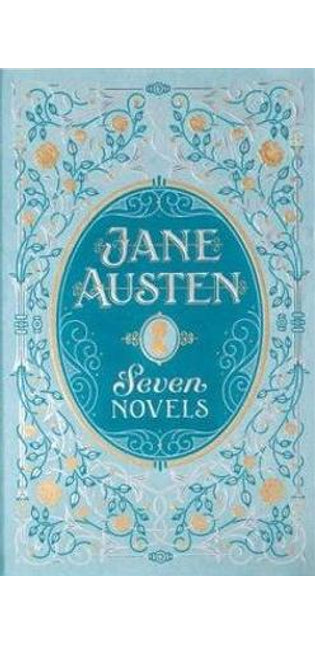
Jane Austen (Barnes & Noble Collectible Classics: Omnibus Edition)
In a publishing career that spanned less than a decade, Jane Austen revolutionised the literary romance, using it as a stage from which to address issues of gender politics and class-consciousness rarely expressed in her day. The novels included in this beautiful leatherbound collection - Sense and Sensibility, Pride and Prejudice, Mansfield Park, Emma, Northanger Abbey, Persuasion, and Lady Susan - represent all of Austen's mature work as a novelist, and provide the reader with an introduction to the world she and her memorable characters inhabited.
R 905.00
Items we need to order for you
R 517.89
R 465.00
Deaths of the Author
For thirty years the "death of the author" has been a familiar poststructuralist slogan in literary theory, widely understood and much debated as a dismissal of the author, a declaration of the writer's irrelevance to the readers experience. In this concise book, Jane Gallop revitalizes this hackneyed concept by considering not only the abstract theoretical death of the author but also the writer's literal death, as well as other authorial "deaths" such as obsolescence. Through bravura close readings of the influential literary theorists Roland Barthes, Jacques Derrida, Eve Kosofsky Sedgwick, and Gayatri Chakravorty Spivak, she shows that the death of the author is best understood as a relation to temporality, not only for the reader but especially for the writer. Gallop does not just approach the death of the author from the reader's perspective; she also reflects at length on how impending death haunts the writer. By connecting an author's theoretical, literal, and metaphoric deaths, she enables us to take a fuller measure of the moving and unsettling effects of the deaths of the author on readers and writers, and on reading and writing.
R 1,046.23
R 365.00
R 365.00
R 275.00
R 611.00
R 342.00
Thinking Through the Body
From one of our most outspoken feminist critics, this collection explores various ways in which the body can be rethought of as a site of knowledge rather than as a medium to move beyond or dominate. Moving between a theoretical and confessional stance, Gallop explores Sade's relation to mothers both in his novels and his life; Barthe's The Pleasure of the Text; Freud's work, read not as a psychological text but as a literary endeavor and from a woman's point of view; and Luce Irigarary's famous This Sex Which Is Not One.
R 1,001.00
R 214.00
R 336.00
R 184.00
R 4,213.00
Polemic
These new essays by leading scholars examine some famous and less well-known instances of polemical encounters. The essays are enhanced by an interview with Gayatri Spivak, specially conducted by Jane Gallop for this volume Historically rigorous, theoretically astute, and sometimes wickedly funny, Polemic makes criticism a critical issue.
R 9,365.31
R 458.00
R 426.07
Intervention of Philology
This book examines the interplay of history, textuality, dramaturgy, and politics in the school dramas of Daniel Casper von Lohenstein (1635-1683). The plays are based on well-known episodes from classical Roman history and were staged in Breslau by students at two all-male humanistic gymnasia. Organized exclusively around stories of such female protagonists as Agrippina, Cleopatra, Epicharis, and Sophonisbe, these productions required that the young actors dress as women to play roles that routinely involved scenes of political intrigue, incest, seduction, torture, and threatened infanticide. In print these plays were accompanied by massive annotational apparatuses that delineate the contours of the learned universe of eastern central Europe in exacting detail.Newman's study sheds light on the ideological complexity of gender, politics, and learned culture in the early modern period as it emerges from these intriguing and often bizarre plays.
R 953.00
R 306.00
R 306.00
Reading Lacan
The influence of the French psychoanalyst Jacques Lacan has extended into nearly every field of the humanities and social sciences—from literature and film studies to anthropology and social work. yet Lacan's major text, Ecrits, continues to perplex and even baffle its readers. In Reading Lacan, Jane Gallop offers a novel approach to Lacan's work based on his own theories of language. Lacan locates truth in the letter rather than in the spirit-in the ways statements are expressed rather than in their intended meaning. Gallop here grapples with six of Lacan's essays from Ecrits: "The Seminar on 'The Purloined Letter,' " "The Mirror Stage," "The Freudian Thing,'' "The Agency of the Letter in the Unconscious,'' "The Signification of the Phallus," and "The Subversion of the Subject." While other commentators have chosen not to confront Lacan's notoriously problematic style in their discussions of his ideas, Gallop addresses herself directly to the problem and the practice of reading Lacan. She takes her direction from Lacan's view of subjectivity and offers a deeply personal, feminist reading of Ecrits. Concentrating on the relation of desire and interpretation, she opens up the rich implications of Lacan's thought, for psychoanalytic theory, for the act of reading, and for knowledge itself. Forceful and revealing, yet utterly candid about its own areas of uncertainty, Gallop's book will be indispensable to readers of Lacan and to scholars and students who have felt his impact.
R 1,823.00
R 457.00
Intersections
Four writers—the first, an eighteenth-century Frenchman whose works still retain their power to shock, scandalize, and instruct; the others, three twentieth-century Frenchmen, heirs and explicators of their earlier compatriot—form the central cast of characters of this literary-philosophical dialogue which seeks to transcend the barriers of time, space, and sexual identity imposed by traditional approaches to literature. Professor Gallop, acknowledging her debt to such writers as Friedrich Nietzsche and Roland Barthes, cites as the shaping principle of her work the central tenet of intertextuality—that a literary work is not a closed system which can be definitively characterized by reference either to its creator or to its beholder. Rather, reader, writer, and text meet, react, and interact in a performance of "polymorphous per-versity"—a performance which, Professor Gallop points out, finds a parodic analogue in the activities of Sade's distinguished libertines. Professor Gallop observes that Sade and the structuralists display a congruity of purpose, in that both take as their goal the destruction of the classical dichotomy, long enshrined at the heart of the humanist tradition, between the ideal and the material.Working from these peculiar conjunctions of theory, purpose, and enactment—and from a distinctly feminist point of view—Professor Gallop moves freely among the texts of her four subjects. She introduces Bataille's Sade to Blanchot’s Sade, relates Klossowski's Sade to Klossowski's Bataille, and, when necessary extricates Sade himself from the web of what has been written about him. She finds that each of the three later writers constructs his own "fiction," with Sade as chief character: Bataille, caught up in the idea of the "sovereign man," discovers the sovereign man in Sade; Blanchot, for whom the real action is the act of writing itself, describes a Sade confronting the horror of the loss of self in that act; while Klossowski creates several Sades, marking different moments in his intellectual itinerary: psychoanalytic, Catholic, Nietzschean.Professor Gallop demonstrates, however, that Sade is ultimately not appropriable—cannot, in effect, be consumed—and that, thus, an inversion occurs whereby Bataille, Blanchot, and Klossowski become extensions of Sade's characters, subsumed into the Sadian world. And she finds herself likewise a part of that world and her work "an ever reverberating extension of Sade's own writing."
R 1,832.00
R 583.71
R 617.00
Sandy Koufax
"The incomparable and mysterious Sandy Koufax is revealed.... This is an absorbing book, beautifully written." --Wall Street Journal "Leavy has hit it out of the park...A lot more than a biography. It's a consideration of how we create our heroes, and how this hero's self perception distinguishes him from nearly every other great athlete in living memory... a remarkably rich portrait." -- Time The instant New York Times bestseller about the baseball legend and famously reclusive Dodgers' pitcher Sandy Koufax, from award-winning former Washington Post sportswriter Jane Leavy. Sandy Koufax reveals, for the first time, what drove the three-time Cy Young award winner to the pinnacle of baseball and then--just as quickly--into self-imposed exile.
R 456.00
R 306.00
Reading Lacan
The influence of the French psychoanalyst Jacques Lacan has extended into nearly every field of the humanities and social sciences—from literature and film studies to anthropology and social work. yet Lacan's major text, Ecrits, continues to perplex and even baffle its readers. In Reading Lacan, Jane Gallop offers a novel approach to Lacan's work based on his own theories of language.Lacan locates truth in the letter rather than in the spirit-in the ways statements are expressed rather than in their intended meaning. Gallop here grapples with six of Lacan's essays from Ecrits: "The Seminar on 'The Purloined Letter,' " "The Mirror Stage," "The Freudian Thing,'' "The Agency of the Letter in the Unconscious,'' "The Signification of the Phallus," and "The Subversion of the Subject." While other commentators have chosen not to confront Lacan's notoriously problematic style in their discussions of his ideas, Gallop addresses herself directly to the problem and the practice of reading Lacan. She takes her direction from Lacan's view of subjectivity and offers a deeply personal, feminist reading of Ecrits. Concentrating on the relation of desire and interpretation, she opens up the rich implications of Lacan's thought, for psychoanalytic theory, for the act of reading, and for knowledge itself.Forceful and revealing, yet utterly candid about its own areas of uncertainty, Gallop's book will be indispensable to readers of Lacan and to scholars and students who have felt his impact.
R 1,176.00
Jane Campion
Throughout films and television series like The Piano, Bright Star, In the Cut and Top of the Lake, Jane Campion has constantly explored gender, subjectivity and narrative representation. In an intensive engagement with her cross-medium career, Bernadette Wegenstein examines how Campion gives a tangible and visible form to the female gaze in her exploration, deployment, and ultimately her subversion of highly formalized genres such as the period piece, the thriller, and the procedural drama. Keeping a strict focus on her directorial practice and specifically on the capacity of her cinematography to induce both empathy and estrangement, this vital new book shows how Campion is engaged in a permanent artistic and intuitive exposition of a profoundly feminist philosophical vision. Wegenstein’s work will be invaluable to scholars and students in gender and women’s studies, film studies and those on philosophy and film courses.
R 835.00
R 689.00
R 306.00
Feminist Accused of Sexual Harassment
Sexual harassment is an issue in which feminists are usually thought to be on the plaintiff’s side. But in 1993—amid considerable attention from the national academic community—Jane Gallop, a prominent feminist professor of literature, was accused of sexual harassment by two of her women graduate students. In Feminist Accused of Sexual Harassment, Gallop tells the story of how and why she was charged with sexual harassment and what resulted from the accusations. Weaving together memoir and theoretical reflections, Gallop uses her dramatic personal experience to offer a vivid analysis of current trends in sexual harassment policy and to pose difficult questions regarding teaching and sex, feminism and knowledge.Comparing “still new” feminism—as she first encountered it in the early 1970s—with the more established academic discipline that women’s studies has become, Gallop makes a case for the intertwining of learning and pleasure. Refusing to acquiesce to an imperative of silence that surrounds such issues, Gallop acknowledges—and describes—her experiences with the eroticism of learning and teaching. She argues that antiharassment activism has turned away from the feminism that created it and suggests that accusations of harassment are taking aim at the inherent sexuality of professional and pedagogic activity rather than indicting discrimination based on gender—that antiharassment has been transformed into a sensationalist campaign against sexuality itself.Feminist Accused of Sexual Harassment offers a direct and challenging perspective on the complex and charged issues surrounding the intersection of politics, sexuality, feminism, and power. Gallop’s story and her characteristically bold way of telling it will be compelling reading for anyone interested in these issues and particularly to anyone interested in the ways they pertain to the university.
R 959.16
R 458.00
R 1,315.00
R 683.00
R 1,073.00
Jane Campion
In Jane Campion: Cinema, Nation, Identity a diverse group of contributors challenge the view that Campion's body of work lacks coherence or unity to instead examine the important characteristics and themes that underlie it. Editors Hilary Radner, Alistair Fox, and Irène Bessière have compiled rich, original scholarship on Campion's oeuvre to probe issues previously neglected by scholars-like her debt to New Zealand sources and her personal views of family dynamics-and those that benefit from additional insight-such as her place in the feminist filmmaking tradition. This volume also investigates Campion's distinct cinematic style in light of these issues to examine the source of her enduring cross-cultural and international appeal.Contributors in the first section explore the creation of subjectivity and identity in Campion's films, which include well-known works like The Piano and Holy Smoke, to trace the unique perspectives of Campion's characters and Campion herself as director. In the second section, essays analyze Campion's close relationship with literature and argue that the singular vision in her literary adaptations stems from her New Zealand background and her personal mythology. Contributors in the third section argue that while Campion devotes considerable attention to the evocation of feminine internal space, she also uses the symbolic potential of her external physical locations to register what is taking place in the inner life of her characters and reflect their search for personal fulfillment. A final group of essays presents a variety of responses to Campion's films, demonstrating that Campion is a highly personal and idiosyncratic director who nonetheless manages to fascinate viewers across a broad cultural spectrum.Taken together, contributors in Jane Campion: Cinema, Nation, Identity present a compelling analysis of Campion's status as a leading female filmmaker with close attention to her distinctive cinematic style and particular mise-en-scène. The collective nature of this volume will appeal to students and teachers of film, literature, and gender studies, as well as fans of Campion's work.
R 1,089.00
R 611.70


-
, by Justine Stevens Giveaway Winners
Keep an eye on our social media pages for regular, fantastic giveaways! 2026 November TBC- October My Battlefield by Joyce Meyer- The Abundant Life: Speak...
