



Search results for "Muscle"
Items in stock - 4 working days delivery time

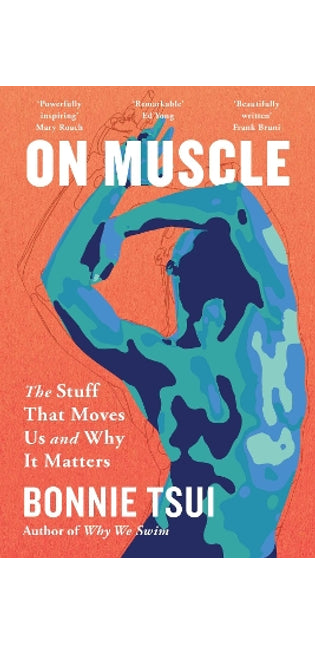
On Muscle
'Remarkable . . . A singular book about the true meanings of strength and flexibility, about our ability to define who we are and who we might be' Ed Yong, New York Times bestselling author of An Immense World and I Contain MultitudesFrom the bestselling author of Why We Swim comes a mind-expanding exploration of muscle that will change the way you think about how we move and why it matters.Cardiac, smooth, skeletal-these three different types of muscle in our bodies make our hearts beat; push food through our intestines, blood through our vessels, attach to our bones and help us move. Individually, they do different things. Collectively, they drive us through our days.Join athlete and writer Bonnie Tsui as she jumps headfirst into the intriguing world of muscle from the five angles of strength, form, action, flexibility and endurance. Tsui introduces us to the first female weightlifter to pick up the famed Scottish Dinnie Stones, then takes us on a 50-mile run through the Nevada desert that follows the path of escape from a Native boarding school, giving the concept of endurance new meaning. She travels to Oslo, where cutting-edge research reveals how muscles help us bounce back after injury and illness, an important aspect of longevity. She jumps into the action with a historic Double Dutch club in Washington, D.C., to explain anew what Charles Darwin meant by the brain-body connection.On Muscle is a powerful reminder that using our muscles promote longevity, joy, and, most important, the feeling that we can do anything.
R 430.00
Items we need to order for you
Muscle
Muscle tissue powers every heartbeat, blink, jog, jump and goosebump. It is the force behind the most critical bodily functions, including digestion and childbirth, as well as extreme feats of athleticism. We can mould our muscles with exercise and observe the results. In this lively, lucid book, orthopedic surgeon Roy A. Meals takes us on a wide-ranging journey through anatomy, biology, history and health to unlock the mysteries of our muscles. He breaks down the three different types of muscle—smooth, skeletal and cardiac—and explores major advancements in medicine and fitness, including cutting-edge gene-editing research and the science behind popular muscle conditioning strategies. Along the way, he offers insight into the changing aesthetic and cultural conception of muscle, from Michelangelo’s David to present-day bodybuilders, and shares fascinating examples of strange muscular maladies and their treatment. Brimming with fun facts and infectious enthusiasm, Muscle sheds light on the astonishing, essential tissue that moves us through life.
R 660.00
Muscle
Muscle tissue powers every heartbeat, blink, jog, jump and goosebump. It is the force behind the most critical bodily functions, including digestion and childbirth, as well as extreme feats of athleticism. We can mould our muscles with exercise and observe the results. In this lively, lucid book, orthopaedic surgeon Roy A. Meals takes us on a wide-ranging journey through anatomy, biology, history and health to unlock the mysteries of our muscles. He breaks down the three different types of muscle—smooth, skeletal and cardiac—and explores major advancements in medicine and fitness, including cutting-edge gene-editing research and the science behind popular muscle conditioning strategies. Along the way, he offers insight into the changing aesthetic and cultural conception of muscle, from Michelangelo’s David to present-day bodybuilders, and shares fascinating examples of strange muscular maladies and their treatment. Brimming with fun facts and infectious enthusiasm, Muscle sheds light on the astonishing, essential tissue that moves us through life.
R 411.00
R 611.00
R 336.00
R 558.82
Muscle
From skinny scholar to muscle-bound showman. “Easily the best memoir ever written about weight training, steroids and all” (Men’s Journal). When blue-blooded, storklike Samuel Wilson Fussell arrived in New York City fresh from the University of Oxford, the ethereal young graduate seemed like the last person on Earth who would be interested in bodybuilding. But he was intimidated by the dangers of the city—and decided to do something about it. At twenty-six, Fussell walked into the YMCA gym. Four solid years of intensive training, protein powders, and steroid injections later, he had gained eighty pounds of pure muscle and was competing for bodybuilding titles. And yet, with forearms like bowling pins and calves like watermelons, Fussell felt weaker than ever before. His punishing regimen of workouts, drugs, and diet had reduced him to near-infant-like helplessness and immobility, leaving him hungry, nauseated, and prone to outbursts of “ ’roid rage.” But he had come to succeed, and there was no backing down now. Alternately funny and fascinating, Muscle is the true story of one man’s obsession with the pursuit of perfection. With insight, wit, and refreshing candor, Fussell ushers readers into the wild world of juicers and gym rats who sacrifice their lives, minds, bodies, and souls to their dreams of glory in Southern California’s so-called iron mecca.
R 521.00
Skeletal Muscle Mechanics
Skeletal Muscle Mechanics: From Mechanisms to Function summarises the variety of approaches used by today's scientist to understand muscle function and the mechanisms of contraction. This book contains research by leading scientists from numerous fields using many different scientific techniques. Topics covered include: * Cellular and molecular mechanisms of skeletal muscle contraction * Historical perspective of muscle research * The newest developments in techniques for the determination of the mechanical properties of single cross-bridges * Theoretical modelling of muscle contraction and force production * Multifaceted approaches to determine the in vivo function of skeletal muscle This state-of-the-art account is written by internationally recognised authors and will be a valuable resource to researchers of biomechanics in sports science and exercise physiology. "I expect this book to be excellent and timely." Professor R. McNeill Alexander FRS, School of Biology, University of Leeds, UK
R 16,377.00
R 331.00
R 432.00
R 814.00
Skeletal Muscle
This volume is intended to cover research in the field of muscle morphology since publication of the previous edition by Haggquist in 1956. The development of new techniques, coupled with an intensified interest in muscle, has resulted in a vast literature which no single person could review, especially within the limitations of one volume. When I accepted the flattering offer to write a new edition, I quickly abandoned any hope of a comprehensive review. Instead, I tried to consider, within my limits, those lines of research which I believe to be important for the understanding of mammalian and ultimately human muscles under normal, experimental, and pathological conditions. It would be naive to suggest that muscle can be adequately described in purely morphologi cal aspects; I would characterize the results of my effort as "muscle as seen with the eyes of a morphologist". It gives me pleasure to acknowledge the help of several colleagues who read and commented on drafts of individual chapters: Dr. Brenda Eisenberg, Chicago; Dr. Else Nygaard, Copenhagen; Dr. Stefano Schiaffino, Padova; Dr. Michael Sjostrom, Umea; Dr. Lars~Erik Thornell, Umea. None of these individ uals can be held responsible for any error or obscurity that persists. Indeed, without their assistance there would have been more. I also thank those col leagues who allowed me to include their published and unpublished material; their names, and also those of the publishers who kindly granted copyright permission, are given in the individual figure captions.
R 3,220.18
R 971.39
R 1,038.00
Muscle Biophysics
Muscle contraction has been the focus of scientific investigation for more than two centuries, and major discoveries have changed the field over the years. Early in the twentieth century, Fenn (1924, 1923) showed that the total energy liberated during a contraction (heat + work) was increased when the muscle was allowed to shorten and perform work. The result implied that chemical reactions during contractions were load-dependent. The observation underlying the “Fenn effect” was taken to a greater extent when Hill (1938) published a pivotal study showing in details the relation between heat production and the amount of muscle shortening, providing investigators with the force-velocity relation for skeletal muscles. Subsequently, two papers paved the way for the current paradigm in the field of muscle contraction. Huxley and Niedergerke (1954), and Huxley and Hanson (1954) showed that the width of the A-bands did not change during muscle stretch or activation. Contraction, previously believed to be caused by shortening of muscle filaments, was associated with sliding of the thick and thin filaments. These studies were followed by the classic paper by Huxley (1957), in which he conceptualized for the first time the cross-bridge theory; filament sliding was driven by the cyclical interactions of myosin heads (cross-bridges) with actin. The original cross-bridge theory has been revised over the years but the basic features have remained mostly intact. It now influences studies performed with molecular motors responsible for tasks as diverse as muscle contraction, cell division and vesicle transport.
R 11,969.56
R 433.00
Muscle Biophysics
Muscle contraction has been the focus of scientific investigation for more than two centuries, and major discoveries have changed the field over the years. Early in the twentieth century, Fenn (1924, 1923) showed that the total energy liberated during a contraction (heat + work) was increased when the muscle was allowed to shorten and perform work. The result implied that chemical reactions during contractions were load-dependent. The observation underlying the “Fenn effect” was taken to a greater extent when Hill (1938) published a pivotal study showing in details the relation between heat production and the amount of muscle shortening, providing investigators with the force-velocity relation for skeletal muscles. Subsequently, two papers paved the way for the current paradigm in the field of muscle contraction. Huxley and Niedergerke (1954), and Huxley and Hanson (1954) showed that the width of the A-bands did not change during muscle stretch or activation. Contraction, previously believed to be caused by shortening of muscle filaments, was associated with sliding of the thick and thin filaments. These studies were followed by the classic paper by Huxley (1957), in which he conceptualized for the first time the cross-bridge theory; filament sliding was driven by the cyclical interactions of myosin heads (cross-bridges) with actin. The original cross-bridge theory has been revised over the years but the basic features have remained mostly intact. It now influences studies performed with molecular motors responsible for tasks as diverse as muscle contraction, cell division and vesicle transport.
R 9,260.75
R 915.00
R 661.00
R 359.00
R 580.00
R 304.00
R 519.00
R 610.00
R 4,274.00
R 977.00
R 304.00
R 305.00
Skeletal Muscle Physiology
This book provides a comprehensive overview of skeletal muscle structure, function, and regulation at the cellular and molecular levels. In addition, the book covers various topics, such as muscle contraction, energy metabolism, fatigue, adaptation, and plasticity. This book discusses skeletal muscle anatomy and histology and then covers muscle contraction's molecular and cellular mechanisms. Also, it includes an in-depth discussion of the sarcomere, the basic unit of muscle contraction, and the role of calcium in the process of muscle contraction.This book also explores the energy metabolism of skeletal muscle, including the role of ATP, glycogen, and fatty acids in providing energy for muscle contraction. Additionally, the book covers the mechanisms of fatigue, including peripheral and central factors contributing to muscle fatigue.Other topics covered include muscle adaptation to exercise, the molecular and cellular mechanisms of muscle hypertrophy and atrophy, and the influence of age, sex, and disease on skeletal muscle function.Overall, Skeletal Muscle Physiology: An Update to Anatomy and Function thoroughly explores the structure and function of skeletal muscle, making it an essential resource for students and professionals in exercise science, sports medicine, and physiology.The auto-summaries have been generated by a recursive clustering algorithm via the Dimensions Auto-summarizer by Digital Science handled by Subject Matter Experts and the external editor. The editor of this book selected which SN content should be auto-summarized and decided its order of appearance. Please be aware that the auto-summaries consist of original sentences, but are not representative of its original paper, since we do not show the full length of the publication. Please note that only published SN content is represented here, and that machine-generated books are still at an experimental stage.
R 6,567.23
Skeletal Muscle Repair and Regeneration
Since the middle of the last century we have progressively built up a comprehensive descriptive model of the allied mechanisms that maintain our muscles at a size and strength appropriate to the functional demands upon them and that rapidly repair damaged muscles. This volume is an assemblage of the collective experience from the pick of major research groups investigating these aspects of muscle cell biology. It provides up-to-date coverage and presents a broad range of topics.
R 5,477.93
Muscle Foods
Traditionally, in the food industry, there has been a distinction made among meat, poultry, seafood, and game. Meat has historically been defined as the edible flesh of animals. This basically referred only to the red meats, namely, beef, lamb, pork, and veal, including both fresh and processed products as well as variety or glandular meats. It has been recognized more recently that all foods derived from muscle, or muscle foods, have basically the same or similar characteristics in physical and chemical properties. Tberefore, it is logical to exarnine and consider all muscle foods under one cover. Tbis book, therefore, is an attempt to address the various attributes of red meat, poultry, fish, and game under the single heading of muscle foods and to note any differences where they might OCCUT. It is of interest that of the 10 top V. S. meat companies in 1990, 8 of them were dealing with poultry as well as red meats and that 4 of the 10 were also involved with seafoods. Tbis lends impetus to the inclusion of all three in a book such as this. Furthermore, the rapid increase in consumption of poultry meat to approximately 30 kg (65 pounds) per capita and seafoods to 7 kg (16 pounds) per capita compared to beef at 34 kg (75 pounds) and pork at 30 kg (65 pounds), whereas veal and lamb/mutton represent only 0.
R 6,856.23
Skeletal Muscle Development
This detailed volume presents a wide range of techniques that go beyond the standard assays typically used to assess Myogenesis. The content included addresses assays to analyze skeletal muscle gene expression, proliferating muscle cells, the process of myoblast fusion, muscle development (in vivo), as well as muscle repair. Written for the highly successful Methods in Molecular Biology series, chapters include introductions to their respective topics, lists of the necessary materials and reagents, step-by-step, readily reproducible laboratory protocols, and tips on troubleshooting and avoiding known pitfalls. Authoritative and practical, Skeletal Muscle Development serves as an ideal guide to the study of this highly complex yet carefully regulated process.>
R 3,949.21
Skeletal Muscle Plasticity in Health and Disease
The ability of striated muscle tissue to adapt to changes in activity or in working conditions is extremely high. In some ways it is comparable to the ability of the brain to learn. The interest in muscle adaptation is increasing in relation to the idea that physical fitness helps in the prevention of disease, may counteract the loss of physical performance and generally improves wellbeing. Plasticity is the word used since the late 1970’s to indicate collectively all the processes and mechanisms which form the background of muscle adaptation. This book aims to provide a systematic updating of the available knowledge on molecular and cellular mechanisms, as well as on changes at whole muscle level. The book means to be a guide and a help for people who enter the field as PhD or medical students, but is also a tool for refreshing and updating knowledge for people already active in the field in basic sciences as well as in applied disciplines such as neurology, sports science and rehabilitation.
R 7,244.37
R 490.98
Muscle for Life
A “must-read” (Mark Divine, New York Times bestselling author) fitness book for men and women over forty from bestselling author and trainer Michael Matthews. Is this a workout book that can make you look and feel like you’re twenty again in thirty days flat? Is it a fitness book full of diet and exercise “hacks” and “shortcuts” for gaining lean muscle and melting belly fat faster than a sneeze in a cyclone? Absolutely not. But is it an exercise and nutrition book that’ll guide you on how to eat and exercise to lose pounds of fat and gain eye-catching amounts of muscle definition and strength? YES. Muscle building and fat loss after forty aren’t nearly as complicated as you’ve been led to believe, and Muscle for Life is the go-to, comprehensive guide for anyone looking to permanently achieve and maintain their best body. Backed by over three hundred peer-reviewed scientific studies that support the Muscle for Life system of eating and exercising, this book offers a realistic and accessible starting point. You can get a fit, lean, and strong body no matter your age or circumstances, and you can do it without following a bland diet and without living in the gym doing exhausting workouts you hate. Just pick up this comprehensive guide from “one of the most informed, intelligent and experienced fitness gurus on the face of the planet” (Ben Greenfield, New York Times bestselling author) and discover how you can finally be at your best for life.
R 684.00
R 550.78
Skeletal Muscle Development
This detailed volume presents a wide range of techniques that go beyond the standard assays typically used to assess Myogenesis. The content included addresses assays to analyze skeletal muscle gene expression, proliferating muscle cells, the process of myoblast fusion, muscle development (in vivo), as well as muscle repair. Written for the highly successful Methods in Molecular Biology series, chapters include introductions to their respective topics, lists of the necessary materials and reagents, step-by-step, readily reproducible laboratory protocols, and tips on troubleshooting and avoiding known pitfalls. Authoritative and practical, Skeletal Muscle Development serves as an ideal guide to the study of this highly complex yet carefully regulated process.>
R 5,378.70
R 457.00
R 3,246.37
R 344.00
Muscle Strength
Muscle strength is an important topic for ergonomics practitioners and physiologists to understand, especially as it relates to workplace injuries. Muscle strength and function is at the heart of many injuries that lead to reduced productivity and economic strain on the worker, the company, and society as a whole.This comprehensive source of information and data relating to muscle strength is the first to present such information in a single source. Muscle Strength explains the general determinants of muscle strength such as gender, age, and muscle type. It illustrates physical data in the context of theoretical background and examines the protocols, techniques, devices, and data used to record muscle strength in various parts of the body. This is followed by a discussion of overexertion, strength prediction, strength and endurance, torque and EMG relationship, and muscle fatigue. Finally, the material is applied to the use of muscle in jobs, to product design, and to studies of job accommodation and the effect of disability on strength. Professionals in ergonomics, biomechanics, sports science, and physiology will find that this unique text provides insight and data on an important subject in their field.
R 14,004.21
Skeletal Muscle Plasticity in Health and Disease
The ability of striated muscle tissue to adapt to changes in activity or in working conditions is extremely high. In some ways it is comparable to the ability of the brain to learn. The interest in muscle adaptation is increasing in relation to the idea that physical fitness helps in the prevention of disease, may counteract the loss of physical performance and generally improves wellbeing. Plasticity is the word used since the late 1970’s to indicate collectively all the processes and mechanisms which form the background of muscle adaptation. This book aims to provide a systematic updating of the available knowledge on molecular and cellular mechanisms, as well as on changes at whole muscle level. The book means to be a guide and a help for people who enter the field as PhD or medical students, but is also a tool for refreshing and updating knowledge for people already active in the field in basic sciences as well as in applied disciplines such as neurology, sports science and rehabilitation.
R 5,904.23
Muscles, Masses and Motion
This book reviews current understanding of normal muscle tone and how it differs in spastic, thixotropic and hypotonic patients. The book contains practical advice on measuring the postural system and will be of interest to pediatricians and also to physiologists involved in investigating muscle tone.
R 1,915.61
R 184.00


