Search results for "Rotella"
Items we need to order for you

R 305.00
Cut Time
Boxing is not just fighting," writes Carlo Rotella. "It is also training and living right and preparing to go the distance in the broadest sense of the phrase, a relentless managing of self that anyone who gets truly old must learn." Rotella's "Cut Time" chronicles his immersion in the fight world, from the brutal classroom of the gym to the spectacle of fight night. An award-winning writer and ringside veteran, Rotella unearths the hidden wisdom in any kind of fight, from barroom brawl to HBO extravaganza. Tracing the consequences of hurt and craft, the two central facts of boxing, Rotella reveals moving resonances between the worlds inside and outside the ropes. The brief, disastrous fistic career of one of his students pinpoints the moment when adulthood arrives; the hard-won insight of a fellow fan shows Rotella how to reckon with a car crash. Mismatches, resilience, pride, pain, and aging - Rotella's lessons from the ring extend far beyond the sport. In "Cut Time", Rotella achieves the near-impossible: he makes the fight world relevant to us, whether we're fans or not.
R 501.00
Good with Their Hands
This eloquent, streetwise book is a paean to America's Rust Belt and a compelling exploration of four milieus caught up in a great transformation of city life. With loving attention to detail and a fine sense of historical context, Carlo Rotella explores women's boxing in Erie, Pennsylvania; Buddy Guy and the blues scene in Chicago; police work and crime stories in New York City, especially as they converged in the making of the movie "The French Connection"; and attempts at urban renewal in the classic mill city of Brockton, Massachusetts. Navigating through accrued layers of cultural, economic, and personal history, Rotella shows how stories of city life can be found in a boxing match, a guitar solo, a chase scene in a movie, or a landscape. The stories he tells dramatize the coming of the postindustrial era in places once defined by their factories, a sweeping set of changes that has remade the form and meaning of American urbanism.A native of the Rust Belt whose own life resonates with these stories, Rotella has gone to the home turfs of his characters, hanging out in boxing gyms and blues clubs, riding along with cops and moviemakers, discussing the future of Brockton with a visionary artist and a pitbull-fancying janitor who both plan to save the city's soul. These people make culture with their hands, and hands become an expressive metaphor for Rotella as he traces the links between their individual talents and the urban scenes in which they flourish. His writing elegantly connects what happens on the street to the larger story of urban transformation, especially the shift from a way of life that demanded individuals be 'good with their hands' to one that depends on the intellectual and social skills fostered by formal education and service work. Strong feelings emerge in this book about what has been lost and gained in the long, slow aging-out of the industrial city. But Rotella's journey through the streets has its ultimate reward in discovering deep-rooted instances of what he calls 'truth and beauty in the Rust Belt.'
R 999.00
R 611.00
World Is Always Coming to an End
An urban neighborhood remakes itself every day--and unmakes itself, too. Houses and stores and streets define it in one way. But it's also people--the people who make it their home, some eagerly, others grudgingly. A neighborhood can thrive or it can decline, and neighbors move in and move out. Sometimes they stay but withdraw behind fences and burglar alarms. If a neighborhood becomes no longer a place of sociability and street life, but of privacy indoors and fearful distrust outdoors, is it still a neighborhood? In the late 1960s and 1970s Carlo Rotella grew up in Chicago's South Shore neighborhood--a place of neat bungalow blocks and desolate commercial strips, and sharp, sometimes painful social contrasts. In the decades since, the hollowing out of the middle class has left residents confronting--or avoiding--each other across an expanding gap that makes it ever harder for them to recognize each other as neighbors. Rotella tells the stories that reveal how that happened--stories of deindustrialization and street life; stories of gorgeous apartments with vistas onto Lake Michigan and of Section 8 housing vouchers held by the poor. At every turn, South Shore is a study in contrasts, shaped and reshaped over the past half-century by individual stories and larger waves of change that make it an exemplar of many American urban neighborhoods. Talking with current and former residents and looking carefully at the interactions of race and class, persistence and change, Rotella explores the tension between residents' deep investment of feeling and resources in the physical landscape of South Shore and their hesitation to make a similar commitment to the community of neighbors living there. Blending journalism, memoir, and archival research, The World Is Always Coming to an End uses the story of one American neighborhood to challenge our assumptions about what neighborhoods are, and to think anew about what they might be if we can bridge gaps and commit anew to the people who share them with us. Tomorrow is another ending.
R 600.00
R 611.00
R 611.00
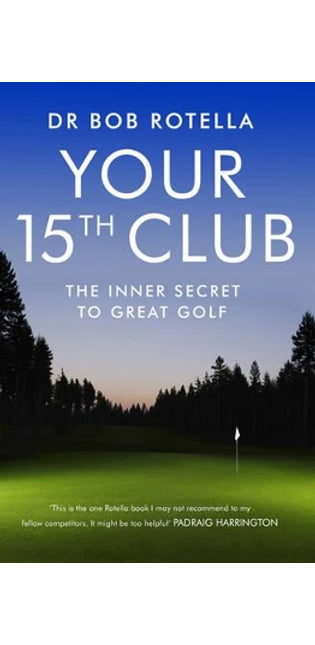
Your 15th Club
Dr Bob Rotella, author of half a dozen bestselling books on golf, including Golf is Not a Game of Perfect, brings together his skills and years of experience as a golf psychologist to give readers the insight they need to improve their game -- before they ever step up to the tee. At some point in playing the sport, whether they're competing on the professional tour or enjoying a day with their foursome on any public course, every golfer hits a snag in their mental game. Dr Bob shows readers how to emulate Tiger, become more comfortable with their own inner arrogance, how to learn from better golfers, and overcome fear. He teaches readers easy ways to talk themselves into feeling confident and provides a detailed plan that anyone at any level can use to build self-esteem both on and off the course.
R 340.00
R 457.00
Twilight on the Line
It would seem the stuff of a fevered thriller if it were not all true: Street gang members from San Diego recruited by a drug cartel are embroiled in the murder of a Roman Catholic cardinal at the Guadalajara airport. Border guards struggle to resist the relentless temptation, despair, and lawlessness at the international line, while Mexican federal police ride shotgun for drug lords in Chevy Suburbans stolen in San Diego. A tunnel is dug under the U.S.-Mexico border to a cannery where cocaine is to be hidden in cans of jalapeno peppers. An alliance of Asian and Mexican racketeers smuggle hundreds of Chinese immigrants. A factory worker assassinates the probable next president of Mexico during a campaign rally, and the bosses of his own party are suspected of being the masterminds. And in a surreal penal village, inmates live with their wives and children, entrepreneurs run businesses, and gangsters live in luxury. This is the U.S.-Mexico border in the 1990s, in the age of NAFTA-a microcosm of porous borders everywhere between the worlds of wealth and poverty, legal and illegal business, power and corruption, democracy and authoritarianism, hope and despair. Sebastian Rotella's masterful portrait of the border is one you will not easily forget.
R 751.12
R 305.00
What Can I Get Out of This?
An eloquent and moving story about the value and the pleasures of intellectual exploration—and why it matters beyond the classroom. At a time when college students and their parents often question the "return on investment" from humanities courses, accomplished feature writer and English professor Carlo Rotella invites us into the minds of a group of skeptical first-year students who are ultimately transformed by a required literature class. In What Can I Get Out of This? he follows thirty-three students through his class to provide an intimate look at teaching and learning from their perspectives as well as his own. The students' reluctance—"How does this get me a job?"—transforms into insight as they wrestle with challenging books, share ideas, discover how to think critically, and form a community. In all these ways, they learn how to extract meaning from the world around them, an essential life skill. Confronting skeptics of higher education, this compassionate and inspiring book reveals the truth of what students actually experience in college.
R 902.86
What Can I Get Out of This?
An eloquent and moving story about the value and the pleasures of intellectual exploration—and why it matters beyond the classroom. At a time when college students and their parents often question the "return on investment" from humanities courses, accomplished feature writer and English professor Carlo Rotella invites us into the minds of a group of skeptical first-year students who are ultimately transformed by a required literature class. In What Can I Get Out of This? he follows thirty-three students through his class to provide an intimate look at teaching and learning from their perspectives as well as his own. The students' reluctance—"How does this get me a job?"—transforms into insight as they wrestle with challenging books, share ideas, discover how to think critically, and form a community. In all these ways, they learn how to extract meaning from the world around them, an essential life skill. Confronting skeptics of higher education, this compassionate and inspiring book reveals the truth of what students actually experience in college.
R 2,796.00
Castings
Whether looming over public squares or dotting old battlefields, monuments certify a culture's present by securing its past and pledging its future. They embody exemplary persons or events and the shared ideals they stood for, prompting an obligation to keep those ideals standing now and forever. But monuments also exaggerate the staying power of civilizations and of art. In the second half of the twentieth century, postmodern critics often decried monuments not only for their pretensions and stiffness but also for their supposed role in perpetuating oppressive cultural conventions. Even so, many artists and thinkers of the same period tried to reimagine monuments in ways that were humbler and more provisional but still culturally confirming. In Castings, Guy Rotella examines the work of five important poets who have engaged in that effort: Elizabeth Bishop, Robert Lowell, James Merrill, Derek Walcott, and Seamus Heaney.
R 2,941.00
R 245.00
Putting Out Of Your Mind
'You drive for show, you putt for dough'. This old saying is familiar to all golfers and Bob Rotella, one of the foremost authorities on golf today, is a firm believer in its truth. In Putting out of Your Mind, he reveals the unique mental approach that great putting requires and helps golfers of all levels master this essential skill. Much like Golf Is Not a Game of Perfect and Golf Is a Game of Confidence, Putting out of Your Mind is a resonant and informative guide to achieving a better golf game. While most golfers spend their time trying to perfect their swing so they can hit the ball further, Rotella encourages them to concentrate on their putting, the most crucial yet overlooked aspect of the game. Great players are not only aware of the importance of putting, they go out of their way to master it. And of course mastery begins with an understanding of the attitude needed to be a better putter. Rotella's mental rules, which have helped some of the greatest golfers in the world to become champion putters can now work for golfers everywhere. With everything from true-life stories from some of the greats to dozens of game-changing practice drills, Putting out of Your Mind is the new bible of putting, and is sure to bring about immediate results for anyone who plays the game.
R 309.00
Killer Sicilian
Are you searching for a new weapon against 1 e4? Look no furtherchoose the Killer Sicilian! In this book, opening expert Tony Rotella presents a Sicilian repertoire for Black, the backbone of which consists of the Kalashnikov Variation. The Kalashnikov is an ideal choice for those looking to take up the Sicilian. Black follows an easy-to-learn system of development, with clear strategic aims. What's more, in many lines Black can choose between aggressive and positional options. It's no coincidence that the Kalashnikov has attracted such attacking talents as World Championship candidate Teimour Radjabov and four-time US Champion Alexander Shabalov. Rotella critically examines the main lines and explains the key positional and tactical ideas for both sides. He also demonstrates what Black should do against White's numerous Anti-Sicilian options. Read this book and unleash the Killer Sicilian! *A Sicilian repertoire for Black*Includes Anti-Sicilian coverage*Packed with new ideas and analysis
R 1,096.01
Castings
Whether looming over public squares or dotting old battlefields, monuments certify a culture's present by securing its past and pledging its future. They embody exemplary persons or events and the shared ideals they stood for, prompting an obligation to keep those ideals standing now and forever. But monuments also exaggerate the staying power of civilizations and of art. In the second half of the twentieth century, postmodern critics often decried monuments not only for their pretensions and stiffness but also for their supposed role in perpetuating oppressive cultural conventions. Even so, many artists and thinkers of the same period tried to reimagine monuments in ways that were humbler and more provisional but still culturally confirming. In Castings, Guy Rotella examines the work of five important poets who have engaged in that effort: Elizabeth Bishop, Robert Lowell, James Merrill, Derek Walcott, and Seamus Heaney.
R 1,176.00
R 651.00
October Cities
Returning to his native Chicago after World War II, Nelson Algren found a city transformed. The flourishing industry, culture, and literature that had placed pre-war Chicago at centre stage in American life were entering a time of crisis. The middle class and economic opportunity were leaving the inner city, and black Southerners arriving in Chicago found themselves increasingly estranged from the nation's economic and cultural resources. For Algren, Chicago was becoming "an October sort of city even in the spring," and as Carlo Rotella demonstrates, this metaphorical landscape of fall led Algren and others to forge a literary form that traced the American city's transformation. Narratives of decline, like the complementary narratives of black immigration and inner-city life written by Claude Brown and Gwendolyn Brooks, became building blocks of the post-industrial urban literature. This text examines these narratives as they played out in Chicago, Philadelphia, and Manhattan. Through the work of Algren, Brown, Brooks and other urban writers, Rotella explores the relationship of this new literature to the cities it draws upon for inspiration.The stories told are of neighbourhoods
R 941.00
R 611.70
R 657.00
R 184.00
R 251.00
R 1,038.00
R 638.00
R 671.03
Golf is a Game of Confidence
From the author of the bestselling Golf Is Not a Game of Perfect comes a masterly illumination of golf's mental game. Dr. Bob Rotella follows up the success of Golf Is Not a Game of Perfect with a book filled with anecdotes and motivational instruction focusing on the most important skill a golfer can have: the ability to think confidently. Filled with inspirational stories about the great players, great courses and great tournaments, Golf Is a Game of Confidence encourages golfers, no matter what their level, to reach new heights in their games and their lives.
R 638.00
R 1,020.51
R 1,302.00
R 1,051.00
R 502.00
R 377.00
R 2,001.00
R 1,054.55
R 912.00
R 2,768.34