



Search results for "Woolf-V"
Items in stock - 4 working days delivery time

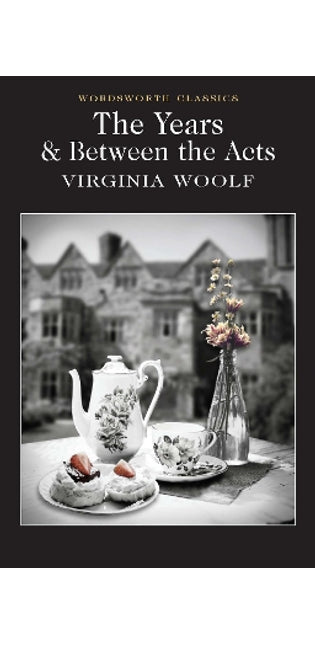
Years / Between the Acts
This volume brings together Virginia Woolf’s last two novels, The Years (1937) which traces the lives of members of a dispersed middle-class family between 1880 and 1937, and Between the Acts (1941), an account of a village pageant in the summer preceding the Second World War which successfully interweaves comedy, satire and disturbing observation.Rewriting the traditional family saga and the pageant, these unsettling novels provide extraordinary critiques of Englishness and English identity while pursuing compelling existentialist and psychological themes such as the nature of time, memory, personal relationships and sexual desire. Their tightly constructed narratives enable the reader to experience the fragmented lives of their characters and the difficulties that they have in communicating with each other and even understanding themselves. Read together, these novels illuminate each other in ways that will engage both the student and the general reader.
R 275.00
Items we need to order for you
R 1,171.00
R 768.00
R 1,303.00
Jacob's Room
First published in 1922, Jacob’s Room was Virginia Woolf’s third novel and the first in her more experimental mode. Set in the years leading up to the First World War, the work is an elegy, not just for an individual character, but for a generation lost in and affected by the war. This Shakespeare Head Press edition restores the text to its original form, notably recreating the space breaks on the page with which Woolf deliberately fragmented her narrative. The editor provides an extensive introduction, discussing the genesis of the novel, its biographical elements, the process of composition and revision, and the history of its early critical reception. A series of notes helps the reader to identify references and allusions, from sponge-bag trousers and gold beater’s skin to Tonks and Steer, and the Hampstead Garden Suburbs; while an appendix lists variants between the first UK and first US editions of the work.
R 5,589.00
R 937.00
Diary of Virginia Woolf: Volume 2
With an introduction by Adam PhillipsMonday 17 July 1922. Back from Garsington, & too unsettled to write - I meant to say read; but then this does not count as writing. It is to me like scratching; or, if it goes well, like having a bath - which of course, I did not get at Garsington.1920. The war is over, and Virginia Woolf is meeting friends old and new, from Maynard Keynes to Vita Sackville-West. She is reading and reviewing voraciously, and the Hogarth Press is thriving. Jacob's Room was published in 1922, and Woolf began work on what was to become Mrs Dalloway. This was a time of creative highs and lows, as well as a growing confidence as Woolf developed her distinctive literary voice.
R 928.00
Diary of Virginia Woolf: Volume 5
With an introduction by Siri HustvedtFriday 30 October 1936. I do not wish, for reasons I cannot now develop, to analyse that extraordinary summer. It will be more helpful & healthy for me to write scenes; to take up my pen & describe actual events: good practice too for my stumbling & doubting pen. Can I still 'write'? That is the question, you see. And now I will try to prove if the gift is dead, or dormant.The concluding volume of Virginia Woolf's diary covers the last five years of her life, ending four days before she committed suicide at the age of 59. These final years were overshadowed by the untimely death of her nephew Julian Bell in the Spanish Civil War, and her own intermittent mental fragility. As another World War began to seem inevitable, writing itself often felt like a battle. Nevertheless, this period saw the publication of her novel The Years, the polemical essay Three Guineas, the biography of her friend Roger Fry, and the writing of Between the Acts. This volume stands as a monument to Woolf's life and the enduring friendships of the Bloomsbury group. This Granta edition of Volume 5 contains the unexpurgated text for the first time.
R 928.00
R 512.13
R 1,303.00
R 1,303.00
Bibliography of Virginia Woolf
This acclaimed bibliography of Virginia Woolf, prepared with the late Leonard Woolf's agreement and co-operation, has been greatly expanded since its first publication in 1957 and the revised editions of 1967 and 1980. The need for a fourth revised edition is the result both of the explosion of new editions of existing books, and of the appearance of much previously unpublished material. Section A, Books and Pamphlets, has increased from 54 to 79 items; Section AA,Composite Editions, is a new section with nine items; Section C, Contributions to Periodicals, has increased by 78 items, including 56 unsigned reviews; Section D, Translations, has increased from 207 to 557 items; Section F, Letters, is new in that it now itemizes only uncollected letters. Studies ofvariant editions and texts are noted in the entry for the work concerned. The bibliography is an essential tool for all interested in Woolf.
R 9,424.20
Virginia Woolf
In her timely contribution to revisionist approaches in modernist studies, Lorraine Sim offers a reading of Virginia Woolf's conception of ordinary experience as revealed in her fiction and nonfiction. Contending that Woolf's representations of everyday life both acknowledge and provide a challenge to characterizations of daily life as mundane, Sim shows how Woolf explores the potential of everyday experience as a site of personal meaning, social understanding, and ethical value. Sim's argument develops through readings of Woolf's literary representations of a subject's engagement with ordinary things like a mark on the wall, a table, or colour; Woolf's accounts of experiences that are both common and extraordinary such as physical pain or epiphanic 'moments of being'; and Woolf's analysis of the effect of new technologies, for example, motor-cars and the cinema, on contemporary understandings of the external world. Throughout, Sim places Woolf's views in the context of the philosophical and lay accounts of ordinary experience that dominated the cultural thought of her time. These include British Empiricism, Romanticism, Platonic thought and Post-Impressionism. In addition to drawing on the major novels, particularly The Voyage Out, Mrs. Dalloway, and To the Lighthouse, Sim focuses close attention on short stories such as 'The Mark on the Wall', 'Solid Objects', and 'Blue & Green'; nonfiction works, including 'On Being Ill', 'Evening over Sussex: Reflections in a Motor-car', and 'A Sketch of the Past'; and Woolf's diaries. Sim concludes with an account of Woolf's ontology of the ordinary, which illuminates the role of the everyday in Woolf's ethics.
R 2,235.00
Virginia Woolf's Late Cultural Criticism
After the Modernist literary experiments of her earlier work, Virginia Woolf became increasingly concerned with overt social and political commentary in her later writings, which are preoccupied with dissecting the links between patriarchy, patriotism, imperialism and war. This book unravels the complex textual histories of The Years (1937), Three Guineas (1938) and Between the Acts (1941) to expose the genesis and evolution of Virginia Woolf’s late cultural criticism. Fusing a feminist-historicist approach with the practices and principles of genetic criticism, this innovative study scrutinizes a range of holograph, typescript and proof documents within their historical context to uncover the writing and thinking processes that produced Woolf’s cultural analysis during 1931-1941. By demonstrating that Woolf’s late cultural criticism developed through her literary experimentalism as well as in response to contemporary social, political and economic upheavals, this book offers a fresh perspective on her emergence as a cultural commentator in her final decade and paves the way for further genetic enquiries in the field.
R 5,591.00
Virginia Woolf
More than most novelists, Virginia Woolf benefits by an introducer. She is never, either by intention or equipment, the expected novelist. She chose the novel to adapt it deliberately and progressively to be the vehicle of her own subtle perception. Behind this study of the novels is an intense interest in the person revealed in the novelist. The criticism is warm as well as acute and the whole study is felt to be a tribute reasoned and justified - to a woman sensitive, compassionate, passionately honest and eager only for truth; to an artist quite unsparing of her own labour, finely gifted, self-effacing, serious and humourous. Mrs Bennett added two chapters on A Writer's Diary and on Virginia Woolf's critical essays for the second edition. Both can help our understanding of Virginia Woolf the novelist; the Diary by the insight it gives into her creative process and the fuller understanding we can gain of technical problems, the essays because they are about novels and novelists.
R 1,744.54
Virginia Woolf
The renaissance of Virginia Woolf reflects a reassessment not only of Woolf as a writer but also of our social and political life as a whole. It points up differences between English and American readers, between older and younger critics, between men and women. Particularly striking in the revaluation is a tendency to approach Woolf as a soliloquist, a person, rather than as a detached and formal artist. In this collection, Ralph Freedman has brought together some of Woolf's most interesting commentators, whose varied concerns, traditional and modern, demonstrate the vitality and scope of Woolf criticism. Virginia Woolf: Revaluation and Continuity contains essays by Ralph Freedman, Harvena Richter, James Hafley, Avrom Fleishman, F. P. W. McDowell, Jane Marcus, Lucio Ruotolo, Maria DiBattista, Jean O. Love, Madeline Moore, James Naremore, and B. H. Fussell. This title is part of UC Press's Voices Revived program, which commemorates University of California Press’s mission to seek out and cultivate the brightest minds and give them voice, reach, and impact. Drawing on a backlist dating to 1893, Voices Revived makes high-quality, peer-reviewed scholarship accessible once again using print-on-demand technology. This title was originally published in 1980.
R 2,796.00
R 1,303.00
Orlando
Orlando, a novel loosely based on the life of Vita Sackville-West, Virginia Woolf's lover and friend, is one of Woolf's most playful and tantalizing works. This edition provides readers with a fully collated and annotated text. A substantial introduction charts the birth of the novel in the romance between Woolf and Sackville-West, and the role it played in the evolution and eventual fading of that romance. Extensive explanatory notes reveal the extent to which the novel is embedded in Woolf's knowledge of Sackville-West, her family history and her writings. Thorough annotation of every literary and historical allusion in the text establishes its significance as a parodic literary and social history of England, as well as a spoof of one of Woolf's favorite forms, the biography. It also includes all variants from the extant proofs, as well as editions of the novel produced during Woolf's lifetime.
R 5,502.85
Virginia Woolf in the Age of Mechanical Reproduction
This collection of ten original essays is the first to read Virginia Woolf through the prism of our technological present. Expanding on the work of feminist and cultural critics of the past two decades, this volume offers a sustained reflection on the relationship between Walter Benjamin's analyses of mass culture and technology and Woolf's cultural productions of the 1920s and 1930s. It also brings out the extent to which Woolf was beginning to image the technological society then taking shape. This book takes part in contemporary efforts to rethink modernism as a more globalized and technologized phenomenon
R 9,386.46
Woolf: A Guide for the Perplexed
Virginia Woolf is one of the best-known and most influential modernist writers; an iconic figure, her image and reference to her work and life appear in the most varied of cultural sites. Her writing is, however, in many ways kaleidoscopic and has given rise to a diverse and, sometimes, conflicting body of critical work. Whilst Woolf envisaged that her readers could be ‘fellow-worker[s]' in the creative process, there is much to perplex any reader approaching her writing, especially for the first time. Drawing on some of the main critical debates and on Woolf's non-fictional writings, this guide untangles some of the difficulties and perplexities that can prove a barrier to understanding of Woolf's writing. These include aspects of the process of writing (such as narrative techniques, formal structures, characterisation), as well as the thematic concerns so central to Woolf's writing, the cultural context in which it emerged and to recent criticism, including representations of gender and sexuality, class and race.
R 3,384.00
Virginia Woolf and the Discourse of Science
Holly Henry investigates how advances in astronomy in the early twentieth century had a shaping effect on Woolf's literature and aesthetics as well as on the work of modernist British writers including Vita Sackville-West, H. G. Wells, Olaf Stapledon, Bertrand Russell, and T. S. Eliot. The 1920s and 30s witnessed a pervasive public fascination with astronomy that extended from the US, where Edwin Hubble in 1923 definitively determined that entire galaxies existed beyond the Milky Way, to England, where London's intellectuals discussed Sir James Jeans's popular astronomy books and the newly explored expanses of space. In re-evaluating the cultural context out of which Modernism emerged, Henry contends that Woolf, through her own fascination with astronomy, formulated a global vision that helped shape her fiction and her pacifist politics. Henry's study includes examinations of scientific and literary archival material and sheds light on Woolf's texts and recent re-evaluations of Modernism.
R 3,317.75
R 1,303.00
R 1,303.00
R 1,904.00
Woolf
A wolf and a sheep fall in love. They have a son that they call Woolf – he’s half wolf, half woolly sheep! This is Woolf’s story.It’s not easy being different – not quite fitting in with one group or another. When Woolf tries to impress the wolves, he finds it fun for a while, but they’re a bit too wild. When when he tries to follow the sheep, he finds it all a bit, well, boring. Can Woolf find his own way in life and make his own friends that like him for who he is, not who he’s trying to be?
R 217.00
R 1,303.00
Virginia Woolf and the Aesthetics of Vision
The category of vision is significant for Modernist texts as well as for the unfolding discourse of Modernism itself. Within the general Modernist fascination with the artistic and experimental possibilities of vision and perception this study looks at Virginia Woolf’s novels and her critical writings and examines the relation between visuality and aesthetics. An aesthetics of vision, as this study argues, becomes a productive principle of narrative. The visual is not only pertinent to Woolf’s processes of composition, but her works create a kind of vision that is proper to the text itself – a vision that reflects on the experience of seeing and renegotiates the relation between the reader and the text. The study investigates key dimensions of aesthetic vision. It addresses vision in the context of theories of aesthetic experience and identifies a semantics of seeing. It analyses functions of symbolic materiality in the presentation of boundaries of perception, modes of temporality and poetic potentialities. In exploring the connections between vision and language, it seeks to provide new perspectives for a reassessment of what occurs in Modernism's relation to vision.
R 4,586.16
R 1,303.00
Virginia Woolf
Virginia Woolf's discovery as a novelist--how to convey the inner reality of experience--is set forth for the first time by Harvena Richter. A voyage "inward" to Mrs. Woolf's subjective methods, Miss Richter's study furthers our understanding of her novels, especially The Waves and The Years, and reveals a new, vital, completely contemporary Virginia Woolf. Originally published in 1970. The Princeton Legacy Library uses the latest print-on-demand technology to again make available previously out-of-print books from the distinguished backlist of Princeton University Press. These editions preserve the original texts of these important books while presenting them in durable paperback and hardcover editions. The goal of the Princeton Legacy Library is to vastly increase access to the rich scholarly heritage found in the thousands of books published by Princeton University Press since its founding in 1905.
R 4,814.02
R 1,720.87
R 2,745.00
Virginia Woolf and the Aesthetics of Vision
The category of vision is significant for Modernist texts as well as for the unfolding discourse of Modernism itself. Within the general Modernist fascination with the artistic and experimental possibilities of vision and perception this study looks at Virginia Woolf’s novels and her critical writings and examines the relation between visuality and aesthetics. An aesthetics of vision, as this study argues, becomes a productive principle of narrative. The visual is not only pertinent to Woolf’s processes of composition, but her works create a kind of vision that is proper to the text itself – a vision that reflects on the experience of seeing and renegotiates the relation between the reader and the text. The study investigates key dimensions of aesthetic vision. It addresses vision in the context of theories of aesthetic experience and identifies a semantics of seeing. It analyses functions of symbolic materiality in the presentation of boundaries of perception, modes of temporality and poetic potentialities. In exploring the connections between vision and language, it seeks to provide new perspectives for a reassessment of what occurs in Modernism's relation to vision.
R 525.00
R 1,303.00
Flush
Flush: A Biography (1933), Woolf's second radical experiment in biography (after Orlando: A Biography) was a runaway best-seller. This life of the pet spaniel of Victorian poets, Elizabeth Barrett Browning and Robert Browning, playfully tests human–animal boundaries and speaks to rising concerns with class, sexuality and eugenics. This edition demonstrates Flush's historical grounding in the Brownings' era and Woolf's own. It provides rigorous, transparent collation of all extant states of Flush published in Woolf's lifetime. The extensive Explanatory Notes offer fresh insight into sociopolitical and literary contexts. This edition presents, for the first time, full transcriptions of Woolf's reading notebooks and drafts, plus the serialised Atlantic Monthly version. The Introduction maps composition history and draws on rediscovered early reviews. It charts Flush's critical reception to current renewed critical interest. This edition establishes Flush as a playfully ironic and seriously experimental work worthy of wide readership and sustained scholarly attention.
R 6,961.00
R 1,008.00
R 5,266.43
Virginia Woolf and the Visible World
In Virginia Woolf and the Visible World, Emily Dalgarno examines Woolf's engagement with notions of the subject and codes of the visible. Dalgarno examines how Woolf's writing engages with visible and non-visible realms of experience, and draws on ideas from the diverse fields of psychoanalytic theory, classical Greek tragedy, astronomy, photography and photojournalism. The solar eclipse of 1927 marks a dividing line in Woolf's career, after which she portrayed the visible world in terms of light, and shifted her interest from painting to photography. Dalgarno offers textual analyses of Woolf's individual works, including To the Lighthouse, The Waves and Three Guineas, arguing for the importance of her ongoing interest in Greek translation. In later chapters, she explores the theory of the subject that emerges from Woolf's representation of the visible in her autobiography.
R 4,432.28
Virginia Woolf and Poetry
Virginia Woolf's career was shaped by her impression of the conflict between poetry and the novel, a conflict she often figured as one between masculine and feminine, old and new, bound and free. In large part for feminist reasons, Woolf promoted the triumph of the novel over poetry, even as she adapted some of poetry's techniques for the novel in order to portray the inner life. Woolf considered poetry the rival form to the novel. A monograph on Woolf'ssense of genre rivalry thus offers a thorough reinterpretation of the motivations and aims of her canonical work. Drawing on unpublished archival material and little-known publications, the book combines biography, book history, formal analysis, genetic criticism, source study, and feminist literary history.Woolf's attitude towards poetry is framed within contexts of wide scholarly interest: the decline of the lyric poem, the rise of the novel, the gendered associations with these two genres, elegy in prose and verse, and the history of English Studies. Virginia Woolf and Poetry makes three important contributions. It clarifies a major prompt for Woolf's poetic prose. It exposes the genre rivalry that was creatively generative to many modernist writers. And it details how holding anideology of a genre can shape literary debates and aesthetics.
R 4,834.00
R 957.38
R 1,303.00
Uncommon Lawyer
In this unique book Lord Woolf recounts his remarkable career and provides a personal and honest perspective on the most important developments in the common law over the last half century. The book opens with a comprehensive description of his family background, which was very influential on his later life, starting with the arrival of his grandparents as Jewish immigrants to England in 1870. His recollections of his early years and family, education and life as a student lead into his early career as a barrister and as a Treasury Devil, moving on to his judicial career and the many roles taken therein. The numerous standout moments examined include his work on access to the judiciary, prison reform, and suggested reforms to the European Court of Human Rights. Fascinating insights into the defining cases of his career, T AG v Jonathan Cape, Gouriet v Union of Post Office Workers, Tameside, Hazel v Hammersmith, M v Home Office, remind the reader of how impactful his influence has been. He considers the setting of the mandatory component of the life sentences of Thompson and Venables and the Diane Blood case. Alongside the case law, and the Woolf Reforms, the Constitutional Law Reform Act 2005 is also explored. Considering the ebb and flow of changes over his remarkable judicial life, Lord Woolf identifies those he welcomes, but also expresses regret on what has been lost. A book to remind lawyers, be they students, practitioners or scholars, of the power and importance of law.All author profits from the book will be donated to the Woolf Institute.
R 2,943.00
Virginia Woolf and the Ethics of Intimacy
Revisiting Virginia Woolf’s most experimental novels, Elsa Högberg explores how Woolf’s writing prompts us to re-examine the meaning of intimacy. In Högberg’s readings of Jacob's Room, Mrs Dalloway, To the Lighthouse and The Waves, intimacy is revealed to inhere not just in close relations with the ones we know and love, but primarily within those unsettling encounters which suspend our comfortable sense of ourselves as separate from others and the world around us. Virginia Woolf and the Ethics of Intimacy locates this radical notion of intimacy at the heart of Woolf’s introspective, modernist poetics as well as her ethical and political resistance to violence, aggressive nationalism and fascism. Engaging contemporary theory – particularly the more recent works of Judith Butler, Luce Irigaray and Julia Kristeva – it reads Woolf as a writer and ethical thinker whose vital contribution to the modernist scene of inter-war Britain is strikingly relevant to critical debates around intimacy, affect, violence and vulnerability in our own time.
R 4,414.00
Mrs. Dalloway
Mrs Dalloway, created from a series of short stories, is one of Virginia Woolf's best-known novels. Thematically it conveys a rich and genuine humanity, in part through Woolf's use of interior perspectives. This edition provides a substantial introduction, which discusses the composition history of the novel and shows how Woolf's reading, writing, and personal life as well as the world around her contributed to the book. Explanatory notes review decades of scholarship while identifying numerous allusions to Homer, Shakespeare, Tennyson and others. A complete list of textual variants shows differences among all English language editions of the novel published in Woolf's lifetime. The notes call attention to variants of particular interest, including Woolf's substantial addition, at proof stage, to the scene of Septimus' suicide. This edition also includes Woolf's seldom-reprinted 1928 introduction, along with a full chronology of composition, and a more general chronology of Woolf's life and works.
R 6,928.66
Virginia Woolf
John R. Maze presents a penetrating psychoanalytic reading of Virginia Woolf's novels from first to last. Underlying their elegant, imaginative, mysterious texture there is revealed a network of sibling rivalry, incestuous attraction and exploitation, sexual repulsion, bizarre fantasies, anger, and fatal despair.Woolf's feminism and pacificism, based on her conscious insight into an authoritarian society, were given passionate conviction by her resentment and irrational guilt over her half-brothers' sexual aggression against her as a vulnerable girl. This found its place in repressed animosity toward her idealized mother, whom she blamed not only for failing to protect her, but also for trying to impose the Victorian female sexist orthodoxy. Deeper still was the childhood conviction that her mother was complicit in the fantasied genital injuries—exacerbated later, she felt, by the males in her life—which prevented her from having children, as her envied sister had. Maze's approach not only reveals the intimate processes of Woolf's imagination, but yields a deeper and richer reading of her texts. An important study for all students and scholars of British 20th-century literature, feminist literary criticism, and critical theory in general.
R 2,943.00


