Approx. 20 - 30 Business Days

R 494.00
R 954.00
R 490.00
R 1,119.00
R 418.00
R 494.00
R 724.00
R 494.00
R 309.00
R 494.00
R 184.00
R 770.00
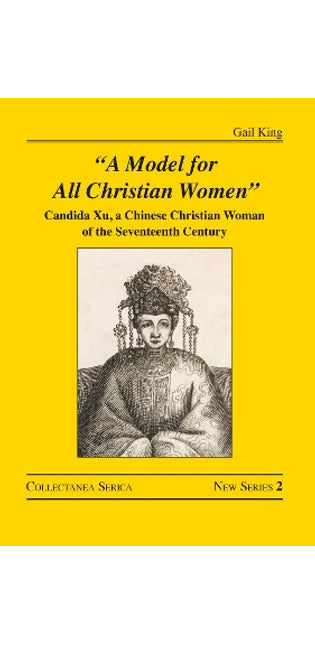
"A Model for All Christian Women"
This biography of Candida Xu (1607–1680), granddaughter of the prominent Chinese Christian convert and statesman Xu Guangqi (1562–1633) and foremost Chinese Christian woman of the seventeenth century, is based on the biography of Candida Xu titled Histoire d’une dame chrétienne de la Chine (Paris, 1688) written by her confessor Philippe Couplet, S.J. (1623–1693), an obituary of his mother and other writings by her eldest son, and the Xu family history. Using these as well as other relevant European missionary and Chinese language sources, Candida Xu’s life as daughter, wife, mother, and generous contributor to the Christian Church is recounted. Events in her life are set in the context of historical and religious circumstances in China at the time. Consideration of the situation of women, particularly Christian women, draws out how Candida Xu’s faith helped her and other believing Christian women to gain greater freedom of choice and action.
R 2,406.00
R 432.00
R 220.00
R 587.00
R 463.00
R 523.00
R 839.00
R 306.00
R 275.00
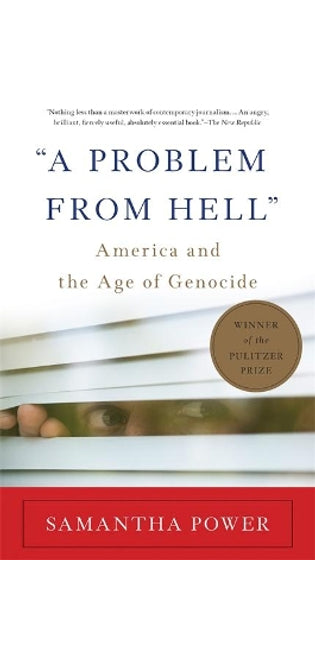
"A Problem from Hell"
From the Armenian Genocide to the ethnic cleansings of Kosovo and Darfur, modern history is haunted by acts of brutal violence. Yet American leaders who vow never again" repeatedly fail to stop genocide. Winner of the Pulitzer Prize and the National Book Critics Circle Award, " A Problem from Hell" draws upon exclusive interviews with Washington's top policymakers, thousands of once classified documents, and accounts of reporting from the killing fields to show how decent Americans inside and outside government looked away from mass murder. Combining spellbinding history and seasoned political analysis, " A Problem from Hell" allows readers to hear directly from American decision-makers and dissenters, as well as from victims of genocide, and reveals just what was known and what might have been done while millions perished.
R 576.00
R 561.59
R 282.00
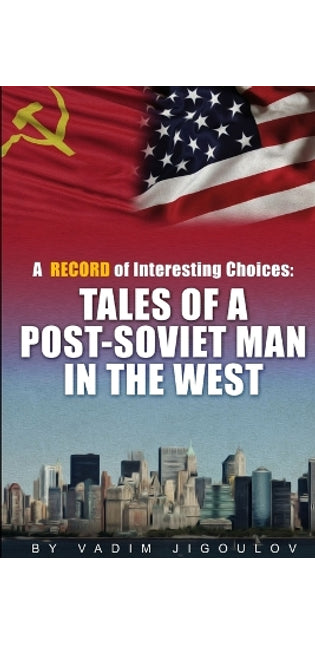
"A Record of Interesting Choices: Tales of a Post-Soviet Man in the West"
"A Record of Interesting Choices: Tales of a Post-Soviet Man in the West" is a collection of entertaining and irreverent stories from a Russian immigrant living in the US. With his characteristic sarcasm and at times warm tone, Jigoulov writes on religion in America, the importance of German erotica in the Soviet space, the world of espionage, and the secrets of the Russian soul. Jigoulov reminiscences on growing up in the Soviet Union, his experiences in the Soviet intelligence services, and his involvement with American religious groups in Russia and the US. He also shares his humorous anecdotes of survival as an immigrant. After living in the US for over twenty years, the author reflects back at his life in the Soviet Union as a Westerner and writes about it in the language that would appeal to American readers.
R 658.00
R 460.00
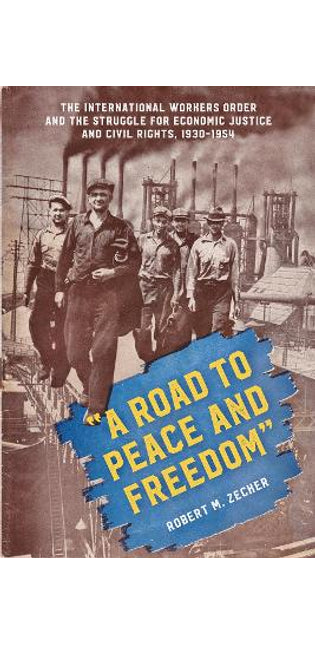
"A Road to Peace and Freedom"
The International Workers Order was an American consortium of ethnic mutual self-insurance societies that advocated for unemployment insurance, Social Security and vibrant industrial unions. This interracial leftist organization guaranteed the healthcare of its 180,000 white, black, Hispanic and Arabic working-class members. But what accounted for the popularity—and eventual notoriety—of this Order? Mining extensive primary sources, Robert Zecker gives voice to the workers in “A Road to Peace and Freedom.” He describes the group's economic goals, commitment to racial justice, and activism, from lobbying to end segregation and lynching in America to defeating fascism abroad. Zecker also illustrates the panoply of entertainment, sports, and educational activities designed to cultivate the minds and bodies of members. However, the IWO was led by Communists, and the Order was targeted for red-baiting during the Cold War, subject to government surveillance, and ultimately "liquidated." Zecker explains how the dismantling of the IWO and the general suppression of left-wing dissenting views on economic egalitarianism and racial equality had deleterious effects for the entire country. Moreover, Zecker shows why the sobering lesson of the IWO remains prescient today.
R 1,151.00
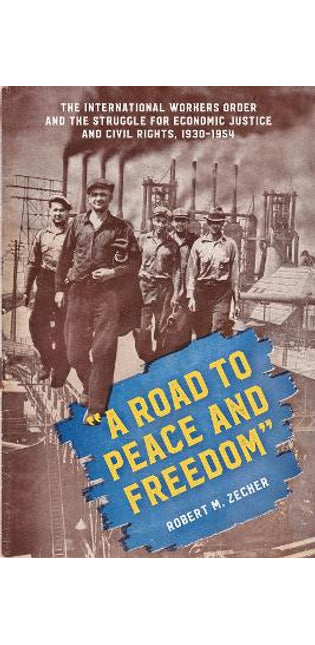
"A Road to Peace and Freedom"
The International Workers Order was an American consortium of ethnic mutual self-insurance societies that advocated for unemployment insurance, Social Security and vibrant industrial unions. This interracial leftist organization guaranteed the healthcare of its 180,000 white, black, Hispanic and Arabic working-class members. But what accounted for the popularity—and eventual notoriety—of this Order? Mining extensive primary sources, Robert Zecker gives voice to the workers in “A Road to Peace and Freedom.” He describes the group's economic goals, commitment to racial justice, and activism, from lobbying to end segregation and lynching in America to defeating fascism abroad. Zecker also illustrates the panoply of entertainment, sports, and educational activities designed to cultivate the minds and bodies of members. However, the IWO was led by Communists, and the Order was targeted for red-baiting during the Cold War, subject to government surveillance, and ultimately "liquidated." Zecker explains how the dismantling of the IWO and the general suppression of left-wing dissenting views on economic egalitarianism and racial equality had deleterious effects for the entire country. Moreover, Zecker shows why the sobering lesson of the IWO remains prescient today.
R 3,275.00
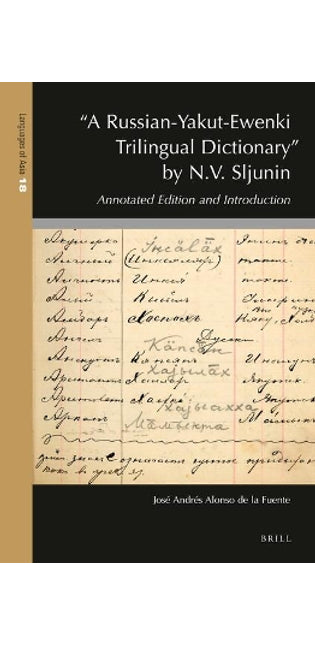
"A Russian-Yakut-Ewenki Trilingual Dictionary" by N.V. Sljunin
In “A Russian-Yakut-Ewenki Trilingual Dictionary” by N.V. Sljunin, José Andrés Alonso de la Fuente offers the philological edition of a very early twentieth-century source of two indigenous languages from Siberia. This edition includes the facsimile of the original handwritten document. Whereas specialists have known about the existence of Sljunin’s Yakut data by indirect references to it in at least one standard dictionary, there was no available information regarding Sljunin’s Ewenki data. Furthermore, careful linguistic analysis reveals that the Ewenki variety reflected in Sljunin’s dictionary may have already dissapeared.
R 9,300.00