


Approx. 20 - 30 Business Days

R 1,616.00
R 667.00
R 252.00
"Get Carter"
"Get Carter" is now widely acknowledged as the finest British gangster film of all time. Released in 1971, the film fell out of fashion until the cultural changes of the 1990s gave a new currency to its pessimistic vision of a doomed male within a decaying social order. Before its re-release in 1999, Mike Hodges' fusion of the crime genre with social realism received surprisingly little critical attention. Steve Chibnall's book now gives "Get Carter" the consideration it demands. With the co-operation of Hodges and access to rare documents, including an early draft of the script, Chibnall places the film in its social context, describes its making, discusses its characteristics, scene by scene, and charts its changing status since the 1970s.
R 1,079.00
R 303.00
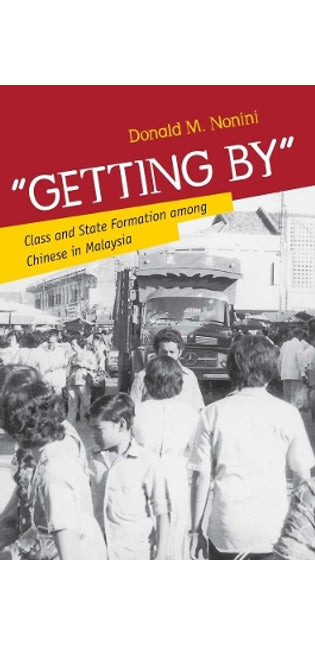
"Getting By"
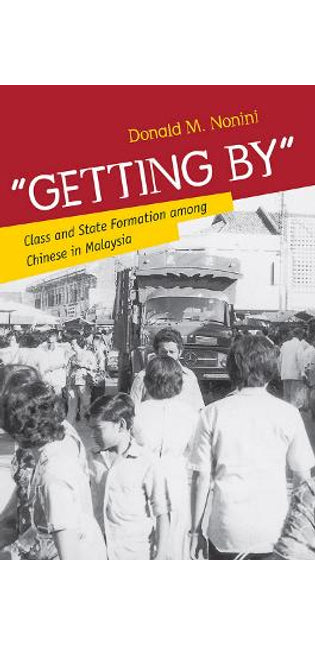
How do class, ethnicity, gender, and politics interact? In what ways do they constitute everyday life among ethnic minorities? In "Getting By," Donald M. Nonini draws on three decades of research in the region of Penang state in northern West Malaysia, mainly in the city of Bukit Mertajam, to provide an ethnographic and historical account of the cultural politics of class conflict and state formation among Malaysians of Chinese descent. Countering triumphalist accounts of the capitalist Chinese diaspora in Southeast Asia, Nonini shows that the Chinese of Penang (as elsewhere) are riven by deep class divisions and that class issues and identities are omnipresent in everyday life. Nor are the common features of "Chinese culture" in Malaysia manifestations of some unchanging cultural essence. Rather, his long immersion in the city shows, they are the results of an interaction between Chinese-Malaysian practices in daily life and the processes of state formation—in particular, the ways in which Kuala Lumpur has defined different categories of citizens. Nonini's ethnography is based on semistructured interviews; participant observation of events, informal gatherings, and meetings; a commercial census; intensive reading of Chinese-language and English-language newspapers; the study of local Chinese-language sources; contemporary government archives; and numerous exchanges with residents.
R 4,234.00
"Getting By"
How do class, ethnicity, gender, and politics interact? In what ways do they constitute everyday life among ethnic minorities? In "Getting By," Donald M. Nonini draws on three decades of research in the region of Penang state in northern West Malaysia, mainly in the city of Bukit Mertajam, to provide an ethnographic and historical account of the cultural politics of class conflict and state formation among Malaysians of Chinese descent. Countering triumphalist accounts of the capitalist Chinese diaspora in Southeast Asia, Nonini shows that the Chinese of Penang (as elsewhere) are riven by deep class divisions and that class issues and identities are omnipresent in everyday life. Nor are the common features of "Chinese culture" in Malaysia manifestations of some unchanging cultural essence. Rather, his long immersion in the city shows, they are the results of an interaction between Chinese-Malaysian practices in daily life and the processes of state formation—in particular, the ways in which Kuala Lumpur has defined different categories of citizens. Nonini's ethnography is based on semistructured interviews; participant observation of events, informal gatherings, and meetings; a commercial census; intensive reading of Chinese-language and English-language newspapers; the study of local Chinese-language sources; contemporary government archives; and numerous exchanges with residents.
R 1,225.00
"Getting History Right"
How do individuals, societies, and nations deal with their difficult pasts? "Getting History Right" examines this question in a comparative context by looking at an authoritarian East Germany and a pluralistic, democratic West Germany. Eschewing a narrow focus on elites, this work draws extensively on societal level discussions of the past in popular culture, such as film, television, radio, and newspapers. It examines how societal level discussions of the past shaped individual perceptions and interpretations of the past; and how individual perceptions and struggles over the meaning of the past shaped societal level discussions. These struggles over meaning and "getting history right" are not only shaped by political power, but are also a source of symbolic power. To understand political life, scholars must embrace not only material political power, but also the symbolic and cultural roots of power. The research presented here makes extensive use of public opinion data, cinema attendance, and television viewer data, as well as other sources, to look at the multiple meanings that East and West Germans assigned to the Holocaust and World War II across time. Rather than culture merely being an extension of political power, this work argues that culture and the boundaries of the cultural matrix shape the use of political power by different social actors. Getting history right is not only a reflection of political power; it is a source of power itself.
R 1,721.00
"Getting History Right"
How do individuals, societies, and nations deal with their difficult pasts? "Getting History Right" examines this question in a comparative context by looking at an authoritarian East Germany and a pluralistic, democratic West Germany. Eschewing a narrow focus on elites, this work draws extensively on societal level discussions of the past in popular culture, such as film, television, radio, and newspapers. It examines how societal level discussions of the past shaped individual perceptions and interpretations of the past; and how individual perceptions and struggles over the meaning of the past shaped societal level discussions. These struggles over meaning and "getting history right" are not only shaped by political power, but are also a source of symbolic power. To understand political life, scholars must embrace not only material political power, but also the symbolic and cultural roots of power. The research presented here makes extensive use of public opinion data, cinema attendance, and television viewer data, as well as other sources, to look at the multiple meanings that East and West Germans assigned to the Holocaust and World War II across time. Rather than culture merely being an extension of political power, this work argues that culture and the boundaries of the cultural matrix shape the use of political power by different social actors. Getting history right is not only a reflection of political power; it is a source of power itself.
R 2,920.00
R 303.00
"Getting Paid"
The working class in New York City was remade in the mid-nineteenth century. In the 1820s a substantial majority of city artisans were native-born; by the 1850s three-quarters of the city's laboring men and women were immigrants. How did the influx of this large group of young adults affect the city's working class? What determined the texture of working-class life during the antebellum period? Richard Stott addresses these questions as he explores the social and economic dimensions of working-class culture. Working-class culture, Stott maintains, is grounded in the material environment, and when work, population, consumption, and the uses of urban space change as rapidly as they did in the mid-nineteenth century, culture will be transformed. Using workers' first-person accounts—letters, diaries, and reminiscences—as evidence, and focusing on such diverse topics as neighborhoods, diet, saloons, and dialect, he traces the rise of a new, youth-oriented working-class culture. By illuminating the everyday experiences of city workers, he shows that the culture emerging in the 1850s was a culture clearly different from that of native-born artisans of an earlier period and from that of the middle class as well.
R 1,079.00
"Getting Paid"
The working class in New York City was remade in the mid-nineteenth century. In the 1820s a substantial majority of city artisans were native-born; by the 1850s three-quarters of the city's laboring men and women were immigrants. How did the influx of this large group of young adults affect the city's working class? What determined the texture of working-class life during the antebellum period? Richard Stott addresses these questions as he explores the social and economic dimensions of working-class culture. Working-class culture, Stott maintains, is grounded in the material environment, and when work, population, consumption, and the uses of urban space change as rapidly as they did in the mid-nineteenth century, culture will be transformed. Using workers' first-person accounts—letters, diaries, and reminiscences—as evidence, and focusing on such diverse topics as neighborhoods, diet, saloons, and dialect, he traces the rise of a new, youth-oriented working-class culture. By illuminating the everyday experiences of city workers, he shows that the culture emerging in the 1850s was a culture clearly different from that of native-born artisans of an earlier period and from that of the middle class as well.
R 1,809.00
R 285.00
R 402.00
R 303.00
R 364.00
R 175.00
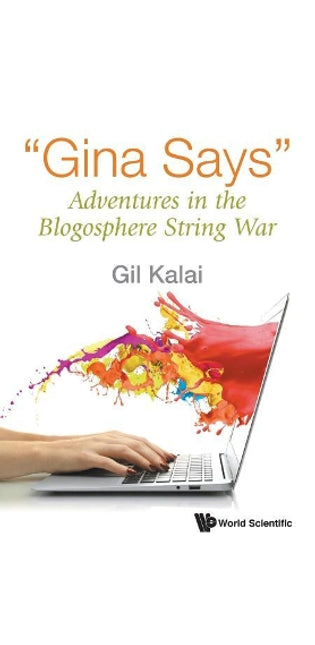
"Gina Says": Adventures In The Blogosphere String War
In the summer of 2006 two books attacking string theory, a prominent theory in physics, appeared: Peter Woit's 'Not Even Wrong' and Lee Smolin's 'The Trouble with Physics'. A fierce public debate, much of it on weblogs, ensued.Gina is very curious about science blogs. Can they be useful for learning about or discussing science? What happens in these blogs and who participates in them? Gina is eager to learn the issues and to form her own opinion about the string theory controversy. She is equipped with some academic background, including in mathematics, and has some familiarity with academic life. Her knowledge of physics is derived mainly from popular accounts. Gina likes to debate and to argue. She is fascinated by questions about rationality and philosophy, and was exposed to various other scientific controversies in the past.This book uses the blog debate on string theory to discuss blogs, science, and mathematics. Meandering over various topics from children's dyscalculia to Chomskian linguistics, the reader may get some sense of the chaotic and often confusing scientific experience. The book tries to show the immense difficulty involved in getting the factual matters right, and interpreting fragmented and partial information.
R 2,109.00
"Gina Says": Adventures In The Blogosphere String War
In the summer of 2006 two books attacking string theory, a prominent theory in physics, appeared: Peter Woit's 'Not Even Wrong' and Lee Smolin's 'The Trouble with Physics'. A fierce public debate, much of it on weblogs, ensued.Gina is very curious about science blogs. Can they be useful for learning about or discussing science? What happens in these blogs and who participates in them? Gina is eager to learn the issues and to form her own opinion about the string theory controversy. She is equipped with some academic background, including in mathematics, and has some familiarity with academic life. Her knowledge of physics is derived mainly from popular accounts. Gina likes to debate and to argue. She is fascinated by questions about rationality and philosophy, and was exposed to various other scientific controversies in the past.This book uses the blog debate on string theory to discuss blogs, science, and mathematics. Meandering over various topics from children's dyscalculia to Chomskian linguistics, the reader may get some sense of the chaotic and often confusing scientific experience. The book tries to show the immense difficulty involved in getting the factual matters right, and interpreting fragmented and partial information.
R 1,018.00
R 163.00
R 163.00
R 1,852.00
R 332.00
R 303.00
R 297.00
R 337.00