


BESTSELLERS

R 453.00
R 606.00
R 330.00
R 243.00
R 516.00
R 485.00
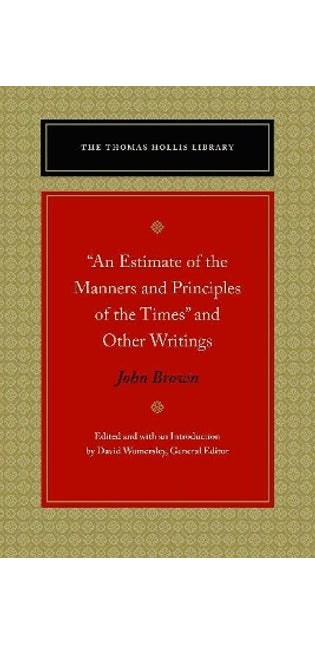
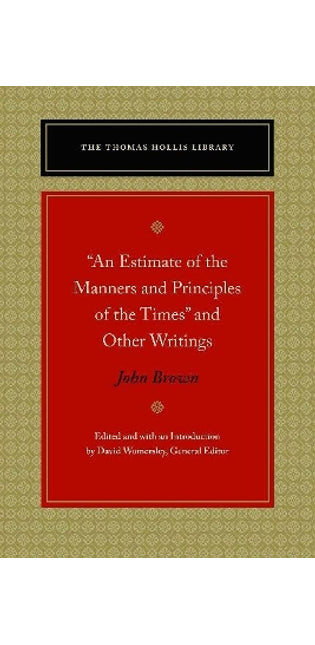
"An Estimate of the Manners and Principles of the Times" and Other Writings
John Brown (17151766) was a clergyman who achieved great but transient fame as a writer and moralist. His attack on Shaftesbury and moral sense philosophy, against which he employed utilitarian arguments and also arguments deriving from Gods benevolent intentions toward his creation, was published in 1751 and was later praised by John Stuart Mill. The central text of this volume, An Estimate of the Manners and Principles of the Times (1757), is a vigorous attack on the vain, luxurious, and selfish effeminacy of Englands higher ranks, in the wake of the loss of Minorca to the French at the opening of the Seven Years War (17561763). Brown repeated the usual complaints of corruption that had been raised during the premiership of Walpole and argued that public virtue had been undermined by a preoccupation with luxury and commerce. Estimate was printed no fewer than seven times within the first year, earning the author the name Estimate Brown. Alongside Estimate, the volume includes four other works by Brown: his poem On Liberty (1749); his Essays on the Characteristicks (1751), which is an attack on Shaftesburys Characteristicks; his Explanatory Defence of the Estimate (1758), in which Brown engaged to defend the work, to some modest extent, against his critics; and finally, a late work, Thoughts on Civil Liberty (1765). Two appendixes complement the texts: a brief tribute to Brown by Thomas Hollis (an Englishman who devoted his life to the cause of liberty and for whom this series is named), in which Hollis depicts Brown as a weak man who nevertheless possessed a measure of virtue and talent, and who fell among thieves in the feral literary and political circles of Hanoverian England. The second appendix provides Holliss own annotations to his copy of Estimate. The introduction, by David Womersley, places Browns writings and career in the context of eighteenth-century moralism and, naturally, in the tradition of British writing on liberty. The annotations will gloss now-unfamiliar words and explain now-obscure references to contemporary events, circumstances, and personalities.
R 849.00
"An Estimate of the Manners and Principles of the Times" and Other Writings
John Brown (17151766) was a clergyman who achieved great but transient fame as a writer and moralist. His attack on Shaftesbury and moral sense philosophy, against which he employed utilitarian arguments and also arguments deriving from Gods benevolent intentions toward his creation, was published in 1751 and was later praised by John Stuart Mill. The central text of this volume, An Estimate of the Manners and Principles of the Times (1757), is a vigorous attack on the vain, luxurious, and selfish effeminacy of Englands higher ranks, in the wake of the loss of Minorca to the French at the opening of the Seven Years War (17561763). Brown repeated the usual complaints of corruption that had been raised during the premiership of Walpole and argued that public virtue had been undermined by a preoccupation with luxury and commerce. Estimate was printed no fewer than seven times within the first year, earning the author the name Estimate Brown. Alongside Estimate, the volume includes four other works by Brown: his poem On Liberty (1749); his Essays on the Characteristicks (1751), which is an attack on Shaftesburys Characteristicks; his Explanatory Defence of the Estimate (1758), in which Brown engaged to defend the work, to some modest extent, against his critics; and finally, a late work, Thoughts on Civil Liberty (1765). Two appendixes complement the texts: a brief tribute to Brown by Thomas Hollis (an Englishman who devoted his life to the cause of liberty and for whom this series is named), in which Hollis depicts Brown as a weak man who nevertheless possessed a measure of virtue and talent, and who fell among thieves in the feral literary and political circles of Hanoverian England. The second appendix provides Holliss own annotations to his copy of Estimate. The introduction, by David Womersley, places Browns writings and career in the context of eighteenth-century moralism and, naturally, in the tradition of British writing on liberty. The annotations will gloss now-unfamiliar words and explain now-obscure references to contemporary events, circumstances, and personalities.
R 481.00
R 388.00
R 7,213.00
R 605.00
R 788.00
R 162.00
R 1,454.00
R 1,454.00
R 1,454.00
R 258.00
R 679.00
R 1,034.00
R 272.00
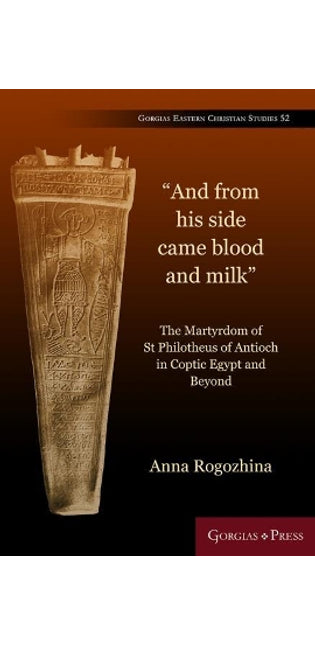
"And From His Side Came Blood and Milk"
This book examines the function and development of the cult of saints in Coptic Egypt, focusing primarily on the material provided by the texts forming the Coptic hagiographical tradition of the early Christian martyr Philotheus of Antioch, and more specifically, the Martyrdom of St Philotheus of Antioch (Pierpont Morgan M583). This Martyrdom is a reflection of a once flourishing cult which is attested in Egypt by rich textual and material evidence. This text enjoyed great popularity not only in Egypt, but also in other countries of the Christian East, since his dossier includes texts in Coptic, Georgian, Ethiopic, and Arabic.
R 3,356.00
R 303.00
R 303.00
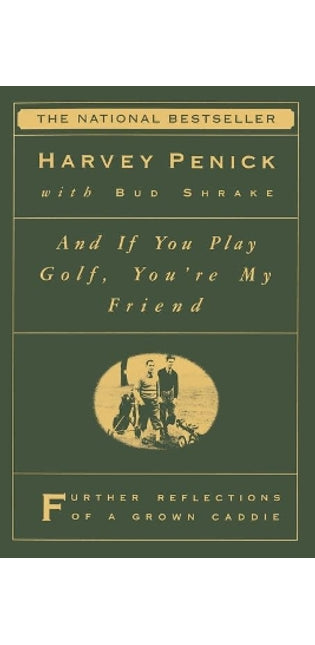
"And If You Play Golf, You're My Friend: Furthur Reflections of a Grown Caddie "
Another round of inspiration and instruction. When Harvey Penick signed copies of his now classic first book, Harvey Penick's Little Red Book, Bud Shrake, his coauthor, noticed that he often inscribed them with the line "To my fried and pupil." When Shrake asked him why, Penick replied "Well, if you read my book, you're my pupil, and if you play golf, you're my friend." Taking up where the Little Red Book left off, this is the second dose of Penick's singular brand of wit and wisdom, full of the simple and easy-to-understand lessons on golf that Penick is known and admired for. Like its predecessor, And If You Play Golf, You're My Friend is rich with Penick's great love of the game, a love that he delighted in sharing with golfers of all ages and levels of ability.
R 407.00
"And Is There Honey Still for Tea?" Questing Unity
The reference to 'questing unity" pertains to many different subjects and themes involving grappling with issues in such areas as comparative literature, linguistics, literature, history and mythology. In all events every comparison implies a criterion wide enough to comprehend the scope of the common area occupied by the subjects of comparison, whether the inquirer is aware f it or not. Thus comparison involves delving into one's own psyche, or not? Without the assumption of a universal underlying unity: no religion, no science and no sanity.
R 671.00

















!["An Outline Of Murder In Ireland [1800-2023] - 360 Cases"](http://exclusivebooks.co.za/cdn/shop/files/9798332322877.jpg?height=645&pad_color=fff&v=1725940240&width=315)