


BESTSELLERS

"Comforted of God"
This collection of Scripture texts, prose and poetry shines the light of God's Word into the darkness of disappointment, illness and bereavement. To those in such circumstances it provides encouragement, strength, illumination, understanding and comfort. Over thirty thousand copies were produced during the first half of the twentieth century, bringing relief to many. Over one hundred years have passed since the first edition was compiled, and yet the basic problems of the human condition remain essentially unchanged; and God's Word has as much to say to those facing the darkest of personal situations in the 21st Century as it ever did. Its message of hope still lifts the spirit and draws the stressed, the discouraged and the sorrowful to the Saviour, who is the Prince of Peace. The compiler, Algernon James Pollock (1864-1957), was the eldest son born to a Christian banker and his wife in Newcastle-upon-Tyne. At the age of eleven he made a profession of faith in Christ. Early in life he was introduced to leading figures amongst the Brethren (John Nelson Darby was entertained in the home when he was about fifteen). He followed his father into banking, but his true calling was to share the treasure he had found in heaven, and he left to become a full-time evangelist. He was an indefatigable apologist from the pulpit and in print wherever he saw the Christian faith under attack. He wrote several books, but he is probably best known for over fifty pamphlets containing critiques of deviations from Bible-based, Christ-centred Christianity.
R 227.00
R 636.00
R 324.00
R 455.00
R 455.00
R 1,065.00
R 1,018.00
R 303.00
R 303.00
R 303.00
R 364.00
R 270.00
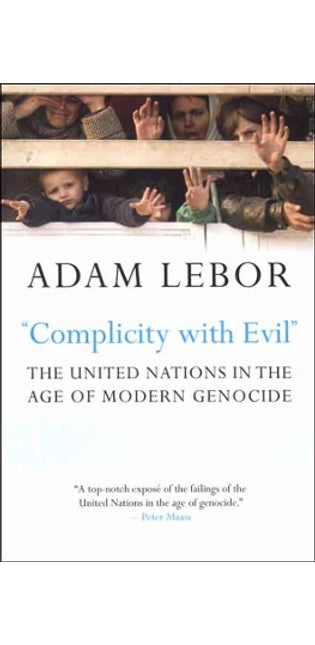
"Complicity with Evil"
A seasoned foreign correspondent shows how the UN privileges its own neutrality and interests above its founding mission of protecting humanity, with predictably tragic consequences From the killing fields of Rwanda and Srebrenica a decade ago to those of Darfur today, the United Nations has repeatedly failed to confront genocide. This is evinced, author and journalist Adam LeBor maintains, in a May 1995 document from Yasushi Akashi, the most senior UN official in the field during the Yugoslav wars, in which he refused to authorize air strikes against the Serbs for fear they would “weaken” Milosevic. More recently, in 2003, urgent reports from UN officials in the Sudan detailing atrocities from Darfur were ignored for a year because they were politically inconvenient. This book is the first to examine in detail the crucial role of the Secretariat, its relationship with the Security Council, and the failure of UN officials themselves to confront genocide. LeBor argues the UN must return to its founding principles, take a moral stand and set the agenda of the Security Council instead of merely following the lead of the great powers. LeBor draws on dozens of firsthand interviews with UN officials, current and former, and such international diplomats as Madeleine Albright, Richard Holbrooke, Douglas Hurd, and David Owen. This book will set the terms for discussion when UN Secretary General Kofi Annan steps down to make room for a new head of the world body, and political observers assess Annan’s legacy and look to the future of the world organization.
R 1,489.00
R 455.00
R 758.00
R 937.00
R 1,584.00
R 1,551.00
R 1,097.00
R 742.00
R 421.00
R 757.00
R 773.00
R 182.00
R 455.00
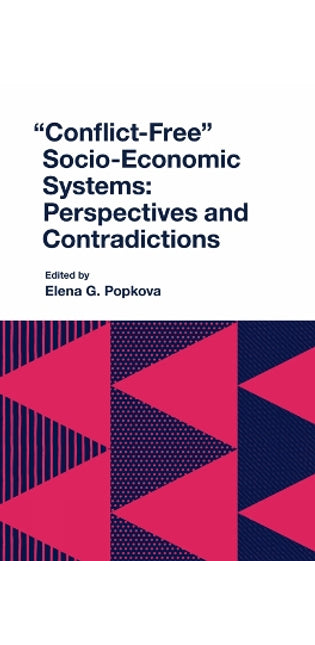
"Conflict-Free" Socio-Economic Systems
"Conflict-free" Socio-Economic Systems: Perspectives and Contradictions analyses crisis as a component of the growth and development process of economic systems, and its role within the economic cycle. The scientific treatment of the role of crisis in the development of economic systems has traditionally been divided into two conceptual approaches. The first conceptual approach views crisis as a possibility to reconsider the trajectory of economic development of both the national systems and the global economic system overall. However, most scholars, politicians, and experts focus on the second conceptual approach, within which economic crisis is seen as a temporary failure in the work of a system which hinders the process of economic growth and development. This became a precondition for proclaiming a new course of development of the modern national and global economic system oriented at sustainability. This book provides a strong theoretical and methodological basis to sustainable development of economic systems, for researchers and scholars in the area of economic theory and sustainable economics. In locating the role of crisis within socio-economic systems, Popkova advocates the concept of a "conflict-free" system as the landmark of global economic development.
R 5,141.00
R 216.00
R 517.00
R 516.00
R 968.00
R 580.00
R 1,000.00
R 279.00
R 212.00
R 1,999.00