South African History

Indaba, My Children: African Tribal History, Legends, Customs And Religious Beliefs
First published in 1964, Indaba, My Children is an internationally acclaimed collection of African folk tales that chart the story of African tribal life since the time of the Phoenicians. It is these stories that have shaped Africa as we know it.
R 370.00
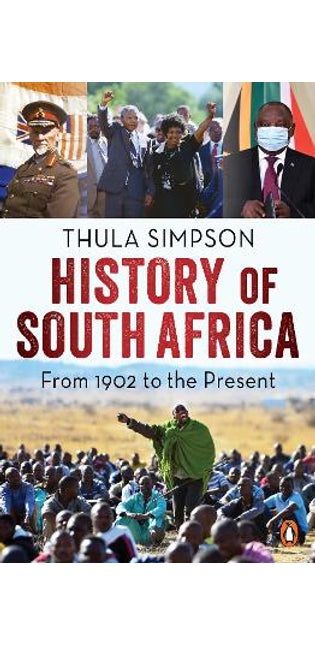
History of South Africa
Winner of the 2022 Humanities and Social Sciences Award for Best Non-Fiction Monograph South Africa was born in war, its growth has been marked by crises and ruptures, and it once again stands on a precipice. History of South Africa explores the country’s tumultuous journey from the aftermath of the Second Anglo-Boer War to the COVID-19 pandemic. Drawing on never-before-published documentary evidence – including diaries, letters, eyewitness testimony and diplomatic reports – the book follows the South African people through the battles, elections, repression, resistance, strikes, insurrections, massacres, economic crashes and health crises that have shaped the nation’s character. Tracking South Africa’s path from colony to Union and from apartheid to democracy, History of South Africa documents the influence of key figures including Pixley Seme, Jan Smuts, Lilian Ngoyi, H.F. Verwoerd, Nelson Mandela, Steve Biko, P.W. Botha, Thabo Mbeki, Jacob Zuma and Cyril Ramaphosa. The book gives detailed accounts of definitive events such as the 1922 Rand Revolt, the Defiance Campaign, Sharpeville, the Soweto uprising and the Marikana massacre. Looking beyond the country’s borders, it sheds light on the role of people such as Mohandas Gandhi, Winston Churchill, Fidel Castro and Margaret Thatcher, and unpacks military conflicts such as the World Wars, the armed struggle and the Border War. The book explores the transition to democracy and traces the phases of ANC rule, from the Rainbow Nation to transformation, state capture to ‘New Dawn’. It examines the divisive and unifying role of sport, the ups and downs of the economy, and the impact of pandemics from the Spanish flu to AIDS and COVID-19. With South Africa currently facing a crisis as severe as any in its history, the book shows that these challenges are neither unprecedented nor insurmountable, and that there are principles to be found in history that may lead us safely into the future.
R 485.00
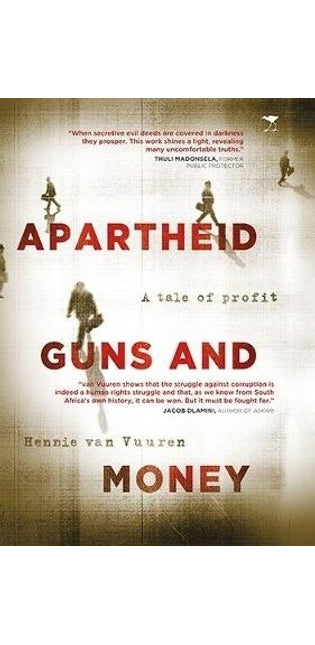
Apartheid, guns and money
The apartheid state was at war. For two decades before 1994, while internal resistance grew, mandatory sanctions prohibited the sale of strategic goods and arms to South Africa. The last white regime was confronted with an existential threat. A global covert network of nearly 50 countries was constructed to counter sanctions. In complete secrecy, allies in corporations, banks, governments and intelligence agencies helped move cash, illegally supply guns and create the apartheid arms money machine. Whistleblowers were assassinated and ordinary people suffered. This is an exposé of that machinery created in defence of apartheid and the people who made this possible: heads of state, arms dealers, aristocrats, plutocrats, senators, bankers, spies, journalists and members of secret lobby groups. They were all complicit in a crime against humanity. Motivated by ideology or kinship most sought to simply profit from the war. Many have until now relied on lingering silence to erase the uncomfortable truth. This meticulously researched book lifts the lid on some of the darkest secrets of apartheid’s economic crimes, weaving together material collected in over two-dozen archives in eight countries with an insight into tens of thousands of pages of newly declassified documents. Interviews with spies, businessmen, politicians, sanctions busters and freedom fighters provide eyewitness accounts. Networks of state capture persist in our democratic political system because the past and present are interconnected. In forging its future a new generation needs to grapple with the persistent silence regarding apartheid-era economic crime and ask difficult questions of those who benefited from it. This book provides the evidence and the motivation to do so.
R 435.00
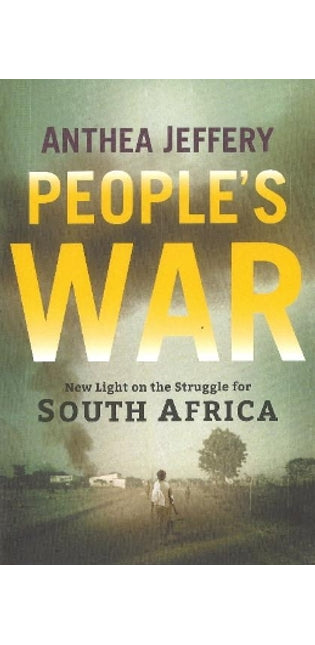
People's War
Twenty-five years have passed since South Africans were being shot, hacked or burned to death in political conflict. The memory of the trauma has faded where some 20 500 people were killed between 1984 and 1994. Conventional wisdom claims that they died at the hands of a state-backed Third Force. The more accurate explanation is that they died as a result of the peoples war the ANC unleashed. After the peoples war began in September 1984, intimidation and political killings rapidly accelerated. At the same time, a remarkably effective propaganda campaign put the blame for violence on the National Party government and its alleged Inkatha surrogate. Sympathy for the ANC soared, while its rivals suffered crippling losses in credibility and support. By 1993 the ANC was able to dominate the negotiating process, as well as to control the militarily undefeated police and army and bend them to its will. By May 1994 it had trounced its rivals and taken over government. Many books have been written on South Africa's political transition, but none deals adequately with the people's war. This book does. It shows the extraordinary success of the peoples war in giving the ANC a virtual monopoly on power, as well as the great cost at which this was done. Apart from the terror and killings it sparked, the peoples war set in motion forces that cannot easily be tamed. Contemporary South Africa and the problems it confronts cannot be fully understood without a knowledge of the scars and damaging legacy of the peoples war. For this new edition of her seminal work, Anthea Jeffery has revised and abridged her book. She has also included a brief overview of the ANCs National Democratic Revolution, for which the peoples war was intended to prepare the way. Since 1994, the NDR has incrementally been implemented in many different spheres. It is also now being speeded up in its current and more radical phase.
R 330.00
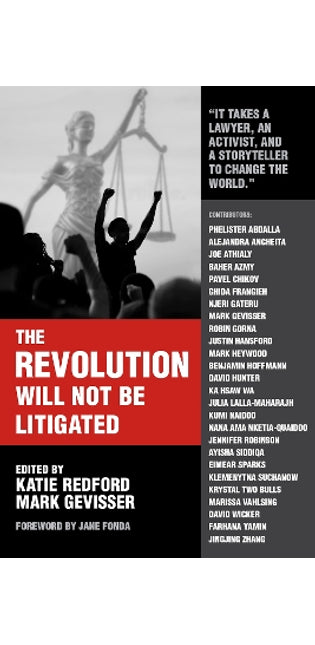
The Revolution Will Not Be Litigated
Written from the maxim “it takes a lawyer, an activist, and a storyteller to change the world", The Revolution Will Not Be Litigated shows how the law and social movements can reinforce each other in the struggle for justice and freedom. In these vibrant narratives, 25 of the world’s most accomplished movement lawyers and activists become storytellers, reflecting on their experiences at the frontlines of some of the most significant struggles of our time. In an era where human rights are under threat, their words offer both an inspiration and a compass for the way movements can use the law – and must sometimes break it – to bring about social justice. The contributors here take you into their worlds: Jennifer Robinson frantically orchestrating a protest outside London’s Ecuadorean embassy to prevent the authorities from arresting her client Julian Assange; Justin Hansford at the barricades during the protests over the murder of Black teenager Mike Brown in Ferguson, Missouri; Ghida Frangieh in Lebanon’s detention centres trying to access arrested protestors during the 2019 revolution; Pavel Chikov defending Pussy Riot and other abused prisoners in Russia; Ayisha Siddiqa, a shy Pakistani immigrant, discovering community in her new home while leading the 2019 youth climate strike in Manhattan; Greenpeace activist Kumi Naidoo on a rubber dinghy in stormy Arctic seas contemplating his mortality as he races to occupy an oil rig.The stories in The Revolution Will Not Be Litigated capture the complex, and often-awkward dance between legal reform and social change. They are more than compelling portraits of fascinating lives and work, they are revelatory: of generational transitions; of epochal change and apocalyptic anxiety; of the ethical dilemmas that define our age; and of how one can make a positive impact when the odds are stacked against you in a harsh world of climate crisis and ruthless globalization. Contributors: Phelister Abdalla, Alejandra Ancheita, Joe Athialy, Baher Azmy, Pavel Chikov, Ghida Frangieh, Njeri Gateru, Mark Gevisser, Robin Gorna, Justin Hansford, Mark Heywood, Benjamin Hoffman, David Hunter, Ka Hsaw Wa, Julia Lalla-Maharajh, Kumi Naidoo, Nana Ama Nketia-Quaidoo, Katie Redford, Jennifer Robinson, Ayisha Siddiqa, Eimear Sparks, Klementyna Suchanov, Marissa Vahlsing, Krystal Two Bulls, David Wicker, Farhana Yamin and JingJing Zhang.
R 165.00
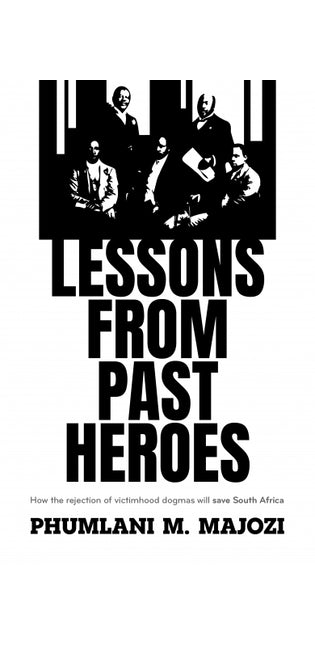
Lessons From Past Heroes
What can be learned from black South Africans who achieved success before South Africa became a democracy in 1994? What are the challenges they faced, and how did they overcome them? And, today, how have South Africans benefited from the country’s democratic system of governance? These are the questions Phumlani M. Majozi explores and attempts to answer in Lessons from Past Heroes. He traces black people’s success and political activity back to the early 1900s; successful men and women who spearheaded the struggle against the segregationist, colonialist government and devoted their lives to advancing the interests of their communities. Phumlani explores the careers,challenges, and successes of people such as Pixley ka Isaka Seme, John Langalibalele Dube, Sol Plaatje and Josiah Tshangana Gumede. During the apartheid years, South Africa produced black men and women who overcame the odds to succeed in their fields of business, entertainment, science, and politics. They excelled in the face of an oppressive government system, and their stories should inspire every South African today. After exploring the history of South Africa, Phumlani delves into the presentand the future; evaluating the challenges South Africans face and proposes solutions that can speed up their economic progress. He argues that much of South Africa’s history has portrayed the majority as victims of the minority, and that the inspirational stories of those people who overcame adversity are not being told widely enough.
R 330.00
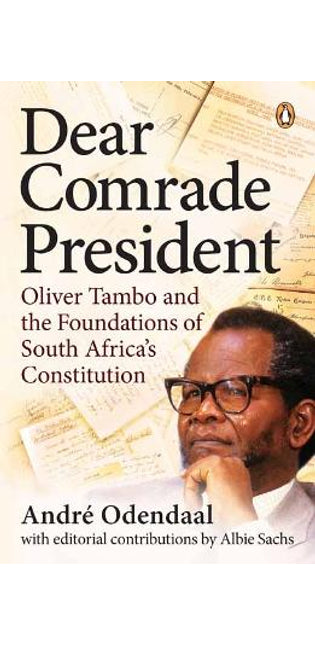
Dear Comrade President
In his annual presidential address on 8 January 1986, ANC president Oliver Tambo called on South Africans to make apartheid ungovernable through armed action and militant struggle. But unknown to the world, on that very day, the quiet-spoken mathematics teacher and aspirant priest turned reluctant revolutionary had also set up a secret think tank in Lusaka, which he named the Constitution Committee, giving it an ‘ad hoc unique exercise’ that had ‘no precedent in the history of the movement’. Knowing that all wars end at a negotiating table, and judging the balance of forces to be moving in favour of the liberation movement, Tambo wanted the ANC to hold the initiative after the fall of apartheid. Assisted by Pallo Jordan, he instructed his new think tank to formulate the principles and draft the outlines of a constitution that could unite South Africa when the time came to talk in the fledgling days of freedom and democracy. The seven-member team, including Albie Sachs, Kader Asmal and Zola Skweyiya, started deliberating and reporting to Tambo. In correspondence, they typically addressed him as ‘Dear Comrade President’.Drawing on the personal archives of participants, Dear Comrade President explains how the purposeful first steps were taken in the making of South Africa’s Constitution. Why and how did this process happen? What were the first written words? When and where were they put on paper? By whom? What values did they espouse? And how did the committee’s work fit into the broader struggle? This book answers these questions in new, paradigm-shifting ways.
R 425.00
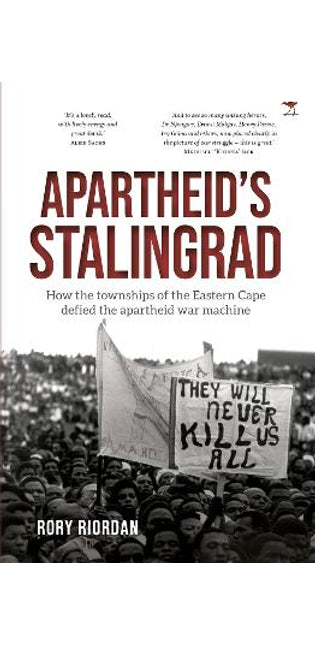
Apartheid’s Stalingrad
The apartheid security juggernaut met its Battle of Stalingrad in the townships of Port Elizabeth and Uitenhage in 1985 and 1986. This is the blazing story of how the people’s resistance – in the church, in the civic structures, underground – fought that war. Up until these insurrections, the brutal force of the apartheid state successfully crushed all attempts at revolt. Yet in the townships of Port Elizabeth, where they threw everything they had at the uprisings, the people stood and fought, and fought and stood. Riordan, a human rights activist during the years of high apartheid, draws a line connecting the story of Thozamile Botha, the Zwide and KwaZakhele Residents’ Associations and the Port Elizabeth Black Civic Association (PEBCO) of 1979, the subsequent demise of PEBCO, and the February 1990 unbanning of the ANC and the movement at large. What had happened in the intervening ten years to effect this once unimaginable change? Apartheid’s Stalingrad tells us what had happened.
R 435.00