Search results for "Program Language Mastery"
Items we need to order for you

R 519.00
C++ Programming Language, The
The new C++11 standard allows programmers to express ideas more clearly, simply, and directly, and to write faster, more efficient code. Bjarne Stroustrup, the designer and original implementer of C++, has reorganized, extended, and completely rewritten his definitive reference and tutorial for programmers who want to use C++ most effectively. The C++ Programming Language, Fourth Edition, delivers meticulous, richly explained, and integrated coverage of the entire language—its facilities, abstraction mechanisms, standard libraries, and key design techniques. Throughout, Stroustrup presents concise, “pure C++11” examples, which have been carefully crafted to clarify both usage and program design. To promote deeper understanding, the author provides extensive cross-references, both within the book and to the ISO standard. New C++11 coverage includes Support for concurrency Regular expressions, resource management pointers, random numbers, and improved containers General and uniform initialization, simplified for-statements, move semantics, and Unicode support Lambdas, general constant expressions, control over class defaults, variadic templates, template aliases, and user-defined literals Compatibility issues Topics addressed in this comprehensive book include Basic facilities: type, object, scope, storage, computation fundamentals, and more Modularity, as supported by namespaces, source files, and exception handling C++ abstraction, including classes, class hierarchies, and templates in support of a synthesis of traditional programming, object-oriented programming, and generic programming Standard Library: containers, algorithms, iterators, utilities, strings, stream I/O, locales, numerics, and more The C++ basic memory model, in depth This fourth edition makes C++11 thoroughly accessible to programmers moving from C++98 or other languages, while introducing insights and techniques that even cutting-edge C++11 programmers will find indispensable. This is a hardcover version of the Fourth Edition. Content in this hardcover and the paperback version is identical. This book features an enhanced, layflat binding, which allows the book to stay open more easily when placed on a flat surface. This special binding method—noticeable by a small space inside the spine—also increases durability.
R 2,756.00
Fortran 90 Language Guide
PREFACE The FORTRAN programming language was designed in the 1950s and standardized in 1966. That version of the language was later called FORTRAN 66. FORTRAN 66 quickly developed into the most important programming language for the development of engineering and scientific applications. In 1978, the language was redesigned and standardized again and called FORTRAN 77. However, this FORTRAN version was not yet a modern language as far as software engineering and programming methodology were concerned. In 1991, a new version of the language was standardized. Its name is Fortran 90. This version is a powerful tool, in fact it is closer to the state of the art of high level problem oriented programming languages than other famous languages that are used for the same area of application. The next revision of the language is planned for 1995; it will be a minor revision of Fortran 90. The next major language revision is planned for the year 2000. This "Fortran90 Language Guide" is a comprehensible description of the com plete Fortran 90 programming language as it is defined in the standard docu ment [1]. It is already in accordance with the two corrigenda [2] [3] of the standard document. The standard document is a reference book for compiler writers and those experts who already know all about Fortran 90, but it is use less for beginners and rather impractical even for experienced programmers.
R 1,570.92
Go Programming Language For Dummies
Ready, set, program with Go! Now is the perfect time to learn the Go Programming Language. It's one of the most in-demand languages among tech recruiters and developers love its simplicity and power. Go Programming Language For Dummies is an easy way to add this top job skill to your toolkit. Written for novice and experienced coders alike, this book traverses basic syntax, writing functions, organizing data, building packages, and interfacing with APIs. Go--or GoLang, as it's also known--has proven to be a strong choice for developers creating applications for the cloud-based world we live in. This book will put you on the path to using the language that's created some of today's leading web applications, so you can steer your career where you want to Go! Learn how Go works and start writing programs and modules Install and implement the most powerful third-party Go packages Use Go in conjunction with web services and MySQL databases Keep your codebase organized and use Go to structure data With this book, you can join the growing numbers of developers using Go to create 21st century solutions. Step inside to take start writing code that puts data in users' hands.
R 798.00
Developing Professional-Level Language Proficiency
This comprehensive 2002 book examines approaches to teaching students who aim to make the leap from 'advanced' or 'superior' proficiency in a foreign language to 'near-native' ability. While there are copious publications on classroom techniques and methods for lower levels of instruction, virtually nothing exists about this transition, which is vital for those who intend to use foreign languages in high-level international arenas. This book, by leading practitioners in this area of foreign language teaching, aims to fill this gap and assist those developing language programmes at the 'advanced to distinguished' level. • Divided into three parts which provide information on different aspects of teaching at this level - theory of advanced language teaching - nine sample programs - description of highly advanced learners based on long-term experience and empirical research • Presents programs in seven languages - Spanish, Arabic, Russian, Chinese, English, French and German • Content is both theoretical and pragmatic
R 3,490.43
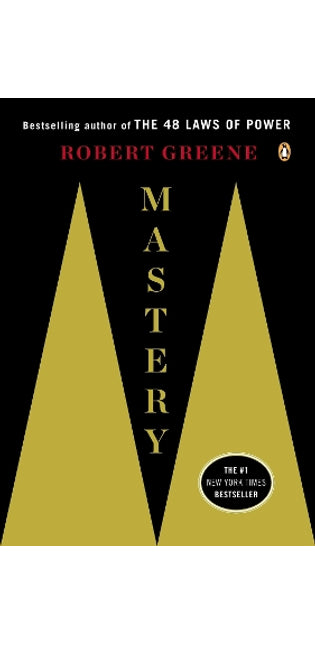
Mastery
From the bestselling author of The 48 Laws of Power and The Laws of Human Nature, a vital work revealing that the secret to mastery is already within you. Each one of us has within us the potential to be a Master. Learn the secrets of the field you have chosen, submit to a rigorous apprenticeship, absorb the hidden knowledge possessed by those with years of experience, surge past competitors to surpass them in brilliance, and explode established patterns from within. Study the behaviors of Albert Einstein, Charles Darwin, Leonardo da Vinci and the nine contemporary Masters interviewed for this book. The bestseller author of The 48 Laws of Power, The Art of Seduction, and The 33 Strategies of War, Robert Greene has spent a lifetime studying the laws of power. Now, he shares the secret path to greatness. With this seminal text as a guide, readers will learn how to unlock the passion within and become masters.
R 639.00
Language Server Protocol and Implementation
Understand the important aspects of implementing a production-grade language server in support of language-smart tools such as code editors and other programming utilities. This book shows you how to create a single implementation of a language server that can be used by multiple tools, enabling you to do the job once in a way that can be shared and reused. This book covers the language server protocol used for communication between programming tools and your language server. The book also provides an in-depth understanding of the design, implementation, and user experience aspects which should be considered when implementing a language server. The book walks you through an example language server implementation to illustrate the basic concepts, then goes on to cover advanced aspects of language server use such as progress reporting, launchers, and extension points. User experience is an important aspect of language server implementation and different tooling vendors strive to provide their own unique user experiences. This book explains how the protocol features can be leveraged to address the unique developer experience provided by different tooling vendors. The book also shows how to enhance the smoothness of the editing experience by orchestrating multiple features together.What You Will LearnImplement a language server from scratchUnderstand language server protocol and its data modelsLeverage the protocol while preserving the unique user experience of different editorsExtend the protocol to support more than its standard capabilitiesRun a language server on top of launchers such as standard I/O and TCP socketSeamlessly incorporate language semantics into your protocol featuresWho This Book Is ForDevelopers focused on and passionate about implementing language development tools such as plug-ins and extensions for interactive development environments (IDEs) or other tools that rely upon parsing of language statements and commands, and developers who need an in-depth understanding of the language server protocol as well as how to use the language server protocol to develop extensible language services
R 1,254.00
R 764.00
Fortran 95 Language Guide
Fortran is one of the most widely used programming languages in science and engineering. Fortran 90 replaced the outmoded FORTRAN 77 in 1991 and this recent version of the International Standard enhances this version. It also includes several new features to ensure that Fortran continues to be aligned with High Performance Fortran (HPF) for parallel computer architectures. Fortran 95 Language Guide will serve as a language reference manual for programmers, provide teaching material for introductory courses in Fortran programming, and give help to experienced Fortran programmers migrating to the new standard. Gehrke has provided a comprehensive and easy-to-understand description of the Fortran 95 programming language as defined by the ISO, which will be welcomed by both practitioners and students alike.
R 2,787.03
R 608.00
F Language Guide
Fortran is currently the world's most powerful numeric language and F is a subset of this. F is a programming language which is nearly as powerful as its parent language, containing the modern language features of Fortran, yet smaller and easier to use, debug and teach than Fortran. As with his previous Fortran books, Wilhelm Gehrke has provided a clear and comprehensive guide to the F language in this book which will be welcomed by practitioners and students alike. The F Language Guide will serve as a language reference manual for the novice as well as for the experienced programmer, as teaching material for courses in F programming, and in programming methodology. The guide concentrates on the description of the language as a programmers' tool. A representation of the F Syntax using railroad diagrams will be available on the Springer server at http://www.springer.co.uk/
R 1,564.46
R 1,878.51
R 165.00
R 703.00
R 244.00
Advising in Language Learning
Advising in Language Learning (ALL) brings together examples of advising practice and research from various international contexts in a fast-developing field. A theoretical model based on constructivism and sociocultural theory (the Dialogue, Tools and Context Model) is proposed and supported thoughout the book, as each of the contributions focuses on one or more areas of the model. In this volume the editors set out the general aims and understandings of the field, illustrating the innovative manner in which advisors around the world are working with learners and researching the practice of ALL.
R 2,370.92
R 519.00
R 1,520.63
R 251.03
R 1,694.24
Introducing Speech and Language Processing
This major new textbook provides a clearly-written, concise and accessible introduction to speech and language processing. Assuming knowledge of only the very basics of linguistics and written specifically for students with no technical background, it is the perfect starting point for anyone beginning to study the discipline. Students are introduced to topics such as digital signal processing, speech analysis and synthesis, finite-state machines, automatic speech recognition, parsing and probabilistic grammars, and are shown from a very elementary level how to work with two programming languages, C and Prolog. The accompanying CD-ROM contains all the software described in the book, along with a C compiler, Prolog interpreter and sound file editor, thus providing a self-contained, one-stop resource for the learner. Setting a firm grounding in speech and language processing and an invaluable foundation for further study, Introducing Speech and Language Processing is set to become the leading introduction to the field.
R 3,133.00
Introduction to Assembly Language Programming
This updated textbook introduces readers to assembly and its evolving role in computer programming and design. The author concentrates the revised edition on protected-mode Pentium programming, MIPS assembly language programming, and use of the NASM and SPIM assemblers for a Linux orientation. The focus is on providing students with a firm grasp of the main features of assembly programming, and how it can be used to improve a computer's performance. All of the main features are covered in depth, and the book is equally viable for DOS or Linux, MIPS (RISC) or CISC (Pentium). The book is based on a successful course given by the author and includes numerous hands-on exercises.
R 2,909.91
R 672.00
R 376.00
Language Intelligence
Thorough review of foundational concepts and advanced techniques in natural language processing (NLP) and its impact across sectors Supported by examples and case studies throughout, Language Intelligence provides an in-depth exploration of the latest advancements in natural language processing (NLP), offering a unique blend of insight on theoretical foundations, practical applications, and future directions in the field. Comprised of 10 chapters, this book provides a thorough understanding of both foundational concepts and advanced techniques, starting with an overview of the historical development of NLP and essential mechanisms of Natural Language Understanding (NLU) and Natural Language Generation (NLG). It delves into the data landscape crucial for NLP, emphasizing ethical considerations, and equips readers with fundamental text processing techniques. The book also discusses linguistic features central to NLP and explores computational and cognitive approaches that enrich the field’s advancement. Practical applications and advanced processing techniques across various sectors like healthcare, legal, finance, and education are showcased, along with a critical examination of NLP metrics and methods for evaluation. The appendices offer detailed explorations of text representation methods, advanced applications, and Python’s NLP capabilities, aiming to inform, inspire, and ignite a passion for NLP in the ever-expanding digital universe. Written by a highly qualified academic with significant research experience in the field, Language Intelligence covers topics including: Fundamental text processing, covering text cleaning, sentence splitting, tokenization, lemmatization and stemming, stop-word removal, part-of-speech tagging, and parsing and syntactic analysisComputational and cognitive approaches, covering human-like reasoning, transfer learning, and learning with minimal examplesAffective, psychological, and content analysis, covering sentiment analysis, emotion recognition, irony, humour, and sarcasm detection, and indicators of distressMultilingual natural language processing, covering translation and transliteration, cross-lingual models and embeddings, low-resource language processing, and cultural nuance and idiom recognition Language Intelligence is an ideal reference for professionals across sectors and graduate students in related programs of study who have a foundational understanding of computer science, linguistics, and artificial intelligence looking to delve deeper into the intricacies of NLP.
R 4,559.00
R 580.00
JR Programming Language
JR is an extension of the Java programming language with additional concurrency mechanisms based on those in the SR (Synchronizing Resources) programming language. The JR implementation executes on UNIX-based systems (Linux, Mac OS X, and Solaris) and Windows-based systems. It is available free from the JR webpage. This book describes the JR programming language and illustrates how it can be used to write concurrent programs for a variety of applications. This text presents numerous small and large example programs. The source code for all programming examples and the given parts of all programming exercises are available on the JR webpage. Dr. Ronald A. Olsson and Dr. Aaron W. Keen, the authors of this text, are the designers and implementors of JR.
R 1,571.66
Developing Global Competence in World Language Education
This book presents a four-step framework to help English as a world language (EWL) learners successfully develop global competence, which is defined as the skills, values, and behaviors that prepare young people to thrive in diverse environments. The book showcases practical methods and strategies supported by autoethnography and empirical studies to detail the four elements of the framework towards developing global competence: English language proficiency, cross-cultural knowledge, adopting flexibility in oral communication, and embracing values beyond our horizons. While the English language and culture provide essential input for effective communication, developing flexibility in communication styles and viewing conflict as an opportunity for growth can help L2 learners navigate intercultural encounters more effectively and achieve cross-cultural adaptation. This text will be beneficial to language learners, intercultural communication majors, researchers, and educators in TESOL/EFL/ESL programs, as well as in-service teachers of English language learners (ELLs).
R 1,685.00
R 611.00
Using Surveys in Language Programs
This text presents a comprehensive but practical overview of how to develop and implement effective survey projects. This book presents a comprehensive but practical overview of the different phases and activities involved in the development and implementation of effective survey projects by language teaching professionals. It is accessible to graduate students, language teachers, administrators, and researchers. The theoretical and practical issues involved in survey design are defined and discussed. Each chapter includes a list of key terms, a set of review questions, and a collection of exercises for practical application. Language teaching professionals will find all the crucial information needed to survey students and teachers about their beliefs and practices.
R 1,562.00
R 519.00