Search results for "Code"
Items in stock - 4 working days delivery time

Believer's Code
365 Devotions to Unlock the Blessings in God's WordGod's Word is filled with blessings and insights that encourage, comfort, and bring joy. Delve into the riches of Scripture through The Believer’s Code, and find each day's devotional, including Scripture, a daily reading, and a Code Word. The unique Code Words offer a challenge and practical suggestion to put your faith in action.All author royalties from the book are donated to Mission:Dignity, an organization that supports retired pastors and their spouses living near the poverty level.
R 140.00
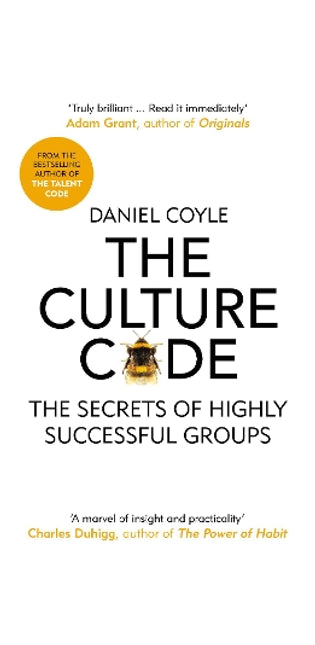
Culture Code
THE NEW YORK TIMES BESTSELLER'A marvel of insight and practicality' Charles Duhigg, author of The Power of HabitHow do you build and sustain a great team?The Culture Code reveals the secrets of some of the best teams in the world - from Pixar to Google to US Navy SEALs - explaining the three skills such groups have mastered in order to generate trust and a willingness to collaborate. Combining cutting-edge science, on-the-ground insight and practical ideas for action, it offers a roadmap for creating an environment where innovation flourishes, problems get solved, and expectations are exceeded.'There are profound ideas on every single page, stories that will change the way you work, the way you lead, and the impact you have on the world. Highly recommended, an urgent read.' Seth Godin, author of Linchpin'Truly brilliant . . . Read it immediately' Adam Grant, author of Originals'Well told stories, with actionable lessons' Financial Times
R 330.00

Items we need to order for you
Organic Codes
The genetic code appeared on Earth with the first cells. The codes of cultural evolution arrived almost four billion years later. These are the only codes that are recognized by modern biology. In this book, however, Marcello Barbieri explains that there are many more organic codes in nature, and their appearance not only took place throughout the history of life but marked the major steps of that history. A code establishes a correspondence between two independent 'worlds', and the codemaker is a third party between those 'worlds'. Therefore the cell can be thought of as a trinity of genotype, phenotype and ribotype. The ancestral ribotypes were the agents which gave rise to the first cells. The book goes on to explain how organic codes and organic memories can be used to shed new light on the problems encountered in cell signalling, epigenesis, embryonic development, and the evolution of language.
R 2,879.23
R 455.00
R 1,073.28
R 611.00
R 275.00
R 367.00
R 1,046.00
Construction and Evolution of Code Generators
Automatic code generation is an essential cornerstone of model-driven approaches to software development. Currently, lots of techniques are available that support the specification and implementation of code generators, such as engines based on templates or rule-based transformations. All those techniques have in common that code generators are either directly programmed or described by means of textual specifications. This monograph presents Genesys, a general approach, which advocates the graphical development of code generators for arbitrary source and target languages, on the basis of models and services. In particular, it is designed to support incremental language development on arbitrary metalevels. The use of models allows building code generators in a truly platform-independent and domain-specific way. Furthermore, models are amenable to formal verification methods such as model checking, which increase the reliability and robustness of the code generators. Services enable the reuse and integration of existing code generation frameworks and tools regardless of their complexity, and at the same time manifest as easy-to-use building blocks which facilitate agile development through quick interchangeability. Both, models and services, are reusable and thus form a growing repository for the fast creation and evolution of code generators.
R 2,168.89
R 456.00
Codes, Cryptology and Information Security
This book constitutes the proceedings of the Second International Conference on Codes, Cryptology and Information Security, C2SI 2017, held in Rabat, Morocco, in April 2017. The 19 regular papers presented together with 5 invited talks were carefully reviewed and selected from 72 submissions. The first aim of this conference is to pay homage to Claude Carlet for his valuable contribution in teaching and disseminating knowledge in coding theory and cryptography worldwide, especially in Africa. The second aim of the conference is to provide an international forum for researchers from academia and practitioners from industry from all over the world for discussion of all forms of cryptology, coding theory and information security.
R 2,189.60
R 1,374.00
Introduction to Error Correcting Codes with Applications
5. 2 Rings and Ideals 148 5. 3 Ideals and Cyclic Subspaces 152 5. 4 Generator Matrices and Parity-Check Matrices 159 5. 5 Encoding Cyclic Codest 163 5. 6 Syndromes and Simple Decoding Procedures 168 5. 7 Burst Error Correcting 175 5. 8 Finite Fields and Factoring xn-l over GF(q) 181 5. 9 Another Method for Factoring xn-l over GF(q)t 187 5. 10 Exercises 193 Chapter 6 BCH Codes and Bounds for Cyclic Codes 6. 1 Introduction 201 6. 2 BCH Codes and the BCH Bound 205 6. 3 Bounds for Cyclic Codest 210 6. 4 Decoding BCH Codes 215 6. 5 Linearized Polynomials and Finding Roots of Polynomialst 224 6. 6 Exercises 231 Chapter 7 Error Correction Techniques and Digital Audio Recording 7. 1 Introduction 237 7. 2 Reed-Solomon Codes 237 7. 3 Channel Erasures 240 7. 4 BCH Decoding with Erasures 244 7. 5 Interleaving 250 7. 6 Error Correction and Digital Audio Recording 256 7.
R 1,594.13
R 1,374.00
R 457.00
Just Code
How code shapes power and inequality across technology, governance, and global political economies.Code—whether software routines, legal frameworks, or informal social norms—shapes the world around us in profound and often invisible ways. In Just Code, editors Jeffrey R. Yost and Gerardo Con Díaz bring together a diverse group of scholars to examine how different forms of code both structure and reinforce power dynamics across societies.From algorithmic bias in artificial intelligence to global labor practices, this collection uncovers the hidden mechanisms by which code perpetuates inequality and injustice. It explores connections among technology, governance, and socioeconomic systems to reveal how code is both a tool of control and a product of the power structures it enables. Contributors analyze topics such as platform economies, algorithmic collusion, and labor practices in the tech industry, as well as how systems of representation and communication encode biases that amplify racial, gendered, and economic inequalities. These essays provide a critical lens for understanding how code intersects with politics and global cultures of technology production and use.By broadening the concept of "code" to include legal, social, and cultural systems, this collection challenges readers to see beyond the technical and interrogate the structures of power embedded in every layer of modern life. Just Code introduces a new framework for understanding the relationships among information technologies, systemic inequities, and the political economies that sustain them.
R 2,617.03
R 457.00
R 554.00
Code Halos
Harness "Code Halos" to gain competitive advantage in the digital era Amazon beating Borders, Netflix beating Blockbuster, Apple beating Kodak, and the rise of companies like Google, LinkedIn, and Pandora are not isolated or random events. Today's outliers in revenue growth and value creation are winning with a new set of rules. They are dominating by managing the information that surrounds people, organizations, processes, and products—what authors Malcolm Frank, Paul Roehrig, and Ben Pring call Code Halos. This is far beyond “Big Data” and analytics. Code Halos spark new commercial models that can dramatically flip market dominance from industry stalwarts to challengers. In this new book, the authors show leaders how digital innovators and traditional companies can build Code Halo solutions to drive success. The book: Examines the explosion of digital information that now surrounds us and describes the profound impact this is having on individuals, corporations, and societies;Shows how the Crossroads Model can help anticipate and navigate this market shift;Provides examples of traditional firms already harnessing the power of Code Halos including GE's "Brilliant Machines," Disney's theme park "Magic Band," and Allstate's mobile devices and analytics that transform auto insurance. With reasoned insight, new data, real-world cases, and practical guidance, Code Halos shows seasoned executives, entrepreneurs, students, line-of-business owners, and technology leaders how to master the new rules of the Code Halo economy.
R 639.00
R 605.04
R 518.00
Codes and Algebraic Curves
The geometry of curves has fascinated mathematicians for 2500 years, and the theory has become highly abstract. Recently links have been made with the subject of error correction, leading to the creation of geometric Goppa codes, a new and important area of coding theory. This book is an updated and extended version of the last part of the successful book Error-Correcting Codes and Finite Fields. It provides an elementary introduction to Goppa codes, andincludes many examples, calculations, and applications. The book is in two parts with an emphasis on motivation, and applications of the theory take precedence over proofs of theorems. The formal theory is, however, provided in the second part of the book, and several of the concepts and proofs have beensimplified without sacrificing rigour.
R 7,347.00
R 424.00
R 244.00
R 457.00
R 1,140.00
R 1,521.00
R 546.09
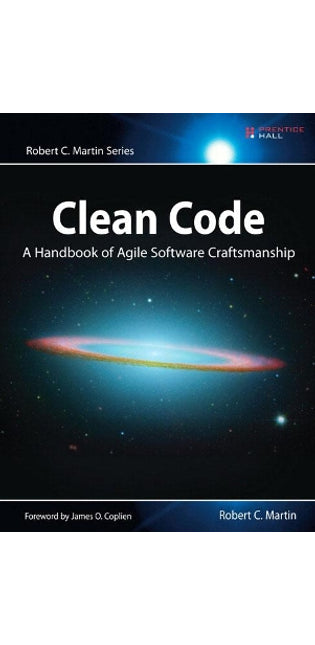
Clean Code
Even bad code can function. But if code isn’t clean, it can bring a development organization to its knees. Every year, countless hours and significant resources are lost because of poorly written code. But it doesn’t have to be that way. Noted software expert Robert C. Martin presents a revolutionary paradigm with Clean Code: A Handbook of Agile Software Craftsmanship. Martin has teamed up with his colleagues from Object Mentor to distill their best agile practice of cleaning code “on the fly” into a book that will instill within you the values of a software craftsman and make you a better programmer—but only if you work at it. What kind of work will you be doing? You’ll be reading code—lots of code. And you will be challenged to think about what’s right about that code, and what’s wrong with it. More importantly, you will be challenged to reassess your professional values and your commitment to your craft. Clean Code is divided into three parts. The first describes the principles, patterns, and practices of writing clean code. The second part consists of several case studies of increasing complexity. Each case study is an exercise in cleaning up code—of transforming a code base that has some problems into one that is sound and efficient. The third part is the payoff: a single chapter containing a list of heuristics and “smells” gathered while creating the case studies. The result is a knowledge base that describes the way we think when we write, read, and clean code. Readers will come away from this book understanding How to tell the difference between good and bad codeHow to write good code and how to transform bad code into good codeHow to create good names, good functions, good objects, and good classesHow to format code for maximum readabilityHow to implement complete error handling without obscuring code logicHow to unit test and practice test-driven developmentThis book is a must for any developer, software engineer, project manager, team lead, or systems analyst with an interest in producing better code.
R 1,832.00
Jesus Code
In 1998, John Randolph Price experienced a mystical revelation from which came specific steps to higher consciousness - a ladder to climb to a new dimension where the illusions of sickness, scarcity and discord are shattered and a world of wholeness, abundance and right relations is revealed. He was also given a glimpse of the future as we move into the third millennium, and how lasting peace will finally come to Earth. This is the story of that revelation.
R 391.00
R 623.00
Cool Code
In this funny and heartfelt slice-of-life graphic novel for fans of Raina Telgemeier and Kayla Miller, when coding whiz Zoey goes from homeschooled to new school, she develops an app to help her make friends. Will the Cool Code help Zoey fit in? Or will it completely crash her social life?In an attempt to fit in, Zoey develops an app called the Cool Code with a cute llama avatar that will tell her everything from what to say to what to wear based on pop culture algorithms she's uploaded.But when the app gives her ridiculous advice, awkwardness and hilarity ensues. With a few upgrades and a bit of debugging from the coding club, the app actually works--Zoey gets really popular . . . and gets her pulled in all kinds of directions, including away from her real friends.Life's most complicated choices. . . is there a code for that?
R 570.00
Code Copying
This book presents Lars Johanson’s Code-Copying Model, an integrated framework for the description of contact-induced processes. The model covers all the main contact linguistic issues in their synchronic and diachronic interrelationship. The terminology is kept intuitive and simple to apply. Illustrative examples from a wide range of languages demonstrate the model’s applicability to both spoken and written codes. The fundamental difference between ‘take-over’ copying and ‘carry-over’ copying is given special value. Speakers can take over copies from a secondary code into their own primary code, or alternatively carry over copies from their own primary code into their variety of a secondary code. The results of these two types of copying are significantly different and thus provide insights into historical processes.
R 4,641.00
Beautiful Code
How do the experts solve difficult problems in software development? In this unique and insightful book, leading computer scientists offer case studies that reveal how they found unusual, carefully designed solutions to high-profile projects. You will be able to look over the shoulder of major coding and design experts to see problems through their eyes. This is not simply another design patterns book, or another software engineering treatise on the right and wrong way to do things. The authors think aloud as they work through their project's architecture, the tradeoffs made in its construction, and when it was important to break rules. "Beautiful Code" is an opportunity for master coders to tell their story. All author royalties will be donated to Amnesty International. The book includes the following contributions: "Beautiful Brevity: Rob Pike's Regular Expression Matcher" by Brian Kernighan, Department of Computer Science, Princeton University; "Subversion's Delta Editor: Interface as Ontology" by Karl Fogel, editor of "QuestionCopyright.org", Co-founder of Cyclic Software, the first company offering commercial CVS support; "The Most Beautiful Code I Never Wrote" by Jon Bentley, Avaya Labs Research; "Finding Things" by Tim Bray, Director of Web Technologies at Sun Microsystems, co-inventor of XML 1.0; "Correct, Beautiful, Fast (In That Order): Lessons From Designing XML Validators" by Elliotte Rusty Harold, Computer Science Department at Polytechnic University, author of "Java I/O, Java Network Programming", and "XML in a Nutshell" (O'Reilly); and, "The Framework for Integrated Test: Beauty through Fragility" by Michael Feathers, consultant at Object Mentor, author of "Working Effectively with Legacy Code" (Prentice Hall). It also includes: "Beautiful Tests" by Alberto Savoia, Chief Technology Officer, Agitar Software Inc; "On-the-Fly Code Generation for Image Processing" by Charles Petzold, author "Programming Windows and Code: The Hidden Language of Computer Hardware and Software" (both Microsoft Press); "Top Down Operator Precedence" by Douglas Crockford, architect at Yahoo!Inc, Founder and CTO of State Software, where he discovered JSON; "Accelerating Population Count" by Henry Warren, currently works on the Blue Gene petaflop computer project Worked for IBM for 41 years; "Secure Communication: The Technology of Freedom" by Ashish Gulhati, Chief Developer of Neomailbox, an Internet privacy service Developer of Cryptonite, an OpenPGP-compatible secure webmail system; and, "Growing Beautiful Code in BioPerl" by Lincoln Stein, investigator at Cold Spring Harbor Laboratory - develops databases and user interfaces for the Human Genome Project using the Apache server and its module API.It also includes: "The Design of the Gene Sorter" by Jim Kent, Genome Bioinformatics Group, University of California Santa Cruz; "How Elegant Code Evolves With Hardware: The Case Of Gaussian Elimination" by Jack Dongarra, University Distinguished Professor of Comp
R 1,557.00
R 457.00
R 397.00
R 855.00
R 1,010.26
R 886.00
R 651.00
Code Generation with Roslyn
Learn how Roslyn's new code generation capability will let you write software that is more concise, runs faster, and is easier to maintain. You will learn from real-world business applications to create better software by letting the computer write its own code based on your business logic already defined in lookup tables.Code Generation with Rosyln is the first book to cover this new capability. You will learn how these techniques can be used to simplify systems integration so that if one system already defines business logic through lookup tables, you can integrate a new system and share business logic by allowing the new system to write its own business logic based on already existing table-based business logic.One of the many benefits you will discover is that Roslyn uses an innovative approach to compiler design, opening up the inner workings of the compiler process. You will learn how to see the syntax tree that Roslyn is building as it compiles your code. Additionally, you will learn to feed it your own syntax tree that you create on the fly.What You'll LearnStructure logic to be stored in database designBuild complex conditional logic based on lookup data in the databaseCompile code that you generate programmaticallyDiscover generated code and run it dynamically to implement new business logicDebug problems in generated codeDeploy and access generated codeWho This Book Is ForBack end developers in very dynamic fast-paced business environments. Developers focused on integrating different systems across an enterprise should also find this information useful.
R 853.93
R 1,238.00
R 457.00
R 457.00