Search results for "Computer Science with C"
Items we need to order for you

SOFSEM 2020: Theory and Practice of Computer Science
This book constitutes the refereed proceedings of the 46th International Conference on Current Trends in Theory and Practice of Informatics, SOFSEM 2020, held in Limassol, Cyprus, in January 2020. The 40 full papers presented together with 17 short papers and 3 invited papers were carefully reviewed and selected from 125 submissions. They presented new research results in the theory and practice of computer science in the each sub-area of SOFSEM 2020: foundations of computer science, foundations of data science and engineering, foundations of software engineering, and foundations of algorithmic computational biology.
R 2,244.70
R 1,176.52
Second Age of Computer Science
By the end of the 1960s, a new discipline named computer science had come into being. A new scientific paradigm—the 'computational paradigm'—was in place, suggesting that computer science had reached a certain level of maturity. Yet as a science it was still precociously young. New forces, some technological, some socio-economic, some cognitive impinged upon it, the outcome of which was that new kinds of computational problems arose over the next two decades.Indeed, by the beginning of the 1990's the structure of the computational paradigm looked markedly different in many important respects from how it was at the end of the 1960s. Author Subrata Dasgupta named the two decades from 1970 to 1990 as the second age of computer science to distinguish it from thepreceding genesis of the science and the age of the Internet/World Wide Web that followed.This book describes the evolution of computer science in this second age in the form of seven overlapping, intermingling, parallel histories that unfold concurrently in the course of the two decades. Certain themes characteristic of this second age thread through this narrative: the desire for a genuine science of computing; the realization that computing is as much a human experience as it is a technological one; the search for a unified theory of intelligence spanning machines and mind; thedesire to liberate the computational mind from the shackles of sequentiality; and, most ambitiously, a quest to subvert the very core of the computational paradigm itself. We see how the computer scientists of the second age address these desires and challenges, in what manner they succeed or fail andhow, along the way, the shape of computational paradigm was altered.And to complete this history, the author asks and seeks to answer the question of how computer science shows evidence of progress over the course of its second age.
R 2,137.20
Principles of Constraint Programming
Constraints are everywhere: most computational problems can be described in terms of restrictions imposed on the set of possible solutions, and constraint programming is a problem-solving technique that works by incorporating those restrictions in a programming environment. It draws on methods from combinatorial optimisation and artificial intelligence, and has been successfully applied in a number of fields from scheduling, computational biology, finance, electrical engineering and operations research through to numerical analysis. This textbook for upper-division students provides a thorough and structured account of the main aspects of constraint programming. The author provides many worked examples that illustrate the usefulness and versatility of this approach to programming, as well as many exercises throughout the book that illustrate techniques, test skills and extend the text. Pointers to current research, extensive historical and bibliographic notes, and a comprehensive list of references will also be valuable to professionals in computer science and artificial intelligence.
R 2,971.40
R 1,099.00
JavaTech, an Introduction to Scientific and Technical Computing with Java
JavaTech is a practical introduction to the Java programming language with an emphasis on the features that benefit technical computing. After presenting the basics of object-oriented programming in Java, it examines introductory topics such as graphical interfaces and thread processes. It goes on to review network programming and develops Web client-server examples for tasks such as monitoring remote devices. The focus then shifts to distributed computing with RMI. Finally, it examines how Java programs can access the local platform and interact with hardware. Topics include combining native code with Java, communication via serial lines, and programming embedded processors. An extensive web site supports the book with additional instructional materials. JavaTech demonstrates the ease with which Java can be used to create powerful network applications and distributed computing applications. It will be used as a textbook for programming courses, and by researchers who need to learn Java for a particular task.
R 2,872.00
Foundations of Software Technology and Theoretical Computer Science
For more than a decade, Foundations of Software Technologyand Theoretical Computer Science Conferences have beenproviding an annual forum for the presentation of newresearch results in India and abroad. This year, 119 papersfrom 20 countries were submitted. Each paper was reviewed byat least three reviewers, and 33 papers were selected forpresentation and included in this volume, grouped into partson type theory, parallel algorithms, term rewriting, logicand constraint logic programming, computational geometry andcomplexity, software technology, concurrency, distributedalgorithms, and algorithms and learning theory. Alsoincluded in the volume are the five invited papers presentedat theconference.
R 1,584.57
R 1,164.32
Quantum Computer Science
In the 1990's it was realized that quantum physics has some spectacular applications in computer science. This book is a concise introduction to quantum computation, developing the basic elements of this new branch of computational theory without assuming any background in physics. It begins with an introduction to the quantum theory from a computer-science perspective. It illustrates the quantum-computational approach with several elementary examples of quantum speed-up, before moving to the major applications: Shor's factoring algorithm, Grover's search algorithm, and quantum error correction. The book is intended primarily for computer scientists who know nothing about quantum theory, but will also be of interest to physicists who want to learn the theory of quantum computation, and philosophers of science interested in quantum foundational issues. It evolved during six years of teaching the subject to undergraduates and graduate students in computer science, mathematics, engineering, and physics, at Cornell University.
R 2,931.98
Computational Science and Its Applications - ICCSA 2003
Computational Science is becoming a vital part of many scienti?c investi- tions, impacting researchers and practitioners in areas ranging from aerospace andautomotiveto chemistry,electronics,geosciences,?nance,mathematics,and physics. Due to the sheer size of many challenges in computational science, the use of supercomputing, parallel processing, and sophisticated algorithms is - evitable. This volume contains the proceedings of The 2003 International Conference on Computational Science and Its Applications (ICCSA 2003), held in M- treal, Canada in May 2003. The papers presented here re?ect the aim of the programcommittee to bring together researchersand scientists from mathem- ics and computer science, the basic computing disciplines, and researchers from various application areas who are pioneering advanced application of compu- tional methods to sciences such as physics, chemistry, life sciences, engineering, arts, and the humanities, along with software developers and vendors, to d- cuss problems and solutions in the area, identify new issues, and shape future directions for research, as well as help industrial users apply various advanced computational techniques.Our outstanding invited speakers outlined the theme for the Conference, consideringsophisticatednumericalcomputationalmethods,emergingcompu- tional solutions, and problems and applications pushing the bounds of advanced computing techniques and hardware. This Conference was held as the ?rst in its series, with an emphasis on C- putational Science and the application of computational science. Interest from researchers and practitioners in this interdisciplinary area has been overwhe- ing, and we are looking forward to future events in this Conference series.
R 4,030.00
Modeling Methods for Marine Science
This advanced textbook on modeling, data analysis and numerical techniques for marine science has been developed from a course taught by the authors for many years at the Woods Hole Oceanographic Institute. The first part covers statistics: singular value decomposition, error propagation, least squares regression, principal component analysis, time series analysis and objective interpolation. The second part deals with modeling techniques: finite differences, stability analysis and optimization. The third part describes case studies of actual ocean models of ever increasing dimensionality and complexity, starting with zero-dimensional models and finishing with three-dimensional general circulation models. Throughout the book hands-on computational examples are introduced using the MATLAB programming language and the principles of scientific visualization are emphasised. Ideal as a textbook for advanced students of oceanography on courses in data analysis and numerical modeling, the book is also an invaluable resource for a broad range of scientists undertaking modeling in chemical, biological, geological and physical oceanography.
R 4,518.51
Advanced Computer Simulation Approaches for Soft Matter Sciences III
“Soft matter” is nowadays used to describe an increasingly important class of - terials that encompasses polymers, liquid crystals, molecular assemblies building hierarchical structures, organic-inorganic hybrids, and the whole area of colloidal science. Common to all is that ?uctuations, and thus the thermal energy k T and B entropy, play an important role. “Soft” then means that these materials are in a state of matter that is neither a simple liquid nor a hard solid of the type studied in hard condensed matter, hence sometimes many types of soft matter are also named “c- plex ?uids. ” Soft matter, either of synthetic or biological origin, has been a subject of physical and chemical research since the early ?nding of Staudinger that long chain mo- cules exist. From then on, synthetic chemistry as well as physical characterization underwent an enormous development. One of the outcomes is the abundant pr- ence of polymeric materials in our everyday life. Nowadays, methods developed for synthetic polymers are being more and more applied to biological soft matter. The link between modern biophysics and soft matter physics is quite close in many respects. This also means that the focus of research has moved from simple - mopolymers to more complex structures, such as branched objects, heteropolymers (random copolymers, proteins), polyelectrolytes, amphiphiles and so on.
R 9,490.06
Culture and Computing
This book constitutes the refereed proceedings of the 13th International Conference on Culture and Computing, held as part of the 27th International Conference, HCI International 2025, which took place in Gothenburg, Sweden, during June 22–27, 2025.The total of 1430 papers and 355 posters included in the HCII 2025 proceedings was carefully reviewed and selected from 7972 submissions.Two volumes of the HCII 2025 proceedings are dedicated to this year’s edition of the C&C conference:Part I focuses on topics related to Interactive Cultural Experiences and Traditional Craft Preservation, AI-empowered Art and Computational Creativity, and Virtual, Augmented, and Mixed Reality for Cultural Heritage.Part II focuses on topics related to Interactive Media, Embodied Cognition, and Digital Communication in Cultural Experiences; Health and Well-Being; and Bie-Modernism and Cultural Computing.
R 3,131.81
Computer Science - Theory and Applications
This book features the refereed proceedings of the 2nd International Symposium on Computer Science in Russia held in September 2007. The 35 papers cover theory track deals with algorithms, protocols, and data structures; complexity and cryptography; formal languages, automata and their applications to computer science; computational models and concepts; proof theory; and applications of logic to computer science. Many applications are presented.
R 1,578.72
Innovations in Computer Science and Engineering
This book features a collection of high-quality, peer-reviewed research papers presented at the 7th International Conference on Innovations in Computer Science & Engineering (ICICSE 2019), held at Guru Nanak Institutions, Hyderabad, India, on 16–17 August 2019. Written by researchers from academia and industry, the book discusses a wide variety of industrial, engineering, and scientific applications of the emerging techniques in the field of computer science.
R 6,973.23
Medical Image Computing and Computer Assisted Intervention – MICCAI 2025
The 16-volume set LNCS 15960 - 15975 constitutes the refereed proceedings of the 28th International Conference on Medical Image Computing and Computer Assisted Intervention, MICCAI 2025, which took place in Daejeon, South Korea, during September 23-27, 2025. The total of 1027 papers included in the proceedings was carefully reviewed and selected from 3447 submissions. They were organized in topical parts as follows: Part I, LNCS Volume 15960: Multimodal Fusion and Contextual Reasoning in Medical Imaging Part II, LNCS Volume 15961: Surgical Navigation, Scene Understanding, and Video Modeling Part III, LNCS Volume 15962: Learning and Augmented Reality for Surgical and Endoscopic Applications (I) Part IV, LNCS Volume 15963: Learning and Augmented Reality for Surgical and Endoscopic Applications (II) Part V, LNCS Volume 15964: Graph-Based Methods in Medical Imaging Part VI, LNCS Volume 15965: Datasets and Methods for Image Quality Enhancement Part VII, LNCS Volume 15966: Trustworthy and Responsible AI for Medical Imaging Part VIII, LNCS Volume 15967: Multimodal Learning for Diagnosis, Risk Prediction, and Survival Analysis Part IX, LNCS Volume 15968: Core Techniques in Medical Imaging: Segmentation, Registration, Synthesis, Reconstruction, and Other Emerging Methods (I) Part X, LNCS Volume 15969: Core Techniques in Medical Imaging: Segmentation, Registration, Synthesis, Reconstruction, and Other Emerging Methods (II) Part XI, LNCS Volume 15970: Core Techniques in Medical Imaging: Segmentation, Registration, Synthesis, Reconstruction, and Other Emerging Methods (III) Part XII, LNCS Volume 15971: Core Techniques in Medical Imaging: Segmentation, Registration, Synthesis, Reconstruction, and Other Emerging Methods (IV) Part XIII, LNCS Volume 15972: Adapting Foundation Models for Medical Imaging: LLMs, VLMs, and Cross-Domain Generalization (I) Part XIV, LNCS Volume 15973: Adapting Foundation Models for Medical Imaging: LLMs, VLMs, and Cross-Domain Generalization (II) Part XV, LNCS Volume 15974: Adapting Foundation Models for Medical Imaging: LLMs, VLMs, and Cross-Domain Generalization (III) Part XVI, LNCS Volume 15975: Statistical Techniques in Medical Imaging: Causality, Imputation, Weak Supervision, and Other Methods
R 3,582.83
Probability in Electrical Engineering and Computer Science
This revised textbook motivates and illustrates the techniques of applied probability by applications in electrical engineering and computer science (EECS). The author presents information processing and communication systems that use algorithms based on probabilistic models and techniques, including web searches, digital links, speech recognition, GPS, route planning, recommendation systems, classification, and estimation. He then explains how these applications work and, along the way, provides the readers with the understanding of the key concepts and methods of applied probability. Python labs enable the readers to experiment and consolidate their understanding. The book includes homework, solutions, and Jupyter notebooks. This edition includes new topics such as Boosting, Multi-armed bandits, statistical tests, social networks, queuing networks, and neural networks. For ancillaries related to this book, including examples of Python demos and also Python labs used in Berkeley, please email Mary James at mary.james@springer.com.This is an open access book.
R 1,649.00
Computer Science Project Work
Ninety percent of any Computing Science academic staff are involved with project work at some stage of their working life. Often they have no previous experience of how to handle it, and there are no written guidelines or reference books at the moment. Knowledge and practical experiences are often only disseminated from one institution to another when staff change jobs. This book is the first reference work to fill that gap in the market. It will be of use to lecturers and course designers who want to improve their handling of project work in specific courses, and to department heads and deans who want to learn about overall strategic issues and experiences from other institutions.
R 3,035.25
Thinking Programs
This book describes some basic principles that allow developers of computer programs (computer scientists, software engineers, programmers) to clearly think about the artifacts they deal with in their daily work: data types, programming languages, programs written in these languages that compute wanted outputs from given inputs, and programs that describe continuously executing systems. The core message is that clear thinking about programs can be expressed in a single, universal language, the formal language of logic. Apart from its universal elegance and expressiveness, this “logical” approach to the formal modeling of, and reasoning about, computer programs has another advantage: due to advances in computational logic (automated theorem proving, satisfiability solving, model checking), nowadays much of this process can be supported by software. This book therefore accompanies its theoretical elaborations by practical demonstrations of various systems and tools that are based on or make use of the presented logical underpinnings.
R 2,931.00
Computational Science -- ICCS 2005
The Fifth International Conference on Computational Science (ICCS 2005) held in Atlanta, Georgia, USA, May 22–25, 2005, continued in the tradition of p- vious conferences in the series: ICCS 2004 in Krakow, Poland; ICCS 2003 held simultaneously at two locations, in Melbourne, Australia and St. Petersburg, Russia; ICCS 2002 in Amsterdam, The Netherlands; and ICCS 2001 in San Francisco, California, USA. Computational science is rapidly maturing as a mainstream discipline. It is central to an ever-expanding variety of ?elds in which computational methods and tools enable new discoveries with greater accuracy and speed. ICCS 2005 wasorganizedasaforumforscientistsfromthecoredisciplinesofcomputational science and numerous application areas to discuss and exchange ideas, results, and future directions. ICCS participants included researchers from many app- cation domains, including those interested in advanced computational methods for physics, chemistry, life sciences, engineering, economics and ?nance, arts and humanities, as well as computer system vendors and software developers. The primary objectives of this conference were to discuss problems and solutions in allareas,toidentifynewissues,toshapefuturedirectionsofresearch,andtohelp users apply various advanced computational techniques. The event highlighted recent developments in algorithms, computational kernels, next generation c- puting systems, tools, advanced numerical methods, data-driven systems, and emerging application ?elds, such as complex systems, ?nance, bioinformatics, computational aspects of wireless and mobile networks, graphics, and hybrid computation.
R 4,793.33
Mathematical Foundations of Computer Science 2013
This book constitutes the thoroughly refereed conference proceedings of the 38th International Symposium on Mathematical Foundations of Computer Science, MFCS 2013, held in Klosterneuburg, Austria, in August 2013. The 67 revised full papers presented together with six invited talks were carefully selected from 191 submissions. Topics covered include algorithmic game theory, algorithmic learning theory, algorithms and data structures, automata, formal languages, bioinformatics, complexity, computational geometry, computer-assisted reasoning, concurrency theory, databases and knowledge-based systems, foundations of computing, logic in computer science, models of computation, semantics and verification of programs, and theoretical issues in artificial intelligence.
R 1,648.21
GCSE Computer Science AQA Complete Revision & Practice
Unbeatable CGP Grade 9-1 GCSE AQA Computer Science revision and practice all in one book! The book is packed with crystal-clear study notes, examples and revision summaries at the end of each section. There are heaps of warm-up questions and exam-style questions (with answers) to test students' understanding on everything they need to know for both exams. What's more the book is rounded off with a full set of practice papers - perfect preparation for the real thing! And finally, we've included a free Online Edition of the whole book - just use the code printed inside the cover to access it on a PC, Mac or tablet. Don't miss our fantastic AQA GCSE Computer Science Revision Question Cards (9781789086126) for even more practice!
R 536.00
Foundations of Software Technology and Theoretical Computer Science
This volume gives the proceedings of the Tenth Conference on Foundations of Software Technology and Theoretical Computer Science. These conferences are organized and run by the computer science research community in India, and their purpose is to provide a forum for professional interaction between members of this research community and their counterparts in different parts of the world. The volume includes four invited papers on: - reasoning about linear constraints using parametric queries, - the parallel evaluation of classes of circuits, - a theory of commonsense visual reasoning, - natural language processing, complexity theory and logic. The 26 submitted papers are organized into sections on logic, automata and formal languages, theory of programming, parallel algorithms, geometric algorithms, concurrency, distributed computing, and semantics.
R 1,597.51
Medical Image Computing and Computer Assisted Intervention – MICCAI 2025
The 16-volume set LNCS 15960 - 15975 constitutes the refereed proceedings of the 28th International Conference on Medical Image Computing and Computer Assisted Intervention, MICCAI 2025, which took place in Daejeon, South Korea, during September 23-27, 2025. The total of 1027 papers included in the proceedings was carefully reviewed and selected from 3447 submissions. They were organized in topical parts as follows: Part I, LNCS Volume 15960: Multimodal Fusion and Contextual Reasoning in Medical Imaging Part II, LNCS Volume 15961: Surgical Navigation, Scene Understanding, and Video Modeling Part III, LNCS Volume 15962: Learning and Augmented Reality for Surgical and Endoscopic Applications (I) Part IV, LNCS Volume 15963: Learning and Augmented Reality for Surgical and Endoscopic Applications (II) Part V, LNCS Volume 15964: Graph-Based Methods in Medical Imaging Part VI, LNCS Volume 15965: Datasets and Methods for Image Quality Enhancement Part VII, LNCS Volume 15966: Trustworthy and Responsible AI for Medical Imaging Part VIII, LNCS Volume 15967: Multimodal Learning for Diagnosis, Risk Prediction, and Survival Analysis Part IX, LNCS Volume 15968: Core Techniques in Medical Imaging: Segmentation, Registration, Synthesis, Reconstruction, and Other Emerging Methods (I) Part X, LNCS Volume 15969: Core Techniques in Medical Imaging: Segmentation, Registration, Synthesis, Reconstruction, and Other Emerging Methods (II) Part XI, LNCS Volume 15970: Core Techniques in Medical Imaging: Segmentation, Registration, Synthesis, Reconstruction, and Other Emerging Methods (III) Part XII, LNCS Volume 15971: Core Techniques in Medical Imaging: Segmentation, Registration, Synthesis, Reconstruction, and Other Emerging Methods (IV) Part XIII, LNCS Volume 15972: Adapting Foundation Models for Medical Imaging: LLMs, VLMs, and Cross-Domain Generalization (I) Part XIV, LNCS Volume 15973: Adapting Foundation Models for Medical Imaging: LLMs, VLMs, and Cross-Domain Generalization (II) Part XV, LNCS Volume 15974: Adapting Foundation Models for Medical Imaging: LLMs, VLMs, and Cross-Domain Generalization (III) Part XVI, LNCS Volume 15975: Statistical Techniques in Medical Imaging: Causality, Imputation, Weak Supervision, and Other Methods
R 3,573.86
R 911.00
Advances in Computer Science and Education Applications
This two-volume set (CCIS 201 and CCIS 202) constitutes the refereed proceedings of the International Conference on Computer Science and Education, CSE 2011, held in Qingdao, China, in July 2011.The 164 revised full papers presented in both volumes were carefully reviewed and selected from a large number of submissions. The papers address a large number of research topics and applications: fromartificial intelligence to computers and information technology; from education systems to methods research and other related issues; such as: database technology, computer architecture, software engineering,computer graphics, control technology, systems engineering, network, communication, and other advanced technology, computer education, and life-long education.
R 3,088.15
Recent Advances in Computer Science and Information Engineering
CSIE 2011 is an international scientific Congress for distinguished scholars engaged in scientific, engineering and technological research, dedicated to build a platform for exploring and discussing the future of Computer Science and Information Engineering with existing and potential application scenarios. The congress has been held twice, in Los Angeles, USA for the first and in Changchun, China for the second time, each of which attracted a large number of researchers from all over the world. The congress turns out to develop a spirit of cooperation that leads to new friendship for addressing a wide variety of ongoing problems in this vibrant area of technology and fostering more collaboration over the world. The congress, CSIE 2011, received 2483 full paper and abstract submissions from 27 countries and regions over the world. Through a rigorous peer review process, all submissions were refereed based on their quality of content, level of innovation, significance, originality and legibility. 688 papers have been accepted for the international congress proceedings ultimately.
R 8,563.49
Descriptional Complexity of Formal Systems
This book constitutes the refereed proceedings of the 27th IFIP WG 1.02 International Conference on Descriptional Complexity of Formal Systems, DCFS 2026, held in Kingston, ON, Canada, during August 9–11, 2026.The 13 full papers included in this book were carefully reviewed and selected from 14 submissions. They focus on the Descriptional Complexity of Automata, Grammars, and Related Structures, Formal Descriptions and Software Reliability.
R 2,539.22
FST TCS 2001: Foundations of Software Technology and Theoretical Computer Science
This volume contains the proceedings of the 21st international conference on the Foundations of Software Technology and Theoretical Computer Science (FSTTCS 2001), organized under the auspices of the Indian Association for Research in Computing Science (IARCS). This year’s conference attracted 73 submissions from 20 countries. Each s- mission was reviewed by at least three independent referees. In a departure from previous conferences, the ?nal selection of the papers making up the program was done through an electronic discussion spanning two weeks, without a physical meeting of the Program Committee (PC). Since the PC of FSTTCS is distributed across the globe, it is very di?cult to ?x a meeting whose time and venue is convenient for a substantial fraction of the PC. Given this, it was felt that an electronic discussion would enable all members to participate on a more equal footing in the ?nal selection. All reviews, scores, and comments were posted on a secure website, with a mechanism for making updates and automatically sending noti?cations by email to relevant members of the PC. All PC members participated actively in the discussion. The general feedback on the arrangement was very positive, so we hope to continue this in future years. We had ?ve invited speakers this year: Eric Allender, Sanjeev Arora, David Harel, Colin Stirling, and Uri Zwick. We thank them for having readily accepted our invitation to talk at the conference and for providing abstracts (and even full papers) for the proceedings.
R 2,015.00
Mathematics and Computer Science
This is the first book where mathematics and computer science are directly confronted and joined to tackle intricate problems in computer science with deep mathematical approaches. It contains a collection of refereed papers presented at the Colloquium on Mathematics and Computer Science held at the University of Versailles-St-Quentin on September 18-20, 2000. The colloquium was a meeting place for researchers in mathematics and computer science and thus an important opportunity to exchange ideas and points of view, and to present new approaches and new results in the common areas such as algorithms analysis, trees, combinatorics, optimization, performance evaluation and probabilities.The book is intended for a large public in applied mathematics, discrete mathematics and computer science, including researchers, teachers, graduate students and engineers. It provides an overview of the current questions in computer science and related modern mathematical methods. The range of applications is very wide and reaches beyond computer science.
R 2,750.83
Transactions on Computational Science VI
The LNCS journal Transactions on Computational Science reflects recent developments in the field of Computational Science, conceiving the field not as a mere ancillary science but rather as an innovative approach supporting many other scientific disciplines. The journal focuses on original high-quality research in the realm of computational science in parallel and distributed environments, encompassing the facilitating theoretical foundations and the applications of large-scale computations and massive data processing. It addresses researchers and practitioners in areas ranging from aerospace to biochemistry, from electronics to geosciences, from mathematics to software architecture, presenting verifiable computational methods, findings and solutions and enabling industrial users to apply techniques of leading-edge, large-scale, high performance computational methods.The sixth volume of the Transactions on Computational Science journal contains the thoroughly refereed best papers selected from the International Conference on Computational Science and Its Applications, ICCSA 2008. All 21 papers included in the issue have been significantly revised and extended following the event. The journal has been divided into two parts. The 11 papers in Part 1 are devoted to the theme of information systems and communications and the 10 papers in Part 2 focus on geographical analysis and geometric modeling.
R 1,571.66
Algebra for Computer Science
The aim of this book is to teach the reader the topics in algebra which are useful in the study of computer science. In a clear, concise style, the author present the basic algebraic structures, and their applications to such topics as the finite Fourier transform, coding, complexity, and automata theory. The book can also be read profitably as a course in applied algebra for mathematics students.
R 1,541.80
Mathematical Foundations of Computer Science 2015
This two volume set LNCS 9234 and 9235 constitutes the refereed conference proceedings of the 40th International Symposium on Mathematical Foundations of Computer Science, MFCS 2015, held in Milan, Italy, in August 2015. The 82 revised full papers presented together with 5 invited talks were carefully selected from 201 submissions. The papers feature high-quality research in all branches of theoretical computer science. They have been organized in the following topical main sections: logic, semantics, automata, and theory of programming (volume 1) and algorithms, complexity, and games (volume 2).
R 2,204.17
Computational Science and Computational Intelligence
This CCIS book constitutes selected papers accepted in the Research Track on Cyber Warfare, Cyber Defense and Cyber Security and the Research Track on Mobile Computing, Wireless Networks and Security held as part of the 11th International Conference on Computational Science and Computational Intelligence, CSCI 2024, which took place in Las Vegas, NV, USA, during December 11-13, 2024. The Research Track on Cyber Warfare, Cyber Defense and Cyber Security, CSCI-RTCW, received 98 submissions of which 18 papers were accepted. For the Research Track on Mobile Computing, Wireless Networks and Security, CSCI-RTMC, 7 papers were accepted from 31 submissions. They were organized in topical sections on Cyber Warfare, Cyber Defense and Cyber Security; and Mobile Computing, Wireless Networks and Security.
R 3,324.87
R 611.00
Graph-Theoretic Concepts in Computer Science
This book reflects the scientific program of the annual workshop on Graph-theoretic Concepts in Computer Science in 1987. The purpose of this conference is to be the "missing link" between theory and application of graphs in as many branches of computer science as a conference scheduled for three days without parallel sessions can permit. So the organizers of WG '87 addressed a selected group of people with a strong interest in theory and practice. The proceedings include latest results on "classical" graph-theoretic problems (including formal language theory applied to graphs) and how to apply those results to practical problems, e.g. data bases, layout of graph operating systems, software engineering, chemistry, and modelling with graphs.
R 1,550.49
Computer and Information Science
This edited book presents scientific results of the 13th IEEE/ACIS International Conference on Computer and Information Science (ICIS 2014) which was held on June 4-6, 2014 in Taiyuan, China. The aim of this conference was to bring together researchers and scientists, businessmen and entrepreneurs, teachers, engineers, computer users, and students to discuss the numerous fields of computer science and to share their experiences and exchange new ideas and information in a meaningful way. Research results about all aspects (theory, applications and tools) of computer and information science, and to discuss the practical challenges encountered along the way and the solutions adopted to solve them.The conference organizers selected the best papers from those papers accepted for presentation at the conference. The papers were chosen based on review scores submitted by members of the program committee, and underwent further rigorous rounds of review. This publication captures 14 of the conference’s most promising papers, and we impatiently await the important contributions that we know these authors will bring to the field of computer and information science.
R 3,024.83
Computational Science/Intelligence and Applied Informatics
This book gathers the outcomes of the 6th ACIS International Conference on Computational Science/Intelligence & Applied Informatics (CSII 2019), which was held on May 29–31, 2019 in Honolulu, Hawaii. The aim of the conference was to bring together researchers and scientists, businesspeople and entrepreneurs, teachers, engineers, computer users, and students to discuss the various fields of computer science and to share their experiences and exchange new ideas and information in a meaningful way. Further, they presented research results on all aspects (theory, applications and tools) of computer and information science, and discussed the practical challenges encountered in their work and the solutions they adopted to overcome them. The book highlights the best papers from those accepted for presentation at the conference. They were chosen based on review scores submitted by members of the program committee and underwent further rigorous rounds of review. From this second round, 15 of the conference’s most promising papers were selected for this Springer (SCI) book and not the conference proceedings. We eagerly await the important contributions that we know these authors will make to the field of computer and information science.
R 4,262.03
Intelligent Support for Computer Science Education
Intelligent Support for Computer Science Education presents the authors’ research journey into the effectiveness of human tutoring, with the goal of developing educational technology that can be used to improve introductory Computer Science education at the undergraduate level. Nowadays, Computer Science education is central to the concerns of society, as attested by the penetration of information technology in all aspects of our lives; consequently, in the last few years interest in Computer Science at all levels of schooling, especially at the college level, has been flourishing. However, introductory concepts in Computer Science such as data structures and recursion are difficult for novices to grasp.Key Features:Includes a comprehensive and succinct overview of the Computer Science education landscape at all levels of education.Provides in-depth analysis of one-on-one human tutoring dialogues in introductory Computer Science at college level.Describes a scalable, plug-in based Intelligent Tutoring System architecture, portable to different topics and pedagogical strategies.Presents systematic, controlled evaluation of different versions of the system in ecologically valid settings (18 actual classes and their laboratory sessions).Provides a time-series analysis of student behavior when interacting with the system.This book will be of special interest to the Computer Science education community, specifically instructors of introductory courses at the college level, and Advanced Placement (AP) courses at the high school level. Additionally, all the authors’ work is relevant to the Educational Technology community, especially to those working in Intelligent Tutoring Systems, their interfaces, and Educational Data Mining, in particular as applied to human-human pedagogical interactions and to user interaction with educational software.
R 6,673.56
Principles and Practices of Building Parallel Software
This Festschrift celebrates the career of Vivek Sarkar, a pioneer who has influenced research into programming languages, compilers, runtime systems, and debugging and verification systems for high-performance computers.After foundational Ph.D. work at Stanford University under the mentorship of John L. Hennessy, Vivek joined IBM, where he contributed to the PTRAN Project, he led the design and implementation of the ASTI optimizer for the XL compiler, the design of the X10 programming language, and the development of the Jikes Research Virtual Machine, an open-source JVM that has enabled experimentation with advanced virtual machine technologies at hundreds of universities worldwide. He was appointed to a professorship at Rice University where he also served as Chair of the Dept. of Computer Science, and he is now the Chair of the School of Computer Science at Georgia Tech. Vivek is a member of the IBM Academy of Technology, he is an ACM Fellow and an IEEE Fellow, and he serves on the US Dept. of Energy Advanced Scientific Computing Advisory Committee and the CRA Board of Directors. In 2020 he received the ACM-IEEE CS Ken Kennedy Award for foundational technical contributions to the area of programmability and productivity in parallel computing, and leadership contributions to professional service, mentoring, and teaching.This volume celebrates Vivek Sarkar’s transformative work. Motivated by the challenges of high-performance and exascale computing, he has profoundly shaped both industry practices and academic research through pioneering innovations, technical expertise, and dedicated mentorship, and is a role model for generations of computer scientists.
R 4,355.06
Constructivity in Computer Science
Mathematicians have long recognized the distinction betweenan argument showing that an interesting object exists and aprocedure for actually constructing the object. Computerscience adds a new dimension of interest in constructivity,since a computer program is a formal description of aconstructive procedure that can be executed automatically.It has beenover a decade since a conference was devoted toconstructivity, and never before has one been heldspecifically relating computer science to constructivity.Thus, this proceedings volume is the most concentratedoffering ever produced of the diverse ways in whichconstructivity and computer science are related. The paperscover semantics and type theory, logic and theorem proving,real and complex analysis, topology and combinatorics,nonconstructive graph-theoretical techniques, and curriculumand pedagogic issues.The book offers a concentrated view of the many ways inwhich constructivity has assumed importance in computerscience, and contains results available nowhere else.
R 1,551.22
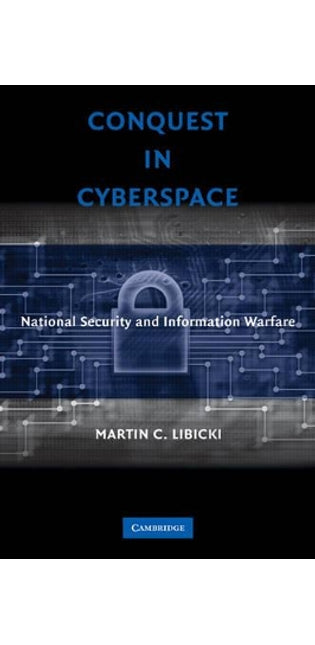
Conquest in Cyberspace
With billions of computers in existence, cyberspace, 'the virtual world created when they are connected,' is said to be the new medium of power. Computer hackers operating from anywhere can enter cyberspace and take control of other people's computers, stealing their information, corrupting their workings, and shutting them down. Modern societies and militaries, both pervaded by computers, are supposedly at risk. As Conquest in Cyberspace explains, however, information systems and information itself are too easily conflated, and persistent mastery over the former is difficult to achieve. The author also investigates how far 'friendly conquest' in cyberspace extends, such as the power to persuade users to adopt new points of view. He discusses the role of public policy in managing cyberspace conquests and shows how the Internet is becoming more ubiquitous and complex, such as in the use of artificial intelligence.
R 3,694.85
Introduction to Computational Science
This textbook provides an introduction to the growing interdisciplinary field of computational science. It combines a foundational development of numerical methods with a variety of illustrative applications spread across numerous areas of science and engineering. The intended audience is the undergraduate who has completed introductory coursework in mathematics and computer science. Students gain computational acuity by authoring their own numerical routines and by practicing with numerical methods as they solve computational models. This education encourages students to learn the importance of answering: How expensive is a calculation, how trustworthy is a calculation, and how might we model a problem to apply a desired numerical method?The text is written in two parts. Part I provides a succinct, one-term inauguration into the primary routines on which a further study of computational science rests. The material is organized so that the transition to computational science from coursework in calculus, differential equations, and linear algebra is natural. Beyond the mathematical and computational content of Part I, students gain proficiency with elemental programming constructs and visualization, which are presented in MATLAB syntax. The focus of Part II is modeling, wherein students build computational models, compute solutions, and report their findings. The models purposely intersect numerous areas of science and engineering to demonstrate the pervasive role played by computational science.
R 5,129.00
Medical Image Computing and Computer Assisted Intervention – MICCAI 2025
The 16-volume set LNCS 15960 - 15975 constitutes the refereed proceedings of the 28th International Conference on Medical Image Computing and Computer Assisted Intervention, MICCAI 2025, which took place in Daejeon, South Korea, during September 23-27, 2025. The total of 1027 papers included in the proceedings was carefully reviewed and selected from 3447 submissions. They were organized in topical parts as follows: Part I, LNCS Volume 15960: Multimodal Fusion and Contextual Reasoning in Medical Imaging Part II, LNCS Volume 15961: Surgical Navigation, Scene Understanding, and Video Modeling Part III, LNCS Volume 15962: Learning and Augmented Reality for Surgical and Endoscopic Applications (I) Part IV, LNCS Volume 15963: Learning and Augmented Reality for Surgical and Endoscopic Applications (II) Part V, LNCS Volume 15964: Graph-Based Methods in Medical Imaging Part VI, LNCS Volume 15965: Datasets and Methods for Image Quality Enhancement Part VII, LNCS Volume 15966: Trustworthy and Responsible AI for Medical Imaging Part VIII, LNCS Volume 15967: Multimodal Learning for Diagnosis, Risk Prediction, and Survival Analysis Part IX, LNCS Volume 15968: Core Techniques in Medical Imaging: Segmentation, Registration, Synthesis, Reconstruction, and Other Emerging Methods (I) Part X, LNCS Volume 15969: Core Techniques in Medical Imaging: Segmentation, Registration, Synthesis, Reconstruction, and Other Emerging Methods (II) Part XI, LNCS Volume 15970: Core Techniques in Medical Imaging: Segmentation, Registration, Synthesis, Reconstruction, and Other Emerging Methods (III) Part XII, LNCS Volume 15971: Core Techniques in Medical Imaging: Segmentation, Registration, Synthesis, Reconstruction, and Other Emerging Methods (IV) Part XIII, LNCS Volume 15972: Adapting Foundation Models for Medical Imaging: LLMs, VLMs, and Cross-Domain Generalization (I) Part XIV, LNCS Volume 15973: Adapting Foundation Models for Medical Imaging: LLMs, VLMs, and Cross-Domain Generalization (II) Part XV, LNCS Volume 15974: Adapting Foundation Models for Medical Imaging: LLMs, VLMs, and Cross-Domain Generalization (III) Part XVI, LNCS Volume 15975: Statistical Techniques in Medical Imaging: Causality, Imputation, Weak Supervision, and Other Methods
R 3,582.10
Applications of Continuous Mathematics to Computer Science
This volume is intended to be used as a textbook for a special topic course in computer science. It addresses contemporary research topics of interest such as intelligent control, genetic algorithms, neural networks, optimization techniques, expert systems, fractals, and computer vision. The work incorporates many new research ideas, and focuses on the role of continuous mathematics. Audience: This book will be valuable to graduate students interested in theoretical computer topics, algorithms, expert systems, neural networks, and software engineering.
R 6,022.46
Progress in Discovery Science
This volume contains the research reports of the Discovery Science pro ject in Japan (No. 10143106),in which more than 60 scientists participated. It was a three-year pro ject sponsored by Grant-in-Aid for Scienti?c Research on Priority Areas from the Ministry of Education,Culture,Sports,Science,and Technology (MEXT) of Japan. This pro ject mainly aimed to (1) develop new methods for knowledge discovery,(2) install network environments for knowledge discovery, and (3) establish Discovery Science as a new area of study in Computer Science / Arti?cial Intelligence. In order to attain these aims we set up ?ve groups for studying the following research areas: (A) Logic for/of Knowledge Discovery (B) Knowledge Discovery by Inference/Reasoning (C) Knowledge Discovery Based on Computational Learning Theory (D) Knowledge Discovery in Huge Databases and Data Mining (E) Knowledge Discovery in Network Environments These research areas and related topics can be regarded as a preliminary d- inition of Discovery Science by enumeration. Thus Discovery Science ranges over philosophy,logic,reasoning,computational learning,and system developments. In addition to these ?ve research groups we organized a steering group for planning,adjustment,and evaluation of the project.The steering group,chaired by the principal investigator of the project,consists of leaders of the ?ve research groups and their subgroups as well as advisors from outside of the pro ject. We invited three scientists to consider Discovery Science and the ?ve above m- tioned research areas from viewpoints of knowledge science,natural language processing,and image processi ng,respectively.
R 2,015.00