Search results for "Knowledge Guided Machine Learning"
Items we need to order for you

Advances in Knowledge Discovery and Data Mining
The five-volume set, LNAI 158710 - 15874 constitutes the proceedings of the 29th Pacific-Asia Conference on Knowledge Discovery and Data Mining, PAKDD 2025, held in Sydney, New South Wales, Australia, during June 10–13, 2025.The conference received a total of 557 submissions to the main track, 35 submissions to the survey track and 104 submittion to the special track on LLMs. Of these, 134 papers have been accepted for the main track, 10 for the survey track and 24 for the LLM track. 68 papers have been transferred to the4 DSFA special session. The papers have been organized in topical sections as follows: Part I: Anomaly Detection; Business Data Analysis; Clustering; Continual Learning; Contrastive Learning; Data Processing for Learning; Part II: Fairness and Interpretability; Federated Learning; Graph Mining and GNN; Learning on Scientific Data; Part III: Machine Learning; Multi-modality; OOD and Optimization; Recommender Systems; Representation Learning and Generative AI; Part IV: Security and Privacy; Temporal Learning; Survey; Part V: LLM Fine-tuning and Prompt Engineering; Fairness and Interpretability of LLMs; LLM Application; OOD and Optimization of LLMs.
R 3,539.34
Introduction to Machine Learning Algorithms
Mathematics is the foundation of machine learning algorithms. To understand the shortcomings of existing algorithms and develop more effective methods, it is essential to understand the mathematical concepts underlying these algorithms and their operational principles. This book serves as an introductory resource, outlining the preliminary concepts and offering insights into the mathematical foundations and operational mechanisms of machine learning algorithms. It describes the basic equations and interrelates the questions arising during practical applications of machine learning with the basic mathematical picture of the algorithms used.• Introduces machine learning, highlights the central role of algorithms in machine learning, and explains the core mathematical prerequisites to understanding machine learning algorithms• Systematically examines the sequential steps of classical machine learning algorithms used for classification of data sets into distinct groups; regression, clustering analysis,• Provides an overview of value, policy, and model-based reinforcement learning algorithms. This book is for academicians, scholars, students, and professionals engaged in the study of machine learning and artificial intelligence.
R 9,342.00
Knowledge Science, Engineering and Management
This two-volume set of LNAI 12274 and LNAI 12275 constitutes the refereed proceedings of the 13th International Conference on Knowledge Science, Engineering and Management, KSEM 2020, held in Hangzhou, China, in August 2020.*The 58 revised full papers and 27 short papers were carefully reviewed and selected from 291 submissions. The papers of the first volume are organized in the following topical sections: knowledge graph; knowledge representation; knowledge management for education; knowledge-based systems; and data processing and mining. The papers of the second volume are organized in the following topical sections: machine learning; recommendation algorithms and systems; social knowledge analysis and management; text mining and document analysis; and deep learning.*The conference was held virtually due to the COVID-19 pandemic.
R 2,206.80
R 540.21
Reasoning Web. Causality, Explanations and Declarative Knowledge
The purpose of the Reasoning Web Summer School is to disseminate recent advances on reasoning techniques and related issues that are of particular interest to Semantic Web and Linked Data applications. It is primarily intended for postgraduate students, postdocs, young researchers, and senior researchers wishing to deepen their knowledge. As in the previous years, lectures in the summer school were given by a distinguished group of expert lecturers. The broad theme of this year's summer school was “Reasoning in Probabilistic Models and Machine Learning” and it covered various aspects of ontological reasoning and related issues that are of particular interest to Semantic Web and Linked Data applications. The following eight lectures were presented during the school: Logic-Based Explainability in Machine Learning; Causal Explanations and Fairness in Data; Statistical Relational Extensions of Answer Set Programming; Vadalog: Its Extensions and Business Applications; Cross-Modal Knowledge Discovery, Inference, and Challenges; Reasoning with Tractable Probabilistic Circuits; From Statistical Relational to Neural Symbolic Artificial Intelligence; Building Intelligent Data Apps in Rel using Reasoning and Probabilistic Modelling.
R 2,543.06
Diagnostic Test Approaches to Machine Learning and Commonsense Reasoning Systems
Diagnostic Test Approaches to Machine Learning and Commonsense Reasoning Systems surveys, analyzes, and compares the most effective algorithms for mining all kinds of logical rules. Global academics and professionals in related fields have come together to create this unique knowledge-sharing resources which will serve as a forum for future collaborations.
R 7,559.79
Optimal Learning
Learn the science of collecting information to make effective decisions Everyday decisions are made without the benefit of accurate information. Optimal Learning develops the needed principles for gathering information to make decisions, especially when collecting information is time-consuming and expensive. Designed for readers with an elementary background in probability and statistics, the book presents effective and practical policies illustrated in a wide range of applications, from energy, homeland security, and transportation to engineering, health, and business. This book covers the fundamental dimensions of a learning problem and presents a simple method for testing and comparing policies for learning. Special attention is given to the knowledge gradient policy and its use with a wide range of belief models, including lookup table and parametric and for online and offline problems. Three sections develop ideas with increasing levels of sophistication: Fundamentals explores fundamental topics, including adaptive learning, ranking and selection, the knowledge gradient, and bandit problemsExtensions and Applications features coverage of linear belief models, subset selection models, scalar function optimization, optimal bidding, and stopping problemsAdvanced Topics explores complex methods including simulation optimization, active learning in mathematical programming, and optimal continuous measurements Each chapter identifies a specific learning problem, presents the related, practical algorithms for implementation, and concludes with numerous exercises. A related website features additional applications and downloadable software, including MATLAB and the Optimal Learning Calculator, a spreadsheet-based package that provides an introduction to learning and a variety of policies for learning.
R 4,460.00
R 2,442.00
Meta-Learning in Decision Tree Induction
The book focuses on different variants of decision tree induction but also describes the meta-learning approach in general which is applicable to other types of machine learning algorithms. The book discusses different variants of decision tree induction and represents a useful source of information to readers wishing to review some of the techniques used in decision tree learning, as well as different ensemble methods that involve decision trees. It is shown that the knowledge of different components used within decision tree learning needs to be systematized to enable the system to generate and evaluate different variants of machine learning algorithms with the aim of identifying the top-most performers or potentially the best one. A unified view of decision tree learning enables to emulate different decision tree algorithms simply by setting certain parameters. As meta-learning requires running many different processes with the aim of obtaining performance results, a detailed description of the experimental methodology and evaluation framework is provided. Meta-learning is discussed in great detail in the second half of the book. The exposition starts by presenting a comprehensive review of many meta-learning approaches explored in the past described in literature, including for instance approaches that provide a ranking of algorithms. The approach described can be related to other work that exploits planning whose aim is to construct data mining workflows. The book stimulates interchange of ideas between different, albeit related, approaches.
R 7,334.28
R 611.00
Interpretable Machine Learning with Python 2e
A deep dive into the key aspects and challenges of machine learning interpretability using a comprehensive toolkit, including SHAP, feature importance, and causal inference, to build fairer, safer, and more reliable models.Purchase of the print or Kindle book includes a free eBook in PDF format.Key FeaturesInterpret real-world data, including cardiovascular disease data and the COMPAS recidivism scoresBuild your interpretability toolkit with global, local, model-agnostic, and model-specific methodsAnalyze and extract insights from complex models from CNNs to BERT to time series modelsBook DescriptionInterpretable Machine Learning with Python, Second Edition, brings to light the key concepts of interpreting and machine learning models by analyzing real-world data, providing you with a wide range of skills and tools to decipher the results of even the most complex models.Build your interpretability toolkit with several use cases, from flight delay prediction to waste classification to COMPAS risk assessment scores. This book is full of useful techniques, introducing them to the right use case. Learn traditional methods, such as feature importance and partial dependence plots to integrated gradients for NLP interpretations and gradient-based attribution methods, such as saliency maps.In addition to the step-by-step code, you’ll get hands-on with tuning models and training data for interpretability by reducing complexity, mitigating bias, placing guardrails, and enhancing reliability.By the end of the book, you’ll be confident in tackling interpretability challenges with black-box models using tabular, language, image, and time series data.What you will learnProgress from basic to advanced techniques, such as causal inference and quantifying uncertaintyBuild your skillset from analyzing linear and logistic models to complex ones, such as CatBoost, CNNs, and NLP transformersUse monotonic and interaction constraints to make fairer and safer modelsUnderstand how to mitigate the influence of bias in datasetsLeverage sensitivity analysis factor prioritization and factor fixing for any modelDiscover how to make models more reliable with adversarial robustnessWho this book is forThis book is for data scientists, machine learning developers, machine learning engineers, MLOps engineers, and data stewards who have an increasingly critical responsibility to explain how the artificial intelligence systems they develop work, their impact on decision making, and how they identify and manage bias. It’s also a useful resource for self-taught ML enthusiasts and beginners who want to go deeper into the subject matter, though a good grasp of the Python programming language is needed to implement the examples.
R 1,693.00
Machine Learning and Principles and Practice of Knowledge Discovery in Databases
The 4-volume set CCIS 2558 – 2561 constitutes the refereed proceedings of several workshops held in conjunction with the European Conference on Machine Learning and Principles and Practice of Knowledge Discovery in Databases, ECML PKDD 2024, which took place in Vilnius, Lithuania, in September 2024. The 132 full papers included in these proceedings were carefully reviewed and selected from a total of 272 submissions to the workshops. The papers were organized topical sections as follows:Part I: Workshop on IoT, Edge, and Mobile for Embedded Machine Learning (ITEM Workshop 2024), Machine Learning for Sustainable Power Systems (ML4SPS), Workshop on eXplainable Knowledge Discovery in Data Mining (XKDD) and Workshop on Bias and Fairness in AI (BIAS 2024).Part II: Workshop on Machine Learning for Chemistry and Chemical Engineering (ML4CCE), Workshop on Advances in Interpretable Machine Learning and Artificial Intelligence (AIM[1]LAI), 2nd Workshop on Hybrid Human-Machine Learning and Decision Making HLDM’24, 15th International Workshop on Machine Learning and Music (MML 2024), Tutorial and Workshop on Responsible Knowledge Discovery in Education (RKDE 2024).Part III: 21st International Workshop on Mining and Learning with Graphs (MLG 2024), 2nd International Workshop on Deep Learning meets Neuromorphic Hard[1]ware (website), International Workshop on Machine Learning for Irregular Time Series (ML4ITS 2024), Workshop on Machine Learning for Earth Observation (MACLEAN 2024) Workshop on New Frontiers in Mining Complex Patterns (NFMCP 2024) and International Workshop and Tutorial on Data-Centric Artificial Intelligence (DEARING).Part IV: Workshop on Data Science for Social Good (SoGood 2024), 7th Workshop on Machine Learning for CyberSecurity (MLCS 2024), Tutorial and Workshop on Explainable and Robust AI for Industry 4.0 & 5.0 (X-RAI), Workshop on MIning DAta for financial applicationS (MIDAS), Workshop on Advancements in Federated Learning (WAFL), Workshop on Mining and Learning Real-world Dynamics via High-order Networks (MLH).
R 6,604.41
Innovations in Machine Learning
Machine learning is currently one of the most rapidly growing areas of research in computer science. In compiling this volume we have brought together contributions from some of the most prestigious researchers in this field. This book covers the three main learning systems; symbolic learning, neural networks and genetic algorithms as well as providing a tutorial on learning casual influences. Each of the nine chapters is self-contained.Both theoreticians and application scientists/engineers in the broad area of artificial intelligence will find this volume valuable. It also provides a useful sourcebook for Postgraduate since it shows the direction of current research.
R 4,652.67
Machine Learning and Its Applications
In recent years machine learning has made its way from artificial intelligence into areas of administration, commerce, and industry. Data mining is perhaps the most widely known demonstration of this migration, complemented by less publicized applications of machine learning like adaptive systems in industry, financial prediction, medical diagnosis and the construction of user profiles for Web browsers.This book presents the capabilities of machine learning methods and ideas on how these methods could be used to solve real-world problems. The first ten chapters assess the current state of the art of machine learning, from symbolic concept learning and conceptual clustering to case-based reasoning, neural networks, and genetic algorithms. The second part introduces the reader to innovative applications of ML techniques in fields such as data mining, knowledge discovery, human language technology, user modeling, data analysis, discovery science, agent technology, finance, etc.
R 2,015.00
Reinforcement and Systemic Machine Learning for Decision Making
Reinforcement and Systemic Machine Learning for Decision Making There are always difficulties in making machines that learn from experience. Complete information is not always available—or it becomes available in bits and pieces over a period of time. With respect to systemic learning, there is a need to understand the impact of decisions and actions on a system over that period of time. This book takes a holistic approach to addressing that need and presents a new paradigm—creating new learning applications and, ultimately, more intelligent machines. The first book of its kind in this new and growing field, Reinforcement and Systemic Machine Learning for Decision Making focuses on the specialized research area of machine learning and systemic machine learning. It addresses reinforcement learning and its applications, incremental machine learning, repetitive failure-correction mechanisms, and multiperspective decision making. Chapters include: Introduction to Reinforcement and Systemic Machine LearningFundamentals of Whole-System, Systemic, and Multiperspective Machine LearningSystemic Machine Learning and ModelInference and Information IntegrationAdaptive LearningIncremental Learning and Knowledge RepresentationKnowledge Augmentation: A Machine Learning PerspectiveBuilding a Learning System With the potential of this paradigm to become one of the more utilized in its field, professionals in the area of machine and systemic learning will find this book to be a valuable resource.
R 4,655.00
Evaluating Learning Algorithms
The field of machine learning has matured to the point where many sophisticated learning approaches can be applied to practical applications. Thus it is of critical importance that researchers have the proper tools to evaluate learning approaches and understand the underlying issues. This book examines various aspects of the evaluation process with an emphasis on classification algorithms. The authors describe several techniques for classifier performance assessment, error estimation and resampling, obtaining statistical significance as well as selecting appropriate domains for evaluation. They also present a unified evaluation framework and highlight how different components of evaluation are both significantly interrelated and interdependent. The techniques presented in the book are illustrated using R and WEKA, facilitating better practical insight as well as implementation. Aimed at researchers in the theory and applications of machine learning, this book offers a solid basis for conducting performance evaluations of algorithms in practical settings.
R 2,825.01
Knowledge-Driven Board-Level Functional Fault Diagnosis
This book provides a comprehensive set of characterization, prediction, optimization, evaluation, and evolution techniques for a diagnosis system for fault isolation in large electronic systems. Readers with a background in electronics design or system engineering can use this book as a reference to derive insightful knowledge from data analysis and use this knowledge as guidance for designing reasoning-based diagnosis systems. Moreover, readers with a background in statistics or data analytics can use this book as a practical case study for adapting data mining and machine learning techniques to electronic system design and diagnosis. This book identifies the key challenges in reasoning-based, board-level diagnosis system design and presents the solutions and corresponding results that have emerged from leading-edge research in this domain. It covers topics ranging from highly accurate fault isolation, adaptive fault isolation, diagnosis-system robustness assessment, to system performance analysis and evaluation, knowledge discovery and knowledge transfer. With its emphasis on the above topics, the book provides an in-depth and broad view of reasoning-based fault diagnosis system design.• Explains and applies optimized techniques from the machine-learning domain to solve the fault diagnosis problem in the realm of electronic system design and manufacturing;• Demonstrates techniques based on industrial data and feedback from an actual manufacturing line;• Discusses practical problems, including diagnosis accuracy, diagnosis time cost, evaluation of diagnosis system, handling of missing syndromes in diagnosis, and need for fast diagnosis-system development.
R 3,066.71
Handbook of Machine Learning for Computational Optimization
Technology is moving at an exponential pace in this era of computational intelligence. Machine learning has emerged as one of the most promising tools used to challenge and think beyond current limitations. This handbook will provide readers with a leading edge to improving their products and processes through optimal and smarter machine learning techniques. This handbook focuses on new machine learning developments that can lead to newly developed applications. It uses a predictive and futuristic approach, which makes machine learning a promising tool for processes and sustainable solutions. It also promotes newer algorithms that are more efficient and reliable for new dimensions in discovering other applications, and then goes on to discuss the potential in making better use of machines in order to ensure optimal prediction, execution, and decision-making. Individuals looking for machine learning-based knowledge will find interest in this handbook. The readership ranges from undergraduate students of engineering and allied courses to researchers, professionals, and application designers.
R 3,708.88
R 611.00
Learning with the Minimum Description Length Principle
This book introduces readers to the minimum description length (MDL) principle and its applications in learning. The MDL is a fundamental principle for inductive inference, which is used in many applications including statistical modeling, pattern recognition and machine learning. At its core, the MDL is based on the premise that “the shortest code length leads to the best strategy for learning anything from data.” The MDL provides a broad and unifying view of statistical inferences such as estimation, prediction and testing and, of course, machine learning.The content covers the theoretical foundations of the MDL and broad practical areas such as detecting changes and anomalies, problems involving latent variable models, and high dimensional statistical inference, among others. The book offers an easy-to-follow guide to the MDL principle, together with other information criteria, explaining the differences between their standpoints. Written in a systematic, concise and comprehensive style, this book is suitable for researchers and graduate students of machine learning, statistics, information theory and computer science.
R 5,129.00
R 501.00
Feature Selection in Machine Learning
Learn over 20 feature selection methods using Python, scikit-learn, and Feature-engine. Apply filter, wrapper, embedded, and recursive techniques to select predictive features and build efficient machine learning modelsKey FeaturesMaster over 20 feature selection techniques using practical Python examplesApply filter, wrapper, embedded, and recursive feature selection methodsRemove redundant variables to build faster, simpler, and more interpretable ML modelsBook DescriptionFeature selection is essential for building efficient machine learning models, yet choosing the right variables can be challenging. Irrelevant, redundant, and highly correlated features increase complexity, slow training, and can affect model performance and interpretabilityFeature Selection in Machine Learning provides a practical guide to identifying the most predictive variables using Python. Starting with the fundamentals, you'll learn why feature selection matters and how different methods help simplify datasets without losing valuable informationYou'll begin by removing constant, quasi-constant, duplicate, and correlated features before exploring statistical techniques such as chi-square, ANOVA, and mutual information. The book then introduces univariate selection, wrapper methods, embedded techniques using Lasso and decision trees, and recursive feature elimination. You'll also explore alternative approaches, including feature permutation, minimum redundancy maximum relevance (MRMR), and BorutaWith practical code examples and open-source Python libraries, you'll learn to compare techniques and select the right approach for your data and models. By the end, you'll be equipped to build simpler, faster, and more interpretable machine learning solutionsWhat you will learnUnderstand feature selection and its impact on ML performanceIdentify and remove constant, duplicate, and correlated featuresApply statistical methods such as chi-square, ANOVA, and mutual informationSelect predictive variables using univariate techniquesImplement forward, backward, and exhaustive feature selectionUse Lasso and decision trees for embedded feature selectionApply recursive feature elimination and feature permutationExplore advanced methods including MRMR and BorutaWho this book is forThis book is for data scientists, machine learning engineers, data analysts, and Python developers who want to improve model performance through effective feature selection. It is particularly useful for practitioners working with high-dimensional datasets or looking to simplify models without sacrificing predictive power. Readers should have basic Python programming skills, familiarity with pandas and scikit-learn, and a foundational understanding of machine learning concepts
R 1,172.00
Applied Deep Learning with Python
A hands-on guide to deep learning that’s filled with intuitive explanations and engaging practical examplesKey FeaturesDesigned to iteratively develop the skills of Python users who don’t have a data science backgroundCovers the key foundational concepts you’ll need to know when building deep learning systemsFull of step-by-step exercises and activities to help build the skills that you need for the real-worldBook DescriptionTaking an approach that uses the latest developments in the Python ecosystem, you’ll first be guided through the Jupyter ecosystem, key visualization libraries and powerful data sanitization techniques before we train our first predictive model. We’ll explore a variety of approaches to classification like support vector networks, random decision forests and k-nearest neighbours to build out your understanding before we move into more complex territory. It’s okay if these terms seem overwhelming; we’ll show you how to put them to work.We’ll build upon our classification coverage by taking a quick look at ethical web scraping and interactive visualizations to help you professionally gather and present your analysis. It’s after this that we start building out our keystone deep learning application, one that aims to predict the future price of Bitcoin based on historical public data.By guiding you through a trained neural network, we’ll explore common deep learning network architectures (convolutional, recurrent, generative adversarial) and branch out into deep reinforcement learning before we dive into model optimization and evaluation. We’ll do all of this whilst working on a production-ready web application that combines Tensorflow and Keras to produce a meaningful user-friendly result, leaving you with all the skills you need to tackle and develop your own real-world deep learning projects confidently and effectively.What you will learnDiscover how you can assemble and clean your very own datasetsDevelop a tailored machine learning classification strategyBuild, train and enhance your own models to solve unique problemsWork with production-ready frameworks like Tensorflow and KerasExplain how neural networks operate in clear and simple termsUnderstand how to deploy your predictions to the webWho this book is forIf you're a Python programmer stepping into the world of data science, this is the ideal way to get started.
R 1,661.00
Artificial Intelligence for Knowledge Management
This book features a selection of extended papers presented at the 7th IFIP WG 12.6 International Workshop on Artificial Intelligence for Knowledge Management, AI4KM 2019, held in Macao, China, in August 2019, in the framework of the International Joint Conference on Artificial Intelligence, IJCAI 2019.The 8 revised and extended papers were carefully reviewed and selected for inclusion in this volume. They present new research and innovative aspects in the field of knowledge management such as machine learning, knowledge models, KM and Web, knowledge capturing and learning, and KM and AI intersections.
R 3,008.81
Ensemble Machine Learning
It is common wisdom that gathering a variety of views and inputs improves the process of decision making, and, indeed, underpins a democratic society. Dubbed “ensemble learning” by researchers in computational intelligence and machine learning, it is known to improve a decision system’s robustness and accuracy. Now, fresh developments are allowing researchers to unleash the power of ensemble learning in an increasing range of real-world applications. Ensemble learning algorithms such as “boosting” and “random forest” facilitate solutions to key computational issues such as face recognition and are now being applied in areas as diverse as object tracking and bioinformatics. Responding to a shortage of literature dedicated to the topic, this volume offers comprehensive coverage of state-of-the-art ensemble learning techniques, including the random forest skeleton tracking algorithm in the Xbox Kinect sensor, which bypasses the need for game controllers. At once a solid theoretical study and a practical guide, the volume is a windfall for researchers and practitioners alike.
R 6,815.05
Machine Learning Models and Algorithms for Big Data Classification
This book presents machine learning models and algorithms to address big data classification problems. Existing machine learning techniques like the decision tree (a hierarchical approach), random forest (an ensemble hierarchical approach), and deep learning (a layered approach) are highly suitable for the system that can handle such problems. This book helps readers, especially students and newcomers to the field of big data and machine learning, to gain a quick understanding of the techniques and technologies; therefore, the theory, examples, and programs (Matlab and R) presented in this book have been simplified, hardcoded, repeated, or spaced for improvements. They provide vehicles to test and understand the complicated concepts of various topics in the field. It is expected that the readers adopt these programs to experiment with the examples, and then modify or write their own programs toward advancing their knowledge for solving more complex and challenging problems. The presentation format of this book focuses on simplicity, readability, and dependability so that both undergraduate and graduate students as well as new researchers, developers, and practitioners in this field can easily trust and grasp the concepts, and learn them effectively. It has been written to reduce the mathematical complexity and help the vast majority of readers to understand the topics and get interested in the field. This book consists of four parts, with the total of 14 chapters. The first part mainly focuses on the topics that are needed to help analyze and understand data and big data. The second part covers the topics that can explain the systems required for processing big data. The third part presents the topics required to understand and select machine learning techniques to classify big data. Finally, the fourth part concentrates on the topics that explain the scaling-up machine learning, an important solution for modern big data problems.
R 7,761.54
Machine Learning in Medicine
Machine learning is concerned with the analysis of large data and multiple variables. However, it is also often more sensitive than traditional statistical methods to analyze small data. The first volume reviewed subjects like optimal scaling, neural networks, factor analysis, partial least squares, discriminant analysis, canonical analysis, and fuzzy modeling. This second volume includes various clustering models, support vector machines, Bayesian networks, discrete wavelet analysis, genetic programming, association rule learning, anomaly detection, correspondence analysis, and other subjects. Both the theoretical bases and the step by step analyses are described for the benefit of non-mathematical readers. Each chapter can be studied without the need to consult other chapters. Traditional statistical tests are, sometimes, priors to machine learning methods, and they are also, sometimes, used as contrast tests. To those wishing to obtain more knowledge of them, we recommend to additionally study (1) Statistics Applied to Clinical Studies 5th Edition 2012, (2) SPSS for Starters Part One and Two 2012, and (3) Statistical Analysis of Clinical Data on a Pocket Calculator Part One and Two 2012, written by the same authors, and edited by Springer, New York.
R 1,547.99
Machine Learning Challenges
This book constitutes the refereed post-proceedings of the First PASCAL Machine Learning Challenges Workshop, MLCW 2005. 25 papers address three challenges: finding an assessment base on the uncertainty of predictions using classical statistics, Bayesian inference, and statistical learning theory; second, recognizing objects from a number of visual object classes in realistic scenes; third, recognizing textual entailment addresses semantic analysis of language to form a generic framework for applied semantic inference in text understanding.
R 2,015.00
Machine Learning for Emotion Analysis
Kickstart your emotion analysis journey with this hands-on, step-by-step guide to data science successKey Features* Discover the ins and outs of the end-to-end emotional analysis workflow* Explore the use of various ML models to derive meaningful insights from all sorts of data* Hone your craft by building and tweaking complex emotion analysis models in practical projectsBook DescriptionThe AI winter has long thawed, but many organizations are still failing to harness the power of machine learning (ML). If you want to tap that potential and add value to your own business with cutting-edge emotion analysis, you've found what you need in this trusty guide.In Machine Learning for Emotion Analysis, you'll take your foundational data science skills and grow them in the exciting realm of emotion analysis. With its practical approach, you'll be equipped with everything you need to give your company a clear insight into what your customers are thinking.This no-nonsense guide jumps right into the practicalities of emotion analysis, teaching you how to preprocess data, build a serviceable dataset, and ensure top-notch data quality. Once you're set up for success, we get hands-on with complex ML techniques. This is where you go from the intermediate to the advanced, covering deep neural networks, support vector machines, conditional probabilities, and more, as you experience the full breadth of possibilities with emotion analysis. The book finally rounds out with a couple of in-depth use cases – a sort of sandbox for you to experiment with your newly acquired skill set.By the end of this book, you'll be ready to present yourself as a valuable asset to any organization that takes data science seriously.What you will learn* Distinguish between sentiment analysis and emotion analysis* Master the art of data preprocessing and ensure high-quality input* Expand your use of data sources through data transformation* Build models that employ cutting-edge deep learning techniques* Discover how best to tune your models' hyperparameters* Explore the use of KNN, SVM, and DNNs for advanced use cases* Build APIs and integrate your models into existing solutions* Practice your new skills by working on real-world scenariosWho This Book Is ForThis book is for data scientists and Python developers who want to gain insights into what people are saying about their product, company, brand, governorship, and more. Basic knowledge of machine learning and Python programming knowledge is necessary to grasp the concepts covered.
R 1,693.00
Hyperparameter Tuning for Machine and Deep Learning with R
This open access book provides a wealth of hands-on examples that illustrate how hyperparameter tuning can be applied in practice and gives deep insights into the working mechanisms of machine learning (ML) and deep learning (DL) methods. The aim of the book is to equip readers with the ability to achieve better results with significantly less time, costs, effort and resources using the methods described here. The case studies presented in this book can be run on a regular desktop or notebook computer. No high-performance computing facilities are required. The idea for the book originated in a study conducted by Bartz & Bartz GmbH for the Federal Statistical Office of Germany (Destatis). Building on that study, the book is addressed to practitioners in industry as well as researchers, teachers and students in academia. The content focuses on the hyperparameter tuning of ML and DL algorithms, and is divided into two main parts: theory (Part I) and application (Part II). Essential topics covered include: a survey of important model parameters; four parameter tuning studies and one extensive global parameter tuning study; statistical analysis of the performance of ML and DL methods based on severity; and a new, consensus-ranking-based way to aggregate and analyze results from multiple algorithms. The book presents analyses of more than 30 hyperparameters from six relevant ML and DL methods, and provides source code so that users can reproduce the results. Accordingly, it serves as a handbook and textbook alike.
R 1,832.00
Machine Learning Security Principles
Thwart hackers by preventing, detecting, and misdirecting access before they can plant malware, obtain credentials, engage in fraud, modify data, poison models, corrupt users, eavesdrop, and otherwise ruin your dayKey FeaturesDiscover how hackers rely on misdirection and deep fakes to fool even the best security systemsRetain the usefulness of your data by detecting unwanted and invalid modificationsDevelop application code to meet the security requirements related to machine learningBook DescriptionBusinesses are leveraging the power of AI to make undertakings that used to be complicated and pricy much easier, faster, and cheaper. The first part of this book will explore these processes in more depth, which will help you in understanding the role security plays in machine learning.As you progress to the second part, you'll learn more about the environments where ML is commonly used and dive into the security threats that plague them using code, graphics, and real-world references.The next part of the book will guide you through the process of detecting hacker behaviors in the modern computing environment, where fraud takes many forms in ML, from gaining sales through fake reviews to destroying an adversary's reputation. Once you've understood hacker goals and detection techniques, you'll learn about the ramifications of deep fakes, followed by mitigation strategies.This book also takes you through best practices for embracing ethical data sourcing, which reduces the security risk associated with data. You'll see how the simple act of removing personally identifiable information (PII) from a dataset lowers the risk of social engineering attacks.By the end of this machine learning book, you'll have an increased awareness of the various attacks and the techniques to secure your ML systems effectively.What you will learnExplore methods to detect and prevent illegal access to your systemImplement detection techniques when access does occurEmploy machine learning techniques to determine motivationsMitigate hacker access once security is breachedPerform statistical measurement and behavior analysisRepair damage to your data and applicationsUse ethical data collection methods to reduce security risksWho this book is forWhether you're a data scientist, researcher, or manager working with machine learning techniques in any aspect, this security book is a must-have. While most resources available on this topic are written in a language more suitable for experts, this guide presents security in an easy-to-understand way, employing a host of diagrams to explain concepts to visual learners. While familiarity with machine learning concepts is assumed, knowledge of Python and programming in general will be useful.
R 1,596.00
Machine Learning Fundamentals
This lucid, accessible introduction to supervised machine learning presents core concepts in a focused and logical way that is easy for beginners to follow. The author assumes basic calculus, linear algebra, probability and statistics but no prior exposure to machine learning. Coverage includes widely used traditional methods such as SVMs, boosted trees, HMMs, and LDAs, plus popular deep learning methods such as convolution neural nets, attention, transformers, and GANs. Organized in a coherent presentation framework that emphasizes the big picture, the text introduces each method clearly and concisely “from scratch” based on the fundamentals. All methods and algorithms are described by a clean and consistent style, with a minimum of unnecessary detail. Numerous case studies and concrete examples demonstrate how the methods can be applied in a variety of contexts.
R 2,111.00
Intelligent Systems
This book features best selected research papers presented at the Fifth International Conference on Machine Learning, Internet of Things and Big Data (ICMIB 2025) held at Department of Computer Science and Engineering, Parala Maharaja Engineering College, Berhampur, India during 4–6 April 2025. It comprises high-quality research work by academicians and industrial experts in the field of machine learning, mobile computing, natural language processing, fuzzy computing, green computing, human–computer interaction, information retrieval, intelligent control, data mining and knowledge discovery, evolutionary computing, IoT and applications in smart environments, smart health, smart city, wireless networks, big data, cloud computing, business intelligence, Internet security, pattern recognition, predictive analytics applications in health care, sensor networks and social sensing, and statistical analysis of search techniques.
R 12,154.09
Machine Intelligence, Tools, and Applications
This book presents the recent advances including tools and techniques in the constantly changing landscape of machine learning (ML). This would enable the readers with a strong understanding of critical issues in ML by providing both broad and detailed perspectives on cutting-edge theories, algorithms, and tools. This will become a single source of reference on conceptual, methodological, technical, and managerial issues, as well as provide insight into emerging trends and future opportunities in the discipline of ML. This book contains altogether 36 chapters in the area of ML and its applications.
R 10,560.80
Grandes Modelos de Lenguaje: Una Guía Práctica (Spanish Version)
La IA ha adquirido nuevas y sorprendentes capacidades lingüísticas en los últimos años. Impulsados por los rápidos avances en Deep Learning, los sistemas de IA lingüística son capaces de escribir y comprender textos mejor que nunca. Esta tendencia está dando lugar a nuevas funciones, productos e industrias enteras. A través de la naturaleza visualmente educativa de este libro, los lectores aprenderán herramientas prácticas y conceptos que necesitan para utilizar estas capacidades hoy en día. Aprenderás a utilizar modelos de lenguaje de gran tamaño previamente entrenados para casos de uso como la redacción publicitaria y la síntesis; a crear sistemas de búsqueda semántica que van más allá de la coincidencia de palabras clave; y a utilizar bibliotecas existentes y modelos previamente entrenados para la clasificación, búsqueda y agrupación de textos. Este libro también te ayuda a: Comprender la arquitectura de los modelos de lenguaje Transformer que destacan en la generación y representación de texto. Comprender la arquitectura de los modelos de lenguaje Transformer que destacan en la generación y representación de texto.Construir canalizaciones avanzadas de LLM para agrupar documentos de texto y explorar los temas que tratan.Construir motores de búsqueda semántica que vayan más allá de la búsqueda por palabras clave, utilizando métodos como la recuperación densa y los reordenadores.Explora cómo se pueden utilizar los modelos generativos, desde la ingeniería de prompts hasta la generación aumentada por recuperación.Obtén una comprensión más profunda de cómo entrenar LLMs y optimizarlos para aplicaciones específicas utilizando el ajuste fino de modelos generativos, el ajuste fino contrastivo y el aprendizaje en contexto.
R 2,931.00
Machine Learning: Theory and Applications
Statistical learning and analysis techniques have become extremely important today, given the tremendous growth in the size of heterogeneous data collections and the ability to process it even from physically distant locations. Recent advances made in the field of machine learning provide a strong framework for robust learning from the diverse corpora and continue to impact a variety of research problems across multiple scientific disciplines. The aim of this handbook is to familiarize beginners as well as experts with some of the recent techniques in this field.The Handbook is divided in two sections: Theory and Applications, covering machine learning, data analytics, biometrics, document recognition and security.
R 7,356.00
Pattern Recognition and Machine Learning
This is the first textbook on pattern recognition to present the Bayesian viewpoint. The book presents approximate inference algorithms that permit fast approximate answers in situations where exact answers are not feasible. It uses graphical models to describe probability distributions when no other books apply graphical models to machine learning. No previous knowledge of pattern recognition or machine learning concepts is assumed. Familiarity with multivariate calculus and basic linear algebra is required, and some experience in the use of probabilities would be helpful though not essential as the book includes a self-contained introduction to basic probability theory.
R 3,114.00
Machine Learning and Deep Learning Using Python and TensorFlow
Publisher's Note: Products purchased from Third Party sellers are not guaranteed by the publisher for quality, authenticity, or access to any online entitlements included with the product.Explore the principles and practices of machine learning and deep learning This comprehensive textbook lays out the theories and applications of machine learning and deep learning in a style that is approachable for students and working professionals at all math skill levels. You will discover how to handle data, regression and logistic regression, decision trees, cross-validation techniques and error testing, artificial neural networks (ANN, CNN and RNN), random forests, boosting, and more. Machine Learning and Deep Learning Using Python and TensorFlow includes valuable case studies across professional domains, including banking, insurance, e-commerce, retail, and healthcare. The book presents examples using both Python and TensorFlow programming languages and clearly demonstrates how to utilize this cutting-edge technology in today’s “smart” devices.• Presented in a mathematically non-rigorous way• Includes image classification and computer vision tasks • Written by a pair of business analytics experts
R 4,616.00
Bayesian Reasoning and Gaussian Processes for Machine Learning Applications
This book introduces Bayesian reasoning and Gaussian processes into machine learning applications. Bayesian methods are applied in many areas, such as game development, decision making, and drug discovery. It is very effective for machine learning algorithms in handling missing data and extracting information from small datasets. Bayesian Reasoning and Gaussian Processes for Machine Learning Applications uses a statistical background to understand continuous distributions and how learning can be viewed from a probabilistic framework. The chapters progress into such machine learning topics as belief network and Bayesian reinforcement learning, which is followed by Gaussian process introduction, classification, regression, covariance, and performance analysis of Gaussian processes with other models.FEATURES Contains recent advancements in machine learning Highlights applications of machine learning algorithms Offers both quantitative and qualitative research Includes numerous case studiesThis book is aimed at graduates, researchers, and professionals in the field of data science and machine learning.
R 7,578.41
AI Powered Insight
In our hyper-connected world, where every interaction generates valuable data, artificial intelligence (AI) is having a profound impact on marketing, marketing research, and customer data analytics.This book sheds light on the untapped potential of AI-driven analytics in market research so that businesses can better understand and interact with their customers. The transformation of marketing and market research over recent decades has only accelerated thanks to breathtaking AI developments that are reshaping data analytics and insights generation while enabling more effective foresight and actionability.These technologies are moving the field beyond solicited customer opinion, traditionally gathered through surveys and focus groups, allowing marketers to leverage unstructured big data for a whole new type of customer feedback: the unsolicited opinion. Acting as a guide to what’s possible, the book explores the redefinition of insight in the age of AI and stresses the need for every true insight to inspire action. It dives into techniques for analysis and the AI science behind the analytics, automated brand recommendations, and content creation, introducing AI-specific research and data analysis tools. The birth of synthetic data is discussed, with advantages including privacy compliance, cost-effectiveness, and the ability to generate diverse datasets on demand. The book also covers critical ethical issues, such as data privacy, algorithmic bias, transparency, and the potential for AI to be used manipulatively, and raises important questions around knowledge, creativity, and the future of the field of marketing research.This book’s clear-eyed guidance and thoughtful reflections will benefit anyone involved in marketing, market research, digital advertising, and business strategy, including CX practitioners, business leaders tasked with delivering growth, data scientists, marketing agency executives and consultants, and advanced business and marketing students.
R 1,758.00
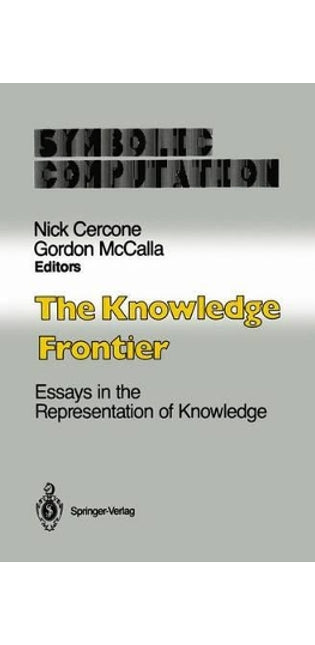
Knowledge Frontier
Knowledge representation is perhaps the most central problem confronting artificial intelligence. Expert systems need knowledge of their domain of expertise in order to function properly. Computer vlslOn systems need to know characteristics of what they are "seeing" in order to be able to fully interpret scenes. Natural language systems are invaluably aided by knowledge of the subject of the natural language discourse and knowledge of the participants in the discourse. Knowledge can guide learning systems towards better understanding and can aid problem solving systems in creating plans to solve various problems. Applications such as intelligent tutoring. computer-aided VLSI design. game playing. automatic programming. medical reasoning. diagnosis in various domains. and speech recogOltlOn. to name a few. are all currently experimenting with knowledge-based approaches. The problem of knowledge representation breaks down into several subsidiary problems including what knowledge to represent in a particular application. how to extract or create that knowledge. how to represent the knowledge efficiently and effectively. how to implement the knowledge representation scheme chosen. how to modify the knowledge in the face of a changing world. how to reason with the knowledge. and how tc use the knowledge appropriately in the creation of the application solution. This volume contains an elaboration of many of these basic issues from a variety of perspectives.
R 2,015.00
R 2,290.00
R 611.00
Intelligent Systems
This book features best selected research papers presented at the Fifth International Conference on Machine Learning, Internet of Things and Big Data (ICMIB 2025) held at Department of Computer Science and Engineering, Parala Maharaja Engineering College, Berhampur, India, during April 4–6, 2025. It comprises high-quality research work by academicians and industrial experts in the field of machine learning, mobile computing, natural language processing, fuzzy computing, green computing, human–computer interaction, information retrieval, intelligent control, data mining and knowledge discovery, evolutionary computing, IoT and applications in smart environments, smart health, smart city, wireless networks, big data, cloud computing, business intelligence, Internet security, pattern recognition, predictive analytics applications in health care, sensor networks and social sensing and statistical analysis of search techniques.
R 18,737.75
From Curve Fitting to Machine Learning
This successful book provides in its second edition an interactive and illustrative guide from two-dimensional curve fitting to multidimensional clustering and machine learning with neural networks or support vector machines. Along the way topics like mathematical optimization or evolutionary algorithms are touched. All concepts and ideas are outlined in a clear cut manner with graphically depicted plausibility arguments and a little elementary mathematics.The major topics are extensively outlined with exploratory examples and applications. The primary goal is to be as illustrative as possible without hiding problems and pitfalls but to address them. The character of an illustrative cookbook is complemented with specific sections that address more fundamental questions like the relation between machine learning and human intelligence.All topics are completely demonstrated with the computing platform Mathematica and the Computational Intelligence Packages (CIP), a high-level function library developed with Mathematica's programming language on top of Mathematica's algorithms. CIP is open-source and the detailed code used throughout the book is freely accessible.The target readerships are students of (computer) science and engineering as well as scientific practitioners in industry and academia who deserve an illustrative introduction. Readers with programming skills may easily port or customize the provided code. "'From curve fitting to machine learning' is ... a useful book. ... It contains the basic formulas of curve fitting and related subjects and throws in, what is missing in so many books, the code to reproduce the results.All in all this is an interesting and useful book both for novice as well as expert readers. For the novice it is a good introductory book and the expert will appreciate the many examples and working code". Leslie A. Piegl (Review of the first edition, 2012).
R 10,257.00