Search results for "Christopher Harding"
Items in stock - 4 working days delivery time

Permission to Unplug
What if the best thing you could do for your business is leave it? Christopher Brown was living the entrepreneurial dream: running multiple successful companies, training for triathlons, coaching his son's soccer team. Then came the heart attack that changed everything. Just weeks after returning from a month-long family cruise, he flatlined in front of his wife. That wake-up call cemented a revolutionary truth: experiences are necessities that fuel creativity, leadership, and well-being today. In Permission to Unplug, Brown challenges the culture of busyness that dominates entrepreneurial life. He combines neuroscience research with hard-won lessons from building businesses that thrive during his absence to show how strategic disconnection actually improves your performance. In this book, you'll learn how to: Break free from the "someday" mindsetRedefine success beyond busyness and burnoutStep away without everything falling apartBuild a sustainable rhythm that supports both work and lifeThis book is your blueprint for breaking free from the "someday" mindset that keeps you postponing life. You'll discover how to systematize operations so your team can function autonomously, design experiences that rewire your brain for peak performance, and return from breaks with renewed vision and energy. From microexperiences that recharge your weekends to extended journeys that transform your perspective, Brown proves that when you embrace building a business capable of thriving without your constant presence, both your life and your business flourish.
R 485.00

Items we need to order for you
R 396.00
The Japanese
A SUNDAY TIMES BOOK OF THE YEAR 2020'Mightily impressive ... a marvellous read' Sunday TimesFrom the acclaimed author of Japan Story, this is the history of Japan, distilled into the stories of twenty remarkable individuals. The vivid and entertaining portraits in Chris Harding's enormously enjoyable new book take the reader from the earliest written accounts of Japan right through to the life of the current empress, Masako. We encounter shamans and warlords, poets and revolutionaries, scientists, artists and adventurers - each offering insights of their own into this extraordinary place. For anyone new to Japan, this book is the ideal introduction. For anyone already deeply involved with it, this is a book filled with surprises and pleasures.
R 471.00
R 365.00
R 365.00
Religious Transformation in South Asia
In the last decades of the nineteenth century, urgent and unprecedented demands among oppressed peoples in colonial India drove what came to be called 'mass conversion movements' towards a range of Christian denominations, launching a revolution in South Asia's two thousand-year Christian history. For all the scale, drama, and lasting controversy of a movement that approached half a million members in Punjab alone by the end of the 1930s, much actually depended upon a varied range of tempestuous local relationships between converts and mission personnel, based upon uncertain and constantly evolving terms. Making extensive use of Protestant Evangelical and newly-uncovered Catholic mission sources, Religious Transformation in South Asia explores those relationships to reveal what laybehind the great diversity of social and religious aspirations of converts and mission personnel.In this highly accessible study, Christopher Harding overturns the one-dimensional Christian missions of popular imagination by analysing the way that social class, theological training, culture, motivation, and personality produced an extraordinary range of presentations of 'Christianity' in late colonial Punjab. Punjabi converts themselves were animated by a similarly broad spectrum of expectations and pressures, communicated through informal social networks and representing a brand ofsubaltern consciousness and resistance rarely considered by mainstream Indian historiography. These internal dynamics produced a first generation of rural Punjabi Christianity that was locally variable, highly fluid, and conflict-ridden-testament to the ways in which the meanings of conversion were contested by all sides in an encounter with far-reaching implications for the future of Christianity and religious identity in India and Pakistan.
R 3,790.00
Criminal Enterprise
This is a study of agency in the field of criminal liability, considering the respective roles of individuals and organisations and the allocation of criminal responsibility to these different kinds of actor. The issue of criminal responsibility, which is informed by both the sociological analysis of conduct and by ethical considerations of responsibility, provides an important and revealing focus for discussion. Criminal Enterprise analyses criminal responsibility through three main types of organisation: corporate actors in the field of business activity, states and governments, and delinquent or criminal organisations; each of which is of contemporary significance. This analysis focuses on three particular issues: the theory of individual and corporate (or organisational) responsibilitythe attribution of legal personality, as a particular form of identity, in theory and across jurisdictions and legal ordersthe internal practice and operation of complex organisations and corporate actors and how an understanding of this sociology of organisations should be used in the construction of legal agency in the field of criminal law.
R 2,801.57
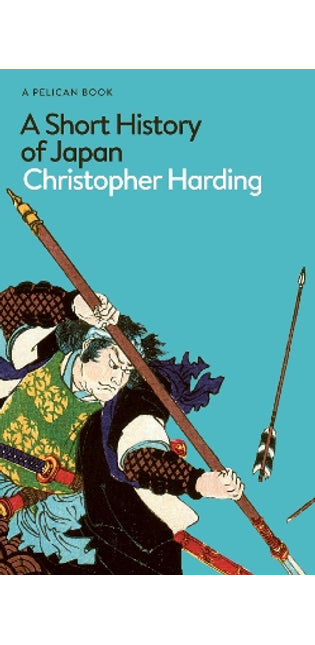
Short History of Japan
'A history that somehow manages to be at once succinct and sweeping: essential reading for anyone interested in this most fascinating of countries' Tom HollandIn this enormously enjoyable introduction to a remarkable country, Christopher Harding traces Japan's rich history over several millennia. Beginning with its earliest coastal communities through to the spread of Buddhism, the rise of the warlords, the promise and menace of the West and Japan's own empire-building, Harding explores how a distinctly Japanese society and culture was forged.Drawing on the latest scholarship, A Short History of Japan moves beyond traditional tourist-board clichés to consider Japan's own view of its past, values and culture, from ceramics and theatre to food and architecture. The result is a sensory, tactile history conveying to the reader much about Japan’s special nature. Harding skilfully shows how these everyday details are intimately bound up with the bigger historical picture, as an expression of the values that have been extraordinarily successful in helping the country to cope with centuries of radical change.
R 628.00
Light of Asia
From the time of the ancient Greeks onwards the West's relationship with Asia consisted for the most part of outrageous tales of strange beasts and monsters, of silk and spices shipped over vast distances and an uneasy sense of unknowable empires fantastically far away. By the twentieth century much of Asia might have come under Western rule after centuries of warfare, but its intellectual, artistic and spiritual influence was fighting back.The Light of Asia is a wonderfully varied and entertaining history of the many ways in which Asia has shaped European and North American culture over centuries of tangled, dynamic encounters, and the central importance of this vexed, often confused relationship. From Marco Polo onwards Asia has been both a source of genuine fascination and equally genuine failures of comprehension. China, India and Japan were all acknowledged to be both great civilizations and in crude ways seen as superseded by the West. From Chicago to Calcutta, and from antiquity to the new millennium, this is a rich, involving story of misunderstandings and sincere connection, of inspiration and falsehood, of geniuses, adventurers and con-men.Christopher Harding's captivating gallery of people and places celebrates Asia's impact on the West in all its variety.
R 471.00
Imprisonment in England and Wales
Originally published in 1985, Imprisonment in England and Wales is an account of the changing functions and conditions of imprisonment in England and Wales from the Medieval period to the present day. It is designed both as a text for students and teachers of history, law and social science and as an introduction to the subject for more general readers and is one of the few attempts to provide an overall view of the institution of imprisonment in this country over a period of several centuries. The authors have made use of original sources and other research to provide an accessible account of the subject, combining essential factual detail with an analysis of the use of imprisonment. It is therefore particularly of interest to those approaching the subject for the first time and is also intended to provide guidance for further research into particular areas of the subject.The authors draw upon their respective knowledge of four main periods to show how imprisonment has performed a number of different functions: the punishment and reform of convicted offenders, the coercion of debtors, the custody of persons awaiting trial and more generally the containment of society’s undesirables. At the same time, the institution of imprisonment is put into the context of wider social, political and economic forces, and related to the development of an increasingly centralised and incursive system of criminal law, as well as to the use and disuse of other forms of punishment and legal control. This discussion is supported by an account of the characteristics of prisons, the problems of administration and the implementation of penal and reformative policy.
R 7,586.44
Short History of Japan
In this enormously enjoyable introduction to a remarkable country, Christopher Harding traces Japan's rich history over several millennia. Beginning with its earliest coastal communities through to the spread of Buddhism, the rise of the warlords, the promise and menace of the West and Japan's own empire-building, Harding explores how a distinctly Japanese society and culture was forged.Drawing on the latest scholarship, A Short History of Japan moves beyond traditional tourist-board clichés to consider Japan's own view of its past, values and culture, from ceramics and theatre to food and architecture. The result is a sensory, tactile history conveying to the reader much about Japan’s special nature. Harding skilfully shows how these everyday details are intimately bound up with the bigger historical picture, as an expression of the values that have been extraordinarily successful in helping the country to cope with centuries of radical change.
R 408.00
Criminal Enterprise
This is a study of agency in the field of criminal liability, considering the respective roles of individuals and organisations and the allocation of criminal responsibility to these different kinds of actor. The issue of criminal responsibility, which is informed by both the sociological analysis of conduct and by ethical considerations of responsibility, provides an important and revealing focus for discussion. Criminal Enterprise analyses criminal responsibility through three main types of organisation: corporate actors in the field of business activity, states and governments, and delinquent or criminal organisations; each of which is of contemporary significance. This analysis focuses on three particular issues: the theory of individual and corporate (or organisational) responsibilitythe attribution of legal personality, as a particular form of identity, in theory and across jurisdictions and legal ordersthe internal practice and operation of complex organisations and corporate actors and how an understanding of this sociology of organisations should be used in the construction of legal agency in the field of criminal law.
R 9,320.10
R 534.00
R 397.00
R 382.00
R 457.00
R 367.00
Criminal Justice in Europe
This new book is the product of a six years association between the Willem Pompe Institution for Criminal Law and Criminology at the University of Utrecht and the Law Schools of the University of Wales at Aberystwyth and Cardiff. It contains eighteen comparative studies on criminal justice in the Netherlands, England, and Wales, concentrating on the central themes of the convergence of the adversarial - British - and inquisitorial - Dutch - system of justice and theincreasing `Europeanization' of each by an ever-increasing body of European law.
R 4,447.00
R 443.00
Cartel Criminality
Anti-competitive business cartels, engaging in practices such as price fixing, market sharing, bid rigging and restrictions on output, are now subject to strong official censure and rigorous legal control in a large number of jurisdictions across the world. The longstanding condemnation under the US Sherman Act of 1890 has been taken up (although in a rather different form) during the last thirty years in the EC/EU and in European national jurisdictions in particular, but also in a range of countries outside North America and Europe. Legal control has not only extended geographically but has intensified, as a number of jurisdictions have moved beyond administrative regulation and penalties to embrace enforcement through civil liability and (most significantly in terms of policy and rhetoric) the methods of criminal law. It is therefore timely to consider critically this development of legal control and assess its achievement to date and its future prospects. But such an exercise requires an understanding of the reasons and need for such regulation, based on a clear appreciation of the nature and extent of the economic and social malaise which is its subject. What, more exactly, are such business cartels, why do they come into existence and persist, why are they regarded as being so bad, and what are the objectives within this increasingly complex and multi-level phenomenon of legal control? By seeking to answer such fundamental questions, this book sets a research agenda for a pathology, aetiology and criminology of business cartels, and probes more accurately their nature, operation, endurance and perceived delinquency.
R 9,316.30
Human Rights in the Market Place
The ideology of human rights protection has gained considerable momentum during the second half of the twentieth century at both national and international level and appears to be an effective lever for bringing about legal change. This book analyzes this strategy in economic and commercial policy and considers the transportation of the 'public law' discourse of basic human rights protection into the 'commercial law' context of economic policy, business activity and corporate behaviour. The volume will prove indispensable for anyone interested in human rights, international law, and business and commercial law.
R 3,348.42
Human Rights in the Market Place
The ideology of human rights protection has gained considerable momentum during the second half of the twentieth century at both national and international level and appears to be an effective lever for bringing about legal change. This book analyzes this strategy in economic and commercial policy and considers the transportation of the 'public law' discourse of basic human rights protection into the 'commercial law' context of economic policy, business activity and corporate behaviour. The volume will prove indispensable for anyone interested in human rights, international law, and business and commercial law.
R 9,313.80
Sleepwalkers
The pacy, sensitive and formidably argued history of the causes of the First World War, from acclaimed historian and author Christopher ClarkFINANCIAL TIMES BOOKS OF THE YEAR 2014SUNDAY TIMES and INDEPENDENT BOOKS OF THE YEAR 2012Winner of the Los Angeles Times History Book Prize 2014The moments that it took Gavrilo Princip to step forward to the stalled car and shoot dead Franz Ferdinand and his wife were perhaps the most fateful of the modern era. An act of terrorism of staggering efficiency, it fulfilled its every aim: it would liberate Bosnia from Habsburg rule and it created a powerful new Serbia, but it also brought down four great empires, killed millions of men and destroyed a civilization. What made a seemingly prosperous and complacent Europe so vulnerable to the impact of this assassination? In The Sleepwalkers Christopher Clark retells the story of the outbreak of the First World War and its causes. Above all, it shows how the failure to understand the seriousness of the chaotic, near genocidal fighting in the Balkans would drag Europe into catastrophe.Reviews:'Formidable ... one of the most impressive and stimulating studies of the period ever published' Max Hastings, Sunday Times'Easily the best book ever written on the subject ... A work of rare beauty that combines meticulous research with sensitive analysis and elegant prose. The enormous weight of its quality inspires amazement and awe ... Academics should take note: Good history can still be a good story' Washington Post'A lovingly researched work of the highest scholarship. It is hard to believe we will ever see a better narrative of what was perhaps the biggest collective blunder in the history of international relations' Niall Ferguson'[Reading The Sleepwalkers], it is as if a light had been turned on a half-darkened stage of shadowy characters cursing among themselves without reason ... [Clark] demolishes the standard view ... The brilliance of Clark's far-reaching history is that we are able to discern how the past was genuinely prologue ... In conception, steely scholarship and piercing insights, his book is a masterpiece' Harold Evans, New York Times Book Review'Impeccably researched, provocatively argued and elegantly written ... a model of scholarship' Sunday Times Books of the Year'Superb ... effectively consigns the old historical consensus to the bin ... It's not often that one has the privilege of reading a book that reforges our understanding of one of the seminal events of world history' Mail Online'A monumental new volume ... Revelatory, even revolutionary ... Clark has done a masterful job explaining the inexplicable' Boston Globe'Superb ... One of the great mysteries of history is how Europe's great powers could have stumbled into World War I ... This is the single best book I have read on this important topic' Fareed Zakaria'A meticulously researched, superbly organized, and handsomely written account Military HistoryClark is a masterly historian ... His acc
R 597.00
R 490.00
Religion and Psychotherapy in Modern Japan
Since the late nineteenth century, religious ideas and practices in Japan have become increasingly intertwined with those associated with mental health and healing. This relationship developed against the backdrop of a far broader, and deeply consequential meeting: between Japan’s long-standing, Chinese-influenced intellectual and institutional forms, and the politics, science, philosophy, and religion of the post-Enlightenment West. In striving to craft a modern society and culture that could exist on terms with – rather than be subsumed by – western power and influence, Japan became home to a religion--psy dialogue informed by pressing political priorities and rapidly shifting cultural concerns.This book provides a historically contextualized introduction to the dialogue between religion and psychotherapy in modern Japan. In doing so, it draws out connections between developments in medicine, government policy, Japanese religion and spirituality, social and cultural criticism, regional dynamics, and gender relations. The chapters all focus on the meeting and intermingling of religious with psychotherapeutic ideas and draw on a wide range of case studies including: how temple and shrine ‘cures’ of early modern Japan fared in the light of German neuropsychiatry; how Japanese Buddhist theories of mind, body, and self-cultivation negotiated with the findings of western medicine; how Buddhists, Christians, and other organizations and groups drew and redrew the lines between religious praxis and psychological healing; how major European therapies such as Freud’s fed into self-consciously Japanese analyses of and treatments for the ills of the age; and how distress, suffering, and individuality came to be reinterpreted across the twentieth and early twenty-first centuries, from the southern islands of Okinawa to the devastated northern neighbourhoods of the Tohoku region after the earthquake, tsunami, and nuclear disasters of March 2011.Religion and Psychotherapy in Modern Japan will be welcomed by students and scholars working across a broad range of subjects, including Japanese culture and society, religious studies, psychology and psychotherapy, mental health, and international history.
R 2,804.23
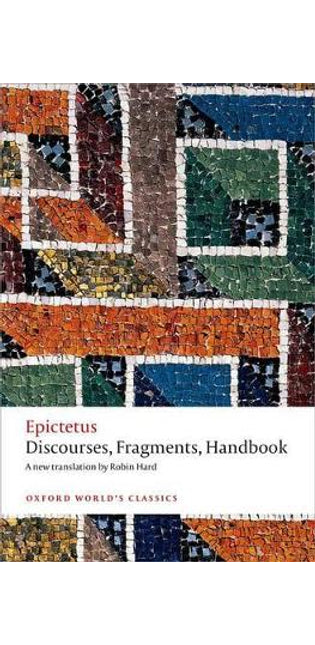
Discourses, Fragments, Handbook
'About things that are within our power and those that are not.'Epictetus's Discourses have been the most widely read and influential of all writings of Stoic philosophy, from antiquity onwards. They set out the core ethical principles of Stoicism in a form designed to help people put them into practice and to use them as a basis for leading a good human life. Epictetus was a teacher, and a freed slave, whose discourses have a vivid informality, animated by anecdotes and dialogue. Forceful, direct, and challenging, their central message is that thebasis of happiness is up to us, and that we all have the capacity, through sustained reflection and hard work, of achieving this goal. They still speak eloquently to modern readers seeking meaning in their own lives.This is the only complete modern translation of the Discourses, together with the Handbook or manual of key themes, and surviving fragments. Robin Hard's accurate and accessible translation is accompanied by Christopher Gill's full introduction and comprehensive notes.ABOUT THE SERIES: For over 100 years Oxford World's Classics has made available the widest range of literature from around the globe. Each affordable volume reflects Oxford's commitment to scholarship, providing the most accurate text plus a wealth of other valuable features, including expert introductions by leading authorities, helpful notes to clarify the text, up-to-date bibliographies for further study, and much more.
R 346.00
Meditations
'Do not act as if you had ten thousand years to live ... while you have life in you, while you still can, make yourself good.'The Meditations of Marcus Aurelius (AD 121-180) is a private notebook of philosophical reflections, written by a Roman emperor probably on military campaign in Germany. In short, highly charged comments, Marcus draws on Stoic philosophy to confront challenges that he felt acutely, but which are also shared by all human beings - the looming presence of death, making sense of one's social role and projects, the moral significance of the universe. They bring us closer to thepersonality of the emperor, who is often disillusioned with his own status and with human activities in general; they are both an historical document and a remarkable spiritual diary.This translation by Robin Hard brings out the eloquence and universality of Marcus' thoughts. The introduction and notes by Christopher Gill place the Meditations firmly in the ancient philosophical context. A selection of Marcus' correspondence with his tutor Fronto broadens the picture of the emperor as a person and thinker. ABOUT THE SERIES: For over 100 years Oxford World's Classics has made available the widest range of literature from around the globe. Each affordable volume reflects Oxford's commitment to scholarship, providing the most accurate text plus a wealth of other valuable features, including expert introductions by leading authorities, helpful notes to clarify the text, up-to-date bibliographies for further study, and much more.
R 283.00
R 397.00
R 510.00
R 244.00
R 611.00
R 682.16
R 244.00
R 465.00
R 509.74
Everest the Hard Way
50th Anniversary Edition Everest – the highest peak in the world, the ultimate challenge to a mountaineer’s skill and endurance. It had been climbed before, but never like this. Chris Bonington and his team had ambitions to climb it – the hard way. Yet before Bonington and his team set out in August 1975, even their well-wishers gave them only a fifty–fifty chance of success. The South West Face of Everest had already defeated five expeditions, including one led by Bonington himself. Everest the Hard Way is an exhilarating story of courage, endurance and teamwork. Bonington’s narrative celebrates the big moments and recreates the excitement and danger of the climb with vivid immediacy. He shares the logistical problems involved in keeping a large expedition moving, and the very real psychological ones of balancing and pairing lead climbers and giving each a chance to make the route on the face. He describes the constant avalanche threat which made the Western Cwm more dangerous than the ever-treacherous Ice Fall, and explains how lowering the sites of camps 4 and 5 solved a supply problem and kept the upward momentum for the attack on the notorious thousand-foot-tall Rock Band at 27,000 feet which had barred the way to the summit for all previous attempts. Drawing upon his experiences and the first-hand accounts and diaries of his fellow climbers, Bonington gives us the first-time jitters and unexpected emergencies, the pressures of balancing egos and skills, the meticulous planning, and the undiluted joy of mastering a seemingly impossible climb which would see Britons stand on the summit of the world for the first time. It is an immensely absorbing narrative, stunningly augmented with photographs and maps, with eleven appendices on everything from communications and equipment to food and medicine. How Bonington’s team climbed on Everest in 1975 bears no relation to how Everest is climbed fifty years on, with endless resources and helicopter support. It was much riskier in 1975. Weather forecasts were threadbare and, although equipment was improving, it was much more basic than today, so the risk of frostbite was much greater for mountaineers in the 1970s. These climbers, the best of their generation, were leading hard new ground in the only style which gave them a meaningful chance of success. Chris Bonington’s Everest the Hard Way is a beautiful, fascinating and tragic story of their legendary achievement.
R 684.00
On Craftsmanship
‘Craftsmanship has again become fashionable in high places, just as it did in the last few recessions.’The concept of craftsmanship has never been as relevant and timely as it is today. Assailed on all sides by – among many other tendencies - flexible working, short-termism, portfolio careers, quick-fix training and the cult of celebrity, it has recently re-entered public debate with a new sense of urgency. Why?A bestseller in hardback, this series of linked essays by the man who ran the Royal College of Art for many years is now available in paperback, and explores the crafts in education, in history and literature, in the contemporary arts landscape, in the language, in the digital age, taking an unsentimental, hard-headed look at craftsmanship today. Only when the romantic cobwebs have been blown away, it argues, can the key importance of the crafts be fully understood.
R 440.00
R 672.00
R 2,512.00
Lords of Easy Money
The New York Times bestseller from business journalist Christopher Leonard infiltrates one of America’s most mysterious institutions—the Federal Reserve—to show how its policies spearheaded by Chairman Jerome Powell over the past ten years have accelerated income inequality and put our country’s economic stability at risk.If you asked most people what forces led to today’s unprecedented income inequality and financial crashes, no one would say the Federal Reserve. For most of its history, the Fed has enjoyed the fawning adoration of the press. When the economy grew, it was credited to the Fed. When the economy imploded in 2008, the Fed got credit for rescuing us. But here, for the first time, is the inside story of how the Fed has reshaped the American economy for the worse. It all started on November 3, 2010, when the Fed began a radical intervention called quantitative easing. In just a few short years, the Fed more than quadrupled the money supply with one goal: to encourage banks and other investors to extend more risky debt. Leaders at the Fed knew that they were undertaking a bold experiment that would produce few real jobs, with long-term risks that were hard to measure. But the Fed proceeded anyway…and then found itself trapped. Once it printed all that money, there was no way to withdraw it from circulation. The Fed tried several times, only to see the market start to crash, at which point the Fed turned the money spigot back on. That’s what it did when COVID hit, printing 300 years’ worth of money in a few short months. Which brings us to now: Ten years on, the gap between the rich and poor has grown dramatically, inflation is raging, and the stock market is driven by boom, busts, and bailouts. Middle-class Americans seem stuck in a stage of permanent stagnation, with wage gains wiped out by high prices even as they remain buried under credit card debt, car loan debt, and student debt. Meanwhile, the “too big to fail” banks remain bigger and more powerful than ever while the richest Americans enjoy the gains of a hyper-charged financial system. The Lords of Easy Money “skillfully” (The Wall Street Journal) tells the “fascinating” (The New York Times) tale of how quantitative easing is imperiling the American economy through the story of the one man who tried to warn us. This is the first inside story of how we really got here—and why our economy rests on such unstable ground.
R 456.00
A Natural History of Empty Lots
"Brown lives far from any conventional battlefield, but he is surrounded by the wreckage of a different war, and he, too, finds hope in cultivating the ruins of nature...A Natural History of Empty Lots is less a departure from the nature writing tradition than a welcome addition to its edgelands." -New York Review of Books"The nature writing we need now." -Michelle Nijhuis, author of Beloved Beasts"Incredible" -Kelly Link, Pulitzer Prize finalist"An instant classic" -Jeff VanderMeer, New York Times bestselling authorDuring the real estate crash of the late 2000s, Christopher Brown purchased an empty lot in an industrial section of Austin, Texas. The property-abandoned and full of litter and debris-was an unlikely site for a home. Brown had become fascinated with these empty lots around Austin, so-called "ruined" spaces once used for agriculture and industry awaiting their redevelopment. He discovered them to be teeming with natural activity, and embarked on a twenty-year project to live in and document such spaces. There, in our most damaged landscapes, he witnessed the remarkable resilience of wild nature, and how we can heal ourselves by healing the Earth. Beautifully written and philosophically hard-hitting, A Natural History of Empty Lots offers a new lens on human disruption and nature, offering a sense of hope among the edgelands.
R 456.00
R 574.07
R 305.00
Staring at Lakes
Throughout his life, Michael Harding has lived with a sense of emptiness - through faith, marriage, fatherhood and his career as a writer, a pervading sense of darkness and unease remained.When he was fifty-eight, he became physically ill and found himself in the grip of a deep melancholy. Here, in this beautifully written memoir, he talks with openness and honesty about his journey: leaving the priesthood when he was in his thirties, settling in Leitrim with his artist wife, the depression that eventually overwhelmed him, and how, ultimately, he found a way out of the dark, by accepting the fragility of love and the importance of now.Staring at Lakes was a number one bestseller in Michael's native Ireland and won three BGE Irish book awards in 2013, including Non-Fiction Book of the Year. 'It's rare for a memoir to demand such intense emotional involvement and rarer still for it to be so fully rewarded' - SUNDAY TIMES.'Staring at Lakes is a raw and honest account of a life in depression. Harding's writing, which is rich and lyrical, is especially astute when describing the pain of living with an illness that has the ability to suck the joy out of any occasion.' - DAILY EXPRESS
R 408.00
R 611.00
R 550.00