Search results for "Adrian Docherty"
Items we need to order for you

Better Banking
Why did the financial crisis happen? Why did no one see it coming? And how did our banks lose so much of our money? What's being done to sort out the banking industry? And will it work? These are the questions that industry experts Adrian Docherty and Franck Viort cover in Better Banking: Understanding and Addressing the Failures in Risk Management, Governance and Regulation. They give a clear and thorough run-through of some of the key concepts and developments in banking, to enable the reader to understand better this vital yet perilous industry. Without excessive detail or jargon, they explain the most important issues in risk management, regulation and governance and build a comprehensive description of how failings in these areas resulted in the current financial crisis. In order to make the diagnosis clear, the authors illustrate their descriptions with a series of informative case studies. The book revolves around a critique of the current regulatory developments, which the authors feel will be ineffective in fixing the structural flaws in banking. Crucially, and as the title of the book suggests, they set out their own series of proposals to contribute to the development of a better, safer and more effective banking industry. Docherty and Viort's book fills an important gap in the literature on banking and its role in the current financial crisis. It is at once a history, a primer, a critique and a manifesto. It does not take sides but works through a constructive diagnosis towards ideas that could lead to major improvements in the quality and stability of the financial world. Better Banking: Understanding and Addressing the Failures in Risk Management, Governance and Regulation is a technical yet accessible book that seeks to engage interested readers of all kinds -- students, professionals, bankers and regulators but also politicians and the broader audience of citizens outside the banking industry, who are keen to inform themselves and understand what needs to be done to avoid a repeat of this crisis.
R 2,312.00
R 715.11
R 342.65
R 596.51
R 814.00
American Horror Fiction
"Insights" brings contemporary criticism on neglected literary and cultural areas. Each contribution concentrates on a study of a particular work, author or genre in its artistic, historical and cultural context.;This criticism on American horror fiction 1798-1983 offers critical and theoretical perspectives. Each essay deals with a major figure in the genre from Gothic to modern feminist reworkings and aim to illustrate the fact that modern theory can usefully be applied to any text or genre.;The essays discuss the work of Charles Brockden Brown, Edgar Allan Poe, H.P.Lovecraft, William Faulkner, Robert Bloch, Patricia Highsmith, Shirley Jackson, Stephen King and S.M.Charnas.
R 1,538.58
Docherty
'His face made a fist at the world. The twined remnant of umbilicus projected vulnerably. Hands, feet and prick. He had come equipped for the job.'Newborn Conn Docherty, raw as a fresh wound, lies between his parents in their tenement room, with no birthright but a life's labour in the pits of his small town. But the world is changing, and, lying next to him, Conn's father Tam has decided that his son's life will be different from his own. Gritty, dark and tender, McIlvanney's Docherty is a modern classic.
R 309.00
R 651.00
Criticism and Modernity
Criticism and Modernity traces the conditions under which criticism emerges as a socio-cultural practice within the institutionalized forms of European modernity and democracy. It argues that criticism is born out of anxieties about national supremacy in the late seventeenth century, with the consequence that the emergent national cultures of the eighteenth century and since become sites for the regulation of the democratic subject through the academic formof arguments about the proper relations of aesthetics to ethics and politics. The central issue is that of legitimation: how can subjective aesthetic experiences regulate the norms of ethical justice? That question is posed not as an abstract philosophical issue, but rather as a question properly locatedwithin the struggles for national culture. The usual Germanic source of modern aesthetics and criticism is here placed in the broader European context, involving contests between England, France, Scotland, Ireland, and the emergent Germany and Italy. Writers addressed include Corneille, Dryden, Molière, Shaftesbury, Hutcheson, Hume, Rousseau, Kant, Schiller, Hegel, Schopenhauer; and, throughout, the legacy of these thinkers is found in the most recent contemporary theory, in work by Agamben, Badiou, Lyotard, MacIntyre, and others.A closing chapter considers the formation of the university across modern Europe, in Vico's Naples, Humboldt's Berlin, Newman's Dublin, Blair's Edinburgh, the France of Alain and Benda, the England of Leavis, as well as our contemporary institutional predicaments.
R 10,827.00
Independence Day
Independence Day moves on from previous work, while still retaining some continuities in theme, style and approach. It is a book of journeys, literal and metaphorical, making use of ekphrastic techniques. The poems here start out from north London, taking the reader to San Francisco, New York, Baku, Kuala Lumpur, France, Russia, and back again, while remaining firmly grounded in the writer's locale. As ever, political realities and social issues are not neglected; these poems move to a contemporary music without losing seriousness of purpose without resorting to agit-prop.
R 263.00
Literature and Capital
What is the value of literature? In this important new work, Thomas Docherty charts a new economic history of literary culture and its institutions in the modern age. From the literary patronage of the early modern period, through the colonial exploitation of the 18th and 19th centuries to the institutionalisation of “literature” in the neoliberal university of the 21st century, Literature and Capital explores the changing ways in which literary culture has both resisted and become complicit with exploitative economic notions of value. Drawing on the work of economic and political thinkers such as Thomas Piketty, Naomi Klein, Edward Said and Raymond Williams, the book includes readings of work by a wide range of canonical authors from Shakespeare, Donne and Swift to Tolstoy, Woolf and Ishiguro.
R 3,825.00
Confessions
This book is available as open access through the Bloomsbury Open Access programme and is available on www.bloomsburycollections.com.This book explores what is at stake in our confessional culture. Thomas Docherty examines confessional writings from Augustine to Montaigne and from Sylvia Plath to Derrida, arguing that through all this work runs a philosophical substratum - the conditions under which it is possible to assert a confessional mode - that needs exploration and explication. Docherty outlines a philosophy of confession that has pertinence for a contemporary political culture based on the notion of 'transparency'. In a postmodern 'transparent society', the self coincides with its self-representations. Such a position is central to the idea of authenticity and truth-telling in confessional writing: it is the basis of saying, truthfully, 'here I take my stand'. The question is: what other consequences might there be of an assumption of the primacy of transparency? Two areas are examined in detail: the religious and the judicial. Docherty shows that despite the tendency to regard transparency as a general social and ethical good, our contemporary culture of transparency has engendered a society in which autonomy (or the very authority of the subject that proclaims 'I confess') is grounded in guilt, reparation and victimhood.
R 1,558.00
A to Z of Australia
The last continent to be claimed by Europeans, Australia began to be settled by the British in 1788 in the form of a jail for its convicts. While British culture has had the largest influence on the country and its presence can be seen everywhere, the British were not Australia's original populace. The first inhabitants of Australia, the Aborigines, are believed to have migrated from Southeast Asia into northern Australia as early as 60,000 years ago. This distinctive blend of vastly different cultures contributed to the ease with which Australia has become one of the world's most successful immigrant nations. The A to Z of Australia relates the history of this unique and beautiful land, which is home to an amazing range of flora and fauna, a climate that ranges from tropical forests to arid deserts, and the largest single collection of coral reefs and islands in the world. Through a detailed chronology, an introduction, appendixes, a bibliography, and cross-referenced dictionary entries on some of the more significant persons, places, and events; institutions and organizations; and political, economic, social, cultural, and religious facets, author James Docherty provides a much needed single volume reference on Australia, from its most unpromising of beginnings as a British jail to the liberal, tolerant, democracy it is today.
R 2,160.00
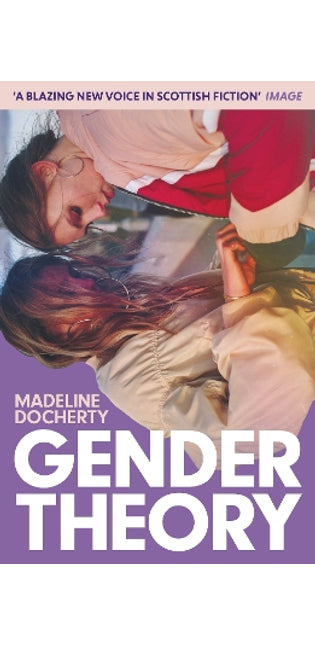
Gender Theory
'Beautifully captures the pain of growing into yourself, and the intensity of all-consuming female friendship' ROSE WILDINGYou lose your virginity to a boy from your gender theory seminar, and the first person you tell is Ella.Ella's with you at the party when you first kiss a girl. And Ella takes you to the hospital the first time you're diagnosed. Over the next few years you have a string of relationships and jobs, but you can always count on Ella to be there for you - until the drinking and the parties, the hospital visits and late-night calls, blur the lines of your friendship into something unbalanced and fragile, at risk of breaking altogether.The worst part is you can see it coming. The worst part is you don't know how to stop.From a blazing new voice in Scottish fiction, Gender Theory is an incisive, affecting debut about illness, identity and how we care for those around us.
R 309.00
Twentieth-Century European Drama
This volume offers critical and theoretical perspectives on some of the major figures in European drama in the 20th century. There are 13 essays, covering Luigi Pirandello, Bertolt Brecht, Stanislaw Witkiewicz, Samuel Beckett, Antonin Artaud, Eugene Ionesco, Jean Anouilh, Fernando Arrabal, Jean Genet, Peter Weiss, Vaclav Havel, contemporary German theatre, and Dario Fo and Franca Fame. These essays combine contemporary theory with a discussion of the dramatic work and theories of theatre and drama of the playwrights who created modern drama in Europe. Brian Docherty is the co-editor of "Nineteenth-Century Suspense: From Poe to Conan Doyle", and editor of "American Crime Fiction: Studies in the Genre", "American Horror Fiction: From Brockden Brown to Stephen King", "Twentieth Century American Drama", "American Modernist Poetry", "Twentieth Century British Poetry 1900-50", Twentieth Century British Poetry 1950-90" and "The Beat Generation".
R 3,086.32
If the Mute Timber
Tom Docherty's first collection, If the Mute Timber, begins 'not with a book / nor even an attentive ear', but with the elusive fragment of its title. The poems situate themselves in medias res: among birds or gravestones, between lines of prayer, in the flux of appearances. Places without words become focal points: the poems seek articulation in life before birth and after death; in animal and imagined lives; in works of music, painting, and architecture; and in the varied silences of human and divine relationships. In one sense, the poems are variations on the vanitas-but the transience of life and its artefacts is transposed to an offering, a potential key in which to register the work. When followed to their natural end, fragments become sentences, notes are sung. If the Mute Timber finds a range of forms-syllabics, near-sonnets, metrically shifting rhyme-patterns-that aim to bring particular sense to the 'sencelesse' (as the epigraph from Sidney has it). And not only sense but also sensuousness. The poems seem often to come so close to something as to touch it (or taste it or see it). But what? The sound 'in another place', the 'perfect ending / at which one never arrives'. In their balancing act, looking both back and ahead, these poems cannot end where they have begun; their phrasing brings about change, as to fragments on which new light is cast: 'yes, it is saying / then, then, then ...'.
R 520.11
R 794.00
Universities at War
"Docherty is not only is a brilliant critic of those forces that would like to transform higher education into an extension of the market-place... he is also a man of great moral and civic courage, who under intense pressure from the punishing neoliberal state has risked a great deal to remind us that higher education is a civic institution crucial to creating the formative cultures necessary for a democracy to survive, if not flourish."- Henry Giroux, McMasters University"Docherty engages with the secular university in its present crisis, reflecting on its origins and on its role in the future of democracy. He tackles the urgent issue of inequality with a compelling denunciation of the ways of entrenched privilege; he offers a view of governance and representation from the perspective of those who are silenced; and exposes the fundamental damage done to thought by management-speak. Docherty is moral, passionate and committed and this is a fierce and important book."- Mary Margaret McCabe, King′s College LondonThere is a war on for the future of the university worldwide. The stakes are high, and they reach deep into our social condition.On one side are self-proclaimed modernisers who view the institution as vital to national economic success. Here the university is a servant of the national economy in the context of globalization, its driving principles of private and personal enrichment necessary conditions of ‘progress’ and modernity.Others see this as a radical impoverishment of the university’s capacities to extend human possibilities and freedoms, to seek earnestly for social justice, and to participate in the endless need for the extension of democracy.This book analyses the former position, and argues for the necessity of taking sides with the latter. It does so with a sense of urgency, because the market fundamentalists are on the march. The fundamental war that is being fought is not just for scholars, but for a better – more democratic, more just, more emancipatory – form of life.Choose sides.
R 2,882.38
Literature and Capital
What is the value of literature? In this important new work, Thomas Docherty charts a new economic history of literary culture and its institutions in the modern age. From the literary patronage of the early modern period, through the colonial exploitation of the 18th and 19th centuries to the institutionalisation of “literature” in the neoliberal university of the 21st century, Literature and Capital explores the changing ways in which literary culture has both resisted and become complicit with exploitative economic notions of value. Drawing on the work of economic and political thinkers such as Thomas Piketty, Naomi Klein, Edward Said and Raymond Williams, the book includes readings of work by a wide range of canonical authors from Shakespeare, Donne and Swift to Tolstoy, Woolf and Ishiguro.
R 1,117.00
Complicity
Complicity argues that all existing modes of cultural critique are regarded as legitimate and productive if and only if they are complicit with the very ideologies and values that the criticism sets out to undermine. Through philosophical, literary and theoretical analysis, Thomas Docherty shows how easy it has been for criticism to become essentially an act of political collaboration with existing governmental power. The book explores the various ways in which, both historically and theoretically, critical activity has become complicit with the over-arching social and political norms that it aims to undermine. Philosophically, ethically and politically, criticism’s fundamental impulse is too often intrinsically negated. In extreme political form, this places criticism in line with collaborationist activity. Docherty then finds a productive way out of the double-bind in which criticism has traditionally found itself, through an idea of criticism as a mode of ‘reserve’, a mode of commitment that eschews fundamentalism of all kinds.
R 1,411.00
Aesthetic Democracy
Aesthetic Democracy argues that art and the aesthetic in general are the founding condition of the possibility of establishing social and political democracy. The book examines contemporary criticism and finds that it is historically shaped by colonialism, and that it sets up an opposition of east and west that shapes all contemporary cultural politics. The author argues for a way of outwitting this potentially dangerous struggle of east and west grounded in an aestheticism and a validation of sensory experience. Docherty proposes a new model of cultural critique, based on a revitalized and positively valorized notion of "hypocrisy," whose roots lie in Machiavelli, but whose contemporary strength lies in its potential for an ethical encounter with alterity as such.
R 713.00
Confessions
This book explores what is at stake in our confessional culture. Thomas Docherty examines confessional writings from Augustine to Montaigne and from Sylvia Plath to Derrida, arguing that through all this work runs a philosophical substratum - the conditions under which it is possible to assert a confessional mode - that needs exploration and explication. Docherty outlines a philosophy of confession that has pertinence for a contemporary political culture based on the notion of 'transparency'. In a postmodern 'transparent society', the self coincides with its self-representations. Such a position is central to the idea of authenticity and truth-telling in confessional writing: it is the basis of saying, truthfully, 'here I take my stand'. The question is: what other consequences might there be of an assumption of the primacy of transparency? Two areas are examined in detail: the religious and the judicial.Docherty shows that despite the tendency to regard transparency as a general social and ethical good, our contemporary culture of transparency has engendered a society in which autonomy (or the very authority of the subject that proclaims 'I confess') is grounded in guilt, reparation and victimhood.
R 4,414.00
Complicity
Complicity argues that all existing modes of cultural critique are regarded as legitimate and productive if and only if they are complicit with the very ideologies and values that the criticism sets out to undermine. Through philosophical, literary and theoretical analysis, Thomas Docherty shows how easy it has been for criticism to become essentially an act of political collaboration with existing governmental power. The book explores the various ways in which, both historically and theoretically, critical activity has become complicit with the over-arching social and political norms that it aims to undermine. Philosophically, ethically and politically, criticism’s fundamental impulse is too often intrinsically negated. In extreme political form, this places criticism in line with collaborationist activity. Docherty then finds a productive way out of the double-bind in which criticism has traditionally found itself, through an idea of criticism as a mode of ‘reserve’, a mode of commitment that eschews fundamentalism of all kinds.
R 4,414.00
Political English
From post-truth politics to “no-platforming” on university campuses, the English language has been both a potent weapon and a crucial battlefield for our divided politics. In this important and wide-ranging intervention, Thomas Docherty explores the politics of the English language, its implication in the dynamics of political power and the spaces it offers for dissent and resistance. From the authorised English of the King James Bible to the colonial project of University English Studies, this book develops a powerful history for contemporary debates about propaganda, free speech and truth-telling in our politics. Taking examples from the US, UK and beyond - from debates about the Second Amendment and free-speech on campus, to the Iraq War and the Grenfell Tower fire - this book is a powerful and polemical return to Orwell’s observation that a degraded political language is intimately connected to an equally degraded political culture.
R 3,384.00
In My Dreams, Again
In My Dreams, Again is Brian Docherty's fifth full collection of new poems, written in north London over several years. Once again, he takes the reader on a journey to places some readers might be familiar with, and some detours and side trips. His favourite locations, such as San Francisco, are on the tour itinerary, narrated in the blend of politics, social comment and black humour for which his work is noted, but there might also be a few surprises along the way. Brian Docherty is a resident alien . . . Woke up this Morning is a hitch-hiker's guide to cultural alienation and appropriation, from Glasgow to San Francisco and back. It is a book about real and imagined journeys to other worlds that always seem less alien than our own, a series of studies in estrangement and exile - Stanley Spencer in Cookham, Dracula in Whitby, Gauguin on Tahiti, Muddy Waters in Chicago. (Andy Croft, New Poetry column, Morning Star)
R 254.00
Political English
From post-truth politics to “no-platforming” on university campuses, the English language has been both a potent weapon and a crucial battlefield for our divided politics. In this important and wide-ranging intervention, Thomas Docherty explores the politics of the English language, its implication in the dynamics of political power and the spaces it offers for dissent and resistance. From the authorised English of the King James Bible to the colonial project of University English Studies, this book develops a powerful history for contemporary debates about propaganda, free speech and truth-telling in our politics. Taking examples from the US, UK and beyond - from debates about the Second Amendment and free-speech on campus, to the Iraq War and the Grenfell Tower fire - this book is a powerful and polemical return to Orwell’s observation that a degraded political language is intimately connected to an equally degraded political culture.
R 1,088.00
Dylan's Park
Edited by Helen Docherty, this picture book combines extracts from the works of Dylan Thomas that centre on his recollections of Cwmdonkin Park, Swansea. A boyhood adventure like no other, Dylan's words serve to bring to life the period, the environment and the very essence of what it is to be a child with a child's imagination.
R 402.00
New Deal for Transport?
Comprising contributions from a range of experts, this volume offers a critical commentary on the government's sustainable transport policy. A critical commentary on the Blair government's sustainable transport policy and its implementation.Firmly rooted in an appreciation of the politics of this controversial field.Experts contribute up-to-the-minute analyses of the key issues.Will inform debate over the future of transport policy.Includes a Foreword by David Begg, Chair of the Commission for Integrated Transport.
R 1,865.00
R 773.00
You Can Never Run Out Of Love
A heart-warming and funny tale about the different kinds of love, and how no matter how much love you give you can never run out. You can’t measure love in a bucket or cup. You don’t have to worry you’ll use it all up. Because love’s not a game where you have to keep score. Whenever you give some, you’ll always have more. When you’ve run out of everything else you’ll still find . . . You can never run out of love. Find our about all different kinds of love in this gorgeous book by award-winning author Helen Docherty with illustrations from the brilliant Ali Pye. 'Love never runs out - what a perfect message for parents to share with their children ... The message of love is repeated throughout this sweet and gentle book.' Parents in Touch
R 247.00
Scottish Migration Since 1750
Scottish Migration since 1750: Reasons and Results begins a fresh chapter in migration studies using new methods and unpublished sources to map the course of Scottish migration between 1750 and 1990. It explains why the Scottish population grew after 1650, why most Scots continued to be female, and the underlying economic reasons for Scottish emigration after 1820. It surveys migration to England, Canada, United States, South Africa, Australia, and New Zealand. It explores their names, marriages, family structures, and religions, and assesses how well they really fared compared to other British migrants. Far from being just another Celtic sob story, this book offers a model about how the histories of other migrant groups might be reappraised.
R 1,501.00
R 342.00
Someone Just Like You
A deeply moving, vitally important picture book encouraging empathy and kindness.Somewhere in this world, there is someone just like you, who finds the same things funny and who laughs the way you do. Have you ever stopped to think that there might be someone out there who is just like you? And if they needed you, would you help them? Helen Docherty’s lyrical rhyming text is perfectly matched by David Roberts’ stunning, thoughtful illustrations, as the two combine to make a picture book that is as necessary as it is beautiful.
R 223.00
R 397.00