



Search results for "Alex Toth"
Items in stock - 4 working days delivery time

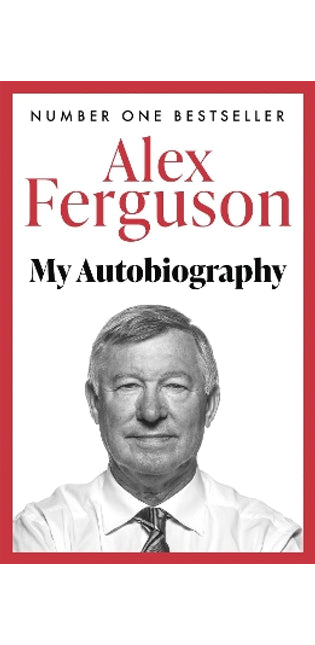
ALEX FERGUSON My Autobiography
Sir Alex Ferguson's compelling story is always honest and revealing he reflects on his managerial career that embraced unprecedented European success for Aberdeen and 26 triumphant seasons with Manchester United. Sir Alex Ferguson's best-selling autobiography has now been updated to offer reflections on events at Manchester United since his retirement as well as his teachings at the Harvard Business School, a night at the Oscars and a boat tour round the Hebrides, where he passed unrecognised.The extra material adds fresh insights and detail on his final years as United's manager. Both the psychology of management and the detail of football strategy at the top level can be complex matters but no-one has explained them in a more interesting and accessible way for the general reader than Sir Alex does here. MY AUTOBIOGRAPHY is revealing, endlessly entertaining and above all inspirational.
R 450.00
Items we need to order for you
R 711.00
R 397.00
R 487.00
R 596.00
Guide to a Second America n Revolution
The American "experiment" is in danger. It is time to renew our commitment to our republican form of government and to the promise of "liberty and justice for all."
R 416.00
R 396.00
R 1,426.00
R 582.00
R 443.00
R 1,282.00
R 304.00
R 519.00
R 458.00
R 367.00
R 365.00
R 305.00
R 397.00
R 215.97
R 805.75
R 275.00
R 1,188.30
Truth and Metafiction
Metafiction has long been associated with the heyday of literary postmodernism—with a certain sense of irresponsibility, political apathy, or outright nihilism. Yet, if (as is now widely assumed) postmodernism has finally run its course, how might we account for the proliferation of metafictional devices in contemporary narrative media? Does this persistence undermine the claim that postmodernism has passed, or has the function of metafiction somehow changed? To answer these questions, Josh Toth considers a broad range of recent metafictional texts—bywriters such as George Saunders and Jennifer Egan and directors such as Sofia Coppola and Quentin Tarantino. At the same time, he traverses a diffuse theoretical landscape: from the rise of various new materialisms (in philosophy) and the turn to affect (in literary criticism) to the seemingly endless efforts to name postmodernism’s ostensible successor. Ultimately, Toth argues that much contemporary metafiction moves beyond postmodern skepticism to reassert the possibility of making true claims about real things. Capable of combating a “post-truth” crisis, such forms assert or assume a kind of Hegelian plasticity; they actively and persistently confront the trauma of what is infinitely mutable, or perpetually other. What is outside or before a given representation is confirmed and endured as that which exceeds the instance of its capture. The truth is thereby renewed; neither denied nor simply assumed, it is approached as ethically as possible. Its plasticity is grasped because the grasp, the form of its narrative apprehension, lets slip.
R 1,029.00
Toth
Claire Hayes was an Englishwoman with pale blonde hair and dark, burning eyes. Soon she was crossing the wild, wide American continent. Its roughness would strengthen her, and five men would help make her a woman: Peter, the husband drawn to prayer and the golden California sun; Morton, the trapper who saved her life and wanted full payment; Lone Eagle, the tall chief who bought her, loved her, and gave her his child; Don Hernando, the Spanish-American aristocrat; and Camden Summers, the fearless half-Indian, half-English scout. And always there was Claire, surviving them all! "A master storyteller." —The Nashville Banner. "The master's touch in storytelling." —Publishers Weekly. "V. J. Banis is a national treasure. His stories are filled with believable characters and situations, and are meticulously researched. I couldn't put this one down!"—Robert Reginald.
R 456.00
Mettray
The Mettray Penal Colony was a private reformatory without walls, established in France in 1840 for the rehabilitation of young male delinquents. Foucault linked its opening to the most significant change in the modern status of prisons and now, at last, Stephen Toth takes us behind the gates to show how the institution legitimized France's repression of criminal youth and added a unique layer to the nation's carceral system.Drawing on insights from sociology, criminology, critical theory, and social history, Stephen Toth dissects Mettray's social anatomy, exploring inmates' experiences. More than 17,000 young men passed through the reformatory before its closure, and Toth situates their struggles within changing conceptions of childhood and adolescence in modern France. Mettray demonstrates that the colony was an ill-conceived project marked by internal contradictions. Its social order was one of subjection and subversion, as officials struggled for order and inmates struggled for autonomy.Toth's formidable archival work exposes the nature of the relationships between, and among, prisoners and administrators. He explores the daily grind of existence: living conditions, discipline, labor, sex, and violence. Thus, he gives voice to the incarcerated, not simply to the incarcerators, whose ideas and agendas tend to dominate the historical record. Mettray is, above all else, a deeply personal illumination of life inside France's most venerated carceral institution.
R 1,588.00
R 550.00
Comparative Health Systems
The standard classifications of health systems don't allow for the complexity and variety that exists around the world. Federico Toth sets out a new framework for understanding the many ways in which health systems can be organized and systematically analyses the health systems chosen by 27 OECD countries. He provides a great deal of up-to-date data on financing models, healthcare spending, insurance coverage, methods of organizing providers, healthcare personnel, remuneration methods for doctors and hospitals, development trajectories and recent reforms. For each of the major components of the healthcare system, the organizational models and the possible variants from which individual countries can ideally select are defined. Then, based on the organizational solutions actually adopted, the various national systems are grouped into homogeneous families. With its clear, jargon-free language and concrete examples, this is the most accessible comparative study of international healthcare arrangements available.
R 5,104.48
Unveiling Kate Chopin
This is the true, unvarnished life story of the girl who grew up to write The Awakening, a masterpiece published 100 years ago. With its portrayal of a woman whose sexual desires take her outside marriage, it rocked American literature's cozy conception of womanhood.In Unveiling Kate Chopin Emily Toth, the foremost authority on Chopin's life and works, creates a sharply revealing portrait of a modern woman in a Victorian world. Born in St. Louis in 1850, Kate O'Flaherty was raised by wealthy, feisty widows and educated by brilliant nuns. She endured a mysterious ""outrage"" committed against her by Union soldiers in her teens and suffered what moderns now call a ""loss of voice."" But she survived to become a lively, dangerously clever social observer.She had the talent and then the life experiences to become a writer. Her Louisiana-born husband, Oscar Chopin, had grown up in France and did not restrict her. In New Orleans (where she gossiped with the painter Edgar Degas) and then in rural Louisiana (where the neighbors hated her), Kate produced six children in nine years. Yet she retained her individuality and her wicked sense of humor. After her husband's sudden death, Kate's affair with another woman's husband was a village scandal--but following the lessons of the French women who raised her, she knew when to leave.After the death of her mother, Kate reinvented herself as the author of engaging short stories set in Louisiana. Many had unusual social messages. ""In Sabine"" opposed domestic violence. ""At the 'Cadian Ball"" supported sexual expression for women. ""Odalie Misses Mass"" suggested that interracial friendships between African American and white women were possible. She condemned the idle rich and celebrated single mothers. To promote her own career, she created the first salon in St. Louis and became the first woman in the city to become a professional fiction writer. Although she claimed to be un-serious about her craft, newly discovered manuscripts, which Toth mines for the insights they offer, reveal her as a dedicated artist who wanted to reach her readers' hearts.Toth portrays Chopin as a bright, ambitious woman who ruffled staid souls, and when she published The Awakening, her foes pounced. Many reviews of the novel were uncomprehending; many were vicious and her next book was canceled. Her family suffered; her health declined; and Chopin died in 1904, silenced ahead of her time. Now, a century later, Toth sees Chopin as a woman of unique wit and astonishing talent and as the daring author who wrote the most radical, notorious American novel of the late nineteenth century.
R 1,030.00
Truth and Metafiction
Metafiction has long been associated with the heyday of literary postmodernism—with a certain sense of irresponsibility, political apathy, or outright nihilism. Yet, if (as is now widely assumed) postmodernism has finally run its course, how might we account for the proliferation of metafictional devices in contemporary narrative media? Does this persistence undermine the claim that postmodernism has passed, or has the function of metafiction somehow changed? To answer these questions, Josh Toth considers a broad range of recent metafictional texts—bywriters such as George Saunders and Jennifer Egan and directors such as Sofia Coppola and Quentin Tarantino. At the same time, he traverses a diffuse theoretical landscape: from the rise of various new materialisms (in philosophy) and the turn to affect (in literary criticism) to the seemingly endless efforts to name postmodernism’s ostensible successor. Ultimately, Toth argues that much contemporary metafiction moves beyond postmodern skepticism to reassert the possibility of making true claims about real things. Capable of combating a “post-truth” crisis, such forms assert or assume a kind of Hegelian plasticity; they actively and persistently confront the trauma of what is infinitely mutable, or perpetually other. What is outside or before a given representation is confirmed and endured as that which exceeds the instance of its capture. The truth is thereby renewed; neither denied nor simply assumed, it is approached as ethically as possible. Its plasticity is grasped because the grasp, the form of its narrative apprehension, lets slip.
R 3,973.00
R 1,186.00
R 446.00
R 458.00
Ms. Mentor's New and Ever More Impeccable Advice for Women and Men in Academia
Ms. Mentor, that uniquely brilliant and irascible intellectual, is your all-knowing guide through the jungle that is academia today. In the last decade Ms. Mentor's mailbox has been filled to overflowing with thousands of plaintive epistles, rants, and gossipy screeds. A mere fraction has appeared in her celebrated monthly online and print Q&A columns for the Chronicle of Higher Education; her readers' colorful and rebellious ripostes have gone unpublished—until now.Hearing the call for a follow-up to the wildly successful Ms. Mentor's Impeccable Advice for Women in Academia, Ms. Mentor now broadens her counsel to include academics of the male variety. Ms. Mentor knows all about foraging for jobs, about graduate school stars and serfs, and about mentors and underminers, backbiters and whiners. She answers burning questions: Am I too old, too working class, too perfect, too blonde? When should I reproduce? When do I speak up, laugh, and spill the secrets I've gathered? Do I really have to erase my own blackboard? Does academic sex have to be reptilian?From the ivory tower that affords her an unparalleled view of the academic landscape, Ms. Mentor dispenses her perfect wisdom to the huddled masses of professorial newbies, hardbitten oldies, and anxious midcareerists. She gives etiquette lessons to academic couples and the tough-talking low-down on adjunct positions. She tells you what to wear, how to make yourself popular, and how to decode academic language.She introduces you to characters you must know: Professor Pelvic, Dr. Iron Fist, Mr. Upstart Whelp, Dean Titan, Professor McShameless.In this volume Ms. Mentor once again shares her wide-ranging unexpurgated wisdom, giving tips on bizarre writing rituals, tenure diaries, and time management (Exploding Head Syndrome). She decodes department meetings and teaches you the tricks for getting stellar teaching evaluations.Raw, shocking, precise, clever, absurd—Ms. Mentor has it all.
R 1,069.00
R 457.00
R 587.00
R 542.90
R 457.00
R 610.00
R 304.00
R 733.00
Comparative Health Systems
The standard classifications of health systems don't allow for the complexity and variety that exists around the world. Federico Toth sets out a new framework for understanding the many ways in which health systems can be organized and systematically analyses the health systems chosen by 27 OECD countries. He provides a great deal of up-to-date data on financing models, healthcare spending, insurance coverage, methods of organizing providers, healthcare personnel, remuneration methods for doctors and hospitals, development trajectories and recent reforms. For each of the major components of the healthcare system, the organizational models and the possible variants from which individual countries can ideally select are defined. Then, based on the organizational solutions actually adopted, the various national systems are grouped into homogeneous families. With its clear, jargon-free language and concrete examples, this is the most accessible comparative study of international healthcare arrangements available.
R 1,764.83


