Search results for "Butler-White"
Items we need to order for you

R 367.00
R 554.00
R 261.00
R 458.00
R 428.00
R 1,594.00
R 397.00
R 305.00
R 619.00
R 336.00
R 304.00
R 305.00
R 552.00
R 5,321.76
R 472.52
R 367.00
R 911.00
White Evangelical Racism
The American political scene today is poisonously divided, and the vast majority of white evangelicals play a strikingly unified, powerful role in the disunion. In this clear-eyed, hard-hitting chronicle of American religion and politics, Anthea Butler argues that racism is at the core of conservative evangelical activism and power. Propelled by the benefits of whiteness, white evangelicals used scripture to defend slavery and nurture the Confederacy during the Civil War era. During Reconstruction, they used it to deny the vote to newly emancipated blacks. In the twentieth century, they sided with segregationists in avidly opposing movements for racial equality and civil rights. White evangelicals today, cloaked in a vision of Christian patriarchy and nationhood, form a staunch voting bloc in support of white leadership. Evangelicalism's racial history festers, splits America, and needs a reckoning now.In a new preface to the second edition, Butler takes stock of how the trends she identified have expanded as Donald Trump mounts a third campaign for the presidency, evangelicals celebrate and respond to the overturning of Roe v. Wade, and ferocious backlash against racial equity has injected new venom into evangelicalism's role in American politics.
R 365.00
R 454.00
R 458.00
R 914.49
R 305.00
R 205.00
True Blue
During the American Civil War, thousands of citizens in the Deep South remained loyal to the United States. Though often overlooked, they possessed broad symbolic importance and occupied an outsized place in the strategic thinking and public discourse of both the Union and the Confederacy. In True Blue, Clayton J. Butler investigates the lives of white Unionists in three Confederate states, revealing who they were, why and how they took their Unionist stand, and what happened to them as a result. He focuses on three Union regiments recruited from among the white residents of the Deep South—individuals who passed the highest bar of Unionism by enlisting in the United States Army to fight with the First Louisiana Cavalry, First Alabama Cavalry, and Thirteenth Tennessee Union Cavalry. Northerners and southerners alike thought a considerable amount about Deep South Unionism throughout the war, often projecting their hopes and apprehensions onto these embattled dissenters. For both, the significance of these Unionists hinged on the role they would play in the postwar future. To northerners, they represented the tangible nucleus of national loyalty within the rebelling states on which to build Reconstruction policies. To Confederates, they represented traitors to the political ideals of their would-be nation and, as the war went on, to the white race, making them at times a target for vicious reprisal. Unionists' wartime allegiance proved a touchstone during the political chaos and realignment of Reconstruction, a period when many of these veterans played a key role both as elected officials and as a pivotal voting bloc. In the end, white Unionists proved willing to ally with African Americans during the war to save the Union but unwilling to protect or advance Black civil rights afterward, revealing the character of Unionism during the era as a whole.
R 797.00
R 914.20
Chokehold
Finalist for the 2018 National Council on Crime & Delinquency’s Media for a Just Society AwardsNominated for the 49th NAACP Image Award for Outstanding Literary Work (Nonfiction)A 2017 Washington Post Notable Book A Kirkus Best Book of 2017“Butler has hit his stride. This is a meditation, a sonnet, a legal brief, a poetry slam and a dissertation that represents the full bloom of his early thesis: The justice system does not work for blacks, particularly black men.”—The Washington Post “The most readable and provocative account of the consequences of the war on drugs since Michelle Alexander’s The New Jim Crow . . . .”—The New York Times Book Review“Powerful . . . deeply informed from a legal standpoint and yet in some ways still highly personal”—The Times Literary Supplement (London)With the eloquence of Ta-Nehisi Coates and the persuasive research of Michelle Alexander, a former federal prosecutor explains how the system really works, and how to disrupt itCops, politicians, and ordinary people are afraid of black men. The result is the Chokehold: laws and practices that treat every African American man like a thug. In this explosive new book, an African American former federal prosecutor shows that the system is working exactly the way it's supposed to. Black men are always under watch, and police violence is widespread—all with the support of judges and politicians. In his no-holds-barred style, Butler, whose scholarship has been featured on 60 Minutes, uses new data to demonstrate that white men commit the majority of violent crime in the United States. For example, a white woman is ten times more likely to be raped by a white male acquaintance than be the victim of a violent crime perpetrated by a black man. Butler also frankly discusses the problem of black on black violence and how to keep communities safer—without relying as much on police. Chokehold powerfully demonstrates why current efforts to reform law enforcement will not create lasting change. Butler's controversial recommendations about how to crash the system, and when it's better for a black man to plead guilty—even if he's innocent—are sure to be game-changers in the national debate about policing, criminal justice, and race relations.
R 623.00
R 659.67
R 1,323.00
R 611.00
R 1,615.00
R 305.00
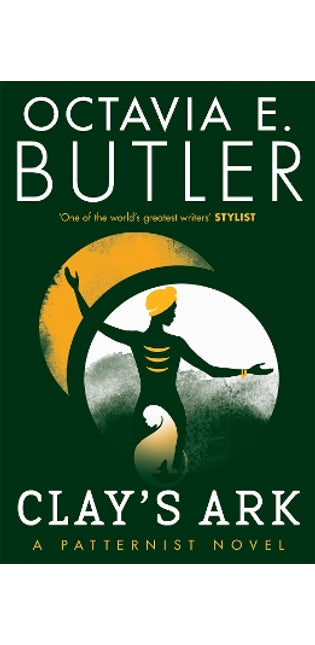
Clay's Ark
'A book that shifted my life... Epic, game-changing, moving and brilliant' VIOLA DAVIS on Wild Seed'Butler's evocative, often troubling novels explore far-reaching issues of race, sex, power and, ultimately, what it means to be human' NEW YORK TIMESA PATTERNIST NOVEL: BOOK THREE Blake Maslin is a doctor. In an alternate America marked by volatile class warfare, he and his twin daughters are taken captive by armed men demanding urgent medical care.In an isolated desert compound, the family encounter a collective of people suffering from an unknown and deadly disease. They appear sickly yet possess unnatural strength, torn between the dangerous compulsion to infect others or to hold on to their own humanity.In the following hours, Blake and his daughters each must make a vital choice: risk everything to escape infection and warn the rest of the world, or accept their place in this strange new society.
R 408.00
R 397.00
R 605.59
R 228.00
R 335.00
R 611.00
Butler; Old, New and Carderview
This is the story of Butler, Johnson County, Tennessee. The only town flooded by the Tennessee Valley Authority. Butler and its citizens met this ultimate fate after surviving almost two centuries of natural floods, wars, and disease. This is the story of 'Old' Butler 1768-1948, Carderview 1948-1953 and 'New' Butler 1953-Present. Interesting side stories of happenings in Butler and surroundings also presented. Appendices are very informative.
R 810.68
Black Homelands of South Africa
"An admirable mixture of first-rate scholarship and controversial political thinking. For anybody who wants to know what the homelands policy is all about, and how it works out in practice, this rightly wrin en volume can be highly recommended."--Cape Times "Many volumes on South Africa have appeared in recent years, but few have analyzed in detail the country's program for eventually creating ten independent black African 'homelands': This book presents a detailed account of the history and conditions ...of two of the homelands, Bophmhatswana (located near Preroria) and KwaZulu (bordering on the Indian Ocean), plus some interpretation of the overall homeland policy. The two homelands studied consist of patches of noncontiguous land and have meager natural resources and virtually no modern economic infrastructures. They could exist as viable independent entities only if a large proportion of their citizens continued to live and work in white-controlled South Africa. On a slightly optimistic note, the authors observe that the homelands, with their new political structures, have created constituencies for modern leaders who may be able to wrest concessions from the whites."--Library journal "The authors, each a major scholar of the current South African scene, address their subject from an historical and legislative background, moving on the separate treatment of the two 'homelands' administration and politics; leadership (principally Lucas Mangope of Bophuthatswana and Gatsha Burhelezi of KwaZulu); income and public finance; and economic development. The study is liberally illustrated with informative tables and maps. They conclude with an excellent (though depressing) conclusion on the future of the two homelands The book is a model study of its subjects--comprehensive, searching, and candid...An indispensible addition to the slim body of book literature (of any substance) on current South African socioeconomic and political conditions, particularly as they relate to the homelands." --Choice "Striving visibly for objectiv ity, this study considers the possible contributions of the homelands to the achievement of evolut ionary change in South Africa, while at the same time thoroughly documenting the vast physical and political constraints on homeland development. An extremely useful source."--Foreign Affairs
R 911.00