Search results for "Clive Webb"
Items in stock - 4 working days delivery time

R 455.00

Items we need to order for you
Vietdamned
Guilty: the conclusion of many trials. But this verdict was unusual, delivered by a jury of the greatest minds of the twentieth century, among them Jean-Paul Sartre and Simone de Beauvoir, James Baldwin and Stokely Carmichael; and in the chair, legendary philosopher-mathematician Bertrand Russell. The defendant was unusual, too: the United States government.Award-winning historian Clive Webb lays bare the extraordinary true story of the 1967 Russell Tribunal and its attempt to hold the US government to account for atrocities in the Vietnam War. The revelations that came out of the tribunal shocked the world. Vietdamned is an eye-opening account of the anti-war movement, of cover-ups and abuses of government, and of the power (and limits) of celebrity.
R 680.00
Rabble Rousers
This title connects civil rights opponents to America's tradition of radical conservatism. The decade following the 1954 Brown v. Board of Education decision saw white southerners mobilize in massive resistance to racial integration. Most segregationists conceded that ultimately they could only postpone the demise of Jim Crow. Some militant whites, however, believed it possible to win the civil rights struggle. Histories of the black freedom struggle, when they mention these racist zealots at all, confine them to the margin of the story. These extremist whites are caricatured as ineffectual members of the lunatic fringe. Civil rights activists, however, saw them for what they really were: calculating, dangerous opponents prepared to use terrorism in their stand against reform. To dismiss white militants is to underestimate the challenge they posed to the movement and, in turn, the magnitude of civil rights activists' accomplishments. The extremists helped turn massive resistance into a powerful political phenomenon. While white southern elites struggled to mobilize mass opposition to racial reform, the militants led entire communities in revolt. ""Rabble Rousers"" turns traditional top-down models of massive resistance on their head by telling the story of five far-right activists - Bryant Bowles, John Kasper, Rear Admiral John Crommelin, Major General Edwin Walker, and J. B. Stoner - who led grassroots rebellions. It casts new light on such contentious issues as the role of white churches in defending segregation, the influence of anti-Semitism in southern racial politics, and the divisive impact of class on white unity. The flame of the far right burned brilliantly but briefly. In the final analysis, violent extremism weakened the cause of white southerners. Tactical and ideological tensions among massive resisters, as well as the strength and unity of civil rights activists, accelerated the destruction of Jim Crow.
R 1,354.00
Rabble Rousers
This title connects civil rights opponents to America's tradition of radical conservatism. The decade following the 1954 Brown v. Board of Education decision saw white southerners mobilize in massive resistance to racial integration. Most segregationists conceded that ultimately they could only postpone the demise of Jim Crow. Some militant whites, however, believed it possible to win the civil rights struggle. Histories of the black freedom struggle, when they mention these racist zealots at all, confine them to the margin of the story. These extremist whites are caricatured as ineffectual members of the lunatic fringe. Civil rights activists, however, saw them for what they really were: calculating, dangerous opponents prepared to use terrorism in their stand against reform. To dismiss white militants is to underestimate the challenge they posed to the movement and, in turn, the magnitude of civil rights activists' accomplishments. The extremists helped turn massive resistance into a powerful political phenomenon. While white southern elites struggled to mobilize mass opposition to racial reform, the militants led entire communities in revolt. “Rabble Rousers” turns traditional top-down models of massive resistance on their head by telling the story of five far-right activists - Bryant Bowles, John Kasper, Rear Admiral John Crommelin, Major General Edwin Walker, and J. B. Stoner - who led grassroots rebellions. It casts new light on such contentious issues as the role of white churches in defending segregation, the influence of anti-Semitism in southern racial politics, and the divisive impact of class on white unity. The flame of the far right burned brilliantly but briefly. In the final analysis, violent extremism weakened the cause of white southerners. Tactical and ideological tensions among massive resisters, as well as the strength and unity of civil rights activists, accelerated the destruction of Jim Crow.
R 3,824.00
Forgotten Dead
Mob violence in the United States is usually associated with the southern lynch mobs who terrorized African Americans during the Jim Crow era. In Forgotten Dead, William D. Carrigan and Clive Webb uncover a comparatively neglected chapter in the story of American racial violence, the lynching of persons of Mexican origin or descent. Over eight decades lynch mobs murdered hundreds of Mexicans, mostly in the American Southwest. Racial prejudice, a lack ofrespect for local courts, and economic competition all fueled the actions of the mob. Sometimes ordinary citizens committed these acts because of the alleged failure of the criminal justice system; other times the culprits were law enforcement officers themselves. Violence also occurred against the backdrop ofcontinuing tensions along the border between the United States and Mexico aggravated by criminal raids, military escalation, and political revolution. Based on Spanish and English archival documents from both sides of the border, Forgotten Dead explores through detailed case studies the characteristics and causes of mob violence against Mexicans across time and place. It also relates the numerous acts of resistance by Mexicans, including armed self-defense, crusading journalism, and lobbying by diplomats who pressured the United States to honor its rhetorical commitment to democracy. Finally, it contains the first-ever inventory ofMexican victims of mob violence in the United States. Carrigan and Webb assess how Mexican lynching victims came in the minds of many Americans to be the "forgotten dead" and provide a timely account of Latinos' historical struggle for recognition of civil and human rights.
R 1,559.60
Forgotten Dead
Mob violence in the United States is usually associated with the southern lynch mobs who terrorized African Americans during the Jim Crow era. This book uncovers what is by contrast a neglected chapter in the story of American racial violence, the lynching of persons of Mexican origin or descent. Over eight decades lynch mobs murdered hundreds of Mexicans, mostly in the American Southwest. Racial prejudice, a lack of respect for local courts, and economic competitionall fueled the actions of the mob. Sometimes it was ordinary citizens who committed these acts because of the alleged failure of the criminal justice system; other times the culprits were law enforcement officers themselves. Violence also occurred against the backdrop of continuing tensions alongthe border between the United States and Mexico aggravated by criminal raids, military escalation, and political revolution. Based on exhaustive research on both sides of the border, the first half of Forgotten Dead explores the characteristics and causes of mob violence against Mexicans across time and place. The second half of the book relates the numerous acts of resistance by Mexicans including armed self-defense, crusading journalism, and lobbying by diplomats who pressured the United States to honor its rhetorical commitment to democracy. In reconstructing these stories, the authors provide detailed case studies and assess how Mexican lynching victims came in the minds of many Americans to be the "forgotten dead." The conclusion of the book also contains the first-ever inventory of Mexican victims of mob violence in the United States. With Latinos having an increasingly powerful influence on American public life, this book provides a timely account of their historical struggle for recognition of civil and humanrights.
R 2,805.12
R 632.00
R 1,245.32
R 428.00
R 619.00
R 1,128.72
Methodist Theology Today
British Methodism is reshaping itself. At a time of uncertainty about the future, owing to declining numbers and an ever-closer relationship with the Church of England, a collection of the liveliest theological minds in contemporary Methodism have written a book which shows how recent theology can be a resource for the future. Methodism has always had an active concern with both evangelism and social welfare and by means of its central organization it is able to coordinate efforts in these areas. The book asks challenging questions about how this may develop in the complex post-modern secular world.
R 1,764.00
R 1,251.79
Sitting Pretty
More than any other male movie star, the refined Clifton Webb (1889-1966) caused the movie-going public to change its image of a leading man. In a day when leading men were supposed to be strong, virile, and brave, Clifton Webb projected an image of flip, acerbic arrogance. He was able to play everything from a decadent columnist (Laura) to a fertile father (Cheaper by the Dozen and The Remarkable Mr. Pennypacker), delivering lines in an urbanely clipped, acidly dry manner with impeccable timing. Sitting Pretty is his remarkable story.Long before his film career began, Webb was a child actor and later a suavely effete song-and-dance man in numerous Broadway musicals and revues. The turning point in his career came in 1941 when his good friend Noël Coward cast him in Blithe Spirit. Director Otto Preminger saw Webb's performance and cast him in Laura in 1944.Webb began to write his autobiography, but he said that he eventually had gotten ""bogged down"" in the process. However, he did complete six chapters and left a hefty collection of notes that he intended to use in the proposed book. His writing is as witty and sophisticated as his onscreen persona. Those six chapters, information and voluminous notes, and personal research by the coauthor provide an intimate view of an amazingly talented man's life and times.
R 736.00
Portrait of Mendelssohn
Since his death in 1847, Felix Mendelssohn’s music and personality have been both admired and denigrated to extraordinary degrees. In this valuable book Clive Brown weaves together a rich array of documents—letters, diaries, memoirs, reviews, news reports, and more—to present a balanced and fascinating picture of the composer and his work. Rejecting the received view of Mendelssohn as a facile, lightweight musician, Brown demonstrates that he was in fact an innovative and highly cerebral composer who exerted a powerful influence on musical thought into the twentieth century.Brown discusses Mendelssohn’s family background and education; the role of religion and race in his life and reputation; his experiences as practical musician (pianist, organist, string player, conductor) and as teacher and composer; the critical reception of his works; and the vicissitudes of his posthumous reputation. The book also includes a range of hitherto unpublished sketches made by Mendelssohn. The result is an unprecedented portrayal of the man and his achievements as viewed through his own words and those of his contempories.
R 2,119.00
R 1,482.00
Opal Sunset
Opal Sunset gathers together fifty years of Clive James’s poetry, and enhances his reputation as one of the most versatile and accomplished of contemporary writers. Indeed – as with Other Passports, The Book of My Enemy and Angels Over Elsinore before it – Opal Sunset proves Clive James to be as well suited to the intense demands of the poetic form as he is to prose. Readers new to his verse will not be surprised to find him a master of the comic set-piece and surreal excursion, while those who are familiar with his previous collections will already be aware of his fluency and apparently effortless style, his technical skill and thematic scope. Ultimately, however, the highest recommendation one can give is that Clive James is, in these poems, unmistakably himself – an assured and dazzling wordsmith.His other poetry collections include Collected Poems, Angels Over Elsinore and Sentenced to Life.
R 517.97
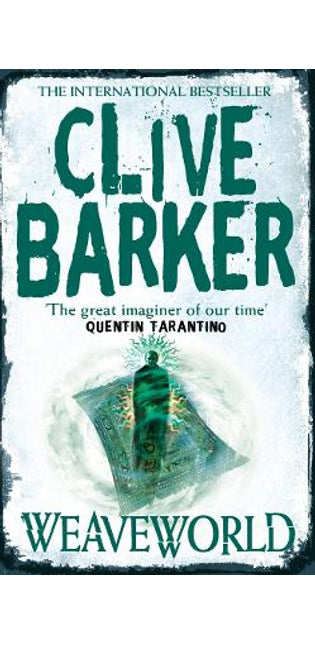
Weaveworld
Reissue of the highly acclaimed thriller by the world’s most outstanding dark fantasist. WEAVEWORLD is an epic adventure of the imagination. It begins with a carpet in which a world of rapture and enchantment is hiding; a world which comes to life, alerting the dark forces and beginning a desperate battle to preserve the last vestiges of magic which Humankind still has access to. WEAVEWORLD is a book of visions and horrors, a story of quest, titanic struggles, of love and of hope. It is a triumph of imagination and storytelling, an adventure, a nightmare, a promise… ‘Barker’s fecundity of invention is beyond praise. In a world of hard-bitten horror and originality, Clive Barker dislocates your mind.’ THE MAIL ON SUNDAY.
R 464.00
Baobab trails
Clive Walker has changed the face of conservation in South Africa and devoted his life to the preservation of our wildlife and natural heritage. Baobab trails is the story of his journey, spanning more than forty years, told through his experiences with some extraordinary and remarkable personalities – the likes of Ian Player, David Shepherd, Kuki Gallman, Eric Rundgren, Blythe Loutit, Iain Douglas Hamilton, Johannes Naari, Lloyd Wilmot, Conita Walker, Peter Hitchin’s and Anthony Hall-Martin to name but a few. Clive’s contact with baobab trees and their presence, combined with his desire to retrace his steps, as well as record and capture these remarkable trees, their size, human history and his own adventures upon first encountering them, means that these remarkable trees are woven into his autobiography, with the skilful assistance of Sally Antrobus. Many baobab trees are associated with famous 19th-century travellers, hunters, traders and explorers who left their names on the tree trunks, camped under them or used the trees for a variety of purposes, revealing a great wealth of interesting history. His journey covers a large spectrum of the southern African landscape – an amazing 45 000 km – and identifies and records forty trees through photos and art. For Clive Walker, these forty trees represent the 40th anniversary of the founding of the Endangered Wildlife Trust. The baobab peace trails enables readers to follow their own trail in locating these amazing specimens, which include five of the largest known baobabs, located throughout southern Africa; in Mozambique, Zimbabwe, Limpopo, Namibia and Botswana. This represents the first ever detailed collection of historical baobab trees. With grateful thanks to SAPPI for funding the books.
R 295.00
Reliable Essays
Including Clive James's most memorable pieces – his ‘Postcard from Rome’, his observations on Margaret Thatcher, his insights into Heaney, Larkin and Orwell – this book also contains brilliantly funny examinations of characters like Barry Humphries, as well as showcasing James’s more thoughtful, analytical side. From Germaine Greer to Marilyn Monroe, from the nature of celebrity to German culpability for the Holocaust, Reliable Essays is an unmissable collection from one of the best writers of our time.
R 759.34
R 683.00
London Uncanny
From Kensington to the East End, under candlelight, gas lamp and then neon signs, London is both a bustling physical metropolis and a stirring psychic encounter. The most depraved depictions of London in fiction, film, poetry, television and theatre have irrevocably merged with the reality of its dark history, creating a phantasmagoria defined by murder, vice and the unnatural. In this panoptic look at the capital at its most eerie and macabre, Clive Bloom takes a tour of Gothic London's uncanny literature, arcane events and its infamous and imagined geographies. From David Bowie to T S Eliot, Thomas de Quincey to Aleister Crowley, the prophetess Joanna Southcott to the 'ghosts' of Abba and the worlds of Neil Gaiman and Clive Barker, these are the figures that populate a city lost in fog and blind alleys, where the dead can be raised, the living sacrificed and the clandestine thrive. Suturing together fact and fantasy, London Uncanny presents the urban landscape of the capital as a space of wonder and madness, haunted by its past and haunting the present. Stalking through disease and degeneracy, death and murder, spiritualism, lunacy and the occult, Bloom crafts a singular, integrated concept of a London where dreams and nightmares meet.
R 724.00
Clive Penguin
Who's ever heard of a penguin that doesn't like the cold? Surrounded by the same old snow day in day out and always bloomin' freezing, Clive Penguin wishes he was somewhere else. SOMEONE else. But, with an epic discovery just around the corner, the solution might be easier than he thinks . . .From real life polar-exploring adventurer Huw Lewis Jones and award-winning illustrator Ben Sanders comes a quirky story about getting what you need, rather than what you want. Readers will hoot with laughter at the hilariously deadpan Clive Penguin - a unique voice that's perfect for fans of Jon Klassen, Oliver Jeffers and Morag Hood. Featuring edgy illustrations complete with neon ink. Oh, and penguins.
R 247.00
Revolt of the Pendulum
The Revolt of the Pendulum is an essay collection that shows Clive James at his most dazzling and versatile best. From the rules of grammar to the fundamentals of religion, from the culture of fandom to the cult of the critic, it’s all there: his customary wit, learning and understanding; his precise way with words and pointed comments; his ear for language and eye for detail; his ability to focus on the finer points and the bigger picture simultaneously – not to mention the sheer scope of his subject matter. ‘Clive James has a fantastic range and depth of knowledge. He is, at times, miraculously funny. He writes knowledgeably and with passion about literature, and especially poetry. His opinions are his own; he knows about classical music, show tunes and pop. He knows about politics and history. He understands people too. And he makes good jokes . . . There’s only one Clive James’ – Sam Leith, Spectator.Discover more of Clive's essays in Reliable Essays and The Meaning of Recognition.
R 916.00
Selected Letters of Clive Bell
Clive Bell was a pivotal member of the Bloomsbury Group. His marriage to Vanessa Bell and his, at times tempestuous, relations with his sister-in-law Virginia Woolf form important strands in the cultural history of modernism. A tireless champion of modernist art, a committed pacifist and conscientious objector, Bell produced a huge body of correspondence with many of the leading artistic and political figures of his time. His lively, witty, highly opinionated letters are a window into the turbulence of the early twentieth century, populated by friends and acquaintances including T. S. Eliot, Katherine Mansfield, Pablo Picasso and Jean Cocteau, as well as his Bloomsbury set, Desmond MacCarthy, Leonard and Virginia Woolf, Duncan Grant, Maynard Keynes, Roger Fry and Vanessa Bell. Arranged in eight categories - Bloomsbury Circles; Virginia; War; Arts and Letters; To the Editor; Francophile; Travels; Love, Gossip, Home - this selection emphasises Bell's enormously varied life and interests. Born in the reign of Queen Victoria and living long enough to have been able to hear the Beatles on the radio, these letters demonstrate that Bell's appetite for art, for love and for peace never flagged.
R 3,094.00
Even As We Speak
Effervescent, energetic and eclectic, this is one of the late Twentieth Century's finest minds (and bellies) on show. Even As We Speak is a compelling collection of essays in which Clive James focusses on Australian poetry; on television today; on the rise and fall of various icons; on the question of the culpability of the ordinary German in the holocaust; and there is a compellingly provocative and much-talked about piece on the death of Diana.
R 764.34
You Think We’re Alone?
You Think We’re Alone? gives the reader an in-depth insight into the internal journey of Clive Birch towards his unfolding spiritual consciousness charting his early years and through to adulthood. The narrative then switches to the psychic and spiritual travels undertaken by Clive utilising his developed skills in dealing with the adventures that unfolded. In the third part of You Think We’re Alone? different paths of energy work are outlined coupled with stunning magical stories for the interest of the reader.
R 604.52
Dreaming Swimmer
The Dreaming Swimmer is a collection of literary essays by poet and TV critic Clive James. 'He writes like a prophet and he can satirise folly in high places with a touch as elegant as Oscar Wilde . . . There isn't a word wasted' Daily Mail 'A well-balanced show of wit, intellect and glorious observation' Sunday Times 'No one wields a joke more punchily than he does. And the wide capacity for warmth towards all sorts of experience - from Billy Connolly to Primo Levi - is impressively exemplary in our culturally divided and divisive times' Observer 'Very funny . . . breathtakingly good literary essays. Mr James is excellent on television - when he is on it, or reviewing it' Sunday Telegraph 'James's hilarity is often a powerful support for his argument, but as well as vintage Jamesian japery there are many excellent things in this collection' New Statesman & Society
R 547.39
Clive Bell and the Making of Modernism
'Amusing, charming, stimulating, urbane' - THE TIMES'Revelatory' - GUARDIAN'Restores Clive Bell vividly to life' - Lucasta MillerClive Bell is perhaps better known today for being a Bloomsbury socialite and the husband of artist Vanessa Bell, sister to Virginia Woolf. Yet Bell was a highly important figure in his own right: an internationally renowned art critic who defended daring new forms of expression at a time when Britain was closed off to all things foreign. His groundbreaking book Art brazenly subverted the narratives of art history and cemented his status as the great interpreter of modern art. Bell was also an ardent pacifist and a touchstone for the Wildean values of individual freedoms, and his is a story that leads us into an extraordinary world of intertwined lives, loves and sexualities. For decades, Bell has been an obscure figure, refracted through the wealth of writing on Bloomsbury, but here Mark Hussey brings him to the fore, drawing on personal letters, archives and Bell’s own extensive writing. Complete with a cast of famous characters, including Lytton Strachey, T. S. Eliot, Katherine Mansfield, Pablo Picasso and Jean Cocteau, Clive Bell and the Making of Modernism is a fascinating portrait of a man who became one of the pioneering voices in art of his era. Reclaiming Bell’s stature among the makers of modernism, Hussey has given us a biography to muse and marvel over – a snapshot of a time and of a man who revelled in and encouraged the shock of the new.'A book of real substance written with style and panache, copious fresh information and many insights' - Julian Bell
R 464.00
R 448.92
R 205.00
Letters at Sea: Long-distance Transport of Farm Animals
Long-distance transport of farm animals is a growing component of the global animal trade. Written by a trusted expert in the area, Clive Phillips, this book stems from his research on live export from Australia to Asia. It focuses on the animal welfare implications of long-distance transport by ship, road, rail and air. It includes a collection of commentaries which describe Australia's experiences of live export, ultimately leading to the sheep trade being banned from 2028. Each commentary is accompanied by a narrative explaining the significance of the piece and its historical relevance to the debate about the live export industry. The book also discusses a range of related issues from an animal welfare perspective: the growing role of big industry in livestock farming, attempts in the USA to legislate against exposés of cruelty in the livestock industries, ethical issues surrounding livestock researchers and their support from the industry, and concerns about growing meat consumption worldwide. Revealing and engaging, this collection provides a very readable overview of potential problems in the trade of farm animals.
R 1,852.00
Philosophy of Literary Translation
While reading transforms texts through memories, associations and re-imaginings, translation allows us to act out our reading experience, inscribe it in a new text, and engage in a dialogic and dynamic relationship with the original. In this highly original new study, Clive Scott reveals the existential and ecological values that literary translation can embody in its perceptual transformation of texts. The transfer of a text from one language into another is merely the platform from which translation launches its larger ambitions, including the existential expansion and re-situation of text towards new expressive futures and ways of inhabiting the world. Recasting language as a living organism and as part of humanity's ongoing duration, this study uncovers its tireless capacity to cross perceptual boundaries, to multiply relations between the human and the non-human and to engage with forms of language which evoke unfamiliar modes of psycho-perception and eco-modelling.
R 4,014.00
R 748.31
Growth of Public Expenditure in the United Kingdom from 1870 to 2005
Public expenditure has increased considerably in the UK from around ten per cent of GDP in the 1870s to forty per cent and above in the 21st century. Clive Lee explores the fluctuations in state spending, highlighting the ongoing political conflict over the size and extent of welfare provision.
R 3,037.18
Work of Literary Translation
Offering an original reconceptualization of literary translation, Clive Scott argues against traditional approaches to the theory and practice of translation. Instead he suggests that translation should attend more to the phenomenology of reading, triggering creative textual thinking in the responsive reader rather than testing the hermeneutic skills of the professional translator. In this new guise, translation enlists the reader as an active participant in the constant re-fashioning of the text's structural, associative, intertextual and intersensory possibilities, so that our larger understanding of ecology, anthropology, comparative literature and aesthetics is fundamentally transformed and our sense of the expressive resources of language radically extended. Literary translation thus assumes an existential value which takes us beyond the text itself to how it situates us in the world, and what part it plays in the geography of human relationships.
R 1,763.06
Meaning of Recognition
Literary critic, cultural commentator, TV personality, journalist, poet, political analyst, satirist and Formula One fan: Clive James is a man (and master) of many talents, and the essays collected in The Meaning of Recognition are testament to that fact. Whether discussing Bing Crosby, Bruno Schulz or Shakespeare, he manages to prioritize style and substance simultaneously, his tone never less than pitch-perfect, his argument always considered. With each phrase carefully crafted and each piece offering cause for thought, the resulting volume – which takes the reader from London to Bali, theatre to library, from pre-election campaigning to sitting in front of the TV at home, watching The Sopranos and The West Wing – is remarkable not only for its range and insight, but also its intimacy and honesty. A contemporary everyman, James is also unmistakably himself, and The Meaning of Recognition shows him at his witty, learned – and heartfelt – best.His other essay collections include The Crystal Bucket, The Dreaming Swimmer, Snakecharmers in Texas and Even as We Speak.
R 761.84
R 692.74
R 943.14
Cultural Theology of Salvation
There aren't many serious works of systematic theology which engage with Breaking Bad, The Big Bang Theory, Crazy Heart, theories of capital and positive psychology, as well as the Isenheim Altarpiece and Handel's Messiah. This lively, contemporary study of salvation does precisely that. Christian doctrine cannot simply repeat what has gone before, even as it recognises the value and richness of the traditions Christianity carries with it. CliveMarsh acknowledges this in exploring how doctrine interweaves with life experience and cultural consumption.A Cultural Theology of Salvation considers how salvation is to be understood and articulated now, when the theme of 'redemption' appears outside of Christianity in the arts and popular culture. Marsh also assesses whether contemporary interest in 'happiness' has anything to do with salvation. The first part of the book sets the enquiry in the context of how theology operates as a discipline, and the cultural climate in which theology has to be done. The second part offers a number ofcase-studies (in art, music, TV, film, positive psychology, and economic life) exploring how the concerns of a doctrine of salvation are addressed directly and indirectly in Western culture. The third part distils the results of the case-studies in formulating a contemporary exposition of salvation, andconcludes by showing what this means in practice.
R 5,027.00
Homemade Hollywood
This is a comprehensive book about fan films, covering the secret history of the burgeoning movement creating the cinema of tomorrow.Who would risk his life swinging six stories above the ground without a net, just for a homemade Spiderman movie? What would drive a young couple with a newborn baby to spend their life savings on a Star Wars film that has been seen by 4 million people - but from which they can never profit? And why would Steven Spielberg praise three nobodies for a home movie they made as teenagers in the Eighties? They're fan filmmakers, creating the cinema of tomorrow: quick, bitesized movies, starring world-famous characters from Superman to Captain Kirk to Lara Croft. The flicks are fun, free and totally illegal.Now, thanks to Internet sites like YouTube and file sharing technologies like Bit Torrent, this controversial filmmaking movement is starting to rise to the surface. Likewise, Hollywood is taking notice: However, there is no comprehensive book about fan films. There's no tome devoted to the controversies surrounding this unlawful brand of filmmaking and how they're already changing today's media.There's no guide that tells you which movies to search out - and which ones to leave hidden under their rocks. "Homemade Hollywood: The Fan Film Phenomenon" can be that book.
R 5,150.00
R 229.00
R 305.00
R 1,205.92