Search results for "Genee"
Items we need to order for you

R 458.00
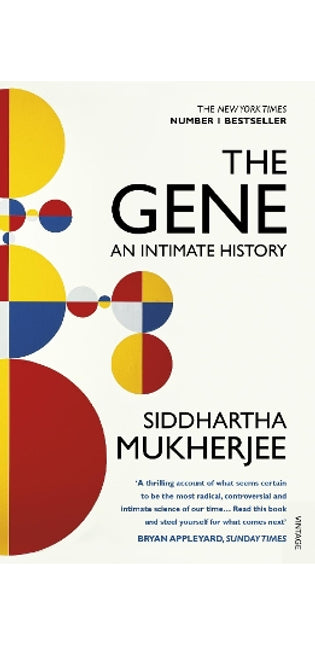
Gene
** NEW YORK TIMES NUMBER ONE BESTSELLER **The Gene is the story of one of the most powerful and dangerous ideas in our history from the author of The Emperor of All Maladies.The story begins in an Augustinian abbey in 1856, and takes the reader from Darwin’s groundbreaking theory of evolution, to the horrors of Nazi eugenics, to present day and beyond - as we learn to “read” and “write” the human genome that unleashes the potential to change the fates and identities of our children. Majestic in its scope and ambition, The Gene provides us with a definitive account of the epic history of the quest to decipher the master-code that makes and defines humans – and paints a fascinating vision of both humanity’s past and future. For fans of Sapiens by Yuval Noah Harari, A Brief History of Time by Stephen Hawking and Being Mortal by Atul Gwande.‘Siddhartha Mukherjee is the perfect person to guide us through the past, present, and future of genome science’ Bill Gates ‘A thrilling and comprehensive account of what seems certain to be the most radical, controversial and, to borrow from the subtitle, intimate science of our time…Read this book and steel yourself for what comes next’ Sunday Times
R 471.00
R 318.00
Genes, Genomes and Society
With CRISPR/Cas gene editing tools in hand, we are currently experiencing a new dimension in genetic engineering. But where should the journey lead? Should we treat diseases or better repair them genetically? Will the new genetic engineering, combined with modern reproductive biology, lead to designer babies? And: May we allow a liberalization of these techniques as citizen science? New methods can precisely alter the genetic material - and they leave no traces. This gene and genome surgery thrives on increasing knowledge about the mode of action of genes, those trait-giving regions in the genome. This knowledge is being applied in practice, particularly in the breeding of more resistant and higher-yielding crops. And what about us? The author shows that gene variants have long been associated not only with diseases, but also with nutritional preferences or intelligence. Therapeutic and optimization options are close at hand. What effect does the environment have on the expression of genetic material? Genes can be shaped during a person's lifetime by the environment, nutrition or experiences and thus passed on to their offspring in a modified form. So, does society have a new form of long-term responsibility for (epi)genetic integrity? In this vividly and comprehensibly written book, the author explains the state of genetic engineering without assuming too much prior knowledge and invites an open dialogue on this ambivalent topic. Get your own idea of the fascinating yet intimidating possibilities of genetic engineering. Where do you stand on the issue? With the help of this book, you have the chance to form a differentiated opinion. This book is a translation of the original German 1st edition Generation Gen-Schere by Röbbe Wünschiers, published by Springer Fachmedien Wiesbaden GmbH, part of Springer Nature in 2019. The translation was done with the help of artificial intelligence (machine translation by the service DeepL.com). The text was subsequently revised by the author. Springer Nature works continuously to further the development of tools for the production of books and on the related technologies to support the authors.
R 866.00
R 519.00
R 521.00
R 939.02
R 916.00
R 1,561.58
R 525.00
R 10,948.29
Gene
Genetics is one of the most powerful scientific fields today. It is transforming how we view medicine and public health, and is producing tremendous new discoveries in biotechnology. Advances in genetics also provoke extensive ethical debates over cloning, genetic counseling, stem cell research, and privacy. But to understand these debates, it's essential to understand where these ideas came from - the ideas of the past have had tremendous influence on not just the science of genetics, but on the political and ethical debates surrounding the field. This volume in the Greenwood Guides to Great Ideas in Science series provides an accessible and thorough description of the history of genetics, and includes relevant historical ideas from the Classical era to the present day.The Gene: A Historical Perspective provides an overview of the field of genetics, with contemporary examples of its scientific, social and economic importance, and an emphasis on the historical development of the concept of the gene. The book includes a glossary of terms, a timeline of events, and a bibliography of accessible resources for students who wish to learn more about the gene.
R 2,354.00
R 1,585.00
Genial Gene
Are selfishness and individuality - rather than kindness and cooperation - basic to biological nature? Does a 'selfish gene' create universal sexual conflict? In "The Genial Gene", Joan Roughgarden forcefully rejects these and other ideas that have come to dominate the study of animal evolution. Building on her brilliant and innovative book "Evolution's Rainbow", in which she challenged accepted wisdom about gender identity and sexual orientation, Roughgarden upends the notion of the selfish gene and the theory of sexual selection and develops a compelling and controversial alternative theory called social selection. This scientifically rigorous, model-based challenge to an important tenet of neo-Darwinian theory emphasizes cooperation, elucidates the factors that contribute to evolutionary success in a gene pool or animal social system, and vigorously demonstrates that to identify Darwinism with selfishness and individuality misrepresents the facts of life as we now know them.
R 793.00
Genes, Environments and Interactions
Genetic effects are the core concepts from which quantitative genetics and the evolutionary synthesis emerged. The groundbreaking theory of genetic effects was first proposed over a century ago. This book revises that theory, both conceptually and mathematically, and brings it up-to-date.The theory here compiled is supplemented with non-previously-published developments covering the broadest spectrum of simultaneously multiallelic and multilocus architectures with autosomal and sex-linked lociArbitrary interactions (dominance, gene-gene, gene-environment, gene-sex, and parent-of-origin interactions) are accounted forBoth effects of allele substitutions from the reference of individual genotypes and in the context of populations are worked outPopulations are considered regardless of any departures from equilibrium frequencies (including both departures from Hardy-Weinberg, departures from linkage equilibrium, and non-random associations between/among genes and environments)All developments are derived under the same mathematical framework, so that transformations of genetic effects between different contexts are easily allowedIn brief, this book enables novel applications to current empirical paradigms (like gene-mapping and genomic prediction) while adhering to the classical conceptualization of genetic effects and variance decomposition that let quantitative genetics and the evolutionary synthesis flourish.All relevant concepts are carefully clarified and discussed from a historical perspective. The theoretical developments presented in the book are illustrated by built-in cases and applications with real data. Reassuringly, the adequacy of the theory here presented is corroborated based on the fundamentals of model development.
R 7,451.34
R 280.79
Gene
Few concepts played a more important role in twentieth-century life sciences than that of the gene. Yet at this moment, the field of genetics is undergoing radical conceptual transformation, and some scientists are questioning the very usefulness of the concept of the gene, arguing instead for more systemic perspectives. The time could not be better, therefore, for Hans-Jorg Rheinberger and Staffan Muller-Wille's magisterial history of the concept of the gene. Though the gene has long been the central organizing theme of biology, both conceptually and as an object of study, Rheinberger and Muller-Wille conclude that we have never even had a universally accepted, stable definition of it. Rather, the concept has been in continual flux a state that, they contend, is typical of historically important and productive scientific concepts. It is that very openness to change and manipulation, the authors argue, that made it so useful: its very mutability enabled it to be useful while the technologies and approaches used to study and theorize about it changed dramatically.
R 1,122.00
R 9,063.40
Genial Gene
Are selfishness and individuality - rather than kindness and cooperation - basic to biological nature? Does a 'selfish gene' create universal sexual conflict? In "The Genial Gene", Joan Roughgarden forcefully rejects these and other ideas that have come to dominate the study of animal evolution. Building on her brilliant and innovative book Evolution's Rainbow, in which she challenged accepted wisdom about gender identity and sexual orientation, Roughgarden upends the notion of the selfish gene and the theory of sexual selection and develops a compelling and controversial alternative theory called social selection. This scientifically rigorous, model-based challenge to an important tenet of neo-Darwinian theory emphasizes cooperation, elucidates the factors that contribute to evolutionary success in a gene pool or animal social system, and vigorously demonstrates that to identify Darwinism with selfishness and individuality misrepresents the facts of life as we now know them.
R 1,323.00
Gene Therapy Plan
Your genes are not your destiny: learn to prevent disease, improve brain function, and reverse the course of obesity and premature aging through easy-to-adopt nutrition and lifestyle changes that target your DNA While we cannot alter the genes we are born with, we can prevent and reverse disease with foods, supplements, and lifestyle choices that turn good genes on and bad genes off. In his pathbreaking plan, Dr. Mitchell Gaynor a renowned oncologist and pioneer in integrative medicine focuses on obesity, heart disease, diabetes, cancer, and aging to explain what we can do to keep our bodies on their natural paths toward healthy, balanced functioning. "The Gene Therapy Plan" presents practical, evidence-based approaches to diet, including juices, recipes, and comprehensive meal plans. And it explains the cutting-edge science that is revolutionizing what we know about how our biology and our behavior intersect. Empowering and informative, with inspiring stories from Dr. Gaynor s decades of clinical practice, this forward-looking book puts our genetic destiny back into our own hands. Praise for "The Gene Therapy Plan" If you want to learn how to use food and nutrients to prevent and even reverse most chronic disease, read this book! Mark Hyman, M.D., author of the #1 "New York Times "bestseller "The Blood Sugar Solution" Dr. Gaynor provides insight and an action plan. Deepak Chopra, M.D."
R 704.00
R 1,103.10
Genes, Germs And Medicine: The Life Of Joshua Lederberg
Genes, Germs and Medicine explores the development of modern biomedical science in the United States through the life of one of the Twentieth Century's most influential scientists.Joshua Lederberg was a scientific renaissance man. He and his collaborators founded the field of bacterial genetics, and he was awarded the Nobel Prize at the age of 33 (the second youngest in history). He helped to lay the foundations for genetic engineering, made fundamental revisions to immunological and evolutionary theory, and developed medical genetics. He initiated the search for extraterrestrial microbial life, developed artificial intelligence, and was a visionary of the Digital Age. Lederberg coined some of the central terms of modern biology: plasmid, transduction, exobiology, euphenics and microbiome.A complex humanist who spoke out for social justice, Lederberg confronted racism, and denied a gene-centered view of humans. Pondering our social evolution outside of nature, he forewarned of the complex ethical issues arising from bioengineering. He sounded the alarm about coming pandemics at a time when few would listen, and warned of the peril of biowarfare and strove to prevent it. Lederberg was a man with a deep sense of social and intellectual responsibility, a trusted advisor to eight presidential administrations.
R 3,590.00
Current Strategies in Cancer Gene Therapy
This book describes important developments and emerging trends in experimental and clinical cancer gene therapy. It reflects the tremendous advances made over recent years with respect to immunogenes, suicide genes and gene correction therapies, as well as in gene suppression and miRNA therapies. Many of the described strategies focus on the generation of more efficient and specific means of attack at known and novel cellular targets associated with tumor development and progression. The book also details parallel improvements in vector design, vector delivery, and therapeutic efficacy. It offers readers a stimulating, broad overview of advances in the field, linking experimental strategies to their clinical applications.
R 6,423.46
Gene, Drug, and Tissue Engineering
This book combines discursive chapters that present the latest progress in molecular biology, drug discovery, organ-tissue engineering, and related fields, with a number of descriptive chapters on methods, protocols, and case studies. Structured into four parts, this volume walks the reader through the latest in cellular biology, with discussions on novel medicinal plant metabolites, nanotechnology in precision medicine, nucleic acid-based therapeutics and vaccines, genetic engineering, computational aid, bioinformatics, synthetic organs for transplantation, and organ-tissue engineering. Written for the highly successful Methods in Molecular Biology series, chapters include the kind of detail and expert implementation advice that ensures quality results in the lab. Authoritative and informative, Gene, Drug, and Tissue Engineering serves as an ideal guide for undergraduate students, postgraduate researchers, and senior researchers working in biomedicine and its underlying technologies, stimulating both computational and experimental development and fostering the exchange of new ideas.
R 7,108.79
Concept of the Gene in Development and Evolution
Advances in molecular biological research in the latter half of the twentieth century have made the story of the gene vastly complicated: the more we learn about genes, the less sure we are of what a gene really is. Knowledge about the structure and functioning of genes abounds, but the gene has also become curiously intangible. This collection of essays renews the question: what are genes? Philosophers, historians and working scientists re-evaluate the question in this volume, treating the gene as a focal point of interdisciplinary and international research. It will be of interest to professionals and students in the philosophy and history of science, genetics and molecular biology.
R 2,031.54
R 520.79
Material Gene
Winner of the 2014 Diamond Anniversary Book AwardFinalist for the 2014 National Communications Association Critical and Cultural Studies Division Book of the Year AwardIn 2000, the National Human Genome Research Institute announced the completion of a “draft” of the human genome, the sequence information of nearly all 3 billion base pairs of DNA. Since then, interest in the hereditary basis of disease has increased considerably. In The Material Gene, Kelly E. Happe considers the broad implications of this development by treating “heredity” as both a scientific and political concept. Beginning with the argument that eugenics was an ideological project that recast the problems of industrialization as pathologies of gender, race, and class, the book traces the legacy of this ideology in contemporary practices of genomics. Delving into the discrete and often obscure epistemologies and discursive practices of genomic scientists, Happe maps the ways in which the hereditarian body, one that is also normatively gendered and racialized, is the new site whereby economic injustice, environmental pollution, racism, and sexism are implicitly reinterpreted as pathologies of genes and by extension, the bodies they inhabit. Comparing genomic approaches to medicine and public health with discourses of epidemiology, social movements, and humanistic theories of the body and society, The Material Gene reworks our common assumption of what might count as effective, just, and socially transformative notions of health and disease.
R 1,393.00
R 976.00
Gene Avatars
`Why life?' Questions of this type were for a long time the prerogative of philosophers who left the `how' question to scientists. Nowadays, Darwin's successors no longer have any qualms about addressing the `why' as well as the `how'. Over a century ago, Darwin modestly admitted having 'thrown some light on the origin of species - this mystery of mysteries'. Two major advances in the following decades helped biologists answer many of the questions he left unsolved. The first was the discovery of the laws of heredity, the second that of DNA. Both provided Darwinian theory with the foundations that were lacking and led to the all-embracing neo-Darwinian synthesis. Since then, Theodosius Dobzhansky's aphorism `nothing in biology makes sense except in the light of evolution' has proven true more than once. This does not suit everyone, as evolutionist ideas have not lost their power to cause a scandal.Darwin toppled man from his pedestal. Evolutionary genetics - the subject of this book - sends the individual crashing. Considered until recently to be the target of selection and the focus of evolution, the individual has been usurped by the gene. The individual is nothing but the gene's avatar.
R 4,654.12
R 6,218.20
R 781.77
Analysis of Genes and Genomes
This beautifully illustrated textbook provides a clear guide to the tools and techniques of genetic engineering, gene cloning and molecular biology. All aspects of genetic engineering in the post-genomic era are covered, beginning with the basics of DNA structure and DNA metabolism. Using an example-driven approach, the fundamentals of creating mutations in DNA, cloning in bacteria, yeast, plants and animals are all clearly presented. Strong emphasis is placed on the latest, post genomic technologies including DNA macro and microarrays, genome-wide two hybrid analysis, proteomics and bioinformatics. A modern post-genome era introduction to key techniques used in genetic engineering.An example driven past-to-present approach to allow the experiments of today to be placed in an historical context The book is beautifully illustrated in full-colour throughout. Associated website including updates, additional content and illusions
R 2,376.00
R 457.00
R 10,589.57
Material Gene
Winner of the 2014 Diamond Anniversary Book AwardFinalist for the 2014 National Communications Association Critical and Cultural Studies Division Book of the Year AwardIn 2000, the National Human Genome Research Institute announced the completion of a “draft” of the human genome, the sequence information of nearly all 3 billion base pairs of DNA. Since then, interest in the hereditary basis of disease has increased considerably. In The Material Gene, Kelly E. Happe considers the broad implications of this development by treating “heredity” as both a scientific and political concept. Beginning with the argument that eugenics was an ideological project that recast the problems of industrialization as pathologies of gender, race, and class, the book traces the legacy of this ideology in contemporary practices of genomics. Delving into the discrete and often obscure epistemologies and discursive practices of genomic scientists, Happe maps the ways in which the hereditarian body, one that is also normatively gendered and racialized, is the new site whereby economic injustice, environmental pollution, racism, and sexism are implicitly reinterpreted as pathologies of genes and by extension, the bodies they inhabit. Comparing genomic approaches to medicine and public health with discourses of epidemiology, social movements, and humanistic theories of the body and society, The Material Gene reworks our common assumption of what might count as effective, just, and socially transformative notions of health and disease.
R 3,149.00
Current Strategies in Cancer Gene Therapy
This book describes important developments and emerging trends in experimental and clinical cancer gene therapy. It reflects the tremendous advances made over recent years with respect to immunogenes, suicide genes and gene correction therapies, as well as in gene suppression and miRNA therapies. Many of the described strategies focus on the generation of more efficient and specific means of attack at known and novel cellular targets associated with tumor development and progression. The book also details parallel improvements in vector design, vector delivery, and therapeutic efficacy. It offers readers a stimulating, broad overview of advances in the field, linking experimental strategies to their clinical applications.
R 6,569.77
Interdisciplinary Approaches to Gene Therapy
Current therapies for most human genetic diseases are inadequate. In response to the need for effective treatments, modern molecular genetics is providing tools for an unprecedented new approach to the treatment of diseases; e.g. the direct manipulation of mutant genes or the input on new therapeutic genes. The treatment of human disease by gene transfer has now moved from the theoretical to the practical realm. With the initiation of clinical trials involving somatic gene therapy in different countries, a critical assessment of the different aspects involved with this new technique is necessary. This volume provides an overview on all these interdisciplinary aspects by some well known experts all over the world.
R 3,038.63
Gene Therapy of Cancer
This third edition provides new and updated chapters on gene therapeutic strategies of cancer. Chapters guide readers through suicide and oncolytic gene therapy, gene replacement and gene suppression therapy, vector development and refinement, immunogene therapy, TCR and CAR engineering, tumor vaccination using DNA or RNA vaccines, and antitumoral immune stimulation at different levels. Written in the format of the highly successful Methods in Molecular Biology series, each chapter includes an introduction to the topic, lists necessary materials and reagents, includes tips on troubleshooting and known pitfalls, and step-by-step, readily reproducible protocols. Authoritative and cutting-edge, Gene Therapy of Cancer: Methods and Protocols, Third Edition aims to be a useful and practical guide to new researchers and experts looking to expand their knowledge.
R 4,828.62
R 5,224.40
Gene Book
The Gene Book: Explorations in the Code of Life is designed to introduce undergraduate college students to foundational concepts in genetics. The text provides in-depth coverage of the essential principles of genetics, from Mendel to molecular gene therapy, and reads like a story, guiding readers through each of these areas in an interesting, engaging, and enlightening way. Milestone scientific discoveries introduce conceptual topics in each of the 10 chapters. The significance of each genetics paradigm is reinforced by the meaningful research context in which it is placed, whether the focus is single gene inheritance of disorders such as PKU and cystic fibrosis, or more complex genetic phenomena. Chromosomes, cell division, and cytogenetic disorders, including Down Syndrome and leukemia, are presented in a riveting historical context. In addition, the principles of molecular genetics are a major focus of this book. Students learn about the double helix, DNA replication, gene expression, mutation, natural selection, genomics, and the tools of molecular DNA analysis. Approachable and effective, The Gene Book is a highly readable comprehensive text on genetics principles designed to highlight essential concepts that make up their very core. The text is well suited to undergraduate genetics courses and can also be used as a primer for more advanced undergraduate and graduate courses in medical or molecular genetics.
R 5,593.83
Anticancer Genes
This book discusses the emergence of a new class of genes with a specific anticancer activity. These genes, recently defined as “Anticancer Genes”, are reviewed in individual chapters on their mode of action, the specific cell death signals they induce, and the status of attempts to translate them into clinical application.Anticancer Genes provides an overview of this nascent field, its genesis, current state, and prospect. It discusses how Anticancer Genes might lead to the identification of a repertoire of signaling pathways directed against cellular alterations that are specific for tumor cells.With contributions from experts worldwide, Anticancer Genes is an essential guide to this dynamic topic for researchers and students in cancer research, molecular medicine, pharmacology and toxicology and genetics as well as clinicians and clinical researchers interested in the therapeutic potential of this exciting new field.
R 3,663.66
R 742.14
Hox Genes
In his 1894 book, Materials for the Study of Variation, William Bateson coined the term Homoeosis with the following prose: The case of the modification of the antenna of an insect into a foot, of the eye of a Crustacean into an antenna, of a petal into a stamen, and the like, are examples of the same kind. It is desirable and indeed necessary that such Variations, which consist in the assumption by one member of a Meristic series, of the form or characters proper to other members of the series, should be recognized as constituting a distinct group of phenomena. ...I therefore propose...the term HOMOEOSIS...; for the essential phenomenon is not that there has merely been a change, but that something has been changed into the likeness of something else. The book was intended as a listing of the kinds of naturally occurring variation that could act as a substrate for the evolutionary process and Bateson took his examples from collections, both private and in museums, of materials displaying morphological oddities. Interestingly the person who also coined the term “Genetics” proffered little in the way of speculation on the possible genetic underpinnings of these oddities. It wasn’t until the early part of the next century that these changes in meristic series were shown to be heritable.
R 7,183.76
R 489.00
Muscle Gene Therapy
About 7 million people worldwide are suffering from various inherited neuromuscular diseases. Gene therapy brings the hope of treating these diseases at their genetic roots. Muscle Gene Therapy is the only book dedicated to this topic. The first edition was published in 2010 when the field was just about to enter its prime time. The progress made since then has been unprecedented. The number of diseases that have been targeted by gene therapy has increased tremendously. The gene therapy toolbox is expanded greatly with many creative novel strategies (such as genome editing and therapy with disease-modifying genes). Most importantly, clinical benefits have begun to emerge in human patients. To reflect rapid advances in the field, we have compiled the second edition of Muscle Gene Therapy with contributions from experts that have conducted gene therapy studies either in animal models and/or in human patients. The new edition offers a much needed, up-to-date overview and perspective on the foundation and current status of neuromuscular disease gene therapy. It provides a framework to the development and regulatory approval of muscle gene therapy drugs in the upcoming years. This book is a must-have for anyone who is interested in neuromuscular disease gene therapy including those in the research arena (established investigators and trainees in the fields of clinical practice, veterinary medicine and basic biomedical sciences), funding and regulatory agencies, and patient community.
R 10,803.87
Gene Therapy
I entered the gene therapy field in the mid-1990s, being fascinated by the immense potential of genes as drugs for the treatment of human disease. Since then, I have experienced the ups and downs of this discipline, and tried to contribute with my work and that of my laboratory to the development of innovative approaches to the treatment of cardiovascular disorders. During these years, I have had several opp- tunities to speak on gene therapy at lectures and academic lessons, and have often noticed that the field is very attractive to scientists of all disciplines. However, as yet no comprehensive book on the subject has been published. Indeed, most books in the field are either a collection of gene transfer laboratory protocols or deal with the subject in a rather superficial manner. Hence the idea to write a gene therapy textbook that is broad and comprehensive, but at the same time provides sufficient molecular and clinical detail to be of interest to students, professors, and specialists in the various disciplines that contribute to gene therapy. I have tried to keep the language plain and, whenever possible, non-technical. Since the book is intended to be a textbook in the field of gene therapy in both the basic science and clinical areas, whenever technical descriptions are required, they are provided.
R 4,386.39
Gene Therapy for Cartilage and Bone Tissue Engineering
"Gene Therapy for Cartilage and Bone Tissue Engineering" outlines the tissue engineering and possible applications of gene therapy in the field of biomedical engineering as well as basic principles of gene therapy, vectors and gene delivery, specifically for cartilage and bone engineering. It is intended for tissue engineers, cell therapists, regenerative medicine scientists and engineers, gene therapist and virologists. Dr. Yu-Chen Hu is a Distinguished Professor at the Department of Chemical Engineering, National Tsing Hua University and has received the Outstanding Research Award (National Science Council), Asia Research Award (Society of Chemical Engineers, Japan) and Professor Tsai-Teh Lai Award (Taiwan Institute of Chemical Engineers). He is also a fellow of the American Institute for Medical and Biological Engineering (AIMBE) and a member of the Tissue Engineering International & Regenerative Medicine Society (TERMIS)-Asia Pacific Council.
R 2,848.44
Cancer Gene Therapy
With the coming of the new millennium we are witnessing a revolution in our understanding of cancer genetics. These are very exciting times. Today we have at our disposal the technology to diagnose abnormalities in our cancer genes and the means to correct the deficit and very soon we will have the complete sequence of the human genome. With the use of gene chip technology the way doctors will be able to assess patients will change completely. Today we can diagnose abnormalities in ten thousand genes and within a short period of time we will be able to screen through our genome and discover potential abnormalities in our proto-oncogenes, tumour suppressor genes, differentiating genes, apoptotic genes and pro-inflammatory genes. In this book various authors have highlighted specific genes that could be expressed, overexpressed, neutralised or h- nessed to achieve cancer control. The problem of transferring the therapeutic gene into the cancer cell has been partly addressed with major developments in the field of naked plasmid DNA, adenovirus, retrovirus and adeno-associated viruses. However, further improvements are yet to be made to achieve significant gene transfer. Gene expression, in particular specificity of gene transfer, is obviously an important issue and one which is highlighted in this book by the use of specific promoter.
R 6,035.23