



Search results for "Han"
Items in stock - 4 working days delivery time

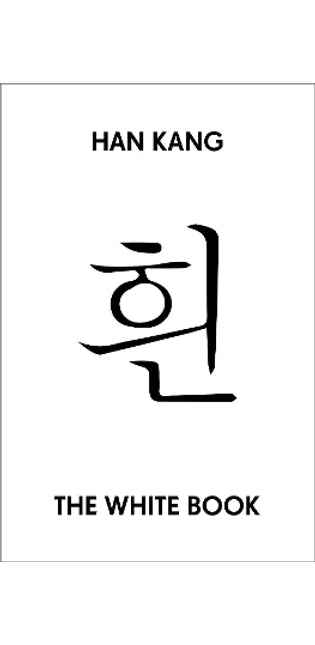
White Book
Shortlisted for the Man Booker International 2018. From the author of The Vegetarian, winner of the Man Booker International Prize 2016. From the author of The Vegetarian and Human Acts comes a book like no other. The White Book is a meditation on colour, beginning with a list of white things. It is a book about mourning, rebirth and the tenacity of the human spirit. It is a stunning investigation of the fragility, beauty and strangeness of life. Translated from the Korean by Deborah Smith.
R 330.00
Items we need to order for you
R 489.00
Great Han
The Great Han is an ethnographic study of the Han Clothing movement (Hanfu yundong), a neo-traditionalist and majority racial nationalist movement that has emerged in China since 2001. Participants come together both online and in person in cities across China to revitalize their utopian vision of the authentic "Great Han" and corresponding "real China" through pseudo-traditional ethnic dress, reinvented Confucian ritual, and anti-foreign sentiment. Employing close analysis of movement ideas and practices, this book finds that the movement's "real China," envisioning a pure, perfectly ordered, ethnically homogeneous, and secure society, is in fact an imaginary vision constructed in response to the challenging realities of the present. Yet this national imaginary is reproduced precisely through its own perpetual elusiveness. The Great Han is a pioneering analysis of Han identity, nationalism, and social movements in a rapidly changing China.
R 2,796.00
Great Han
The Great Han is an ethnographic study of the Han Clothing movement (Hanfu yundong), a neo-traditionalist and majority racial nationalist movement that has emerged in China since 2001. Participants come together both online and in person in cities across China to revitalize their utopian vision of the authentic "Great Han" and corresponding "real China" through pseudo-traditional ethnic dress, reinvented Confucian ritual, and anti-foreign sentiment. Employing close analysis of movement ideas and practices, this book finds that the movement's "real China," envisioning a pure, perfectly ordered, ethnically homogeneous, and secure society, is in fact an imaginary vision constructed in response to the challenging realities of the present. Yet this national imaginary is reproduced precisely through its own perpetual elusiveness. The Great Han is a pioneering analysis of Han identity, nationalism, and social movements in a rapidly changing China.
R 882.00
Critical Han Studies
Constituting over ninety percent of China's population, Han is not only the largest ethnonational group in that country but also one of the largest categories of human identity in world history. In this pathbreaking volume, a multidisciplinary group of scholars examine this ambiguous identity, one that shares features with, but cannot be subsumed under, existing notions of ethnicity, culture, race, nationality, and civilization.
R 1,619.00
R 815.00
R 1,090.48
R 433.00
R 411.00
R 611.00
Fan Ye's Book of Later Han (Houhanshu)
The Book of Later Han (Houhanshu) by Fan Ye (398-445) is enormously important as China’s most complete work on Eastern Han history in biographical form. For the first time in any Western language, the author introduces Fan Ye’s magnificent writings in lively translation with rich annotation and informative and insightful commentary. This first volume covers its early military history and highlights the lives and achievements of the twenty-eight generals who helped Emperor Guangwu unify China and establish the Eastern Han dynasty. Also included are images of these twenty-eight founding fathers, maps, and information related to early Eastern Han systems.
R 8,701.00
R 1,037.00
R 275.00
R 341.00
R 618.00
Bureaucracy of Han Times
This is a comprehensive and fully documented study of Chinese bureaucracy during the Han period, when many of the basic lines of Chinese government practice were laid down. It is also more detailed and wider in scope than similar works on other periods of Chinese history. The book covers the time from 202 BC to AD 9 and from AD 25 to 189, analysing and describing the central and local administrations, the army, official salaries, civil service recruitment and power in government. Professor Bielenstein translates all Chinese official titles and includes alphabetical lists of these titles with their English and Chinese equivalents. Thus his book will serve both as a description for the names of offices at every level of government. The book will be of interest to all scholars of Chinese history, as well as to experts in other fields of institutional history, government and political science.
R 1,831.07
R 244.00
R 1,563.00
R 1,400.00
Hundred Years of Han (vol.2)
This is Volume 2 of a 2-volume set: Compiled by the scholar statesman Sima Guang of the Song dynasty, Zizhi tongjian is well recognised as one of the major histories of China.In length and extent, Later or Eastern Han was one of the great empires of east Asia, and its eventual failure led to the heroic age of the Three Kingdoms and centuries of division between north and south. Sima Guang's account of the dynasty's successes and failures provides detailed and informed information on the nature and governance of the Chinese imperial state.This translation offers a Western reader access to and an understanding of that world.
R 6,613.00
R 1,078.00
Establishment of the Han Empire and Imperial China
The Han Dynasty created an enduring Chinese empire comparable to the Roman Empire. In this book, narrative chapters, biographical sketches, and translated primary documents give readers a unique overview of this important founding dynasty.The Han Dynasty (206 B.C.E. to C.E. 221) ruled a large prosperous Chinese empire that was roughly contemporary with the Roman Empire and comparable in size. The Han was founded by Liu Bang who ruled as Emperor Gaozu. The Han emperors turned away from the harsh rule of their Qin predecessors and promoted Confucianism and other schools of thought while retaining some of the useful autocratic features of Legalism. Under Wudi (140-87 B.C.E.) the empire expanded to include parts of Central Asia, Korea and Vietnam. Under the Han dynasty the Chinese developed steel, the water mill, high quality stoneware (china), and paper.Designed as an introduction to the founding and consolidation of the Han Empire, this work offers information on the founding of the Han Empire; conflict between town and countryside and the empire and barbarians; technological innovations like steel and papermaking; social changes and the lives of women and children; and a comparative look at Imperial China in world history. Excerpts from Confucius on government, recently found Qin laws written on bamboo strips, and contemporary historical accounts lend depth and immediacy to the work. Brief biographies of key rulers, rebels, and philosophers give readers a look at events through the eyes of participants. An annotated bibliography, index, chronology, glossary, and 26 illustrations and maps round out the book.
R 1,707.00
R 1,166.67
R 780.00
Han-Man
As a teenage frontline medic in the German Air Force and as a prisoner of war, this book of recollections by Han-man will take the reader back to the chaotic times of Germany's total defeat at the end of the Second World War. It is also a book full of fascinating and sometimes amusing anecdotes and revelations. The story begins, early in 1945, with the firebombing of his hometown Magdeburg. Afterwards, he was sent at the age of 18, to the front lines to assist a surgeon who never showed up. Wounded and captured by Soviet military forces, he was forced into walking endless exhausting miles leading to the gates of Auschwitz to become a starving prisoner of war. Released, Han-man returned home only to find himself a prisoner again, this time confined by what Winston Churchill called "The Iron Curtain" in the then Soviet occupied regions of East Germany.
R 725.00
Hundred Years of Han (vol.1)
This is Volume 1 of a 2-volume set: Compiled by the scholar statesman Sima Guang of the Song dynasty, Zizhi tongjian is well recognised as one of the major histories of China.In length and extent, Later or Eastern Han was one of the great empires of east Asia, and its eventual failure led to the heroic age of the Three Kingdoms and centuries of division between north and south. Sima Guang's account of the dynasty's successes and failures provides detailed and informed information on the nature and governance of the Chinese imperial state.This translation offers a Western reader access to and an understanding of that world.
R 6,613.00
Archaeology of Han China
The Han Dynasty, which ruled from 202 BCE to 212 CE, is often taken as a reference point and model for Chinese identity and tradition. Covering a geographical expanse comparable to that of the People's Republic of China, it is foundational to understanding Chinese culture and politics, past and present. This volume offers an up-to-date overview of the archaeology of the Han Empire. Alice Yao and Wengcheong Lam study the period via an interdisciplinary approach that combines textual and archaeological evidence. Exploring the dynamics of empire building in East Asia, Yao and Lam draw on recent archaeological discoveries to recast Western Han imperialism as a series of contingent material projects, including the organization of spatial orders, foodways, and the expansion of communication and ritual activities. They also demonstrate how the archaeology of everyday life offers insights into the impact of social change, and how people negotiated their identities and cultural affiliations as individuals and imperial subordinates.
R 3,806.00
R 1,244.59
Connectivity, Imperialism, and the Han Iron Industry
This book examines the rise of the iron industry during the Warring States and Western Han periods (ca. 400 BCE–9 CE) in ancient China, which is characterized not only by various technological innovations but also as a remarkable phenomenon, leading to the widespread distribution of iron implements and the emergence of massive ironworks that were rarely seen in later periods.With Connectivity, Imperialism, and the Han Iron Industry, Lam Wengcheong combines archaeological and historical analyses to piece together fragmentary evidence and to refocus our gaze onto the economic and political mechanism that gave birth to an iron industry unique in the ancient world. Guiding readers through the macroscopic social settings of the iron industry and distribution patterns of iron implements to the microscopic organization of workplace and workers’ foodways, Lam explores how iron production and transportation processes intersected with the transformation of the Han capital region in the Guanzhong basin. Using various lines of evidence of iron production in Guanzhong and its connection with other production centers, this book shows how the production and transportation of iron at various scales played a significant role in generating the "connectivity" between various parts of the Western Han empire, and casts new light on the workings of the economic system in imperial China. Connectivity, Imperialism, and the Han Iron Industry will appeal to anyone interested in Chinese archaeology, the history of the Han empire, and the history of science and engineering in ancient China, as well as to scholars working on the comparative study of ancient imperialism, market exchange, and economic history.
R 9,323.35
Academic History of China's Han Dynasty
This book examines the academic legacy of the Han dynasty. It explicates the line between the explaining of a classical text (训诂) and the study of classical texts and their interpretation (训诂学). The study of hermeneutics was developed already, including the Chinese specific figure, meaning, sound, interpretation, and rites and systems. It details analyses of the Confucian School, Daoist School, Yin-Yang School, Legalist School, Terminologist School, Mohist School, Political Strategist School, Syncretist School, Agriculturalist School, and Literalist School. Among important classical works of the Han Dynasty examined throughout the book Shiji, Hanshu and Hanji are deeply analysed. Referring to various works during the Earlier and Later Han Dynasty, the author details categories of historiographical writing, i.e., the category of classical, official, and miscellaneous history, and different branches of analysis and interpretation.The book expatiates chapters on astronomy, mathematics, geography, agriculture, and medicine. Among these are the three theories on sky, the mathematics, map drawing, ox-plowing, an agricultural treatise, water project examinations, and the process of knowledge transfer and advancement in medicine during the Han Dynasty.
R 4,638.11
R 570.70
Religion of the Han Empire
By examining the tomb images and artifacts from a religious perspective, combined with a cognitive approach that strives to uncover the essentials of the Han belief system, the author convincingly shows how Han belief represented the dimension of faith in the national power structure while reconstructing the history of religious Daoism at the time. This is the first historical study on the subject using this new methodology.
R 4,834.00
R 813.00
R 394.00
R 313.00
R 764.00
R 1,107.00
R 627.51
Ethical Literary Criticism of Han Suyin’s Autobiography
Han Suyin (1916/1917–2012) became a household name when Love is A Many-Splendored Thing, the Hollywood rendition of her novel won several awards in 1956. The study of Han Suyin went out of fashion for a while, but it has recently been revitalised, especially in Singapore and Malaysia. Kuek pays attention to The Crippled Tree autobiographical series, delineating her two-track narrative of her family saga against the backdrop of 20th century China.Different from the earlier studies on Han Suyin that employed perspectives from postcolonialism, feminism, and new historicism, this book examines Han Suyin’s autobiography through the lens of ethical literary criticism (ELC), paying attention to the ethical lines and knots embedded in her series. Using ELC, an apolitical literary analysis approach, this book uncovers multiple layers of meaning and reveals Han Suyin’s life trajectory which draws attention to China’s difficult path of modernisation in the past century. The insights gleaned from this book shed light on Han Suyin’s life accomplishments in the face of great adversities and challenges.This is a valuable book that will enlighten literary critics on critical approaches to autobiography and those interested in understanding the development of modern China through the words of a proud Chinese-Eurasian writer living in the era.
R 3,602.36
R 585.00
R 274.00
Han Rhapsody
An attempt at an analysis in depth of the work of Yang Hsiung (53 BC–AD 18), and of the Fu or rhapsody (a mixture of rhythmical prose passages interspersed with free, rhymed verse). Yang Hsiung has figured prominently in Chinese literary history, though he is better known for his philosophical and historical writings than for his literary work. Professor Knechtges shows that Yang is important in the development of the Fu, a poetic genre popular in the Former Han dynasty (206 BC–AD 8) and the mastery of which brought him recognition and honours at the imperial court. The work and development of the genre are analysed from a modern critical viewpoint. Professor Knechtges' book will be of interest to specialists in Chinese literature and to historians of the Han period.
R 1,743.07
R 749.00


![]The Conceptual World of Han China/汉代人的观念世界](http://exclusivebooks.co.za/cdn/shop/files/9787548869085.jpg?height=645&pad_color=fff&v=1762784732&width=315)


