Search results for "Maria Polinsky"
Items we need to order for you

Deconstructing Ergativity
Nominative-accusative and ergative are two common alignment types found across languages. In the former type, the subject of an intransitive verb and the subject of a transitive verb are expressed the same way, and differently from the object of a transitive. In ergative languages, the subject of an intransitive and the object of a transitive appear in the same form, the absolutive, and the transitive subject has a special, ergative, form. Ergative languages oftenfollow very different patterns, thus evading a uniform description and analysis. A simple explanation for that has to do with the idea that ergative languages, much as their nominative-accusative counterparts, do not form a uniform class. In this book, Maria Polinsky argues that ergative languagesinstantiate two main types, the one where the ergative subject is a prepositional phrase (PP-ergatives) and the one with a noun-phrase ergative. Each type is internally consistent and is characterized by a set of well-defined properties. The book begins with an analysis of syntactic ergativity, which as Polinsky argues, is a manifestation of the PP-ergative type. Polinsky discusses diagnostic properties that define PPs in general and then goes to show that a subset of ergative expressions fit the profile of PPs. Several alternative analyses have been proposed to account for syntactic ergativity; the book presents and outlines these analyses and offers further considerations in support of the PP-ergativity approach. The bookthen discusses the second type, DP-ergative languages, and traces the diachronic connection between the two types. The book includes two chapters illustrating paradigm PP-ergative and DP-ergative languages: Tongan and Tsez. The data used in these descriptions come from Polinsky's original fieldwork hence presenting new empirical facts from both languages.
R 2,046.79
Heritage Languages and their Speakers
This book provides a pioneering introduction to heritage languages and their speakers, written by one of the founders of this new field. Using examples from a wide range of languages, it covers all the main components of grammar, including phonetics and phonology, morphology and morphosyntax, semantics and pragmatics, and shows easy familiarity with approaches ranging from formal grammar to typology, from sociolinguistics to child language acquisition and other relevant aspects of psycholinguistics. The book offers analysis of resilient and vulnerable domains in heritage languages, with a special emphasis on recurrent structural properties that occur across multiple heritage languages. It is explicit about instances where, based on our current knowledge, we are unable to reach a clear decision on a particular claim or analytical point, and therefore provides a much-needed resource for future research.
R 4,298.44
Heritage Languages and their Speakers
This book provides a pioneering introduction to heritage languages and their speakers, written by one of the founders of this new field. Using examples from a wide range of languages, it covers all the main components of grammar, including phonetics and phonology, morphology and morphosyntax, semantics and pragmatics, and shows easy familiarity with approaches ranging from formal grammar to typology, from sociolinguistics to child language acquisition and other relevant aspects of psycholinguistics. The book offers analysis of resilient and vulnerable domains in heritage languages, with a special emphasis on recurrent structural properties that occur across multiple heritage languages. It is explicit about instances where, based on our current knowledge, we are unable to reach a clear decision on a particular claim or analytical point, and therefore provides a much-needed resource for future research.
R 2,000.48
Oxford Handbook of Languages of the Caucasus
The Oxford Handbook of Languages of the Caucasus is an introduction to and overview of the linguistically diverse languages of southern Russia, Georgia, Azerbaijan, and Armenia. Though the languages of the Caucasus have often been mischaracterized or exoticized, many of them have cross-linguistically rare features found in few or no other languages.This handbook presents facts and descriptions of the languages written by experts. The first half of the book is an introduction to the languages, with the linguistic profiles enriched by demographic research about their speakers. It features overviews of the main language families as well as detailed grammatical descriptions of several individual languages. The second half of the book delves more deeply into theoretical analyses of features, such as agreement, ellipsis, and discourseproperties, which are found in some languages of the Caucasus. Promising areas for future research are highlighted throughout the handbook, which will be of interest to linguists of all subfields.
R 9,861.00
Russian Language in the Twentieth Century
Bernard Comrie and Gerald Stone's The Russian Language since the Revolution (OUP 1978) provided a comprehensive account of the way Russian changed in the period between 1917 and the 1970s. In this new volume the authors, joined by Maria Polinsky, extend the time frame back to 1900 and forward to glasnost in the mid 1980s. They first consider changes in the pronunciation, morphology, syntax, and vocabulary of the language and then examine theeffects of social change on the language in chapters on the changing staus of women, modes of address and speech etiquette, and orthography. They show that changes in all these areas have been very substantial, and explore the extent to which the standard language, as portrayed in dictionaries and grammars, coincides withthe actual usage - both spoken and written - of educated Russians. The book will be of interest not only to students of Russian but more generally to sociolinguists and those with an interest in language change.
R 10,247.00
R 741.00
R 1,174.74
R 771.54
R 1,417.55
R 611.00
R 275.00
R 414.00
In Good Faith
Part memoir, part cultural exploration, this book covers the author’s journey as she grows up in an evangelical Christian home, leaves religion behind as a young adult, and goes on to raise children in a family outside of religious belief. Maria Polonchek weaves a personal story with up-to-date studies and philosophic exploration of what it means to raise secular children in an otherwise religious world. Offering careful and respectful advice for other parents who are raising their children outside of a particular religious belief system, she explores the many other ways of instilling identity, belonging, and meaning into our lives and the lives of children. Honest and irreverent, the author admits to her religious “baggage” and searches for better understanding of such topics as religious education, morality, awe, death, purpose, and meaning, and tradition from secular perspectives. She interviews experts, looks at various studies, and turns to a variety of sources for answers, while maintaining a casual and personal tone. While she ultimately argues for parents to let their children shape their own beliefs, she encourages families to tend to existential and social needs that sometimes go unnoticed or unconsidered in life outside religion.
R 1,024.00
R 618.00
R 619.20
Not According to Plan
In Not According to Plan, Maria Belodubrovskaya reveals the limits on the power of even the most repressive totalitarian regimes to create and control propaganda. Belodubrovskaya's revisionist account of Soviet filmmaking between 1930 and 1953 highlights the extent to which the Soviet film industry remained stubbornly artisanal in its methods, especially in contrast to the more industrial approach of the Hollywood studio system. Not According to Plan shows that even though Josef Stalin recognized cinema as a "mighty instrument of mass agitation and propaganda" and strove to harness the Soviet film industry to serve the state, directors such as Eisenstein, Alexandrov, and Pudovkin had far more creative control than did party-appointed executives and censors.
R 911.00
Stanislavsky and Female Actors
Every single artistic endeavor in Stanislavsky's life was achieved in close collaboration with female partners. First, it was his own mother, Elizaveta Alekseyeva, who shaped his personality, and encouraged his exploration of theatre. Then it was his artistic mother, Glikeria Fedotova, who guided him through the ten years of his work. Then Maria Lilina, his wife, who became his best student, and later one of the best actresses of the Art Theatre. It would be impossible to understand Stanislavsky's development as an actor and director without his work with Maria Andreyeva, the "femme fatale" of turn of the century Russian theatre, or Olga Knipper, whom he directed and acted with for forty years. And near the end of his life, when Stanislavsky introduced the method of physical action (metod phizicheskix deistvii), another woman embraced his work, a young actress named Irina Rozanova. Stanislavsky and Female Actors is the exploration of Stanislavsky's artistic and personal relationship with the leading actresses of the Moscow Art Theatre. It seeks to portray their life-long artistic dialogue and offers a new biographical study of the previously unknown spheres of Stanislavsky's life, as well as the lives of the Moscow Art Theatre's principal actresses.
R 1,830.00
Not According to Plan
In Not According to Plan, Maria Belodubrovskaya reveals the limits on the power of even the most repressive totalitarian regimes to create and control propaganda. Belodubrovskaya's revisionist account of Soviet filmmaking between 1930 and 1953 highlights the extent to which the Soviet film industry remained stubbornly artisanal in its methods, especially in contrast to the more industrial approach of the Hollywood studio system. Not According to Plan shows that even though Josef Stalin recognized cinema as a "mighty instrument of mass agitation and propaganda" and strove to harness the Soviet film industry to serve the state, directors such as Eisenstein, Alexandrov, and Pudovkin had far more creative control than did party-appointed executives and censors.
R 1,676.00
Styled by the Stars
Styled by the Stars guides readers through an easy-to-follow process of interpreting their rising sign, Venus sign, and moon sign. By diving into these key elements of astrology, the book empowers readers to curate a wardrobe that feels authentic to them. In addition to personalized style advice, the book encourages a more sustainable approach to fashion with tips on how to build an eco-friendly wardrobe by shopping consciously.Drawing on her twenty years of experience in the fashion industry, astrologist Alyssa Polinsky helps readers unlock their personal style by interpreting their birth charts through this insightful guide that merges the cosmic world of astrology with fashion.By exploring the power of their signs, readers will discover how to curate a wardrobe that aligns with their cosmic energy and unique self-expression. Through humorous, engaging, and practical advice, Styled by the Stars gives readers the confidence to express themselves through fashion with a little help from the stars. Polinsky also encourages a sustainable approach to fashion, offering readers guidance on how to shop at thrift and vintage markets to build a wardrobe that reflects both their personal style and eco-friendly values.
R 464.00
Maria Montessori
Maria Montessori is indisputably a major thinker in education. Marion O'Donnell's volume offers the most coherent account of Montessori's educational thought. This work is divided into: intellectual biography, critical exposition of Montessori's work, and, the reception and influence of Montessori's work and the relevance of the work today.This is a major international reference series providing comprehensive accounts of the work of seminal educational thinkers from a variety of periods, disciplines and traditions. It is the most ambitious and prestigious such project ever published - a definitive resource for at least a generation. The thinkers include: Aquinas, Aristotle, Bourdieu, Bruner, Dewey, Foucault, Freire, Holt, Kant, Locke, Montessori, Neill, Newman, Owen, Peters, Piaget, Plato, Rousseau, Steiner, Vygotsky, West and Wollstonecraft.
R 7,650.00
Maria Czaplicka
This biography of the Polish British anthropologist Maria Czaplicka (1884–1921) is also a cultural study of the dynamics of the anthropological collective presented from a researcher-centric perspective. Czaplicka, together with Bronisław Malinowski, studied anthropology in London and later at Oxford, then she headed the Yenisei Expedition to Siberia (1914–15) and was the first female lecturer of anthropology at Oxford. She was an engaged feminist and an expert on political issues in Northern Asia and Eastern Europe. But this remarkable woman’s career was cut short by suicide. Like many women anthropologists of the time, Czaplicka journeyed through various academic institutions, and her legacy has been dispersed and her field materials lost. Grażyna Kubica covers the major events in Czaplicka’s life and provides contextual knowledge about the intellectual formation in which Czaplicka grew up, including the Warsaw radical intelligentsia and the contemporary anthropology of which she became a part. Kubica also presents a critical analysis of Czaplicka’s scientific and literary works, related to the issues of gender, shamanism, and race. Kubica shows how Czaplicka’s sense of agency and subjectivity enriched and shaped the practice of anthropology and sheds light on how scientific knowledge arises and is produced.
R 2,501.00
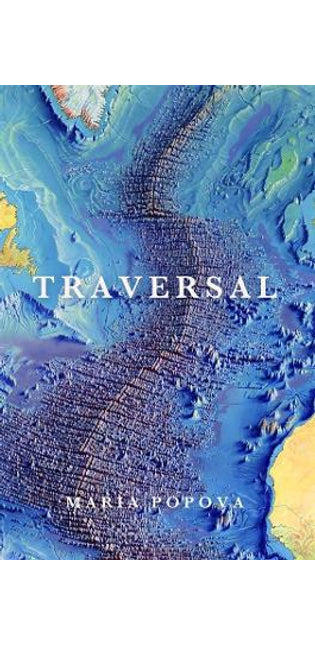
Traversal
In Traversal, her startling and moving new book, Maria Popova traverses the border between life and death, chance and choice, chemistry and consciousness: What makes a body a person? What makes a planet a world? How do we safeguard our love of truth from our lust for power? What slakes our longings and what redeems our losses?Popova illuminates our various instruments of reckoning with these questions—our telescopes and our treatises, our postulates and our poems—through the intertwined lives, loves, and legacies of visionaries both celebrated and sidelined by history, people born into the margins of their time and place who lived to write the future: Mary Shelley, Walt Whitman, Frederick Douglass, Fanny Wright, Dorothy Crowfoot Hodgkin, Marie Tharp, Alfred Wagener, Humphry Davy, Ruth Benedict, and Margaret Mead. Woven throughout their stories are other threads—the world's first global scientific collaboration, the Irish potato famine, the decoding of the insulin molecule, the invention of the bicycle, how nature creates blue—to make the tapestry of meaning more elaborate yet more clarifying as the book advances, converging on the ultimate question of what makes life alive and worth living.By turns epic and intimate—as concerned with the physical laws binding atoms into molecules as with the psychic forces binding us to each other—Traversal explores the universe between cells and souls to reveal the world, and our lives, in a dazzling new light.
R 821.00
Traversal
In Traversal, Maria Popova traverses the border between life and death, chance and choice, chemistry and consciousness: what makes a body a person? What makes a planet a world? How do we safeguard our love of truth from our lust for power? What slakes our longings and what redeems our losses? Popova illuminates our various instruments of reckoning with these questions - our telescopes and our treatises, our postulates and our poems - through the intertwined lives, loves and legacies of visionaries both celebrated and sidelined by history, people born into the margins of their time and place who lived to write the future: Mary Shelley, Walt Whitman, Frederick Douglass, Fanny Wright. Woven throughout their stories are other threads - the decoding of the insulin molecule, the invention of the bicycle, how nature creates blue - which come together to create a rich tapestry of life's meaning; exploring what it is that makes life alive and worth living. By turns epic and intimate, Traversal explores the universe between cells and souls to reveal the world, and our lives, in a dazzling new light.
R 866.00
Yashka
Yashka is the autobiography of Maria Botchkareva, a young Russian woman who bravely took up arms first against the Germans in World War One, and then opposed the Bolsheviks in the Russian Revolution of 1917. Maria describes a hard upbringing as a member of the Russian peasantry. Married at sixteen to her first husband Afanasy, it wasn't long before his charms were replaced by physical abuse; Maria soon fled. She applied for work as a servant girl, only to discover that the man advertising actually owned a string of brothels; she was promptly sent to the town of Sretensk to work in one. Such harsh experiences in youth nevertheless built a certain determination and toughness in the young Maria. When war broke out in 1914, she applied to join as a soldier - facing verbal abuse and sexual harassment from the outset, she nevertheless took to military life with eagerness and courage. The soldiers nicknamed her 'Yashka', and a measure of respect was slowly gained as she demonstrated great bravery.
R 1,117.17
Maria Zef
Maria Zef was considered the farthest limit of verismo in contemporary Italian literature when it was first published in 1936. Like the great films to come after the war, Shoeshine and The Bicycle Thief, Paola Drigo's gritty novel portrays the struggle to come of age or even survive in a harsh environment. But its setting is more rural and its protagonist is a young girl whose voice will now be heard around the world in this English translation by Blossom Steinberg Kirschenbaum. Born in the medieval town of Castelfranco in the Venéto, Paola Drigo (1879–1938) wrote frankly about the poor and brutal lives of toilers in preindustrial northern Italy. Maria Zef, her masterpiece, focuses on the orphaned Maria, who assumes responsibilities beyond her years in protecting her baby sister and staying alive. Poverty, toil, illness, solitude, and abuse contribute to one of the most horrifying climaxes in modern fiction.
R 1,099.00
Malvina, or the Heart’s Intuition
First published in Warsaw in 1816, Malvina, or the Heart's Intuition has been largely—and unjustly—ignored by the Polish literary canon. Ingeniously structured and vividly related by a Tristram Shandy-esque narrator, Maria Wirtemberska's psychologically complex work is often considered Poland's first modern novel. This splendid translation by Ursula Phillips should restore Wirtemberska to her rightful place in the literary pantheon while providing fertile new ground for the study of the international development of the novel.The romantic story of the young widow Malvina and her mysterious lover Ludomir, Malvina combines several literary styles and influences—from the epistolary to the Gothic. Nobel laureate Czeslaw Milosz argues that Malvina is quintessentially a sentimental novel—a model of the genre whose chief aspiration is to promote a change in sensibility and inspire new forces of feeling and imagination. For this reason Wirtemberska may be compared to her English contemporary, Jane Austen. A work of genuine artistic daring and sophistication, Malvina, or the Heart's Intuition has been overlooked by critics for too long, and readers have been denied the pleasure of reading one of literature's major landmarks—until now.
R 411.00
Ian's Ride
While studying as a biology undergrad at UC Santa Cruz, Ian Mackay crashed his bike into a tree on campus. Paralyzed from the shoulders down, Mackay adapted to his new life with the help of his dedicated family, particularly his mother, Teena Woodward, and a group of quirky friends. After years of despair, and against all odds, he became an inspiring leader, an innovator with Apple, and a world-record-breaking athlete. In this intimate biography based on more than one hundred hours of interviews, journal entries, and more, writer Karen Polinsky recounts Ian's accident and determined recovery, in which he discovered the healing power of nature and community. Ian's Ride is both a personal journey and an adventure quest for nature lovers, endurance athletes, and anyone struggling with a life-changing loss or diagnosis. This deeply moving true story examines how we exist in our bodies, adapt to and overcome adversity, and what it means to push our limits.
R 501.00
Strange Comrade Balabanoff
Born in 1878 to a wealthy Ukrainian family, Angelica Balabanoff broke ties with her parents and left for Europe to become one of the leading female socialists of the early 20th century. Just five feet tall, plump and plain, she was rumored to be a lover of Mussolini, Lenin, Trotsky and Stalin. Returning to Russia at the beginning of the October Revolution, she became one of the few women to occupy high-ranking positions within the all-male Bolshevik government, later fleeing Russia in disagreement with Lenin's politics. She was accused by European and American secret services of promoting communist propaganda, and by the Soviets of disloyalty. She lived in small dormitory-like rooms, moving on average every two years with her two suitcases of important documents.She died in Rome at the age 96, concluding her 65-year career by supporting Giuseppe Saragat in his quest to become president of Italy. During her nomadic life, state and police agencies in the countries she visited compiled documents on her. The author draws on this extensive, scattered archive in this first biography of Balabanoff.
R 882.00
Biggest Bluff
A New York Times bestseller * A New York Times Notable Book "The tale of how Konnikova followed a story about poker players and wound up becoming a story herself will have you riveted, first as you learn about her big winnings, and then as she conveys the lessons she learned both about human nature and herself." -The Washington Post It's true that Maria Konnikova had never actually played poker before and didn't even know the rules when she approached Erik Seidel, Poker Hall of Fame inductee and winner of tens of millions of dollars in earnings, and convinced him to be her mentor. But she knew her man: a famously thoughtful and broad-minded player, he was intrigued by her pitch that she wasn't interested in making money so much as learning about life. She had faced a stretch of personal bad luck, and her reflections on the role of chance had led her to a giant of game theory, who pointed her to poker as the ultimate master class in learning to distinguish between what can be controlled and what can't. And she certainly brought something to the table, including a Ph.D. in psychology and an acclaimed and growing body of work on human behavior and how to hack it. So Seidel was in, and soon she was down the rabbit hole with him, into the wild, fiercely competitive, overwhelmingly masculine world of high-stakes Texas Hold'em, their initial end point the following year's World Series of Poker. But then something extraordinary happened. Under Seidel's guidance, Konnikova did have many epiphanies about life that derived from her new pursuit, including how to better read, not just her opponents but far more importantly herself; how to identify what tilted her into an emotional state that got in the way of good decisions; and how to get to a place where she could accept luck for what it was, and what it wasn't. But she also began to win. And win. In a little over a year, she began making earnest money from tournaments, ultimately totaling hundreds of thousands of dollars. She won a major title, got a sponsor, and got used to being on television, and to headlines like "How one writer's book deal turned her into a professional poker player." She even learned to like Las Vegas. But in the end, Maria Konnikova is a writer and student of human behavior, and ultimately the point was to render her incredible journey into a container for its invaluable lessons. The biggest bluff of all, she learned, is that skill is enough. Bad cards will come our way, but keeping our focus on how we play them and not on the outcome will keep us moving through many a dark patch, until the luck once again breaks our way.
R 411.00
Secrets of Soviet Cosmonauts
This book sheds new light on an amazing history, only partially known in the west: Russian cosmonautics and its spectacular record. From Laika, the cosmonaut dog, to Yuri Gagarin, the first man in space, to Valentina Tereshkova, the first woman in space, to the first spacewalk, the Soviets set many goals that they subsequently achieved.But there are shadows behind these headline moments, moments involving human loss, some of which are known, others only rumored. Questions remain, such as:· What was the “flying coffin”?· What secrets are still hidden inside the Russian archives, despite two rounds of declassification?· Why didn’t Marina Popovich (“Madame Mig”) become a cosmonaut?· What problems made it necessary to film Valentina Tereshkova's return?· What (scientific) hypotheses exist concerning Gagarin's mysterious disappearance? The author addresses all of these issues, with help from the documents now available. This book will benefit a broad readership, from interested laypersons to graduate and undergraduate students to those who merely enjoy good history-based stories.
R 752.00
Maria
María: The Potter of San Ildefonso is the story of María Martínez and her husband, Julián, who revived the ancient Pueblo craft of pottery-making and stimulated interest in Southwestern Pueblo pottery among both white people and Indians.María Montoya Martínez, or Marie, as she sometimes signs her pottery, is a woman who has become in her own lifetime a legend. She lives in the pueblo of San Ildefonso, near Santa Fé, New Mexico, and although her life has been, as closely as she could make it, the normal life of a woman of her culture, her unusual qualities have set her apart and gained her fame throughout the world.Through her mastery of pottery-making, María brought economic gain to her family and her village. However, distressing problems accompanied success and fame. Liquor ultimately wrecked Julían. There was dissension within the pueblo. And there was the succession of admiring white people who invaded her home and interrupted her work. Not least, in María view, was the departure of her own children from many Pueblo customs.Inextricably woven into the story of María is the story of the pottery of the Southwestern Pueblos, a native craft that has become a national art interest, including the development of the unique black-on-black ware by Julián, the first of which is reproduced among the illustrations.Margaret Lefranc's many accurate drawings of actual pieces of pottery provide an almost complete documentary history of the craft and show some of the finest examples of María's art. Her skilled pen has also interpreted faithfully the spirit of María, the Pueblo Indians, and the pottery.
R 646.00
R 457.00
Maria Szymanowska (1789-1831)
In Maria Szymanowska (1789-1831): A Bio-Bibliography, Anna E. Kijas examines the career of the highly-influential Polish pianist and composer. Kijas focuses on Szymanowska's life from her days as a young artist to her public concert tours between 1822 and 1828 to the last three years of her life in St. Petersburg. Kijas examines the daily aspects of touring, including organizing concerts, securing transportation and lodging, and managing finances, and she reviews Szymanowska's reception in the cities in which she performed, paying attention to her repertoire, the critic's remarks, ticket prices, and other artists on the program.Separated into Works, Discography, and Literature, the bibliography lists more than 100 compositions for piano, voice, and chamber ensemble. The discography provides details for CD, LP, and cassette recordings between 1960 and the present, and the literature section examines more than 120 primary source documents such as 19th-century reviews and advertisements, personal correspondence, journals, and scrapbooks. Secondary sources include articles, books, and essays about Szymanowska as a composer and pianist. Complete with a list of sources and an index, this comprehensive reference provides insight into the struggles and accomplishments related to concert life for a professional woman in early 19th-century Europe.
R 3,664.00
R 3,017.98
Narrative Complexity
The variety in contemporary philosophical and aesthetic thinking as well as in scientific and experimental research on complexity has not yet been fully adopted by narratology. By integrating cutting-edge approaches, this volume takes a step toward filling this gap and establishing interdisciplinary narrative research on complexity.Narrative Complexity provides a framework for a more complex and nuanced study of narrative and explores the experience of narrative complexity in terms of cognitive processing, affect, and mind and body engagement. Bringing together leading international scholars from a range of disciplines, this volume combines analytical effort and conceptual insight in order to relate more effectively our theories of narrative representation and complexities of intelligent behavior. This collection engages important questions on how narrative complexity functions as an agent of cultural evolution, how our understanding of narrative complexity can be extended in light of new research in the social sciences and humanities, how interactive media produce new types of narrative complexity, and how the role of embodiment as a factor of narrative complexity acquires prominence in cognitive science and media studies. The contributors explore narrative complexity transmitted through various semiotic channels, embedded in multiple contexts, and experienced across different media, including film, comics, music, interactive apps, audiowalks, and ambient literature.
R 2,748.00
Crossroad of Arts, Crossroad of Cultures
Crossroad of Arts, Crossroad of Cultures is the first book-length study of the aesthetic similarities between the French Parnassians, a 19th-century group of poets led by Théophile Gautier, and the Russian Acmeist poets, including Osip Mandelstam and Anna Akhmatova, who were active in the second decade of the 20th century. The Acmeists shared with the Parnassians a classical sensibility, an aspiration to state-of-the-art verbal craftsmanship, and a keen interest in the three-dimensional, physical world. Their love of plastic beauty as embodied in painting, sculpture, and architecture found natural release in verse about works of art. The book shows how Acmeist texts document aspects of Russian Modernist culture while continuing the Parnassian tradition of poetry inspired by visual art.
R 3,039.36
Fair Folk And Little Orphan Mary
A classic children’s tale about Gnomes, appealing equally, if not more so, to the adult child. Written in rich, lyrical prose, frequently shifting into the peasant dialect and interspersed with sundry verses and songs, the tale is replete with mytho-folkloric motifs, legends, superstitions, historical and biblical references, magical depictions of natural phenomena, the sunsets, the twilights, the dawns; the changing seasons, the shadows, the colors, the sounds and silences, Poland’s diverse landscape, her fields, forests and mountains, along with her flora and fauna, and realistic descriptions of late 19th-century Polish rural life. Not least among The Fair Folk’s charms is the author’s whimsical sense of humor—a humor that often rises to a level of high hilarity.
R 2,375.25
R 1,094.49
Maria Callas
For millions of people, the great soprano Maria Callas (1923-1977) remains the focus of such unparalleled fascination that there is still no higher praise for singers than "…the best since Callas." In this biography, Callas' career is brought brilliantly to life, from her transformation from a chubby, painfully shy girl into a magnificent, celebrated soprano, to her conflict with her larger-than-life image. Huffington makes this struggle, which was at the center of her life, also the center of the biography. Using a wealth of previously unpublished material and numerous first-hand interviews, Huffington documents Callas' interminable conflict with her mother, her deeply emotional relationship with her voice, the gradual unraveling of her first marriage, her passionate love affair with of Aristotle Onassis, her agony and humiliation at his leaving her, and her secret abortion.
R 766.37
R 1,855.32
R 1,374.00
R 650.00