Search results for "Neil Storey"
Items we need to order for you

Electronics
Electronics plays a central role in our everyday lives. It is at the heart of almost all of today’s essential technology, from mobile phones to computers and from cars to power stations. As such, all engineers, scientists and technologists need to have a fundamental understanding of this exciting subject, and for many this will just be the beginning. Now in its sixth edition, Electronics: A Systems Approach provides an outstanding introduction to this fast-moving and important field. Comprehensively revised and updated to cover the latest developments in the world of electronics, the text continues to use Neil Storey’s established and well-respected systems approach. It introduces the basic concepts first before progressing to a more advanced analysis, enabling you to contextualise what a system is designed to achieve before tackling the intricacies of designing or analysing its various components with confidence. This book is accompanied by a website which contains over 100 video tutorials to help explain key concepts from the book and interactive quizzes to test your knowledge. Log in to www.pearsoned.co.uk/storey-elec to access these valuable resources, or use the QR codes to view the videos.
R 1,892.00
Murder on Iona
The naked and frozen body of Norah Fornario (33) was discovered lying on a roughly hewn cross on the ground, far from her London home, in the wilds of the remote Hebridean island of Iona in November 1929. The doctor declared she had simply died of exposure, officially, no regard was paid to the strange circumstances under which she had been found, no post-mortem was carried out, no inquest was ordered and there was no major police investigation.Award-winning historian Neil Storey investigates the case and throws new light on the life and mysterious death of Norah Fornario in a gripping story akin to the plot of an Agatha Christie murder mystery novel blended with one of the darkest stories of the occult by Dennis Wheatley. A story that involves the notorious occultist Aleister Crowley, 'The Wickedest Man in the World,' elite secret societies in London, an 'occult college' in the Home Counties, mystical Glastonbury, vampires, demons, fairy folk, and curses set against the backdrop of the roaring 1920s. A story that culminates on a remote Scottish island where folklore and superstition were still believed and feared, and an apparent case of murder by black magic … or was it?
R 773.00
Britain's Coast at War
The whole of Britain’s coastline was involved in the struggle against the Nazis. In the early days invasion was the main threat. Dover and the South East suffered grievously from aerial attacks and were also shelled by German artillery from across the Channel, the area was dubbed ‘Hell Fire Corner.’ Cities and towns all around the coast such as Plymouth, Portsmouth, Hull and Great Yarmouth were the targets of devastating air raids. The coast and lochs of Scotland became a key training area for commandos and assault troops for D-Day and its ports saw the return of crews of sunk vessels of both sides.The East Coast was pivotal to North Sea operations against enemy mining and E-boat operations. The Western ports, particularly Liverpool, were crucial to the vital Atlantic convoys and the defeat of the U-boat threat.The final months of training and preparation for D-Day centred on the South Coast when disaster struck during Exercise Tiger off Slapton Sands.Britain’s coastal ports continued to attract ‘Tip and Run’ raids and the attention of V rockets that changed the character of many these towns and cities forever. Neil Storey’s superbly researched work brilliantly describes all this and more in words and images.
R 495.00
Little Book of Norwich
Norwich is a city that has seen it all. Its citizens have been murdered with poisoned dumplings, royalty and rogues have walked the same cobbled streets, and rioters have mustered outside its city gates. Quirky details and local anecdotes abound as this jam-packed compendium explores the UK’s most easterly city, from its earliest origins to the present day. Looking at conflicts, sports, entertainment, traditions and all that makes Norwich special, this book will entertain and enthrall all those looking for some frivolous facts about this marvellous city.
R 464.00
Little Book of Norfolk
The Little Book of Norfolk is a repository of intriguing, fascinating, obscure, strange and entertaining facts and trivia about one of England’s most colourful counties. It is an essential to the born and bred Norfolk folk or anyone who knows and loves the county. Armed with this fascinating tome the reader will have such knowledge of the county, its landscape, people, places, pleasures and pursuits they will be entertained and enthralled and never short of some frivolous fact to enhance conversation or quiz! A reference book and a quirky guide, this can be dipped in to time and time again to reveal something new about the people, the heritage, the secrets and the enduring fascination of the county. A remarkably engaging little book, this is essential reading for visitors and locals alike.
R 464.00
Island Book of Records Volume III
The third in the acclaimed Island Book of Records series chronicles 1971–72, two years that saw the label secure a position at the forefront of contemporary music around the world.Major albums from Cat Stevens, Emerson, Lake & Palmer and Jethro Tull brought international success. Traffic released their era-defining The Low Spark of High Heeled Boys and Island returned to its roots with the soundtrack to the most important Jamaican film of all time, The Harder They Come. Nick Drake’s masterpieces Bryter Layter and Pink Moon were yet to find their audience, but a new sensation emerged as Roxy Music released their first LP. Meanwhile, Bob Marley & The Wailers were beginning to record Catch A Fire – the album that will be the first to be detailed in IBoR IV.Featuring material from recent interviews and comment of the time, and including a comprehensive discography of 45s, The Island Book of Records Volume III is lavishly illustrated with album art, gig adverts, tickets, flyers, international LP variants, rare photos, LP and 45 adverts and exclusive ephemera.
R 2,840.00
Norfolk's Military Heritage
Norfolk’s military heritage dates back to the earliest times, from Iron Age forts, Iceni strongholds and Boudica’s rebellion against Roman occupation to its front-line role with coastal defences and numerous airbases during the Second World War. The Romans left their mark with fortifications, garrisons and shore forts. The county was shaped by Anglo-Saxon and Viking invasions and the Normans, whose castles still stand dominant in the county.Norfolk was the scene of uprisings and rebellions, including the Peasants’ Revolt, Kett’s Rebellion and Civil War conflicts. The men of the county led and filled the ranks of the local volunteers, militias and yeomanry during the Napoleonic Wars and was famed for its great maritime commander of the day – Admiral Lord Nelson. The county played a vital part in both world wars, not least suffering direct attacks by German battleships, Zeppelin air raids during the First World War and becoming a target during the Baedeker Blitz in 1942. The Royal Norfolk Regiment has a proud history, serving with distinction wherever they fought – from the Peninsular War to South Africa, through two world wars and beyond.Award-winning historian Neil R. Storey is a born-and-bred Norfolk man. He has published on military and social history themes for thirty years and knows and loves his county well. Norfolk’s Military Heritage will interest anyone keen to know more about the county’s remarkable military history.
R 495.00
King's Men
The 4th and 5th Battalions, the Norfolk Regiment were formed in the early days of The Great War as part of the Territorial Force and deployed with 54th (East Anglian) Division to Gallipoli in 1915. Most significantly the 1/5th Battalion was unique in that it contained The Sandringham Company, the only unit to be raised entirely from a Royal Estate.Tragically the Company, along with King George V’s Agent Captain Beck, disappeared without trace on 12 August 1915, presumed to have been overcome by their Turkish adversaries.The Battalion was rebuilt and saw out the ill-fated Gallipoli Campaign being evacuated to Egypt in December 1915. Thereafter the Norfolks served with distinction in Palestine as part of the Egyptian Expeditionary Force.The Author has compiled a fascinating history of these Battalions’ distinguished service using contemporary records and personal accounts illustrated with a splendid selection of photographs. The result is a fitting tribute to the memory of these brave volunteers.
R 526.00
Dunkirk, D-Day, Kohima and The Death Railway
The Royal Norfolk Regiment had a fighting record second to none. Five members of the Regiment were awarded the Victoria Cross, the greatest number to any Line Infantry Regiment during the Second World War.1st Battalion landed on Sword Beach on D-Day and fought with distinction through France, Holland and Germany2nd Battalion was the first complete infantry battalion of the British Expeditionary Force to land in France in 1939. Members of this battalion earned the first gallantry decorations of the war. Tragically, 97 men of this battalion were massacred at Le Paradis during the retreat to Dunkirk in 1940. The battalion was rebuilt and fought in Burma and the hellish Battle of Kohima.4th, 5th and 6th Battalions fought doggedly at Singapore but after the surrender of the island in 1942, spent the rest of the war as Japanese Prisoners of War on the infamous 'Death Railway' and forced labour camps.7th Battalion fought in France in 1940. Only fifty men made it back, but the battalion was rebuilt and returned again to fight in Normandy in 1944.Drawing on the diaries, memoirs and memories of those who were there, this book is a fitting tribute to the brave men of The Royal Norfolk Regiment.
R 773.00
Murder of PC Gutteridge
PC George William Gutteridge was a well-liked and respected village policeman for Stapleford Abbotts in rural Essex, where he lived with his wife and two young children. While on his beat out on a lonely country road in the early hours of the morning of 27 September 1927, he was gunned down in one of the most horrific and callous killings of a police officer in the history of British law enforcement.It had been PC Gutteridge's misfortune to stop a stolen car containing hardened career criminals, Frederick Guy Browne and William Kennedy. Neither had any respect for the police, and neither was afraid to use extreme violence to evade capture. What ensued was one of the biggest manhunts Britain had ever seen.The murderers were brought to justice by a masterpiece of detective work by Scotland Yard, and their arrest required the skill and bravery of officers from a number of police forces. Drawing on Home Office and police files along with a host of contemporary newspaper reports and long-forgotten memoirs, Neil R. Storey provides a vivid account of the case and, in doing so, presents a darkly fascinating insight into Britain's underworld during the roaring 1920s.
R 773.00
R 184.00
Newcastle Battalions
Newcastle raised more battalions of volunteer soldiers that went on to see active service than any other British provincial city during the First World War. The first full battalion of Kitchener's Army, Pioneer battalions, the Tyneside Scottish and the Tyneside Irish Brigades and pre-war Territorial Battalions of The Northumberland Fusiliers were all raised here and all of them served at some point during the Battles on the Somme between 1 July and December 1916. On the First Day of the Somme their stalwart bravery and conduct on the field were remarked upon by all who witnessed it; be they the gallant pipers that led the companies over the top or the parade-like lines of the Tyneside Irish as they strode towards the hail of machine gun fire. The losses suffered by these brave battalions were also the worst suffered by any Regiment on that fateful day. .
R 356.00
R 214.00
R 521.00
R 1,099.00
R 773.00
R 305.00
Innovating Healthcare
Why is there a need to ‘innovate healthcare’? The basic reason stems from the sheer scale of the challenges now facing healthcare provision in the UK and across many other countries. The aim of this book is to interrogate past and current attempts to innovate in this arena and to draw-out the key lessons. Innovating Healthcare: The Role of Political, Managerial and Clinical Leadership presents the latest state of knowledge based on original data from a series of NIHR-funded research projects set in the context of a review of extensive secondary research. The book draws upon first-person verbatim accounts of change attempts made by doctors and other clinicians as well as upon research findings about the roles played by policy-makers and managers. The analysis draws upon theory and practice in leadership, innovation and institution-building. The mutually-reinforcing contributions of political, managerial and clinical leadership are at the core of the investigative narrative.This book will be of interest to students and researchers, clinicians and managers in the health and care sectors as well as policy-makers. While the focus in on healthcare, the book has wider relevance for students of management, leadership, innovation and organizational studies.The Open Access version of this book, available at http://www.taylorfrancis.com, has been made available under a Creative Commons Attribution-Non Commercial-No Derivatives 4.0 license
R 9,304.96
R 316.00
R 165.00
R 878.00
R 1,432.00
Sniper
The Sniper - based on a system of development with 1...g6, ...Bg7 and ...c5! - is a dynamic weapon for Black against both 1 e4 and 1 d4. Black allows White to occupy the centre but, in true hypermodern style, strikes back at once. The Sniper is a fascinating opening that can lead to original or barely-known positions in which White is thrown onto his own resources and Black can strive for the initiative. White also has to negotiate a minefield of transpositions, typically into Sicilian, King's Indian or Benko-type positions. Charlie Storey has spent years refining his favourite opening, testing it out successfully against players of all levels. In this book he reveals all his secrets and provides you with everything you need to know about this fascinating opening.
R 756.63
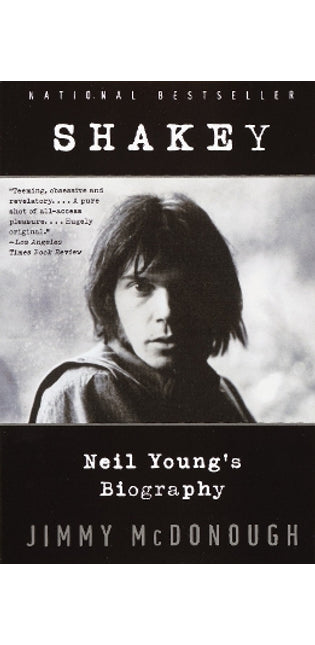
Shakey: Neil Young's Biography
Neil Young is one of rock and roll¿s most important and enigmatic figures, a legend from the sixties who is still hugely influential today. He has never granted a writer access to his inner life ¿ until now. Based on six years of interviews with more than three hundred of Young¿s associates, and on more than fifty hours of interviews with Young himself, Shakey is a fascinating, prodigious account of the singer¿s life and career. Jimmy McDonough follows Young from his childhood in Canada to his cofounding of Buffalo Springfield to the huge success of Crosby, Stills, Nash and Young to his comeback in the nineties. Filled with never-before-published words directly from the artist himself, Shakey is an essential addition to the top shelf of rock biographies.
R 626.00
Eupolis, Poet of Old Comedy
Eupolis (fl. 429-411 BC) was one of the best-attested and most important of Aristophanes' rivals. No complete work by this lost master has survived, but of his fourteen plays we have 500 fragments. These include 120 lines of his best-known comedy, Demoi (The Demes), which were discovered and published in 1911. Even in fragmentary form, Eupolis' plays shed interesting light on the whole range of issues - political, poetic, and dramatic -that make Aristophanes so perennially fascinating. There has, however, been no substantial survey in English until now. As well as providing a new translation of all the remaining fragments and a separate essay on each lost play, Ian C. Storey discusses Eupolis' career, redates the plays, examines how Eupolis was known in theancient world, explores his relationship with Aristophanes (as both rival and collaborator), and delineates the distinct nature of the comedy that this prizewinning poet created.
R 14,307.00
Theories of Consumption
Theories of Consumption explores the concept of consumption from the post-disciplinary perspective of cultural studies.John Storey brings together work that up until now has been located in distinct disciplinary spaces including work on reception theory in literary studies and philosophy; work on consumer culture in sociology, anthropology and history; and work on media audiences (both ethnographic and theoretical) in media studies and sociology.Moving beyond the usual analysis of consumer culture, Storey presents a critical assessment of a range of theoretical approaches to the study of consumption. In doing so, he provides an authoritative overview of a significant selection of research and analysis that has explored consumption as an object of study. This book provides an ideal introduction to consumption for students of media and cultural studies and will also be useful for students within a number of other disciplines such as sociology, history, anthropology, cultural geography and both literary and visual studies.
R 9,158.00
England: The Official History
The complete, official history of the England football team as you've never seen it before! England: The Official History is a fascinating account of the world's oldest and most iconic national football team.• Includes England's fantastic performance at EURO 2020. • A great gift for any England fan. • Features more than 250 exceptional photographs of England icons past and present including Alf Ramsey, Bobby Charlton, Gary Lineker, Hope Powell, David Beckham, Steph Houghton and Harry Kane. • The complete story of the England men's and women's teams – from 1872 right up to the present day. • Written by award-winning journalist and author Daniel Storey in association with the FA and filled with incredible stories spanning 150 years of England football.The book charts the highs (and lows) of the England national teams and the men and women who've worn the Three Lions with pride. Each chapter delves into a specific era, covering key figures, famous and infamous matches, and the evolution of football over the course of more than a century and a half.This is the definitive visual history of English Football.
R 773.00
Cultural Theory and Popular Culture
In this tenth edition of his award-winning introduction, John Storey presents a clear and critical survey of competing theories of, and various approaches to, popular culture. Its breadth and theoretical unity, exemplified through popular culture, means that it can be flexibly and relevantly applied across a number of disciplines.Retaining the accessible approach of previous editions and using appropriate examples from the texts and practices of popular culture, this new edition remains a key introduction to the area.New to this edition:updated throughout with contemporary examples of popular culturea chapter called Nature and Culture, which includes sections on culture in nature, the Anthropocene, the Capitalocene, and popular culture and climate changeupdated student resources at routledgelearning.com/culturaltheoryandpopularcultureThis new edition remains essential reading for undergraduate and postgraduate students of cultural studies, media studies, communication studies, the sociology of culture, popular culture and other related subjects.
R 6,913.25
Leo Strauss
Leo Strauss’s lifelong intellectual mission was to recover ‘classical rationalism’, a pursuit that has made him a controversial figure to this day. While his critics see him as responsible for a troubling anti-democratic strain in modern politics, others argue that his thought is in fact the best defence of responsible democracy. Neil Robertson’s new introduction to Strauss aims to transcend these divides and present a non-partisan account of his thought. He shows how Strauss’ intellectual formation in Weimar Germany and flight from Nazism led him to develop a critique of modernity that tended to support a conservative politics, while embracing a radical sense of what philosophy is and can be. He examines the way in which Strauss built upon the thought of Nietzsche and Heidegger in order to show how their 'nihilism' led not to a standpoint beyond western rationality, but to a recovery of its roots. This skillful reconstruction of the coherence and unity of Strauss’ thought is the essential guide for anyone wishing to fully grasp the contribution of one of the most contentious and intriguing figures in 20th century intellectual history.
R 813.00
Storey Plays: 1
"David Storey is a writer who genuinely extends the territory of drama" (Guardian) The Contractor: "A subtle and poetic parable about the nature and joy of skilled work, the meaning of community and the effect of its loss" (Observer); Home: "about the solitude and dislocation of madness and...the decline of Britain itself...part of the play's appeal is that Storey leaves it to us to draw our own conclusions...a play that contains within itself the still, sad music of humanity." (Guardian); Stages: "...an elegy for lost times and places, an obituary that has been free-associated by the corpse-to-be...Storey once said that a play 'lives almost in the measure that it escapes and refuses definition'. He has always been a writer who hints rather than states, let alone hectors." (The Times); Caring, a companion piece to Stages, reflects a reassessment and renegotiation of the conflict between life and art.
R 945.00
R 1,127.38
Gazza in Italy
A brilliant, funny and insightful analysis of Paul Gascoigne’s crazy up and downs during his three years at Lazio – a period which shows his entire career in microcosm. 4th July, 1990. Turin, Italy England are on the brink of reaching their first World Cup final in 24 years. Twenty-three-year old Paul Gascoigne has been one of the breakout stars of the tournament. His athleticism, speed of thought and incredible natural gifts have given England fans renewed faith in their perennially underachieving national side. Then in the 99th minute of a tense semi-final against Germany, Gascoigne lunges into a mistimed tackle. The ref awards him his second yellow card of the tournament, meaning that if England were to win, he would miss the final. Gascoigne turns away, tries to hold it together, but can’t. Floods of tears run down his face. We understand. We feel his pain and anguish. The legend of Gazza is born. Two years later, after an injury-stricken season at Spurs, he arrives at Lazio for a then record transfer fee. Expectations are sky high; he is welcomed as a footballing Messiah by the Roman fans. But all is not what it seems. There are doubts over his fitness, doubts over how he will adjust to life in Italy, doubts over whether his obvious potential can finally be achieved. The three subsequent years in Italy, shot through with incredible highs and self-inflicted lows, show Gascoigne in all his complexity – an immense natural talent flawed by a too-fragile personality. In Gazza in Italy, award-winning writer Daniel Storey brilliantly shines a light on an unexamined moment in Gascoigne’s career that encapsulates everything that we have come to associate with this most mercurial of talents: childish joy, public gaffes, wondrous skill and saddening self-destruction. Funny and harrowing in equal measure, this book allows us a better, more rounded understanding of one of our greatest sporting idols, and of a tragically misunderstood human being.
R 309.00
R 421.43
R 420.00
R 397.00
Take Over the City
Take Over the City provides the first comprehensive spatial analysis of Italian operaismo and the extraordinary urban struggles of 1970s Italy. Take Over the City is the first systemic spatial account of Italian operaismo. Drawing on the Marxist urban theory of Henri Lefebvre and others, the book situates the struggles of operaismo, especially in the 1970s, within an incipient-yet-tendential phase of global urbanization. In doing so, the book draws attention to previously neglected urban struggles in the wider social factory, recognizing these as immanent to the new spatial composition of capital in Italy. The book argues that these innovative urban struggles carry important lessons for contemporary forms of organization and social conflict in the sphere of social reproduction. They drew attention to, and acted within, a tendency that has only become more entrenched since the 1970s: the centrality of urbanization and real estate to national political economies. If urbanization has become increasingly central for capital accumulation processes, it follows that urban struggle must become increasingly central to anti capitalist struggle. The struggles to ‘Take Over the City’ in 1970s Italy provide an important marker of how this might be done in the current era.
R 502.00
R 821.00
R 275.00
From Popular Culture to Everyday Life
From Popular Culture to Everyday Life presents a critical exploration of the development of everyday life as an object of study in cultural analysis, wherein John Storey addresses the way in which everyday life is beginning to replace popular culture as a primary concept in cultural studies. Storey presents a range of different ways of thinking theoretically about the everyday; from Freudian and Marxist approaches, to chapters exploring topics such as consumption, mediatization and phenomenological sociology. The book concludes, drawing from the previous nine chapters, with notes towards a definition of what everyday life might look like as a pedagogic object of study in cultural studies.This is an ideal introduction to the theories of everyday life for both undergraduate and postgraduate students of cultural studies, communication studies and media studies.
R 2,383.23
R 367.00
R 501.00
Rural Fictions, Urban Realities
The diminishment of rural life at the hands of urbanization, for many, defines the years between the end of the Civil War and the dawn of the twentieth century in the U.S. Traditional literary histories find this transformation clearly demarcated between rural tales-stories set in the countryside, marked by attention to regional dialect and close-knit communities-and grittier novels and short stories that reflected the harsh realities of America's growing cities.Challenging this conventional division, Mark Storey proffers a capacious, trans-regional version of rural fiction that contains and coexists with urban-industrial modernity.To remap literary representations of the rural, Storey pinpoints four key aspects of everyday life that recur with surprising frequency in late nineteenth-century fiction: train journeys, travelling circuses, country doctors, and lynch mobs. Fiction by figures such as Hamlin Garland, Booth Tarkington, and William Dean Howells use railroads and roving carnivals to signify the deeper incursions of urban capitalism into the American countryside. A similar, somewhat disruptive migration of theurban into the rural occurs with the arrival of modern medicine, as viewed in depictions of the country doctor in novels like Sarah Orne Jewett's A Country Doctor and Harold Frederic's The Damnation of Theron Ware. This discussion gives way to a far darker interaction between the urban and the rural,with the intricate relationship of vigilante justice to an emerging modernity used to frame readings of rural lynchings in works by writers like Bret Harte, Charles Chesnutt, Paul Laurence Dunbar, and Owen Wister. The four arenas-transport, entertainment, medicine, and the law-used to organize the study come together in a coda devoted to utopian fiction, which demonstrates one of the more imaginative methods used to express the social and literary anxieties around the changing nature of urbanand rural space at the end of the nineteenth century.Mining a rich variety of long neglected novels and short stories, Rural Fictions, Urban Realities provides a new literary geography of Gilded Age America, and in the process, contributes to our understanding of how we represent and register the cultural complexities of modernization.
R 1,272.29
R 592.00
R 304.00
Radical Utopianism and Cultural Studies
In Radical Utopianism and Cultural Studies, John Storey looks at the concept of utopianism from a cultural studies perspective and argues that radical utopianism can awaken the political promise of cultural studies. Between the Preface and the Postscript, there are seven chapters that explore different aspects of radical utopianism. The book begins with a definition of what radical utopianism means, with its productive combination of defamiliarization and desire. From there, it considers Thomas More’s invention of the concept of utopia with its double articulation of what is and what could be, Herbert Marcuse’s utopian rereading of Sigmund Freud’s concept of repression, Gerrard Winstanley and the Diggers, the Paris Commune, and the Haight-Ashbury counterculture. In the final chapter, Storey examines two versions of utopian capitalism: retro and post. Although the main focus here is on Donald Trump’s presidential election campaign and Paul Mason’s recent bestseller Postcapitalism, the chaper begins with a brief discussion of Karl Marx on capitalism. Each chapter, in a different way, argues that radical utopianism defamiliarizes the manufactured naturalness of the here and now, making it conceivable to believe that another world is possible.This book provides an ideal introduction to utopianism for students of cultural studies as well as students within a number of related disciplines such as sociology, literature, history, politics, and media studies.
R 2,380.60
Time and Antiquity in American Empire
This is a book about two empires—America and Rome—and the forms of time we create when we think about them together. Ranging from the eighteenth century to the present day, through novels, journalism, film, and photography, Time and Antiquity in American Empire reconfigures our understanding of how cultural and political life has generated an analogy between Roman antiquity and the imperial US state—both to justify and perpetuate it, and toresist and critique it.The book takes in a wide scope, from theories of historical time and imperial culture, through the twin political pillars of American empire—republicanism and slavery—to the popular genres that have reimagined America's and Rome's sometimes strange orbit: Christian fiction, travel writing, and science fiction. Through this conjunction of literary history, classical reception studies, and the philosophy of history, however, Time and Antiquity in American Empire builds a morefundamental inquiry: about how we imagine both our politics and ourselves within historical time. It outlines a new relationship between text and context, and between history and culture; one built on the oscillating, dialectical logic of the analogy, and on a spatialising of historical temporality through the metaphorsof constellations and networks. Offering a fresh reckoning with the historicist protocols of literary study, this book suggests that recognizing the shape of history we step into when we analogize with the past is also a way of thinking about how we have read—and how we might yet read.
R 4,447.00