



Search results for "Preve"
Items we need to order for you

R 340.00
R 306.00
R 704.00
R 260.00
R 1,464.00
R 431.00
Is Prevention Better than Cure?
A growing body of research indicates that prevention offers the promise of better ways to maintain health and extend life. In this timely volume, Louise B. Russell shows that preventive measures are not as simple as often depicted while many do improve health, they are not without risk or cost, and in fact rarely reduce medical expenditures. Each measure, she argues, must be evaluated individually and in all its dimensions: health benefits, health risks, and resource costs.To demonstrate the many factors involved in evaluating preventive measures, Russell examines the policy debates about smallpox and measles vaccination, screening and drug therapy for hypertension, and exercise. She uses these case studies to explain the methods of cost-effectivness analysis, showing how the choice among health investments can be made a more rational exercise. The volume concludes with a suggested framework for the design of future cost-effectiveness evaluations. Policymakers in and out of the health field will benefit from this lucid examination of the potential of prevention for improving health and changing the allocation of limited resources.
R 805.00
R 340.00
Ounce of Prevention
The boundaries of psychology are expanding as growing numbers of psychological scientists, educators, and clinicians take a preventive approach to social and mental health challenges. Offering a broad introduction to prevention in psychology, this book provides readers with the tools, resources, and knowledge to develop and implement evidence-based prevention programs. Each chapter features key points, a list of helpful resources for creating successful intervention programs, and culturally informed case examples from across the lifespan, including childhood, school, college, family, adult, and community settings. An important resource for students, researchers, and practitioners in counseling, clinical, health, and educational psychology, social justice and diversity, social work, and public health.
R 3,902.05
Prevention Live to 100 and Love It!
Here’s good news: People are living longer and better than ever before… and now you can, too. Make your life healthier and longer with this information-packed primer to aging well. This empowering longevity book with easy-to-understand text and 100 photos and illustrations offers immediate benefits to extend your lifespan. Inside, you’ll find:The latest news on the science of aging including the myths about the aging brain and memory, and if it’s possible to reverse aging. Ideas to take a staying young approach to your 50s, 60s, 70s, and beyond, plus the secrets of the superagers. Strategies for maximising your “healthspan” - the years you’re in good health - including important advice about brain, heart, and mental health. 25 exercises to help you preserve and build balance, flexibility, strength, and cardiovascular endurance. The best foods to eat for healthy aging and primer on science-supported diet plans including the Mediterranean Diet, DASH diet, and MIND diet. Tips for navigating menopause and sexual health. Action-oriented checklists for living your best life now, and always. Live to 100 and Love It celebrates healthy aging, showing how living a long and healthy life is possible for everyone.
R 570.00
Paradoxes of PrEP for HIV Prevention
Available open access digitally under CC-BY licence.Pre-exposure prophylaxis (PrEP) is a drug taken by HIV-negative people that reduces the risk of getting HIV. Comparing two case studies in Denmark and Zimbabwe, this book demonstrates six paradoxes that users often encounter in navigating their PrEP journey. These paradoxes lead to contentions, uncertainties, dilemmas and ambiguities that need to be carefully and pensively responded to through what the author terms ‘everyday PrEP negotiations’. The social nature and need for such everyday PrEP negotiations help explain why PrEP works for some people and not for others. This book argues that such insight is critical to make PrEP work for more people and to inform social public health responses.
R 888.00
R 1,517.35
R 615.00
R 305.00
Primary Prevention Practices
What are the most effective ways to prevent predictable behavioral problems, protect current states of health, and promote desired behaviors? Intended for use by students in the helping professions and by practitioners and researchers in the field, Primary Prevention Practices offers step-by-step procedures on how to conduct over 50 techniques of prevention practice. Through the use of an organizational framework, the configural equation, author Martin Bloom identifies the classes of factors that are to be considered in any thorough analysis of a given situation and provides a check list for accessing the full range of forces acting on events so the reader can better select which preventive action to apply. In addition, the book covers a wide range of prevention practices, including problem-solving methods, anticipatory instructions, social skills training, life-long exercises, perceived self-efficacy, assertiveness training, cognitive reframing, and peer tutoring. By using a technique that is friendly to practitioners and students, Primary Prevention Practices is a perfect resource for those in the fields of psychology, clinical psychology, social work, and public health.
R 4,245.10
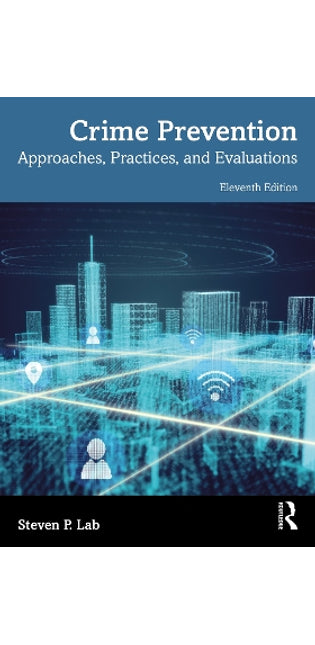
Crime Prevention
Crime Prevention: Approaches, Practices, and Evaluations, Eleventh Edition, meets the needs of students and instructors for engaging, evidence-based, impartial coverage of interventions that can reduce or prevent deviance. This edition examines the entire gamut of prevention, from physical design, to developmental prevention, to identifying high-risk individuals, to situational initiatives, to partnerships, and beyond. Strategies include primary prevention measures designed to prevent conditions that foster deviance, secondary prevention measures directed toward persons or conditions with a high potential for deviance, and tertiary prevention measures to deal with persons who have already committed crimes. In this book, Lab offers a thorough and well-rounded discussion of the many sides of the crime prevention debate in clear and accessible language, including the latest research concerning space syntax, physical environment and crime, neighborhood crime prevention programs, community policing, crime in schools, and electronic monitoring and home confinement. This book is essential for undergraduates studying criminal justice, criminology, and sociology, in the U.S. and globally. Online resources include an instructor’s manual, test bank, and lecture slides for faculty, and a wide array of resources for students.
R 1,190.00
Ounce of Prevention
The boundaries of psychology are expanding as growing numbers of psychological scientists, educators, and clinicians take a preventive approach to social and mental health challenges. Offering a broad introduction to prevention in psychology, this book provides readers with the tools, resources, and knowledge to develop and implement evidence-based prevention programs. Each chapter features key points, a list of helpful resources for creating successful intervention programs, and culturally informed case examples from across the lifespan, including childhood, school, college, family, adult, and community settings. An important resource for students, researchers, and practitioners in counseling, clinical, health, and educational psychology, social justice and diversity, social work, and public health.
R 1,372.95
Handbook of Prevention
Americans are "healing themselves" (Heckler, 1985) and prevention has taken root (McGinnis, 1985a). We are altering our lifestyle to reduce physical and mental health risks. Perhaps as important is the fact that the science of prevention is beginning to catch up with the practices of prevention, although some might argue that the popularity of these practices far outstrips sound theoretical and empirical foundations. The chapter authors in this volume examine the theoretical and empirical foundations of many current prevention practices and, where data exist, discuss the status of prevention efforts. Where substantial prevention is not yet on the horizon, the authors attempt to point us in the right direction or at least share with the reader some of the risk factors that should be addressed in our research. We hope that readers will be stimulated to discuss the issues raised, advance the current research, and, where possible, adopt the prevention and health promotion strategies that are supported by sound theoretical and empirical work. This volume can in no way be comprehensive with respect to the current work in prevention; however, we hope that we have provided a sampling of prevention activities and issues that appear together in one volume for perhaps the first time. The primary intent of this volume is modest, and the reader should not attempt to find continuity among the various chapters. The only binding among these contributions is their focus on prevention.
R 1,610.76
R 1,466.00
R 648.00
Prevention: What Works with Children and Adolescents?
This study deals with the prevention of psychological problems which are of central concern to those who fund and develop health, social and educational services for children, adolescents and their families. Problems addressed in this book include developmental delay in low birth weight infants and socially disadvantaged children; adjustment problems in children with sensory and additional disabilities and autism; challenging behaviour in children with intellectual disabilities; physical and sexual abuse; bullying; adjustment problems in children with asthma and diabetes; teenage smoking; alcohol use and drug abuse; teenage pregnancy, STDs and HIV infection; post-traumatic adjustment problems and adolescent suicide. Conclusions drawn in this book are based on the results of over 200 rigorously conducted studies of more than 70,000 children.
R 1,439.67
Preventing Disease
Preventing Disease, the offspring of an extraordinary collaboration between the U.S. and Canadian Preventive Services Task Forces, presents a meticulous and objective review of the published evidence on preventive measures. Examining such diverse and relevant topics as screening for endometrial cancer, exercise counselling for healthy adults, and the evidence for a causal relation between dietary lipids and coronary heart disease, this volume reflects the editors' shared conviction that recommendations for preventive action should rarely exceed what is well justified by the evidence. In the current period, characterized as the Second Public Health Revolution, the authors' hard-nosed approach leads them to ask the tough questions. Are preventive measures cost-saving? Does preventive screening actually lead to treatment in clinical practice? Does the treatment do more good than harm? To what extent does our desire to eliminate causes of serious disability, ill health and premature death cloud our objectivity? All concerned about preventive medicine, community health, and primary care will find valuable stimulation for thought and action in this book: the contributions have gone beyond the rhetoric.
R 3,117.47
R 970.00
R 456.00
R 417.00
R 443.14
R 549.03
Preventive Measures
State failure, ethnopolitical war, genocide, famine, and refugee flows are variants of a type of complex political and humanitarian crisis, exemplified during the 1990s in places like Somalia, Bosnia, Liberia, and Afghanistan. The international consequences of such crises are profound, often threatening regional security and requiring major inputs of humanitarian assistance. They also may pose long-term and costly challenges of rebuilding shattered governments and societies. A vital policy question is whether failures can be diagnosed far enough in advance to facilitate effective international efforts at prevention or peaceful transformation. This volume of original essays examines crisis early warning factors at different levels, in different settings, and judges their effectiveness according to various models. Top contributors offer answers along with analyses as they move from early warning to early response in their policy recommendations.
R 2,233.00
R 305.00
Primary Prevention Works
I commend this book to you and urge you not only to read about the excellent programs contained herein but also to work to bring these and other high quality prevention programs into your community. Share this information with your elected officials, business leaders, parent groups, and anyone who holds a stake in your community′s well-being. With so many pressing problems confronting children and families in America, we must act now to begin to reduce the tragedy of needlessly wasted lives. --from the Preface by Rosalynn Carter Although mental disorders cost our nation $72.7 billion each year in treatment, related support, and lost productivity, the funding for prevention of mental disorders has been inconsistent, due in some part to a lack of confidence regarding the effectiveness of specific prevention programs. This book highlights some of the most effective prevention programs in the United States and offers readers a common set of principles to reduce maladaptive behavior in ourselves, our children, and society. Divided into five parts, the book begins with an overview of prevention history in this country and next shows ways to operationalize George W. Albee′s incidence formula. Part 2 focuses on successful programs that increase parent-child interaction and parenting ability. Part 3 explores preschool programs, some of which use parents as teachers, others of which describe quality child care programming and programs that develop problem-solving abilities in early childhood. Part 4 examines school-age programs ranging from interventions in school settings to developing social competency and job readiness. And, Part 5 focuses on prevention interventions in adulthood, specifically unemployment and depression. With contributions form the leading researchers in the prevention field, this book provides readers with the best information available about effective prevention programs and the knowledge to develop these preventive services at both state and local community levels. Primary Prevention Works will be of interest to policymakers and to researchers and practitioners in developmental psychology, clinical psychology, family studies, social work, counseling, human services, nursing, and public health.
R 4,241.84
Defining Prevention Science
Whoever coined the adage "an ounce of prevention is worth a pound of cure" could not have known how important this adage would become. The challenge of altering the health trajectories of poor lifestyle decisions for such behaviors as smoking, drinking and using illicit drugs, violence, dropping out of school, engagement in risky sexual behaviors and crime through prevention research has led to a new discipline, prevention science.Defining Prevention Science covers this emerging field of science: its goals, its conceptual and theoretical foundations, its methods and especially its utility. Not content to simply differentiate the field from its close allies: epidemiology, psychology, neuroscience, sociology, economics, the text explains how these many disciplines enhance each other at both research and intervention levels and how prevention science draws on these biological, behavioral and social sciences to create an innovative knowledge base that has provided cost-effective, evidence-based prevention interventions and policies. To this end, familiar developmental benchmarks are recast in prevention/health promotion context, from the crucial importance of adolescence in encountering and deterring high-risk behaviors to the risks and resiliencies of single-mother families. An international group of contributors offers current findings, up-to-date methods for effective evidence-based interventions and improvements in research technologies in these key areas:Physical, cognitive and emotional vulnerability across the life course.The roles of developmental influences in prevention.Intervention development, delivery and implementation.Bringing the intervention approach to research design.New directions in analytic methods.Cost analysis and policy implications.Advances in Prevention Science: Defining Prevention Science aims to inspire further refinements in the field and encourage communication among researchers in its own and related disciplines, including public health, epidemiology, psychology, and criminology. This is the first volume in the series, Advances in Prevention Science, that provides the framework for other volume that will focus on such issues as: Prevention Science in School Settings: Complex Relationships and Processes; Preventing Crime and Violence and The Prevention of Substance Use.
R 3,093.59
Establishing Preventive Services
TodayÆs young people face greater risks to their current and future health and social development as shown by the involvement of younger and younger children in smoking, drinking, gang membership, and acts of violence. Emphasizing developmentally and contextually appropriate prevention service delivery models, the authors of this volume identify state-of-the-art, empirically based strategies to strengthen the environments in which children develop. Since programs with strong conceptualization, design, and implementation have the potential to enhance childrenÆs social, emotional, and physical wellness, the authors first review ways to strengthen the family, child-care systems, early childhood education, school-based health and mental health services, and community-based mental health programming. They next explore the importance of theory-guided evaluation to clarify the process of program implementation as well as highlighting strategies for disseminating programs effectively. Throughout the chapters, the authors emphasize three themes: One, that scientists, practitioners, and policy makers must collaborate to diversify the portfolio of coordinated family-, school-, and community-based prevention services. Second, that rigorous evaluations of prevention programs are critical to document their efficacy and to identify ways to improve their quality. And, three, that well-designed prevention programs must be effectively conducted in order to insure implementation quality. This important new volume will be invaluable to professionals and practitioners in the fields of developmental psychology, clinical psychology, family studies, social work, counseling, human services, nursing, and public health.
R 3,141.74
Coffee in Health and Disease Prevention
Coffee in Health and Disease Prevention, Second Edition, presents a comprehensive look at the compounds in coffee, their benefits (or adverse effects), and explores coffee as it relates to specific health conditions. Embracing a holistic approach, this book covers the coffee plant, coffee production and processing, the major varieties of coffee, and its nutritional and compositional properties. Coffee’s impact on human health, disease risk, and prevention comprises the majority of the text. Diseases covered including Alzheimer’s, anxiety and depression, asthma, diabetes, cancer, and more. This book also covers coffee’s impact on organs and organ systems, including the cardiovascular system, the nervous system, and the gut microbiome.Coffee in Health and Disease Prevention, Second Edition, is the only book on the market that covers all varieties of coffee in one volume and their potential benefits and risks to human health. This is an essential reference for researchers in nutrition, dietetics, food science, biochemistry, and public health.
R 9,158.00
Prevention Program Development and Evaluation
The use of seatbelts, the requirements for smoke detectors, and other kinds of public health interventions have been highly successful in reducing disability, injuries, and premature mortality. Prevention in mental health— identifying and treating mental illnesses before they become full blown syndromes or identifying people at risk for a condition—is just as critical to public mental health. This research-based resource gives practitioners a nuts-and-bolts guide to designing and evaluating prevention programs in mental health that are culturally relevant and aimed at reducing the number of new problems that occur. Key Features Employs a 10-step prevention program development and evaluation model that emphasizes the concepts of community, collaboration, and cultural relevance Offers a brief, practical, how-to approach that is based on rigorous research Identifies specific prevention program development and evaluation steps Highlights examples of "everyday prevention" practices as well as concrete prevention programs that have proven, effective implementation Promotes hands-on learning with practical exercises, instructive figures, and a comprehensive reference list Intended Audience Written in a straightforward and accessible style, Prevention Program Development and Evaluation can be used as a core text in undergraduate courses devoted to prevention or in graduate programs aimed at practice issues. Current practitioners or policymakers interested in designing prevention programs will find this book to be an affable guide.
R 4,937.88
R 414.00
Disease Prevention
Preventive medical interventions and non-medicalised public health programmes that promise health benefits in the future, from actions taken now, carry a strong ethical requirement of 'first, do no harm' or primum non nocere. New preventive advice and interventions are being promoted on a daily basis, Disease Prevention: A Critical Toolkit provides a set of appraisal tools to guide those considering a preventive action to make sure that it iseffective (does more good than harm), efficient (is a competitive use of scarce resources), and equitable in its impact across society. Case studies and worked examples illustrate the risks and benefits of specific preventive interventions. Divided into 10 chapters this practical and concise book focuses on multiple aspects of prevention including the hierarchy of preventive options; the assessment of causation; finding and appraising scientific evidence; prevention directed at entire populations (as opposed to individuals); measuring chronic disease risk factors and medically managing them: statin treatment of highcholesterol; PSA screening for prostate cancer; genetic screening for future disease risk; and assessing the health equity implications of prevention. Aimed at front-line public health and primary care professionals, Disease Prevention: A Critical Toolkit will equip them with the up-to-date skills necessary tohelp them better inform and serve their patients and communities.
R 2,243.00
R 951.00
R 622.00
Prevention Specialist Exam Study Guide
The second edition of The Prevention Specialist Exam Study Guide is a completely re-envisioned resource for today’s prevention professional, reflecting the field’s rapid evolution, the latest 2024 IC&RC Prevention Specialist Certification blueprint, and the expanding role of prevention in public health, equity, and community well-being.Grounded in the science of prevention and enriched with real-world practice, this edition offers a deeper, more integrated learning experience. New chapters explore the psychology of learning and test-taking, the shifting sociocultural landscape of prevention, and the ethical tensions that may arise in federally funded environments. Designed for both new and seasoned professionals, the book now includes end-of-chapter knowledge checks, case studies, and suggested readings.Whether you are preparing for certification or seeking to strengthen your practice, this second edition affirms prevention as both a science and a calling – supporting learners in building competence, confidence, and lasting impact in their communities.
R 8,572.00
R 536.00
R 229.00




-
, by Chris Deeks Pre-Order Giveaway Terms and Conditions
1. Promoter The promoter of this competition is Exclusive Books Group Pty (Ltd). 2. Eligibility The competition is open to residents of South Africa. Employees...
-
, by sungano kanjere Dan Brown Pre-order Giveaway Terms and Conditions
Pre-Order Giveaway Terms and Conditions 1. Promoter The promoter of this competition is Exclusive Books Group Pty (Ltd). 2. Eligibility The competition is open...

