



Search results for "Prevention"
Items we need to order for you

R 1,517.35
Handbook of Prevention
Americans are "healing themselves" (Heckler, 1985) and prevention has taken root (McGinnis, 1985a). We are altering our lifestyle to reduce physical and mental health risks. Perhaps as important is the fact that the science of prevention is beginning to catch up with the practices of prevention, although some might argue that the popularity of these practices far outstrips sound theoretical and empirical foundations. The chapter authors in this volume examine the theoretical and empirical foundations of many current prevention practices and, where data exist, discuss the status of prevention efforts. Where substantial prevention is not yet on the horizon, the authors attempt to point us in the right direction or at least share with the reader some of the risk factors that should be addressed in our research. We hope that readers will be stimulated to discuss the issues raised, advance the current research, and, where possible, adopt the prevention and health promotion strategies that are supported by sound theoretical and empirical work. This volume can in no way be comprehensive with respect to the current work in prevention; however, we hope that we have provided a sampling of prevention activities and issues that appear together in one volume for perhaps the first time. The primary intent of this volume is modest, and the reader should not attempt to find continuity among the various chapters. The only binding among these contributions is their focus on prevention.
R 1,610.76
Prevention
Providing practical information for all prevention professionals, this helpful volume presents an in-depth look at the excellent program models and prevention efforts used in the state of Michigan. Contributors discuss pilot demonstrations and model developments to illustrate what a state can do to further prevention efforts.
R 9,292.06
Crime Prevention
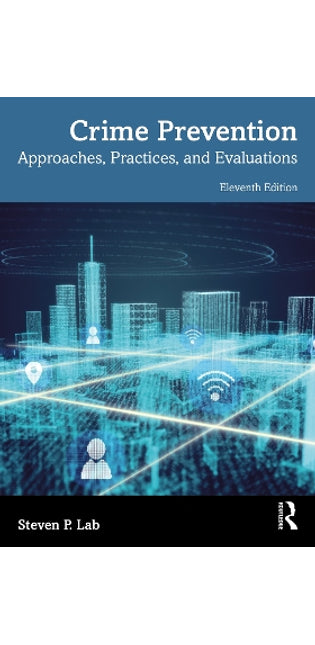
Crime Prevention: Approaches, Practices, and Evaluations, Eleventh Edition, meets the needs of students and instructors for engaging, evidence-based, impartial coverage of interventions that can reduce or prevent deviance. This edition examines the entire gamut of prevention, from physical design, to developmental prevention, to identifying high-risk individuals, to situational initiatives, to partnerships, and beyond. Strategies include primary prevention measures designed to prevent conditions that foster deviance, secondary prevention measures directed toward persons or conditions with a high potential for deviance, and tertiary prevention measures to deal with persons who have already committed crimes. In this book, Lab offers a thorough and well-rounded discussion of the many sides of the crime prevention debate in clear and accessible language, including the latest research concerning space syntax, physical environment and crime, neighborhood crime prevention programs, community policing, crime in schools, and electronic monitoring and home confinement. This book is essential for undergraduates studying criminal justice, criminology, and sociology, in the U.S. and globally. Online resources include an instructor’s manual, test bank, and lecture slides for faculty, and a wide array of resources for students.
R 1,190.00
Prevention: What Works with Children and Adolescents?
This study deals with the prevention of psychological problems which are of central concern to those who fund and develop health, social and educational services for children, adolescents and their families. Problems addressed in this book include developmental delay in low birth weight infants and socially disadvantaged children; adjustment problems in children with sensory and additional disabilities and autism; challenging behaviour in children with intellectual disabilities; physical and sexual abuse; bullying; adjustment problems in children with asthma and diabetes; teenage smoking; alcohol use and drug abuse; teenage pregnancy, STDs and HIV infection; post-traumatic adjustment problems and adolescent suicide. Conclusions drawn in this book are based on the results of over 200 rigorously conducted studies of more than 70,000 children.
R 1,439.67
R 611.00
Prävention
Prävention lässt sich am besten mit vorausschauender Problemvermeidung übersetzen. Seit der Ottawa-Charta der Weltgesundheitsorganisation gelten Prävention und Gesundheitsförderung als die geeignetsten Instrumente, dem Kostenanstieg im Gesundheitswesen durch Vermeidung des Sozialversicherungsfalls entgegenzuwirken; mit andern Worten: durch Vermeidung von Bedarf an Behandlung, Rehabilitation und Pflege. Die lange politische Missachtung des Präventionsansatzes und seine kaum mehr nennenswerte öffentliche Förderung haben zu einer völligen Unterentwicklung hierzulande beigetragen. Der 1. Nationale Präventionskongress will einen Neuanfang in Sachen Prävention und Gesundheitsförderung, und er will in diesem Zusammenhang eine zukünftig stärkere Zusammenarbeit zwischen Wissenschaft und Praxis anstoßen.
R 3,631.51
Establishing Preventive Services
TodayÆs young people face greater risks to their current and future health and social development as shown by the involvement of younger and younger children in smoking, drinking, gang membership, and acts of violence. Emphasizing developmentally and contextually appropriate prevention service delivery models, the authors of this volume identify state-of-the-art, empirically based strategies to strengthen the environments in which children develop. Since programs with strong conceptualization, design, and implementation have the potential to enhance childrenÆs social, emotional, and physical wellness, the authors first review ways to strengthen the family, child-care systems, early childhood education, school-based health and mental health services, and community-based mental health programming. They next explore the importance of theory-guided evaluation to clarify the process of program implementation as well as highlighting strategies for disseminating programs effectively. Throughout the chapters, the authors emphasize three themes: One, that scientists, practitioners, and policy makers must collaborate to diversify the portfolio of coordinated family-, school-, and community-based prevention services. Second, that rigorous evaluations of prevention programs are critical to document their efficacy and to identify ways to improve their quality. And, three, that well-designed prevention programs must be effectively conducted in order to insure implementation quality. This important new volume will be invaluable to professionals and practitioners in the fields of developmental psychology, clinical psychology, family studies, social work, counseling, human services, nursing, and public health.
R 3,141.74
Ounce of Prevention
The boundaries of psychology are expanding as growing numbers of psychological scientists, educators, and clinicians take a preventive approach to social and mental health challenges. Offering a broad introduction to prevention in psychology, this book provides readers with the tools, resources, and knowledge to develop and implement evidence-based prevention programs. Each chapter features key points, a list of helpful resources for creating successful intervention programs, and culturally informed case examples from across the lifespan, including childhood, school, college, family, adult, and community settings. An important resource for students, researchers, and practitioners in counseling, clinical, health, and educational psychology, social justice and diversity, social work, and public health.
R 3,902.05
R 305.00
Primary Prevention Works
I commend this book to you and urge you not only to read about the excellent programs contained herein but also to work to bring these and other high quality prevention programs into your community. Share this information with your elected officials, business leaders, parent groups, and anyone who holds a stake in your community′s well-being. With so many pressing problems confronting children and families in America, we must act now to begin to reduce the tragedy of needlessly wasted lives. --from the Preface by Rosalynn Carter Although mental disorders cost our nation $72.7 billion each year in treatment, related support, and lost productivity, the funding for prevention of mental disorders has been inconsistent, due in some part to a lack of confidence regarding the effectiveness of specific prevention programs. This book highlights some of the most effective prevention programs in the United States and offers readers a common set of principles to reduce maladaptive behavior in ourselves, our children, and society. Divided into five parts, the book begins with an overview of prevention history in this country and next shows ways to operationalize George W. Albee′s incidence formula. Part 2 focuses on successful programs that increase parent-child interaction and parenting ability. Part 3 explores preschool programs, some of which use parents as teachers, others of which describe quality child care programming and programs that develop problem-solving abilities in early childhood. Part 4 examines school-age programs ranging from interventions in school settings to developing social competency and job readiness. And, Part 5 focuses on prevention interventions in adulthood, specifically unemployment and depression. With contributions form the leading researchers in the prevention field, this book provides readers with the best information available about effective prevention programs and the knowledge to develop these preventive services at both state and local community levels. Primary Prevention Works will be of interest to policymakers and to researchers and practitioners in developmental psychology, clinical psychology, family studies, social work, counseling, human services, nursing, and public health.
R 4,241.84
Ounce of Prevention
The boundaries of psychology are expanding as growing numbers of psychological scientists, educators, and clinicians take a preventive approach to social and mental health challenges. Offering a broad introduction to prevention in psychology, this book provides readers with the tools, resources, and knowledge to develop and implement evidence-based prevention programs. Each chapter features key points, a list of helpful resources for creating successful intervention programs, and culturally informed case examples from across the lifespan, including childhood, school, college, family, adult, and community settings. An important resource for students, researchers, and practitioners in counseling, clinical, health, and educational psychology, social justice and diversity, social work, and public health.
R 1,372.95
Defining Prevention Science
Whoever coined the adage "an ounce of prevention is worth a pound of cure" could not have known how important this adage would become. The challenge of altering the health trajectories of poor lifestyle decisions for such behaviors as smoking, drinking and using illicit drugs, violence, dropping out of school, engagement in risky sexual behaviors and crime through prevention research has led to a new discipline, prevention science.Defining Prevention Science covers this emerging field of science: its goals, its conceptual and theoretical foundations, its methods and especially its utility. Not content to simply differentiate the field from its close allies: epidemiology, psychology, neuroscience, sociology, economics, the text explains how these many disciplines enhance each other at both research and intervention levels and how prevention science draws on these biological, behavioral and social sciences to create an innovative knowledge base that has provided cost-effective, evidence-based prevention interventions and policies. To this end, familiar developmental benchmarks are recast in prevention/health promotion context, from the crucial importance of adolescence in encountering and deterring high-risk behaviors to the risks and resiliencies of single-mother families. An international group of contributors offers current findings, up-to-date methods for effective evidence-based interventions and improvements in research technologies in these key areas:Physical, cognitive and emotional vulnerability across the life course.The roles of developmental influences in prevention.Intervention development, delivery and implementation.Bringing the intervention approach to research design.New directions in analytic methods.Cost analysis and policy implications.Advances in Prevention Science: Defining Prevention Science aims to inspire further refinements in the field and encourage communication among researchers in its own and related disciplines, including public health, epidemiology, psychology, and criminology. This is the first volume in the series, Advances in Prevention Science, that provides the framework for other volume that will focus on such issues as: Prevention Science in School Settings: Complex Relationships and Processes; Preventing Crime and Violence and The Prevention of Substance Use.
R 3,093.59
Prevention Program Development and Evaluation
The use of seatbelts, the requirements for smoke detectors, and other kinds of public health interventions have been highly successful in reducing disability, injuries, and premature mortality. Prevention in mental health— identifying and treating mental illnesses before they become full blown syndromes or identifying people at risk for a condition—is just as critical to public mental health. This research-based resource gives practitioners a nuts-and-bolts guide to designing and evaluating prevention programs in mental health that are culturally relevant and aimed at reducing the number of new problems that occur. Key Features Employs a 10-step prevention program development and evaluation model that emphasizes the concepts of community, collaboration, and cultural relevance Offers a brief, practical, how-to approach that is based on rigorous research Identifies specific prevention program development and evaluation steps Highlights examples of "everyday prevention" practices as well as concrete prevention programs that have proven, effective implementation Promotes hands-on learning with practical exercises, instructive figures, and a comprehensive reference list Intended Audience Written in a straightforward and accessible style, Prevention Program Development and Evaluation can be used as a core text in undergraduate courses devoted to prevention or in graduate programs aimed at practice issues. Current practitioners or policymakers interested in designing prevention programs will find this book to be an affable guide.
R 4,937.88
R 692.00
Preventing Disease
Preventing Disease, the offspring of an extraordinary collaboration between the U.S. and Canadian Preventive Services Task Forces, presents a meticulous and objective review of the published evidence on preventive measures. Examining such diverse and relevant topics as screening for endometrial cancer, exercise counselling for healthy adults, and the evidence for a causal relation between dietary lipids and coronary heart disease, this volume reflects the editors' shared conviction that recommendations for preventive action should rarely exceed what is well justified by the evidence. In the current period, characterized as the Second Public Health Revolution, the authors' hard-nosed approach leads them to ask the tough questions. Are preventive measures cost-saving? Does preventive screening actually lead to treatment in clinical practice? Does the treatment do more good than harm? To what extent does our desire to eliminate causes of serious disability, ill health and premature death cloud our objectivity? All concerned about preventive medicine, community health, and primary care will find valuable stimulation for thought and action in this book: the contributions have gone beyond the rhetoric.
R 3,117.47
R 672.00
R 229.00
Disease Prevention
Preventive medical interventions and non-medicalised public health programmes that promise health benefits in the future, from actions taken now, carry a strong ethical requirement of 'first, do no harm' or primum non nocere. New preventive advice and interventions are being promoted on a daily basis, Disease Prevention: A Critical Toolkit provides a set of appraisal tools to guide those considering a preventive action to make sure that it iseffective (does more good than harm), efficient (is a competitive use of scarce resources), and equitable in its impact across society. Case studies and worked examples illustrate the risks and benefits of specific preventive interventions. Divided into 10 chapters this practical and concise book focuses on multiple aspects of prevention including the hierarchy of preventive options; the assessment of causation; finding and appraising scientific evidence; prevention directed at entire populations (as opposed to individuals); measuring chronic disease risk factors and medically managing them: statin treatment of highcholesterol; PSA screening for prostate cancer; genetic screening for future disease risk; and assessing the health equity implications of prevention. Aimed at front-line public health and primary care professionals, Disease Prevention: A Critical Toolkit will equip them with the up-to-date skills necessary tohelp them better inform and serve their patients and communities.
R 2,243.00
Prevention Specialist Exam Study Guide
The second edition of The Prevention Specialist Exam Study Guide is a completely re-envisioned resource for today’s prevention professional, reflecting the field’s rapid evolution, the latest 2024 IC&RC Prevention Specialist Certification blueprint, and the expanding role of prevention in public health, equity, and community well-being.Grounded in the science of prevention and enriched with real-world practice, this edition offers a deeper, more integrated learning experience. New chapters explore the psychology of learning and test-taking, the shifting sociocultural landscape of prevention, and the ethical tensions that may arise in federally funded environments. Designed for both new and seasoned professionals, the book now includes end-of-chapter knowledge checks, case studies, and suggested readings.Whether you are preparing for certification or seeking to strengthen your practice, this second edition affirms prevention as both a science and a calling – supporting learners in building competence, confidence, and lasting impact in their communities.
R 8,572.00
Preventable
**THE SUNDAY TIMES BESTSELLER | BBC RADIO 4 BOOK OF THE WEEK**The definitive story of COVID-19 and how global politics shape our health - from a world-leading expert and the pandemic's go-to science communicator Professor Devi Sridhar has risen to prominence for her vital roles in communicating science to the public and speaking truth to power. In Preventable she highlights lessons learned from outbreaks past and present in a narrative that traces the COVID-19 pandemic - including her personal experience as a scientist - and sets out a vision for how we can better protect ourselves from the inevitable health crises to come.In gripping and heartfelt prose, Sridhar exposes the varied realities of those affected and puts you in the room with key decision makers at crucial moments. She vibrantly conveys the twists and turns of a plot that saw: deadlier varients emerge (contrary to the predictions of social media pundits who argued it would mutate to a milder form); countries with weak health systems like Senegal and Vietnam fare better than countries like the US and UK (which were consistently ranked as the most prepared); and the quickest development of game-changing vaccines in history (and their unfair distribution)Combining science, politics, ethics and economics, this definitive book dissects the global structures that determine our fate, and reveals the deep-seated economic and social inequalities at their heart - it will challenge, outrage and inspire.'A brutally compelling reminder that if voices like Devi's had been listened to, so many more could have lived' OWEN JONES'One of the most brilliant scientists in the world who has been proven consistently right in this crisis' PIERS MORGAN'Excellent . . . Fair, clear and compelling' NICOLA STURGEON'Those who have found Professor Devi Sridhar's expertise and calm advice invaluable since the arrival of Covid-19 will be glad to know that she has written Preventable' RACHEL COOKE, Guardian, Non-fiction to look out for in 2022
R 408.00
Guide to Community Preventive Services
The gold standard for evidence-based public health, The Guide to Community Preventive Services is a primary resource to improve health and prevent disease in states, communities, independent, nonfederal Task Force on Community Preventive Services, the guide uses comprehensive systemic review methods to evaluate population-oriented health interventions. The recommendations of the Task Force are explicitly linked to the scientific evidence developed duringsystematic reviews. This volume examines the effectiveness and efficiency of interventions to combat such risky behaviours as tobacco use, physical inactivity, and violence; to reduce the impact and suffering of specific conditions such as cancer, diabetes, vaccine-preventable diseases, and motor vehicleinjuries; and to address social determinants on health such as education, housing, and access to care. The chapters are grouped into three broad categories: changing risk behaviours; reducing specific diseases, injuries, and impairments; and methodological background for the book itself.
R 2,438.08
Handbook of Drug Abuse Prevention
This wide-ranging handbook brings together experts in the sociology of drug abuse prevention. Providing a comprehensive overview of the accumulated knowledge on prevention theory, intervention design, and development and prevention research methodology, this work also promotes prevention science as an evolving field in the practice and policy of drug abuse prevention.
R 3,173.45
Program Development and Evaluation in Prevention
This seventh book in the Prevention Practice Kit illustrates how carefully constructed programs are involved with reaching prevention goals. Using examples and drawing from a clearly presented framework, this book helps readers easily translate concepts of program development and evaluation (PD&E) into doable, practical steps.This book is guided by five tenets:Prevention occurs through programs applied early.A program is comprised of interrelated elements existing within an open system.PD&E involves cyclical phases of planning, implementation and effects, while being infused by the processes of community, collaboration, and cultural relevance.Conducting prevention PD&E relies on both technical and people skills.Effective programs depend on sound processes that are guided by an overall 10-step PD&E in Prevention Model, which include planning the program, implementing process evaluation, and evaluating output.This book is part of the Prevention Practice Kit: Action Guides for Mental Health, a collection of eight books each authored by scholars in the specific field of prevention and edited by Dr. Robert K. Conyne and Dr. Arthur M. Horne. The books in the collection conform to the editors′ outline to promote a consistent reading experience. Designed to provide human services practitioners, counselors, psychologists, social workers, instructors, and students with concrete direction for spreading and improving the practice of prevention, the series provides thorough coverage of prevention application including a general overview of prevention, best practices, diversity and cultural relevance, psychoeducational groups, consultation, program development and evaluation, evidence base, and public policy.This book is endorsed by the Prevention Section of the Society of Counseling Psychology of the American Psychological Association. Fifty percent of all royalties are donated to Division 17 of the APA.
R 1,345.43
Successful Prevention Programs for Children and Adolescents
Successful Prevention Programs for Children and Adolescents presents a wide variety of exemplary programs addressing behavioral and social problems, school failure, drug use, injuries, child abuse, physical health, and other critical issues. The validity and generality of each study's results are given special attention, and outcomes involving actual behavioral change are emphasized. A special appendix lists resources on prevention, including other texts, special journal issues, national clearinghouses, resource centers containing videos and curriculum materials, and Web sites.
R 3,030.56
Handbook of HIV Prevention
This Handbook provides a comprehensive overview of the theories, methods and approaches for reducing HIV-associated risk behaviors. It represents the first single source of information about HIV prevention research in developed and developing countries. It will be an important resource for students, researchers and clinicians in the field.
R 4,690.05
Best Practices in Prevention
This second book in the Prevention Practice Kit provides counselors, psychologists, and other mental health workers with practical steps that need to be considered by prevention practitioners as they engage with others in developing and delivering prevention projects. A context for engaging in prevention practice is provided, including discussion of how prevention fits with traditional models of psychology, descriptions of theoretical models for doing prevention practice, and examples of empirically-supported prevention interventions.The reader will learn about a new set of Prevention Guidelines being proposed to the American Psychological Association, and why these recommendations are important to consider. The book highlights the essential aspects of collaboration, cultural relevance, social justice, and program dissemination, and addresses knotty ethical issues surrounding confidentiality in prevention and health promotion efforts. In addition, the book provides information on funding and readily available resources for prevention. Finally, examples and activities are provided throughout the book—accompanied by a set of learning exercises—to help readers apply what they learn.This book is part of the Prevention Practice Kit: Action Guides for Mental Health, a collection of eight books each authored by scholars in the specific field of prevention and edited by Dr. Robert K. Conyne and Dr. Arthur M. Horne. The books in the collection conform to the editors′ outline to promote a consistent reading experience. Designed to provide human services practitioners, counselors, psychologists, social workers, instructors, and students with concrete direction for spreading and improving the practice of prevention, the series provides thorough coverage of prevention application including a general overview of prevention, best practices, diversity and cultural relevance, psychoeducational groups, consultation, program development and evaluation, evidence base, and public policy.This book is endorsed by the Prevention Section of the Society of Counseling Psychology of the American Psychological Association. Fifty percent of all royalties are donated to Division 17 of the APA.
R 1,345.43
Prevention Specialist Exam Study Guide
The second edition of The Prevention Specialist Exam Study Guide is a completely re-envisioned resource for today’s prevention professional, reflecting the field’s rapid evolution, the latest 2024 IC&RC Prevention Specialist Certification blueprint, and the expanding role of prevention in public health, equity, and community well-being.Grounded in the science of prevention and enriched with real-world practice, this edition offers a deeper, more integrated learning experience. New chapters explore the psychology of learning and test-taking, the shifting sociocultural landscape of prevention, and the ethical tensions that may arise in federally funded environments. Designed for both new and seasoned professionals, the book now includes end-of-chapter knowledge checks, case studies, and suggested readings.Whether you are preparing for certification or seeking to strengthen your practice, this second edition affirms prevention as both a science and a calling – supporting learners in building competence, confidence, and lasting impact in their communities.
R 1,575.00
Epidemiology and Disease Prevention
Epidemiology is an essential discipline which influences many aspects of clinical practice for doctors, dentists, and other health practitioners. Epidemiology and Disease Prevention, Second Edition, introduces and develops the core principles and practices of epidemiology over three parts: methods of epidemiological enquiry, systems-based epidemiology, and the application of epidemiological findings in clinical and public health practice. This student-friendly textbook guides the reader through the content with the help of illustrations and key points in boxes that highlight need-to-know information. Each chapter references up-to-date and landmark work in the field, while lists of further reading direct the reader to the best sources of information for their own work. Case studies help students to relate epidemiological theory and data to every day clinical practice and public health campaigns. Furthermore, a comprehensiveglossary and practice questions with model answers act as an excellent revision resource. The second edition of Epidemiology and Disease Prevention now includes over 100 illustrations and an updated chapter list, including a brand new chapter on global public health in the 21st century. Authored and edited by experts from across the world, this is a truly modern approach to epidemiology for students studying medicine, dentistry, and other health-related sciences.
R 2,359.00
Ethics, Prevention, and Public Health
Public health is an important and fast-developing area of ethical discussion. In this volume a range of issues in public health ethics are explored using the resources of moral theory, political philosophy, philosophy of science, applied ethics, law, and economics.The twelve original papers presented consider numerous ethical issues arise within public health ethics. To what extent can the public good or the public interest justify state interventions that impose limits upon the freedom of individuals? What role should the law play in regulating risks? Should governments actively aim to change our preferences about such things as food, smoking or physical exercise? What are public goods, and what role (if any) do they play in public health? To whatextent do individuals have moral obligations to contribute to protecting the community or the public good? Where is it appropriate to concentrate upon prevention rather than cure? Given the fact that we cannot be protected from all harm, what sorts of harm provide a justification for public health action?What limits do we wish to place upon public health activities? How do we ensure that the interests of individuals are not set aside or forgotten in the pursuit of population benefits? An excellent line-up of authors from North America, Europe, and the UK tackle these questions.
R 5,027.00
Family-Based Prevention Programs for Children and Adolescents
In addition to introducing readers to the field of family-based prevention science, Family-Based Prevention Programs for Children and Adolescents highlights the distinctive contributions of a set of exemplary programs in terms of their foundational theory, design, delivery mechanisms, performance, and unique opportunities for future research. It is organized into three sections to orient readers to: the existence of different types of family-based programs targeting families with children of different ages; the strategies and challenges that arise when attempting large-scale dissemination of prevention programs; and, the emerging innovations that promise to push the field forward into uncharted territories. Each chapter is written by a preeminent program developer, including: Gene H. BrodyRichard F. CatalanoPatricia ChamberlainThomas J. DishionMarion S. ForgatchKevin P. HaggertyCleve RedmondMatthew R. SandersRichard L. SpothCarolyn Webster-StrattonContributors review the state of the research and then provide a summary of their own program, including research and dissemination efforts. They also discuss take-home lessons for practitioners and policymakers, and provide their view of the future of program development and research in their area. As an important signpost signifying the noteworthy achievements of the field to date, as well as an arrow pointing the field toward significant growth in the future, this book is a must-have primary resource for graduate students in developmental or clinical psychology, counseling, family sciences, social work, or health policy, and an essential guide for practitioners and policymakers in the field of family-based prevention, family service delivery, or public health.
R 9,327.45
Cambridge Handbook of International Prevention Science
The Cambridge Handbook of International Prevention Science offers a comprehensive global overview on prevention science with the most up-to-date research from around the world. Over 100 scholars from 27 different countries (including Australia, Bhutan, Botswana, India, Israel, Mexico, Singapore, South Korea, Spain and Thailand) contributed to this volume, which covers a wide range of topics important to prevention science. It includes major sections on the foundations of prevention as well as examples of new initiatives in the field, detailing current prevention efforts across the five continents. A unique and innovative volume, The Cambridge Handbook of International Prevention Science is a valuable resource for established scholars, early professionals, students, practitioners and policy-makers.
R 9,513.00
Prevention Diaries
How do trees help reduce violence? What do roads have to do with chronic disease? Prevention Diaries examines the unexpected yet empirically predictable relationships that shape our health, providing the keys to realizing vitality and health across our society. With passion, wisdom, and humor, internationally recognized prevention expert Larry Cohen draws on his three decades of experience to make a case for building health into the everyday fabric of ourlives-from health care to workplaces, urban planning to agriculture. Prevention Diaries envisions an alternate model of American health care, one less predicated on treating sickness and more focused on preventing it. Doing so requires a shift in how our society perceives and approaches health — first recognizing our overreliance on individual solutions, then building an environment conducive to preventing problems before they occur. Through first-person vignettes and scientific data, Cohen shows that prevention is the cure what ails us. By creating greater opportunities for health and safety — things like safe access to parks and healthful housing — the US sets a foundation for a healthier country. Prevention Diaries makes it clear that as the US works to ensure everyone can access medical services, we also must make health, not just health care, the ultimate goal.
R 1,246.67
Integrative Preventive Medicine
As the preventable disease and economic burden continues to mount for the United States and the world, it is becoming apparent that embracing prevention strategies is essential. Simply continuing on the same course and infrastructure will not suffice. The future we will leave our children is unsustainable without change. Amidst all the partisan political chaos, Integrative Preventive Medicine (IPM) practices are strongly entering the public consciousness since many are dissatisfied with their traditional health (sick) care delivery systems and the scientific validity of IPM is increasing rapidly. This IPM textbook, the first of its kind, authored by nationally recognized thought leaders and edited by the 17th Surgeon General of the United States and the Canyon Ranch Medical Director will serve to bringtogether the science of IPM so that health practitioners have a ready reference containing practices that can prevent disease, decrease cost of care and improve the quality of life. Our IPM textbook is divided into three sections, Public Health and Evolving Science in IPM, Multidisciplinary Nature of IPMand The IPM Approach of Selected Clinical Problems, providing a continuum of IPM from basic science to clinical science to practical application. This depth and breadth of scientific information and comprehensive approach is a first for a single textbook in IPM. A must read for all health providers and students in order to incorporate these essential concepts into practice.
R 4,161.37
Handbook of HIV Prevention
This Handbook provides a comprehensive overview of the theories, methods and approaches for reducing HIV-associated risk behaviors. It represents the first single source of information about HIV prevention research in developed and developing countries. It will be an important resource for students, researchers and clinicians in the field.
R 4,705.02
R 648.00
Ethics, Prevention, and Public Health
Public health is an important and fast-developing area of ethical discussion. In this volume a range of issues in public health ethics are explored using the resources of moral theory, political philosophy, philosophy of science, applied ethics, law, and economics. The twelve original papers presented consider numerous ethical issues arise within public health ethics. To what extent can the public good or the public interest justify state interventions that impose limits upon the freedom of individuals? What role should the law play in regulating risks? Should governments actively aim to change our preferences about such things as food, smoking or physical exercise? What are public goods, and what role (if any) do they play in public health? To whatextent do individuals have moral obligations to contribute to protecting the community or the public good? Where is it appropriate to concentrate upon prevention rather than cure? Given the fact that we cannot be protected from all harm, what sorts of harm provide a justification for public health action?What limits do we wish to place upon public health activities? How do we ensure that the interests of individuals are not set aside or forgotten in the pursuit of population benefits? An excellent line-up of authors from North America, Europe, and the UK tackle these questions.
R 2,746.00
Passionate About Prevention
This book explores new ideas related to preventing behavioral problems such as alcohol and drug misuse, bullying, and sexual assault. It invites the reader to look more deeply into these issues and provides a framework for creating better solutions to these complex problems. All the essays in the book contribute to establishing a culture of care in schools and other settings where youth come together.
R 391.00
R 397.00
Pathways to Prevention
Pathways to Prevention: Connecting Research and Policy to Reduce Risk for Child Maltreatment foregrounds recommendations for preventing child maltreatment by examining historical and contemporary changes in U.S. social policy and by summarizing research on the causes and consequences of child maltreatment. The book draws on research from the Lehigh Longitudinal Study, one of the longest-running projects on child maltreatment in the United States, to bring attention to the ways in which policies and systems have, or have not, evolved to meet the needs of vulnerable children and families.The book begins by tracing the history of U.S. child welfare policy to explain how the original Child Abuse Prevention and Treatment Act (CAPTA) of the 1970s came to be and what the writers of this legislation intended. Following this review, the authors introduce the Lehigh Longitudinal Study and other studies of its time to explore how themes in research parallel changes in federal policy. Throughout the book, the authors include recommendations to align research and policy and demonstrate the power of prevention.Written with students, child advocates, and policy makers in mind, Pathways to Prevention will serve as a resource for anyone interested in helping improve the lives of children and families.
R 4,061.00
Drug and Alcohol Abuse Prevention
A major national goal is to improve our health and advance our opportunities to pursue happiness. Simulta neously, there are increasing health care costs and increasing demands to accomplish more with less financial support. Treatment costs can be reduced and health improved by preventing the toxic effects of drugs. This first volume of our new series, Drug and Alcohol to reduce the use and Abuse Reviews, focuses on stategies abuse of common compounds known to cause major damage to health: alcohol, tobacco, and illicit drugs such as cocaine and heroin. With the number of deaths attributable to the consumption of alcohol in the US at about 100,000 per year, the annual cost of addictions will be $150 billion by 1995. A variety of approaches to preventing drug abuse are being applied by governmental agencies and health care providers to reduce costs. These include school-based inter ventions, driver education programs, media interventions, health warning labels, physician guidance, economic dis incentives, restricted availability, punishments and penalties, environmental protections, and social-support approaches. With such a range of options, it becomes critical to evaluate and choose the most effective systems for a given population. We feel that the present collection of critical survey articles constitutes a thorough examination of the issues and strategies associated with prevention, and trust that readers will find the book exceedingly helpful in under standing and planning what needs to be done.
R 3,326.70
Prevention Practice and Health Promotion
The all-encompassing Second Edition of Prevention Practice and Health Promotion: A Health Care Professional’s Guide to Health, Fitness, and Wellness offers foundational knowledge to health care professionals implementing primary, secondary, and tertiary prevention to healthy, at-risk, and disabled populations.Dr. Catherine Thompson along with her contributors, all with diverse backgrounds in physical therapy, rehabilitation, and health care, present the interdisciplinary health care perspective of health, fitness, and wellness concepts that are critical for providing preventive care to healthy, impaired, and at-risk populations using the World Health Organization’s International Classification of Functioning, Disability, and Health model as a guideline for assessment and management.Based upon the goals outlined in Healthy People 2020, Prevention Practice and Health Promotion, Second Edition also combines the vision of direct access for health care professionals with the goals of national health care to increase the quality of years of healthy life, as well as to eliminate health disparities between various populations. Recognizing the cost effectiveness of preventive care, health care professionals have an expanded role in health promotion and wellness, complementing evidence-based medical management of acute and chronic conditions.Some topics covered inside Prevention Practice and Health Promotion, Second Edition include an overview of screening across the lifespan; effective interventions to promote health, fitness, and wellness; and options for program development, including marketing and management strategies to address both individual and community needs.Instructors in educational settings can visit www.efacultylounge.com for additional materials to be used for teaching in the classroom.Features of the Second Edition: Use of the American Physical Therapy Association’s Guide to Physical Therapist Practice, Second Edition for health promotionScreening tools for special populations, including children, pregnant women, older adults, individuals with developmental disabilities, and people with chronic conditions affecting their quality of lifeResources to promote healthy living, including nutrition, stress management, fitness training, and injury preventionPerfect for clinicians, students, allied health professionals, rehabilitation specialists, physical medicine specialists, and recreation therapists, the Second Edition to Prevention Practice and Health Promotion is a valuable resource for everyone in the areas of health, fitness, and wellness.
R 3,956.00
Prevention And Early Intervention
Published in 1994, Prevention And Early Intervention is a valuable contribution to the field of Psychiatry/clinical Psychology.
R 6,676.94




-
, by Chris Deeks Pre-Order Giveaway Terms and Conditions
1. Promoter The promoter of this competition is Exclusive Books Group Pty (Ltd). 2. Eligibility The competition is open to residents of South Africa. Employees...
-
, by sungano kanjere Dan Brown Pre-order Giveaway Terms and Conditions
Pre-Order Giveaway Terms and Conditions 1. Promoter The promoter of this competition is Exclusive Books Group Pty (Ltd). 2. Eligibility The competition is open...

