Search results for "Pure Read"
Items we need to order for you

R 305.00
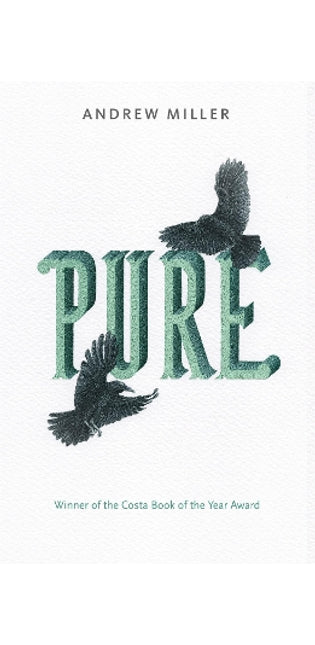
Pure
The clearing of a cemetery stokes the fires of revolution in eighteenth-century France in this Costa Prize-winning "novel of ideas disguised as a ghost story" (The New York Times). Paris, 1785. An ambitious young engineer, Jean-Baptiste Baratte arrives in Paris charged with emptying the overflowing cemetery of Les Innocents, an ancient site whose stench is poisoning the neighborhood's air and water. A self-styled modern man of reason, Baratte sees his work as a chance to clear away the burden of history. But he soon suspects that the destruction of the cemetery might be a prelude to his own fate--and the demise of the social order. As unrest against the court of Louis XVI mounts, the engineer realizes that the future he had planned may no longer be the one he wants. His assignment sets him on a path of discovery and desire, as well as relentless labor, assault, and sudden death. "Pure is a compelling, timely novel--with its throb of revolution, of ordinary people arising in anger--a narrative that takes death as its subject yet races with life."--The Guardian
R 411.00
R 451.61
R 245.00
R 1,011.56
Critique of Pure Teaching Methods and the Case of Synthetic Phonics
A Critique of Pure Teaching Methods and the Case of Synthetic Phonics examines how research into the effectiveness of teaching methods can and should relate to what takes place in the classroom. The discussion brings to light some important features of the way we classify teaching activities. The classifications are unlike those we use in natural science – for instance, how we classify drug dosages. This point has very important implications for what should be considered the appropriate relationships between educational research and classroom practice.Andrew Davis applies the results of this discussion to the teaching of early reading, focussing in particular on the approach known as synthetic phonics. He provides a philosophical investigation into the nature of reading, and into the concepts that feature in approaches to teaching it, such as the idea of building words from letter sounds, the nature of words themselves and reading for meaning. He concludes with a discussion of why this matters so much, reflecting on how stories and books can be part of a child’s emerging identity within the family. He explores how values of family life should be weighed against the importance of achievements in school, and argues for the claim that school reading policies of certain kinds may have a destructive impact if they are felt to trump the private interests of children and their families.
R 5,591.00
R 305.00
R 275.00
Pure
'ANDREW MILLER'S WRITING IS A SOURCE OF WONDER AND DELIGHT' Hilary Mantel 'ONE OF OUR MOST SKILFUL CHRONICLERS OF THE HUMAN HEART AND MIND' Sunday TimesWinner of the Costa Book of the Year Award 'Irresistibly compelling' Sunday Telegraph 'Dazzling'Guardian 'A work of beauty' The Times An enthralling tale of an extraordinary year in pre-revolutionary Paris from the critically acclaimed author of Oxygen and The Slowworm's Song Deep in the heart of Paris, its oldest cemetery is, by 1785, overflowing, tainting the very breath of those who live nearby. Into their midst comes Jean-Baptiste Baratte, a young, provincial engineer charged by the king with demolishing it. At first Baratte sees this as a chance to clear the burden of history, a fitting task for a modern man of reason. But before long, he begins to suspect that the destruction of the cemetery might be a prelude to his own. PRAISE FOR ANDREW MILLER 'Unique, visionary, a master at unmasking humanity' Sarah Hall 'A writer of very rare and outstanding gifts' Independent on Sunday 'A highly intelligent writer, both exciting and contemplative' The Times 'A wonderful storyteller' Spectator
R 346.00
R 336.00
R 321.00
Pure
In Pure, Linda Kay Klein uses a potent combination of journalism, cultural commentary, and memoir to take us “inside religious purity culture as only one who grew up in it can” (Gloria Steinem) and reveals the devastating effects evangelical Christianity’s views on female sexuality has had on a generation of young women.In the 1990s, a “purity industry” emerged out of the white evangelical Christian culture. Purity rings, purity pledges, and purity balls came with a dangerous message: girls are potential sexual “stumbling blocks” for boys and men, and any expression of a girl’s sexuality could reflect the corruption of her character. This message traumatized many girls—resulting in anxiety, fear, and experiences that mimicked the symptoms of Post-Traumatic Stress Disorder—and trapped them in a cycle of shame. This is the sex education Linda Kay Klein grew up with. Fearing being marked a Jezebel, Klein broke up with her high school boyfriend because she thought God told her to and took pregnancy tests despite being a virgin, terrified that any sexual activity would be punished with an out-of-wedlock pregnancy. When the youth pastor of her church was convicted of sexual enticement of a twelve-year-old girl, Klein began to question purity-based sexual ethics. She contacted young women she knew, asking if they were coping with the same shame-induced issues she was. These intimate conversations developed into a twelve-year quest that took her across the country and into the lives of women raised in similar religious communities—a journey that facilitated her own healing and led her to churches that are seeking a new way to reconcile sexuality and spirituality. Pure is “a revelation... Part memoir and part journalism, Pure is a horrendous, granular, relentless, emotionally true account" (The Cut) of society’s larger subjugation of women and the role the purity industry played in maintaining it. Offering a prevailing message of resounding hope and encouragement, “Pure emboldens us to escape toxic misogyny and experience a fresh breath of freedom” (Glennon Doyle, #1 New York Times bestselling author of Love Warrior and founder of Together Rising).
R 433.00
Critique of Pure Teaching Methods and the Case of Synthetic Phonics
A Critique of Pure Teaching Methods and the Case of Synthetic Phonics examines how research into the effectiveness of teaching methods can and should relate to what takes place in the classroom. The discussion brings to light some important features of the way we classify teaching activities. The classifications are unlike those we use in natural science – for instance, how we classify drug dosages. This point has very important implications for what should be considered the appropriate relationships between educational research and classroom practice.Andrew Davis applies the results of this discussion to the teaching of early reading, focussing in particular on the approach known as synthetic phonics. He provides a philosophical investigation into the nature of reading, and into the concepts that feature in approaches to teaching it, such as the idea of building words from letter sounds, the nature of words themselves and reading for meaning. He concludes with a discussion of why this matters so much, reflecting on how stories and books can be part of a child’s emerging identity within the family. He explores how values of family life should be weighed against the importance of achievements in school, and argues for the claim that school reading policies of certain kinds may have a destructive impact if they are felt to trump the private interests of children and their families.
R 1,411.00
R 419.67
R 183.00
R 382.00
R 1,069.00
R 456.00
R 305.00
R 297.00
R 222.00
Pure, Unspotted
Secrecy, adultery, jealousy and guilt play their part in the story of Finuala, a Catholic girl who breaks all the rules. Played out against the backdrop of Apartheid South Africa, she covers her tracks successfully until her death, when she leaves behind a cache of letters, from which, to the amazement of her family, comes this true story. A) Female fulfilment, with a bit of luck, and B) getting all one needs: a story of adultery and jealousy. C) Breaking the rules but hedging ones bets. D) Mistakes, and almost getting away with them, then: E) the reckoning and counting the cost: F) Tarnished love, propped up as best one can G) along with an awful lot of Latin, Afrikaans and guilt: H) a thought -provoking read, right to the bitter end.
R 684.78
R 436.00
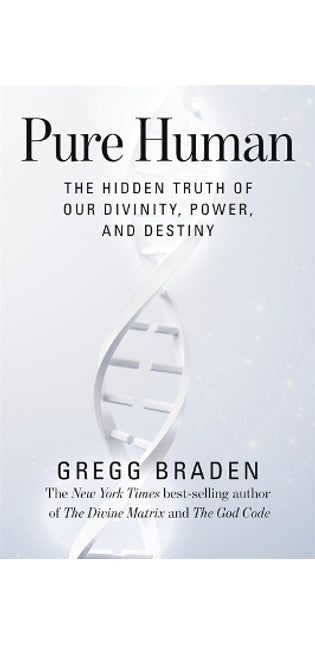
Pure Human
In an age where technologies such as AI threaten to supplant human intelligence, an award-winning scientist offers a radical new view of our innate human technology and what we're truly capable of.There are rare moments in time when we make choices that irreversibly change the world, and our lives, forever. Today is one of those moments. Scientists, engineers and philosophers alike warn us that without a radical shift in our thinking, we are on track to be the last generation of pure humans that the world will know. Within a single generation we will devolve into a hybrid species of synthetic bodies, Artificial Intelligence (AI), and computer chips that limit our ability to think, to love, and to adapt to the conditions of the emerging world in a healthy way. In doing so we will also lose our capacity for emotion, empathy, intimacy, and forgiveness—the very qualities that we value and cherish in our humanness. The question that we face is simple: Do we love ourselves enough to preserve the gift of our humanness? Our answer is based upon the way we’ve been taught to think of ourselves. This book is a compelling journey of self-discovery that will catapult you beyond conventional thinking when it comes to your origins, your limits and, most importantly, the abilities that have been hidden from you for centuries, and the extraordinary potential that awaits as you embrace them.
R 593.00
R 1,081.98
R 252.00
R 208.00
R 275.00
Pure Invention
'Amazingly well researched, fabulously informative and an awful lot of fun. If you love Japanese culture or are just curious to know more I can't recommend this book highly enough' Jonathan Ross'A nerd- and generalist-friendly look at how Japan shaped the post-World War II world, from toys to Trump . . . A non-native's savvy study of Japan's wide influence in ways both subtle and profound' KirkusThe Walkman. Karaoke. Pikachu. Pac-Man. Akira. Emoji. We've all fallen in love with one or another of Japan's pop-culture creations, from the techy to the wild to the super-kawaii. But as Japanese-media veteran Matt Alt proves in this brilliant investigation of Tokyo's pop-fantasy complex, we don't know the half of it.Japan's toys, gadgets, and fantasy worlds didn't merely entertain. They profoundly transformed the way we live. In the 1970s and '80s, Japan seemed to exist in some near future, soaring on the superior technology of Sony and Toyota while the West struggled to catch up. Then a catastrophic 1990 stock-market crash ushered in the 'lost decades' of deep recession and social dysfunction.The end of the boom times should have plunged Japan into irrelevance, but that's precisely when its cultural clout soared - when, once again, Japan got to the future a little ahead of the rest of us. Hello Kitty, the Nintendo Entertainment System, and multimedia empires like Pokemon and Dragon Ball Z were more than marketing hits. Artfully packaged, dangerously cute, and dizzyingly fun, these products made Japan the forge of the world's fantasies, and gave us new tools for coping with trying times. They also transformed us as we consumed them - connecting as well as isolating us in new ways, opening vistas of imagination and pathways to revolution.Through the stories of an indelible group of artists, geniuses, and oddballs, Pure Invention reveals how Japanese ingenuity remade global culture and may have created modern life as we know it. It's Japan's world; we're just gaming, texting, singing, and dreaming in it.
R 408.00
R 500.96
R 521.00
Kant's 'Critique of Pure Reason'
In this introductory textbook to Kant's Critique of Pure Reason, Jill Vance Buroker explains the role of this first Critique in Kant's Critical project and offers a line-by-line reading of the major arguments in the text. She situates Kant's views in relation both to his predecessors and to contemporary debates, explaining his Critical philosophy as a response to the failure of rationalism and the challenge of skepticism. Paying special attention to Kant's notoriously difficult vocabulary, she explains the strengths and weaknesses of his arguments, while leaving the final assessment up to the reader. Intended to be read alongside the Critique (also published by Cambridge University Press as part of The Cambridge Edition of the Works of Immanuel Kant in Translation), this guide is accessible to readers with little background in the history of philosophy, but should also be a valuable resource for more advanced students.
R 2,020.98
R 486.70
R 518.00
R 324.00
R 305.00
Pure Unadulterated Sensual Sex And Infatuation
If you love sex then you will love this book. It is very erotic, nasty and a good read for all of my fans that have an inner freak. This story is about a successful business man that had his heart broken so he decided to take advantage of the single life by snatching the souls of the women he came in contact with, not caring if he hurt their feelings. After getting tired of being with a bunch of different women he meets a woman the knocks his socks off but this woman is a bigger freak than him and snatches his soul. Purchase the book to find out what happens next. the book is very intense, filled with fun and sex along with action. thank you for your purchase. K. Maurice
R 553.00
R 476.98
Kant's 'Critique of Pure Reason'
In this introductory textbook to Kant's Critique of Pure Reason, Jill Vance Buroker explains the role of this first Critique in Kant's Critical project and offers a line-by-line reading of the major arguments in the text. She situates Kant's views in relation both to his predecessors and to contemporary debates, explaining his Critical philosophy as a response to the failure of rationalism and the challenge of skepticism. Paying special attention to Kant's notoriously difficult vocabulary, she explains the strengths and weaknesses of his arguments, while leaving the final assessment up to the reader. Intended to be read alongside the Critique (also published by Cambridge University Press as part of The Cambridge Edition of the Works of Immanuel Kant in Translation), this guide is accessible to readers with little background in the history of philosophy, but should also be a valuable resource for more advanced students.
R 5,204.09
R 252.00
Pure, White and Deadly
Sugar. It is killing us.Why do we eat so much of it?What are its hidden dangers?In 1972, when British scientist John Yudkin first proved that sugar was bad for our health, he was ignored by the majority of the medical profession and rubbished by the food industry. We should have heeded his warning.Today, one in four adults in the UK are overweight.There is an epidemic of obese six-month-olds around the globe.Sugar consumption has tripled since the Second World War.Using everyday language and a range of scientific evidence, Professor Yudkin explores the ins and out of sugar, from the different types - is brown sugar really better than white? - to how it is hidden inside our everyday foods and how it is damaging our health.Brought up to date by childhood obesity expert Dr Robert Lustig MD, his classic exposé on the hidden dangers of sugar is essential reading for anyone interested in their health, the health of their children and the health of modern society.
R 346.00
First Pure, Then Peaceable
In 2001, Continuum published the extensive collected papers from African Americans and the Bible, an interdisciplinary conference held at Union Theological Seminary, NYC. In the collection's introduction, Vincent L. Wimbush issued a challenge to take seriously those who "read darkness," and to consider what it is they are doing when they read the Bible as "scripture." Wimbush's focus on "darkness readers," both within and outside of the African diaspora, breaks open the discourse around the nature, meaning, and importance of the Bible. By following the lead of "darkness readers," the Bible is revealed to be more than a collection of ancient documents from an inaccessible past; it is the site upon which modern, contemporary ideological battles have and continue to be waged. In this book Margaret Aymer takes up his challenge. It is an examination of the way in which Frederick Douglass, the nineteenth-century abolitionist, used the epistle of James, particularly Jas 3:17, in his abolitionist speeches, to "read" the "darkness" of slavery and slaveholding Christianity. Within the epistle of James is a rhetoric of the world as darkness.Douglass uses this to read his contemporary "darkness." As part of her research, Aymer has created an index of biblical references in all of Frederick Douglass' abolitionist speeches as collected by J. W. Blassingame (1841-1860).
R 6,474.00