Search results for "Rod Walters"
Items in stock - 4 working days delivery time

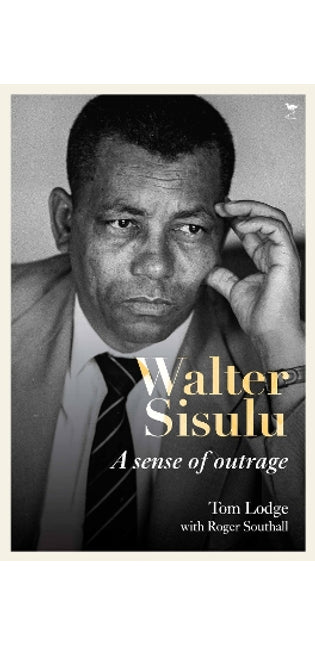
Walter Sisulu
Although hailed, alongside Nelson Mandela and Oliver Tambo, as one of the ANC’s holy trinity, Walter Sisulu has remained a relatively neglected figure in the historiography of the struggle for liberation in South Africa. Modest and unassuming, Sisulu was always content to stay in the background in a way that has belied his importance. This nuanced and highly original biography of Walter Sisulu, drafted by political historian Tom Lodge before his untimely death, provides a powerful corrective. Lodge pronounces Walter an exceptional organiser, the most influential planner of the ANC’s mass campaigning during the 1950s, a principled but undoctrinaire communist, and alongside Mandela an advocate of the necessity of armed struggle. He also served as the careful navigator of the ambiguous relationship between the ANC and Umkhontho we Sizwe, and Lodge details how Sisulu’s exceptional grasp of this enabled him to confound the prosecution when he later played a lead role as a defendant in the Rivonia trial. Sentenced to life imprisonment with his fellow trialists, Walter’s became a calming influence amidst the divisive ideological debates which took place on Robben Island, as well as a constant source of strength and support to Mandela. Then, after his release from jail – ahead of Mandela – in 1989, he again demonstrated his prowess as the chief organiser of the ANC as it re-established itself prior to the 1994 elections. In this powerful account of his life, completed by Roger Southall, Lodge provides the detailed analysis of his commitment and contribution to South African freedom that Walter Sisulu deserves.
R 310.00
Items we need to order for you
Tape, I-C-E, and Sound Advice
Hall of Fame, Rod Walters, has enjoyed a wonderful career in sports. As a youth, he knew he wanted to be in the health care industry. During the summer of his ninth grade year, his parents scholarshipped him to the North Carolina All---Star Student Athletic Training Clinic in Greensboro, North Carolina. Little did he know that at this clinic he would meet some of his favorite professionals who would mold and direct his professional career while being exposed to his professional calling. The world of Athletic Training and Sports Medicine involves so many facets in health care today to provide the participant a high standard of care. Regardless of the level of work; whether it be the professional football arena, big-time college athletics, the highly competitive mid-levels of the NCAA, high school football under the Friday Night Lights, or the outreach role from a Physical Therapy clinic; Athletic Trainers all strive to provide their patients service through the prevention, care, and rehabilitation of sports injuries.
R 546.00
R 365.00
New Lives of the Saints
Presented here for the first time and for meditation and emulation are the words and work of many environmental apostles. The words and work of each apostle are designed to delight and inspire the reader to begin or continue to lead a life of environmental action for conservation and contemplation of nature for spiritual succor in the age of climate change. All the usual suspects are here, such as St. Francis, Rachel Carson, Aldo Leopold, John Muir, Henry David Thoreau, and Judith Wright, but New Lives of the Saints emphasizes some aspects of their words and work often ignored or overlooked, such as Thoreau on swamps and Leopold on marshes. Also included are some unusual and unexpected environmental apostles, such as Walter Benjamin, Raymond Williams, Seamus Heaney, and Paul Virilio, all of whom contributed to green thinking as this book shows. Other environmentally apostolic writers, such as Walt Whitman, Sidney Lanier, Lord Dunsany, H. P. Lovecraft, Felix Guattari and Kelly Barnhill, are also discussed.Beginning with two environmentally and animal friendly retellings of the legends of St. George and St. Margaret involving dragons, the book goes on to devote a chapter each to ten other environmental apostles as patron saints of a special type of environment or of an approach to environmental conservation and contemplation. These saints sing the song of the earth, including its swamps, marshes, bogs, fens, national parks, mountains, forests, oceans, seas, airs, rivers, reefs, trees, cities, peoples, places, plants, animals, and so on. They provide nurture for living a life of hope and symbiotic livelihood living sacrally with the earth. New Lives of the Saints crosses the great divide between fiction and non-fiction and mixes the genres of story and essay. It is a ground-breaking work of environmental counter-theology for the symbiocene, the hoped-for age superseding the Anthropocene.
R 1,757.00
R 489.00
R 519.00
R 611.00
Adaptive System
Butcher the Bookie with: The Adaptive System By Rod Watson, a Certified Accountant, former employee of the Secretaries to the Jockey Club and a professional punter, he has spent thirteen years developing The Adaptive System. The System will almost certainly put a brake on your loses, and practised with discipline and restraint, should, generate a nice secondary tax free income for you from horse racing All you need is a few hours a week (when it suits you), access to the internet and a small sum of seed capital. This little book packs a mighty punch! It is full of original tips and ideas that have been born out of over fifty years of observing horse racing.
R 941.44
R 468.37
R 916.00
R 519.00
R 689.36
R 328.00
R 519.00
R 183.00
R 305.00
Waking to Nature with Thoreau and Benjamin
What do two white men born in the century before last have to say that could possibly be of any use or value in the current conjuncture of climate collapse, the end of the age of fossil fuels and much life on earth, and the recent re-rise of reactionary forces against progressive politics? Turns out, a lot, especially for waking to nature, place, life, social injustice, environmental destruction, industrial capitalism and its technologies. Henry David Thoreau – an inspiration for William Melvin Kelley’s writing on ‘staying woke’ – and Walter Benjamin suggest sensory means for waking the consumer asleep under the “phony spell” of the “putrid magic” of the commodity; provide tools of theory and critique for waking to sexism, racism, and placism; empower the weak with a robust vocabulary for telling the stories of people and places; create resources of hope and limit the prospect of despair about the future; and point to pathways for being at home with the living earth. These are all vital facets of psychopolitical ecology.Waking to Nature with Thoreau and Benjamin discusses topics both writers share in common, such as memory, dreaming, waking, walking, water, swamps, lakes, the body, and the senses, and highlights convergences and divergences between them. It is the first book of psychopolitical ecology and the first to bring together these two timely thinkers and writers for whom life is the union of materiality and spirituality.
R 3,531.00
R 243.00
R 369.00
My Friend Walter
A hilarious tale of history come to life. From the nation’s favourite storyteller, Michael Morpurgo. Living with a ghost can have its difficulties, I discovered, even if he is your friend. Remember Sir Walter Raleigh, who laid his cloak in a puddle so Queen Elizabeth I could walk across? Well, Bess meets his ghost and finds out she’s his ancestor! How will Bess explain Sir Walter to her family? Especially when he breaks her brother’s fishing rod, steals a horse and smokes cigars in her room? My Friend Walter is a uniquely funny story, perfect for reluctant readers, from the author of War Horse. Michael Morpurgo has written more than one hundred books for children and won the Whitbread Award, the Smarties Award, the Circle of Gold Award, the Children’s Book Award and has been short-listed for the Carnegie Medal four times.
R 247.00
Walter Rodney
Among the critical questions that Rodney dealt with whether he was in Tanzania, Jamaica or his native Guyana (formerly British Guiana) was the character of the postcolonial state and its relationship with the working people. It is his engagement with politics that guided his research into African and Caribbean history. In the post-World War II era the colonial powers had regrouped and were rebuilding Europe with the strong financial and political support of the capitalist United States. The Soviet Union, one of the victors over German fascism, was the other power on the world scene. It was communist, and engaged in a Cold War with the United States, the dominant global power. China under Mao Tse Tung was the other communist state that had emerged after the 1949 revolution with a huge rural population, much poverty and a low level of industrialization. Capitalist and socialist powers vied for the hearts and minds of the peoples of Asia, Africa and the Caribbean that were shaking off the shackles of colonialism. Latin American countries which had achieved their political independence in the nineteenth century were caught up in this nationalist surge as they battled with neo-colonialism. They battled with Spain their colonial overlord, but also with the United States which regarded Latin America and the Caribbean as its backyard and intervened as it saw fit to pursue its strategic military, political and economic goals. The Garvey and labor movements of the 1920s and 1930s in the Caribbean as well as communist and national liberation movements in the twentieth century helped to shape Walter Rodney’s political awareness. His parents’ generation was actively involved in the anti-colonial movement in British Guiana in the 1940s and 1950s, and in the 1960s and 1970s Rodney himself helped to shape the ideas around African and Caribbean decolonization, Pan-Africanism, and Marxism.
R 342.00
R 6,352.06
Environmental Humanities and the Uncanny
Sigmund Freud’s essay 'The Uncanny' is celebrating a century since publication. It is arguably his greatest and most fruitful contribution to the study of culture and the environment. Environmental Humanities and the Uncanny brings into the open neglected aspects of the uncanny in this famous essay in its centenary year and in the work of those before and after him, such as Friedrich Schelling, Walter Benjamin, E. T. A. Hoffmann and Bram Stoker. This book does so by focussing on religion, especially at a time and for a world in which some sectors of the monotheisms are in aggressive, and sometimes violent, contention against those of other monotheisms, and even against other sectors within their own monotheism. The chapter on Schelling’s uncanny argues that monotheisms come out of polytheism and makes the plea for polytheism central to the whole book. It enables rethinking the relationships between mythology and monotheistic and polytheistic religions in a culturally and politically liberatory and progressive way. Succeeding chapters consider the uncanny cyborg, the uncanny and the fictional, and the uncanny and the Commonwealth, concluding with a chapter on Taoism as a polytheistic religion. Building on the author’s previous work in Environmental Humanities and Theologies in bringing together theories of religion and the environment, this book will be of great interest to students and scholars of the environmental humanities, ecocultural studies and religion.
R 9,296.01
Modern Melbourne
Melbourne, founded in 1835 among marshes and beside a sluggish stream, grew from wetlands into a world-class modern city. Drawing on a wide range of historical, literary and artistic sources, this book explores the cultural and environmental history of the city and its site. Tracing the city from its swampy beginnings in a squatter’s settlement nestled in the marshy delta of the Yarra and Maribyrnong Rivers, Rod Giblett illuminates Melbourne through its visible structures and the invisible history of its site.The book places Melbourne within an international context by comparing and contrasting it to other cities built on or beside wetlands, including London, New York, Paris, Los Angeles and Toronto. Further, it is the first book to apply the work of European thinkers and writers on modernity and the modern city – such as Walter Benjamin and Peter Sloterdijk – to an analysis of Melbourne. Giblett considers the intertwining of nature and culture, people and place, and cities and wetlands in this bioregional and ecocultural analysis. Placing the city in its proper bioregional and international contexts, Modern Melbourne provides a rich historical analysis of the cultural capital of Australia.
R 1,676.27
R 587.00
R 1,284.59
Legacy of Walter Rodney in Guyana and the Caribbean
Walter Rodney claimed developing countries were heirs to uneven development and ethnic disequilibrium, including continued forms of oppression from the capitalist countries and their own leaders. In Guyana, ethnic chauvinism persisted before and after independence from Britain. Rodney was disturbed by the inability of intellectuals to share common cause with the masses, thus ensuring that they would be unable to contribute to uplifting their talents or participate in the growth of the nation. Guyana and the Caribbean were subject to sugar and slave traffic that constituted cheap labor for the plantations and buttressed the capitalist-industrial system. A significant byproduct of that system was the master-slave relationship; a no-less iniquitous consequence was an active racism. Thus, social inequality became the heritage of Guyanese and Caribbean history. These social evils have influenced all of the social, economic, and political institutions in Guyana. Race, class, and color became the determinants of social value and how the various racial groups responded to them is both the triumph and the tragedy of Guyanese nationalism. Rodney belongs in that pantheon of philosophers whose names adorn the history of the Caribbean and elsewhere. He has sought to lift the Caribbean people from the victimization of history and the poverty of material circumstance.
R 1,940.00
Walter Rodney
The life of the great Guyanese scholar and revolutionary Walter Rodney burned with a rare intensity. The son of working class parents, Rodney showed great academic promise and was awarded scholarships to the University of the West Indies in Jamaica and the School of African and Oriental Studies in London. He received his PhD from the latter at the age of twenty-four, and his thesis was published as A History of the Upper Guinea Coast, now a classic of African history. His most famous work, How Europe Underdeveloped Africa, is a mainstay of radical literature and anticipated the influential world systems theory of Immanuel Wallerstein. Not content merely to study the world, Rodney turned to revolutionary politics in Jamaica, Tanzania, and in Guyana. In his homeland, he helped form the Working People's Alliance (WPA) and was a consistent voice for the oppressed and exploited. As Rodney became more popular, the threat of his revolutionary message stirred fears among the powerful in Guyana and throughout the Caribbean, and he was assassinated in 1980. This book presents a moving and insightful portrait of Rodney through by the words of academics, writers, artists, and political activists who knew him intimately or felt his influence. These informal recollections and reflections demonstrate why Rodney is such a widely admired figure throughout the world, especially in poor countries and among oppressed peoples everywhere.
R 888.00
Hunting Evil
At the end of the Second World War some of the highest ranking members of the Nazi party escaped from justice. Some of them are names that have resonated deeply in twentieth-century history - Eichmann, Mengele, Martin Bormann and Klaus Barbie - not just for the monstrosity of their crimes, but also because of the shadowy nature of their post-war existence, holed up in the depths of Latin America, always one step ahead of their pursuers. The nature of their escape was as gripping as any good thriller. They were aided and abetted by corrupt Catholic priests in the Vatican, they travelled down secret 'rat lines', hid in foreboding castles high in the Austrian alps, and were taken in by shady Argentine secret agents. The attempts to bring them to justice are no less dramatic, with vengeful Holocaust survivors, inept politicians, and daring plots to kidnap or assassinate the fugitives. Guy Walters has travelled the world in pursuit of the real account of how the Nazis escaped at the end of the war, the attempts, sometimes successful, to bring them to justice, and what really happened to those that got away. He has interviewed Nazi hunters, former members of Mossad, and poured through archives across the globe to bring this remarkable period of our recent history to dramatic and vivid life.
R 464.00
R 305.00
R 1,252.67
R 456.00
R 611.00
R 305.00
R 981.00
R 580.00
R 658.05
R 762.11
R 914.20
R 611.00
Charles Walters
From the trolley scene in Meet Me in St. Louis (1944) to Fred Astaire and Ginger Rogers's last dance on the silver screen ( The Barkleys of Broadway, 1949) to Judy Garland's timeless, tuxedo-clad performance of "Get Happy" ( Summer Stock, 1950), Charles Walters staged the iconic musical sequences of Hollywood's golden age. During his career, this Academy Award--nominated director and choreographer showcased the talents of stars such as Gene Kelly, Doris Day, Debbie Reynolds, and Frank Sinatra. However, despite his many critical and commercial triumphs, Walters's name often goes unrecognized today.In the first full-length biography of Walters, Brent Phillips chronicles the artist's career, from his days as a featured Broadway performer and protégé of theater legend Robert Alton to his successes at Metro-Goldwyn-Mayer. He takes readers behind the scenes of many of the studio's most beloved musicals, including Easter Parade (1948), Lili (1953), High Society (1956), and T he Unsinkable Molly Brown (1964). In addition, Phillips recounts Walters's associations with Lucille Ball, Joan Crawford, and Gloria Swanson, examines the director's uncredited work on several films, including the blockbuster Gigi (1958), and discusses his contributions to musical theater and American popular culture.This revealing book also considers Walters's personal life and explores how he navigated the industry as an openly gay man. Drawing on unpublished oral histories, correspondence, and new interviews, this biography offers an entertaining and important new look at an exciting era in Hollywood history.
R 1,547.00
R 422.00
R 305.00