Search results for "Rodney"
Items in stock - 4 working days delivery time

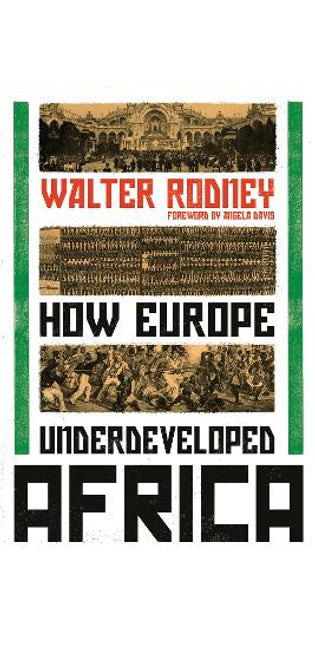
How Europe Underdeveloped Africa
How Europe Underdeveloped Africa is an ambitious masterwork of political economy, detailing the impact of slavery and colonialism on the history of international capitalism. In this classic book, Rodney makes the unflinching case that African maldevelopment is not a natural feature of geography, but a direct product of imperial extraction from the continent, a practice that continues up into the present. Meticulously researched, How Europe Underdeveloped Africa remains an unshakably relevant study of the so-called "great divergence" between Africa and Europe, just as it remains a prescient resource for grasping the the multiplication of global inequality today. In this new edition, Angela Davis offers a striking foreword to the book, exploring its lasting contributions to a revolutionary and feminist practice of anti-imperialism.
R 465.00
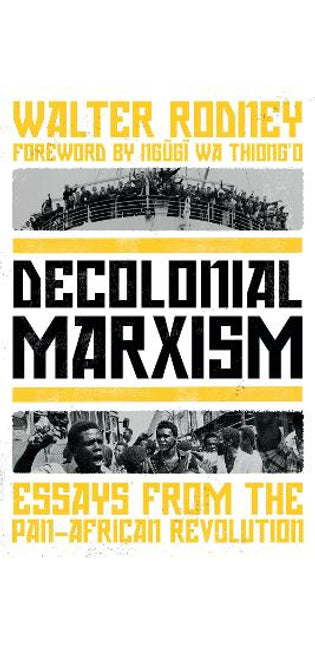
Decolonial Marxism
Early in life, Walter Rodney became a major revolutionary figure in a dizzying range of locales that traversed the breadth of the Black diaspora: in North America and Europe, in the Caribbean and on the African continent. He was not only a witness of a Pan-African and socialist internationalism; in his efforts to build mass organizations, catalyze rebellious ferment, and theorize an anti-colonial path to self-emancipation, he can be counted among its prime authors. Decolonial Marxism records such a life by collecting previously unbound essays written during the world-turning days of Black revolution. In drawing together pages where he elaborates on the nexus of race and class, offers his reflections on radical pedagogy, outlines programs for newly independent nation-states, considers the challenges of anti-colonial historiography, and produces balance sheets for a dozen wars for national liberation, this volume captures something of the range and power of Rodney's output. But it also demonstrates the unbending consistency that unites his life and work: the ongoing reinvention of living conception of Marxism, and a respect for the still untapped potential of mass self-rule.
R 713.00
Items we need to order for you
R 683.00
R 1,310.00
R 1,921.00
R 653.60
R 1,090.48
R 1,205.92
R 505.00
R 410.00
R 336.00
Groundings With My Brothers
In his short life, the Guyanese intellectual Walter Rodney emerged as one of the leading thinkers and activists of the anticolonial revolution, leading movements in North America, South America, the African continent, and the Caribbean. In each locale, Rodney found himself a lightning rod for working class Black Power. His deportation catalyzed 20th century Jamaica's most significant rebellion, the 1968 Rodney riots, and his scholarship trained a generation how to think politics at an international scale. In 1980, shortly after founding of the Working People's Alliance in Guyana, the 38-year-old Rodney would be assassinated.In this classic work published in the heady days of anti-colonial revolution, Groundings with My Brothers follows the global circulation of emancipatory ideas, from the black students of North America to the Rasta counter-culture of Jamaica and beyond. The book is striking in its simultaneous ability to survey the wide and heterogenous international context while remaining anchored in grassroots politics, as Rodney offers us first-hand accounts of mass movement organizing. Having inspired a generation of revolutionaries, this new edition will re-introduce the book to a new political landscape that it helped shape, with reflections from leading scholar-activists such as Carole Boyce Davies
R 501.00
R 404.86
R 1,041.00
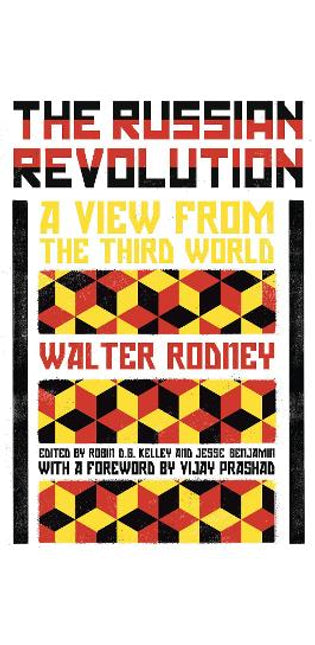
The Russian Revolution
Preface by Jesse Benjamin and the Walter Rodney FoundationIntroduction by Robin D.G. KelleyAfterword by Vijay PrashadIn his short life, the Guyanese intellectual Walter Rodney emerged as one of the leading revolutionary thinkers of the Black Sixties. He became a leading force of dissent throughout the Caribbean and a lightning rod of controversy. The 1968 Rodney Riots erupted in Jamaica when he was prevented from returning to his teaching post at the University of the West Indies. In 1980, Rodney was assassinated in Guyana, reportedly at the behest of the government. In the mid-'70s, Rodney taught a course on the Russian Revolution at the University of Dar es Salaam in Tanzania. A Pan-Africanist and Marxist, Rodney sought to make sense of the reverberations of the October Revolution in a decolonising world marked by Third World revolutionary movements. He intended to publish a book based on his research and teaching. Now historians Jesse Benjamin, Robin D. G. Kelley, and Vijay Prashad have edited Rodney's polished chapters and unfinished lecture notes, presenting the book that Rodney had hoped to publish in his lifetime.1917 is a signal event in radical publishing, and will inaugurate Verso's standard edition of Walter Rodney's works.
R 683.00
R 482.00
R 458.00
R 367.00
R 770.53
R 397.00
Rodney Matthews III
Rodney Matthews III had a difficult upbringing. Raised in the East side of Kansas City, his parents had a hard time making ends meet, and tragic events happened frequently. As he approached the 8th grade, Rodney had become a fantastic prep basketball player, and as he worked his way through high school, he attempted to walk the narrow path to succeed and make his dreams come true, despite all the obstacles. Did he succeed?
R 846.09
Where's Rodney?
A Junior Library Guild SelectionRodney is that kid who just can’t sit still. He's inside, but he wants to be outside. Outside is where Rodney always wants to be. Between school and home, there is a park. He knows all about that park. It’s that triangle-shaped place with the yellow grass and two benches where grown-ups sit around all day. Besides, his momma said to stay away from that park. When Rodney finally gets a chance to go to a real park, with plenty of room to run and climb and shout, and to just be himself, he will never be the same.
R 388.00
R 342.00
Donald Rodney
Donald Rodney (1961-1998) was one of the most gifted, perceptive, and innovative contemporary British artists of his time. A protagonist from the first generation of Black British-born art students in the early 1980s, Rodney and his peers brought a new dynamic to British art – a hitherto unseen interplay between aesthetics, politics, humour and Black consciousness. Donald Rodney: Art, Race and the Body Politic is the first book-length study of a protean practice which spanned the early 1980s to the late 1990s and included a prodigious output of work across painting, photography, collage, assemblage, sculpture, installation, and new technologies.Across eight meticulously researched chapters, the book examines the social and cultural events which inspired Rodney's artwork and the responses it elicited. From his formative years in the West Midlands as a leading exponent of ‘Black Art’, to a subsequent decade of unbridled visual innovation and social critique, the book ventures new detailed analyses of key works, exhibitions, artistic influences and collaborations. Deploying recurring metaphors of the ‘diseased’, traumatised and ‘raced’ body, Rodney addressed racial and social inequality, legacies of slavery, police brutality, sport, and Black male identity in novel and powerful ways. Attending to the artist’s material dexterity and visual acuity, the book considers how and why Rodney’s innovative practice uniquely challenged delineations between the political and non-political, personal and public, representation and visibility. Over a generation has passed since Rodney’s premature death from the effects of the hereditary blood disorder sickle cell anaemia at aged thirty-six. Despite this, Rodney's work continues to speak to our contemporary moment in a multiplicity of ways. As such, the book provides a much-needed critical perspective and insight to the work and legacy of a nonpareil British artist.
R 1,352.00
R 882.86
R 565.27
R 1,252.38
R 474.18
Where's Rodney?
A Black boy’s transformative day out in nature, recommended by Social Justice Books and We Are Kid Lit CollectiveRodney is that kid who just can’t sit still. He's inside, but he wants to be outside. Outside is where Rodney always wants to be. Between school and home, there is a park. He knows all about that park. It’s that triangle-shaped place with the yellow grass and two benches where grown-ups sit around all day. Besides, his momma said to stay away from that park. When Rodney finally gets a chance to go to a real park, with plenty of room to run and climb and shout, and to just be himself, he will never be the same.
R 205.00
R 611.00
Walter Rodney
Among the critical questions that Rodney dealt with whether he was in Tanzania, Jamaica or his native Guyana (formerly British Guiana) was the character of the postcolonial state and its relationship with the working people. It is his engagement with politics that guided his research into African and Caribbean history. In the post-World War II era the colonial powers had regrouped and were rebuilding Europe with the strong financial and political support of the capitalist United States. The Soviet Union, one of the victors over German fascism, was the other power on the world scene. It was communist, and engaged in a Cold War with the United States, the dominant global power. China under Mao Tse Tung was the other communist state that had emerged after the 1949 revolution with a huge rural population, much poverty and a low level of industrialization. Capitalist and socialist powers vied for the hearts and minds of the peoples of Asia, Africa and the Caribbean that were shaking off the shackles of colonialism. Latin American countries which had achieved their political independence in the nineteenth century were caught up in this nationalist surge as they battled with neo-colonialism. They battled with Spain their colonial overlord, but also with the United States which regarded Latin America and the Caribbean as its backyard and intervened as it saw fit to pursue its strategic military, political and economic goals. The Garvey and labor movements of the 1920s and 1930s in the Caribbean as well as communist and national liberation movements in the twentieth century helped to shape Walter Rodney’s political awareness. His parents’ generation was actively involved in the anti-colonial movement in British Guiana in the 1940s and 1950s, and in the 1960s and 1970s Rodney himself helped to shape the ideas around African and Caribbean decolonization, Pan-Africanism, and Marxism.
R 342.00
Rodney McMillian: A Son of the Soil
"McMillian endows simple objects with affecting political resonances...There is anger in them, but there is hope too." --FriezePublished with Columbia Museum of Art. Multimedia artist Rodney McMillian (born 1969) conjoins political texts, found domestic materials and archival footage into assemblages that confront the complex histories of class, race, landscape and region that inform American identity. In A Son of the Soil, McMillian trains his eye on the history of landscape representation in the South. Through large-scale abstract expanses painted on old bedding, sculptures constructed from post-consumer objects and archival film footage, McMillian evokes the land's tillage and spoilage, histories of ownership and the charged relationship between land and the body. A Son of the Soil presents a bevy of scholarly essays that examine McMillian's oeuvre, focusing on the artist's interplay between urban industrialism and domestic space, his visual culture and art historical sources and, more broadly, the relationship between a region and a nation.
R 1,368.00
R 874.59
Rise of Christianity
A landmark reinterpretation of why Christianity became the dominant faith of the WestThe idea that Christianity started as a clandestine movement among the poor is a widely accepted notion. Yet it is one of many myths that must be discarded if we are to understand just how a tiny messianic movement on the edge of the Roman Empire became the dominant faith of Western civilization. In a fast-paced, highly readable book that addresses beliefs as well as historical facts, Rodney Stark brings a sociologist's perspective to bear on the puzzle behind the success of early Christianity. He comes equipped not only with the logic and methods of social science but also with insights gathered firsthand into why people convert and how new religious groups recruit members. He digs deep into the historical evidence on many issues—such as the social background of converts, the mission to the Jews, the status of women in the church, the role of martyrdom—to provide a vivid and unconventional account of early Christianity.The author plots the most plausible curve of Christian growth from the year 40 to 300. By the time of Constantine, Christianity had become a considerable force, with growth patterns very similar to those of modern-day successful religious movements. An unusual number of Christian converts, for example, came from the educated, cosmopolitan classes. Because it offered a new perspective on familiar concepts and was not linked to ethnicity, Christianity had a large following among persons seeking to assimilate into the dominant culture, mainly Hellenized Jews. The oversupply of women in Christian communities—due partly to the respect and protection they received—led to intermarriages with pagans, hence more conversions, and to a high fertility rate. Stark points out, too, the role played by selflessness and faith. Amidst the epidemics, fires, and other disasters that beleaguered Greco-Roman cities, Christian communities were a stronghold of mutual aid, which resulted in a survival rate far greater than that of the pagans. In the meantime, voluntary martyrdom, especially a generation after the death of Christ, reinforced the commitment of the Christian rank and file. What Stark ultimately offers is a multifaceted portrait of early Christianity, one that appeals to practical reasoning, historical curiosity, and personal reflection.
R 478.00
Rodney Smith
The work of Rodney Smith (1947–2016) is above all an invitation to insinuate oneself into a world suspended between illusion and reality. Far from the modern conventions of documentary photography or realism, Smith has created a unique language on the boundary between these two worlds.Each of his sublime, supreme images exerts a real fascination over the viewer, for they are the site of polarity and duality, of the utterance and its contradiction, of the place and its reverse.Rodney Smith is not content merely to document the world; he transforms it and magnifies it, and only photography is capable of delivering, in a flash, his strange visions, his kind of visual impulses, as stunning and explosive as if they were about to break the sound barrier.Text in English and Italian.
R 912.00
R 598.00
R 1,737.00
What Americans Really Believe
A shocking snapshot of the most current impulses in American religion. Rodney Stark reports the surprising findings of the 2007 Baylor Surveys of Religion, a follow up to the 2005 survey revealing most Americans believe in God or a higher power. This new volume highlights even more hot-button issues of religious life in our country. A must-read for anyone interested in Americans' religious beliefs and practices.
R 736.00
R 397.00
R 582.91
Word for Word
From growing up in Texas, to living in his car, to landing his first publishing deal, to writing fifteen #1 songs, Word for Word is a lavishly illustrated look at the lyrics of an icon among songwriting giants. Emmylou Harris—who once employed Rodney Crowell as the guitarist, harmony singer, and arranger in her Hot Band—introduced many listeners to his finely-crafted songs, including “Til I Gain Control Again,” “Leaving Louisiana in the Broad Daylight,” “I Ain’t Living Long Like This,” “Even Cowgirls Get the Blues,” and “Ashes by Now.” They all went on to be become hits for other performers, while Crowell went on to carve out a career as the first country singer to earn five #1 singles from one album. Rodney continued writing and recording classics, while other artists continued to take his songs to the top of the charts, including Bob Seger’s recording of “Shame on the Moon,” Tim McGraw’s recording of “Please Remember Me,” and Keith Urban’s cover of “Making Memories of Us.” In this disarmingly intimate look at Crowell’s songs, he shares pages from his lyric notebooks, personal photographs, and scribbles that reveal the heart of one of this generation’s finest songwriters.
R 1,710.00
Early Bird
In this hilarious and insightful memoir twenty-five-year-old Rodney Rothman, burned out from his big-city life, decides to get a jumpstart on the golden years…four decades before his time. He retires and moves to South Florida and finds an elderly roommate, Leslie, a former piano teacher with cats. Rodney throws himself into the easy life, but soon finds that all the softball, shuffleboard, bingo, gambling cruises, canasta and tennis is, well, exhausting. After his newfound friends get over the oddity of a twenty-something retiree, he becomes one of them, though not without difficulty. He plays in a senior softball league and finds that most seventy-year-olds are far better athletes than he is. He plans a return to the stage for a reluctant ninety-two-year-old comedian. He finds himself the unwelcome muse and romantic interest of a seventy-seven-year-old femme fatale. And he becomes the last great hope of his shuffleboard team. But early retirement - the dream of so many - is not quite what he expected. EARLY BIRD takes readers on a humorous, and often bittersweet, journey through the people and culture of retirement. With a deft comedic touch that evokes Bill Bryson or David Sedaris, Rodney Rothman takes you to where you're going after you get the golden watch.
R 411.00
R 304.00
R 611.00
R 1,127.00