Search results for "Rodney Morrison"
Items we need to order for you

R 2,931.00
R 458.00
R 762.00
R 1,041.00
R 519.00
R 642.00
R 336.00
R 1,310.00
R 1,921.00
R 365.00
R 397.00
R 1,090.48
R 653.60
R 746.55
R 410.00
R 683.00
R 505.00
Mutt
The world-champion freestyle skateboarder and the man who brought the ollie - the trick that revolutionised the sport by taking it from the ground to the air - to street skating shares the history of skateboarding, as he tells the dramatic story of his life. At the age of 13, Rodney took the freestyle skating world by storm. He won 35 world titles in less than five years. But through it all, his father looked down on his son's love for skating and pressured him to walk away from the sport and leave behind his fans and status as the most famous skateboarder of his era. After years of stress and conflict, Rodney gave in and promised his father he'd quit for good. But by the time he finally broke free from his suffocating and abusive home life, the popularity of freestyle had waned and given way to vert and street styles. So Rodney picked up his board and started from scratch. With the help of mentor Mike Ternansky, Rodney used his freestyle background to usher in a whole new era of street skating. Today Rodney is more popular than ever. The videos in his series Rodney Versus Daewon are among the most popular skateboard videos ever produced.He won the 2002 Transworld Skateboarding readers' choice award for favourite street skater and is the most popular character on the top-selling Tony Hawk's Pro Skater video games.
R 309.00
Word for Word
From growing up in Texas, to living in his car, to landing his first publishing deal, to writing fifteen #1 songs, Word for Word is a lavishly illustrated look at the lyrics of an icon among songwriting giants. Emmylou Harris—who once employed Rodney Crowell as the guitarist, harmony singer, and arranger in her Hot Band—introduced many listeners to his finely-crafted songs, including “Til I Gain Control Again,” “Leaving Louisiana in the Broad Daylight,” “I Ain’t Living Long Like This,” “Even Cowgirls Get the Blues,” and “Ashes by Now.” They all went on to be become hits for other performers, while Crowell went on to carve out a career as the first country singer to earn five #1 singles from one album. Rodney continued writing and recording classics, while other artists continued to take his songs to the top of the charts, including Bob Seger’s recording of “Shame on the Moon,” Tim McGraw’s recording of “Please Remember Me,” and Keith Urban’s cover of “Making Memories of Us.” In this disarmingly intimate look at Crowell’s songs, he shares pages from his lyric notebooks, personal photographs, and scribbles that reveal the heart of one of this generation’s finest songwriters.
R 1,710.00
R 404.86
Confessions of a Free Speech Lawyer
In the personal and frank Confessions of a Free Speech Lawyer, Rodney A. Smolla offers an insider's view on the violent confrontations in Charlottesville during the "summer of hate." Blending memoir, courtroom drama, and a consideration of the unhealed wound of racism in our society, he shines a light on the conflict between the value of free speech and the protection of civil rights.Smolla has spent his career in the thick of these tempestuous and fraught issues, from acting as lead counsel in a famous Supreme Court decision challenging Virginia's law against burning crosses, to serving as co-counsel in a libel suit brought by a fraternity against Rolling Stone magazine for publishing an article alleging that one of the fraternity's initiation rituals included gang rape. Smolla has also been active as a university leader, serving as dean of three law schools and president of one and railing against hate speech and sexual assault on US campuses.Well before the tiki torches cast their ominous shadows across the nation, the city of Charlottesville sought to relocate the Unite the Right rally; Smolla was approached to represent the alt-right groups. Though he declined, he came to wonder what his history of advocacy had wrought. Feeling unsettlingly complicit, he joined the Charlottesville Task Force, and he realized that the events that transpired there had meaning and resonance far beyond a singular time and place. Why, he wonders, has one of our foundational rights created a land in which such tragic clashes happen all too frequently?
R 660.00
Groundings With My Brothers
In his short life, the Guyanese intellectual Walter Rodney emerged as one of the leading thinkers and activists of the anticolonial revolution, leading movements in North America, South America, the African continent, and the Caribbean. In each locale, Rodney found himself a lightning rod for working class Black Power. His deportation catalyzed 20th century Jamaica's most significant rebellion, the 1968 Rodney riots, and his scholarship trained a generation how to think politics at an international scale. In 1980, shortly after founding of the Working People's Alliance in Guyana, the 38-year-old Rodney would be assassinated.In this classic work published in the heady days of anti-colonial revolution, Groundings with My Brothers follows the global circulation of emancipatory ideas, from the black students of North America to the Rasta counter-culture of Jamaica and beyond. The book is striking in its simultaneous ability to survey the wide and heterogenous international context while remaining anchored in grassroots politics, as Rodney offers us first-hand accounts of mass movement organizing. Having inspired a generation of revolutionaries, this new edition will re-introduce the book to a new political landscape that it helped shape, with reflections from leading scholar-activists such as Carole Boyce Davies
R 501.00
Toni Morrison and the Geopoetics of Place, Race, and Be/longing
Toni Morrison’s readers and critics typically focus more on the “what” than the “how” of her writing. In Toni Morrison and the Geopoetics of Place, Race, and Be/longing, Marilyn Sanders Mobley analyzes Morrison’s expressed narrative intention of providing “spaces for the reader” to help us understand the narrative strategies in her work. Mobley’s approach is as interdisciplinary, intersectional, nuanced, and complex as Morrison’s. She combines textual analysis with a study of Morrison’s cultural politics and narrative poetics and describes how Morrison engages with both history and the present political moment. Informed by research in geocriticism, spatial literary studies, African American literary studies, and Black feminist studies at the intersection of poetics and cultural politics, Mobley identifies four narrative strategies that illuminate how Morrison creates such spaces in her fiction; what these spaces say about her understanding of place, race, and belonging; and how they constitute a way to read and re-read her work.
R 3,599.00
Cambridge Introduction to Toni Morrison
Toni Morrison has written some of the most significant and demanding fiction of the modern age. Her dazzling depictions of African-American experience are studied in high schools and colleges, debated in the media and analyzed by scholars at an astounding rate. This Introduction offers readers a guide to the world of Morrison in all its complexity, from her status as a key player on the global intellectual stage to her unique perspective on American history and her innovative narrative techniques. Covering every novel from The Bluest Eye to A Mercy, Tessa Roynon combines close readings with critical insights into Morrison's other creative work, such as short stories, libretto and song lyrics and unpublished pieces for performance. Lively and accessibly written, Roynon's insightful text is ideal for readers approaching Morrison for the first time as well as those familiar with her work.
R 4,025.70
Rise of Mormonism
Will Mormonism be the next world faith, one that will rival Catholicism, Islam, and other major religions in terms of numbers and global appeal? This was the question Rodney Stark addressed in his much-discussed and much-debated article, "The Rise of a New World Faith" (1984), one of several essays on Mormonism included in this new collection. Examining the religion's growing appeal, Rodney Stark concluded that Mormons could number 267 million members by 2080. In what would become known as "the Stark argument," Stark suggested that the Mormon Church offered contemporary sociologists and historians of religion an opportunity to observe a rare event: the birth of a new world religion. In the years following that article, Stark has become one of the foremost scholars of Mormonism and the sociology of religion. This new work, the first to collect his influential writings on the Mormon Church, includes previously published essays, revised and rewritten for this volume. His work sheds light on both the growth of Mormonism and on how and why certain religions continue to grow while others fade away.Stark examines the reasons behind the spread of Mormonism, exploring such factors as cultural continuity with the faiths from which it seeks converts, a volunteer missionary force, and birth rates. He explains why a demanding faith like Mormonism has such broad appeal in today's world and considers the importance of social networks in finding new converts. Stark's work also presents groundbreaking perspectives on larger issues in the study of religion, including the nature of revelation and the reasons for religious growth in an age of modernization and secularization.
R 1,913.00
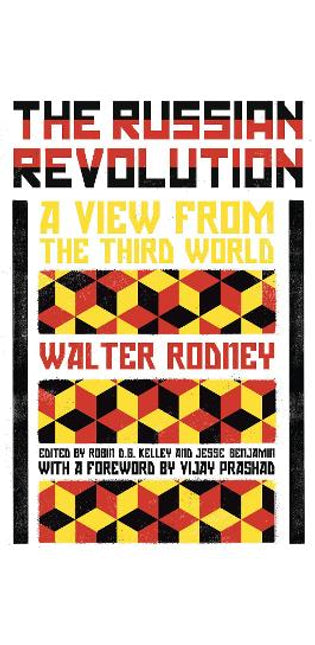
The Russian Revolution
Preface by Jesse Benjamin and the Walter Rodney FoundationIntroduction by Robin D.G. KelleyAfterword by Vijay PrashadIn his short life, the Guyanese intellectual Walter Rodney emerged as one of the leading revolutionary thinkers of the Black Sixties. He became a leading force of dissent throughout the Caribbean and a lightning rod of controversy. The 1968 Rodney Riots erupted in Jamaica when he was prevented from returning to his teaching post at the University of the West Indies. In 1980, Rodney was assassinated in Guyana, reportedly at the behest of the government. In the mid-'70s, Rodney taught a course on the Russian Revolution at the University of Dar es Salaam in Tanzania. A Pan-Africanist and Marxist, Rodney sought to make sense of the reverberations of the October Revolution in a decolonising world marked by Third World revolutionary movements. He intended to publish a book based on his research and teaching. Now historians Jesse Benjamin, Robin D. G. Kelley, and Vijay Prashad have edited Rodney's polished chapters and unfinished lecture notes, presenting the book that Rodney had hoped to publish in his lifetime.1917 is a signal event in radical publishing, and will inaugurate Verso's standard edition of Walter Rodney's works.
R 683.00
Rodney Smith
The work of Rodney Smith (1947–2016) is above all an invitation to insinuate oneself into a world suspended between illusion and reality. Far from the modern conventions of documentary photography or realism, Smith has created a unique language on the boundary between these two worlds.Each of his sublime, supreme images exerts a real fascination over the viewer, for they are the site of polarity and duality, of the utterance and its contradiction, of the place and its reverse.Rodney Smith is not content merely to document the world; he transforms it and magnifies it, and only photography is capable of delivering, in a flash, his strange visions, his kind of visual impulses, as stunning and explosive as if they were about to break the sound barrier.Text in English and Italian.
R 912.00
What Americans Really Believe
A shocking snapshot of the most current impulses in American religion. Rodney Stark reports the surprising findings of the 2007 Baylor Surveys of Religion, a follow up to the 2005 survey revealing most Americans believe in God or a higher power. This new volume highlights even more hot-button issues of religious life in our country. A must-read for anyone interested in Americans' religious beliefs and practices.
R 736.00
R 1,205.92
Cambrian Intelligence
Until the mid-1980s, AI researchers assumed that an intelligent system doing high-level reasoning was necessary for the coupling of perception and action. In this traditional model, cognition mediates between perception and plans of action. Realizing that this core AI, as it was known, was illusory, Rodney A. Brooks turned the field of AI on its head by introducing the behavior-based approach to robotics. The cornerstone of behavior-based robotics is the realization that the coupling of perception and action gives rise to all the power of intelligence and that cognition is only in the eye of an observer. Behavior-based robotics has been the basis of successful applications in entertainment, service industries, agriculture, mining, and the home. It has given rise to both autonomous mobile robots and more recent humanoid robots such as Brooks' Cog. This book represents Brooks' initial formulation of and contributions to the development of the behavior-based approach to robotics. It presents all of the key philosophical and technical ideas that put this "bottom-up" approach at the forefront of current research in not only AI but all of cognitive science.
R 1,228.56
R 417.00
Rodney Matthews III
Rodney Matthews III had a difficult upbringing. Raised in the East side of Kansas City, his parents had a hard time making ends meet, and tragic events happened frequently. As he approached the 8th grade, Rodney had become a fantastic prep basketball player, and as he worked his way through high school, he attempted to walk the narrow path to succeed and make his dreams come true, despite all the obstacles. Did he succeed?
R 846.09
R 381.00
Donald Rodney
Donald Rodney (1961-1998) was one of the most gifted, perceptive, and innovative contemporary British artists of his time. A protagonist from the first generation of Black British-born art students in the early 1980s, Rodney and his peers brought a new dynamic to British art – a hitherto unseen interplay between aesthetics, politics, humour and Black consciousness. Donald Rodney: Art, Race and the Body Politic is the first book-length study of a protean practice which spanned the early 1980s to the late 1990s and included a prodigious output of work across painting, photography, collage, assemblage, sculpture, installation, and new technologies.Across eight meticulously researched chapters, the book examines the social and cultural events which inspired Rodney's artwork and the responses it elicited. From his formative years in the West Midlands as a leading exponent of ‘Black Art’, to a subsequent decade of unbridled visual innovation and social critique, the book ventures new detailed analyses of key works, exhibitions, artistic influences and collaborations. Deploying recurring metaphors of the ‘diseased’, traumatised and ‘raced’ body, Rodney addressed racial and social inequality, legacies of slavery, police brutality, sport, and Black male identity in novel and powerful ways. Attending to the artist’s material dexterity and visual acuity, the book considers how and why Rodney’s innovative practice uniquely challenged delineations between the political and non-political, personal and public, representation and visibility. Over a generation has passed since Rodney’s premature death from the effects of the hereditary blood disorder sickle cell anaemia at aged thirty-six. Despite this, Rodney's work continues to speak to our contemporary moment in a multiplicity of ways. As such, the book provides a much-needed critical perspective and insight to the work and legacy of a nonpareil British artist.
R 1,352.00
Reimagining the Promised Land
While Israel has seemingly been a minor presence in Hollywood cinema, Reimagining the Promised Land argues that there is a long history of Hollywood deploying images of Israel as a means of articulating an idealized notion of American national identity. This argument is developed through readings of The Ten Commandments (Cecil B. DeMille, 1956), Ben-Hur: A Tale of the Christ (William Wyler, 1959), Exodus (Otto Preminger, 1960), Cast a Giant Shadow (Melville Shavelson, 1966), Black Sunday (John Frankenheimer, 1977), The Delta Force (Menahem Golan, 1986), and Munich (Steven Spielberg, 2005). The mobilization of Israel that pervades this eclectic group of films effectively demonstrates one of the more surreptitious ways in which Hollywood has historically constructed and circulated dominant notions of American national identity. Moreover, in examining the most notable Hollywood representations of the Jewish state, the book offers an informed historical overview of the cultural forces that have contributed to popular understandings within the United States of the state of Israel, Israel’s Arab neighbours, and also the Arab-Israeli conflict.
R 1,264.00
Reformation Myths
What has the Reformation ever done for us?A lot less than you might think, as Rodney Stark shows in this enlightening and entertaining antidote to recent books about the rise of Protestantism and its legacy.‘Rodney Stark takes no prisoners as he charges through five hundred years of history, upsetting apple carts left and right. Almost everything you thought you knew about the Reformation turns out to be a false narrative. . . In future, anyone who makes sweeping claims about the benefits of Protestantism ought to check their assumptions against Stark’s research first.’ Clifford Longley, author and journalist ‘Stark brings the insights of a distinguished sociologist of religion to bear on a range of inherited assumptions about the impact of the Reformation . . . The result makes for salutary reading in this year of commemoration and (not always justified) celebration.’ Peter Marshall, Professor of History, University of Warwick‘Stark changed the way we think about the early Church and this book may change the way you think about Protestantism . . . Reformation Myths cuts through pious certainties and challenges us to think again about our cultural history.’ Linda Woodhead MBE DD, Professor of Sociology of Religion, Lancaster University
R 462.61
R 458.00
R 611.00
Reimagining the Promised Land
While Israel has seemingly been a minor presence in Hollywood cinema, Reimagining the Promised Land argues that there is a long history of Hollywood deploying images of Israel as a means of articulating an idealized notion of American national identity. This argument is developed through readings of The Ten Commandments (Cecil B. DeMille, 1956), Ben-Hur: A Tale of the Christ (William Wyler, 1959), Exodus (Otto Preminger, 1960), Cast a Giant Shadow (Melville Shavelson, 1966), Black Sunday (John Frankenheimer, 1977), The Delta Force (Menahem Golan, 1986), and Munich (Steven Spielberg, 2005). The mobilization of Israel that pervades this eclectic group of films effectively demonstrates one of the more surreptitious ways in which Hollywood has historically constructed and circulated dominant notions of American national identity. Moreover, in examining the most notable Hollywood representations of the Jewish state, the book offers an informed historical overview of the cultural forces that have contributed to popular understandings within the United States of the state of Israel, Israel’s Arab neighbours, and also the Arab-Israeli conflict.
R 4,708.00
From Ronald Reagan to Rodney King
A giant of political journalism, Lou Cannon rose to prominence as state bureau chief for the San Jose Mercury News in the late 1960s, covering then-governor of California Ronald Reagan. In 1972, he became a political reporter for The Washington Post, one of the top newspapers in the United States, where he would remain until 2008. Best known for his coverage of Reagan's presidency, he also notably covered the brutal beating of Rodney King at the hands of the Los Angeles police department in 1991. From Ronald Reagan to Rodney King recounts Cannon's lengthy career as a newspaperman during a period when newspapers of record were the most important source of current events. He had extraordinary access to top newsmakers, and his work had a rippling impact—influencing other journalists, sparking coverage on television, and appearing in newspapers around the globe. Some of the stories he covered—such as the end of the Cold War—changed the world. His journalistic influence in the latter half of the twentieth century was deep and wide-ranging. Cannon is the primary source of his stories, but he was a careful reporter then and a careful historian now. He had the benefit of a written record of every story he covered, and he clearly refreshed his memory when necessary to check the facts. Rather than revealing his own opinions or feelings, Cannon narrates straightforward accounts of what he witnessed on the job. From Ronald Reagan to Rodney King will appeal to historians of twentieth-century journalism, the Cold War, Ronald Reagan, race relations, and policing.
R 1,139.00
R 1,099.00
For the Glory of God
Rodney Stark's provocative new book argues that, whether we like it or not, people acting for the glory of God have formed our modern culture. Continuing his project of identifying the widespread consequences of monotheism, Stark shows that the Christian conception of God resulted--almost inevitably and for the same reasons--in the Protestant Reformation, the rise of modern science, the European witch-hunts, and the Western abolition of slavery. In the process, he explains why Christian and Islamic images of God yielded such different cultural results, leading Christians but not Muslims to foster science, burn "witches," and denounce slavery. With his usual clarity and skepticism toward the received wisdom, Stark finds the origins of these disparate phenomena within monotheistic religious organizations. Endemic in such organizations are pressures to maintain religious intensity, which lead to intense conflicts and schisms that have far-reaching social results. Along the way, Stark debunks many commonly accepted ideas.He interprets the sixteenth-century flowering of science not as a sudden revolution that burst religious barriers, but as the normal, gradual, and direct outgrowth of medieval theology. He also shows that the very ideas about God that sustained the rise of science led also to intense witch-hunting by otherwise clear-headed Europeans, including some celebrated scientists. This conception of God likewise yielded the Christian denunciation of slavery as an abomination--and some of the fiercest witch-hunters were devoted participants in successful abolitionist movements on both sides of the Atlantic. For the Glory of God is an engrossing narrative that accounts for the very different histories of the Christian and Muslim worlds. It fundamentally changes our understanding of religion's role in history and the forces behind much of what we point to as secular progress.
R 1,724.42
R 367.00
R 736.00
R 762.00
Improving the Odds
Improving the Odds: Raising the Class is a book aimed at legislators, school administrators, home school advocates,
R 2,746.00