Search results for "S. P. Mukherjee"
Items we need to order for you

Statistical Methods in Social Science Research
This book presents various recently developed and traditional statistical techniques, which are increasingly being applied in social science research. The social sciences cover diverse phenomena arising in society, the economy and the environment, some of which are too complex to allow concrete statements; some cannot be defined by direct observations or measurements; some are culture- (or region-) specific, while others are generic and common. Statistics, being a scientific method – as distinct from a ‘science’ related to any one type of phenomena – is used to make inductive inferences regarding various phenomena. The book addresses both qualitative and quantitative research (a combination of which is essential in social science research) and offers valuable supplementary reading at an advanced level for researchers.
R 3,284.66
Probability Models in Reliability Analysis
This book delves into the fundamental theoretical aspects of reliability analysis, focusing on various probabilistic models. These models are essential for representing random variations in underlying variables such as time-to-failure, the number of failures between consecutive repairs and similar metrics. The calculation, estimation and prediction of reliability all hinge on using appropriate probability models. The book introduces various models beneficial for researchers in the field of reliability. It also provides a comprehensive overview of the available models, highlighting their distinctive features and practical applications in a narrative format. The content of the book is designed to appeal to a broad readership. Students and researchers in the field of reliability analysis will find a comprehensive yet easily understandable summary of models applicable to their data sets of interest. It should be noted, however, As stated clearly in the preface, this book does not illustrate applications of the models discussed in terms of real-life data.
R 2,931.00
Statistical Methods in Social Science Research
This book presents various recently developed and traditional statistical techniques, which are increasingly being applied in social science research. The social sciences cover diverse phenomena arising in society, the economy and the environment, some of which are too complex to allow concrete statements; some cannot be defined by direct observations or measurements; some are culture- (or region-) specific, while others are generic and common. Statistics, being a scientific method – as distinct from a ‘science’ related to any one type of phenomena – is used to make inductive inferences regarding various phenomena. The book addresses both qualitative and quantitative research (a combination of which is essential in social science research) and offers valuable supplementary reading at an advanced level for researchers.
R 2,477.37
Quality
This book offers a comprehensive overview of quality and quality management. It also explores total quality management, covering its human, technological and analytical imperatives. It also examines quality systems and system standards, highlighting essential features and avoiding a reproduction of the ISO 9000 standard, as well as people-related issues in implementing a quality system. A holistic understanding of quality considerations, which now permeate every aspect of human life, should guide related policies, plans and practices. The book describes the all-pervasive characteristics of quality, putting together diverse definitions of "quality," outlining its different dimensions, and linking it with reliability and innovation. It goes on to assess the quality of measurements in terms of precision, accuracy and uncertainty and discusses managing quality with a focus on business performance. This is followed by a chapter on improving process quality, which is the summum bonum of quality management, and a chapter addressing the crucial problem of measuring customer satisfaction through appropriate models and tools. Further, it covers non-traditional subjects such as quality of life, quality of working life, quality assurance and improvement in education, with special reference to higher education, quality in research and development and characterizes the quality-related policies and practices in Indian industry. The last chapter provides a broad sketch of some recent advances in statistical methods for quality management. Along with the research community, the book’s content is also useful for practitioners and industry watchers.
R 3,054.65
Quality
This book offers a comprehensive overview of quality and quality management. It also explores total quality management, covering its human, technological and analytical imperatives. It also examines quality systems and system standards, highlighting essential features and avoiding a reproduction of the ISO 9000 standard, as well as people-related issues in implementing a quality system. A holistic understanding of quality considerations, which now permeate every aspect of human life, should guide related policies, plans and practices. The book describes the all-pervasive characteristics of quality, putting together diverse definitions of "quality," outlining its different dimensions, and linking it with reliability and innovation. It goes on to assess the quality of measurements in terms of precision, accuracy and uncertainty and discusses managing quality with a focus on business performance. This is followed by a chapter on improving process quality, which is the summum bonum of quality management, and a chapter addressing the crucial problem of measuring customer satisfaction through appropriate models and tools. Further, it covers non-traditional subjects such as quality of life, quality of working life, quality assurance and improvement in education, with special reference to higher education, quality in research and development and characterizes the quality-related policies and practices in Indian industry. The last chapter provides a broad sketch of some recent advances in statistical methods for quality management. Along with the research community, the book’s content is also useful for practitioners and industry watchers.
R 3,324.94
R 195.00
Surviving Bhopal
On December 2-3, 1984, India witnessed arguably the world s worst industrial disaster in Bhopal, Madhya Pradesh, which continues to this day as an economic, medical, environmental, and political disaster. Surviving Bhopal draws on oral testimonials of the affected community and analyzes the cause and aftermath of the disaster from the perspective of those who suffered the severe consequences of systemic failure and travesty of justice. The event resulted in a resistance movement, led by women, against corporate and state power. Mukherjee explores the underlying gender politics, showing how activism challenged and redefined the contemporary model of development.
R 1,543.87
R 294.16
R 493.08
R 422.40
R 165.00
R 618.00
R 741.00
R 342.00
Bharati Mukherjee
The twelve essays that form this book, first published in 1993, interpret Bharati Mukherjee’s oeuvre from a variety of critical perspectives. The authors’ approaches range from the biographical to the poststructuralist, from cultural analysis to comparative commentary to deconstructive reading. Such diversity in the contributors’ theoretical stances and interpretive strategies enables this collection of essays to serve a key purpose: to offer not only multiple but conflicting perspectives on Mukherjee’s art and achievement.
R 6,960.00
Conversations with Bharati Mukherjee
The first naturalized citizen to win the National Book Critics Circle Award, Bharati Mukherjee (b. 1940), born into a rigid hierarchy as a Bengali Brahmin and raised in the elite of Calcutta society, joined the American masses by choice. This journey from a privileged yet circumscribed life to one of free will and risk supplied the experiences she has turned into literature.From her first interview, originally published over three decades ago in her native tongue Bengali in the Calcutta journal Desh and appearing here for the first time in English, to an in-depth interview in 2007 granted specifically for this collection, this volume provides a candid look at the woman who has been called the grande dame of diasporic Indian literature.
R 883.00
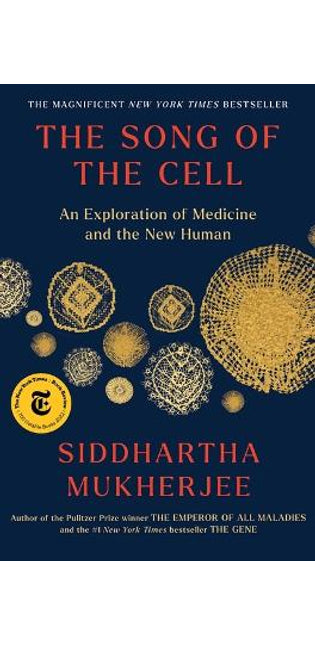
Song of the Cell
Winner of the 2023 PROSE Award for Excellence in Biological and Life Sciences! Named a New York Times Notable Book and a Best Book of the Year by The Economist, Oprah Daily, BookPage, Book Riot, the New York Public Library, and more! In The Song of the Cell, the extraordinary author of the Pulitzer Prize-winning The Emperor of All Maladies and the #1 New York Times bestseller The Gene "blends cutting-edge research, impeccable scholarship, intrepid reporting, and gorgeous prose into an encyclopedic study that reads like a literary page-turner" (Oprah Daily). Mukherjee begins this magnificent story in the late 1600s, when a distinguished English polymath, Robert Hooke, and an eccentric Dutch cloth-merchant, Antonie van Leeuwenhoek looked down their handmade microscopes. What they saw introduced a radical concept that swept through biology and medicine, touching virtually every aspect of the two sciences, and altering both forever. It was the fact that complex living organisms are assemblages of tiny, self-contained, self-regulating units. Our organs, our physiology, our selves--hearts, blood, brains--are built from these compartments. Hooke christened them "cells." The discovery of cells--and the reframing of the human body as a cellular ecosystem--announced the birth of a new kind of medicine based on the therapeutic manipulations of cells. A hip fracture, a cardiac arrest, Alzheimer's dementia, AIDS, pneumonia, lung cancer, kidney failure, arthritis, COVID pneumonia--all could be reconceived as the results of cells, or systems of cells, functioning abnormally. And all could be perceived as loci of cellular therapies. Filled with writing so vivid, lucid, and suspenseful that complex science becomes thrilling, The Song of the Cell tells the story of how scientists discovered cells, began to understand them, and are now using that knowledge to create new humans. Told in six parts, and laced with Mukherjee's own experience as a researcher, a doctor, and a prolific reader, The Song of the Cell is both panoramic and intimate--a masterpiece on what it means to be human. "In an account both lyrical and capacious, Mukherjee takes us through an evolution of human understanding: from the seventeenth-century discovery that humans are made up of cells to our cutting-edge technologies for manipulating and deploying cells for therapeutic purposes" (The New Yorker).
R 525.00
R 397.00
R 936.25
Bharati Mukherjee
The twelve essays that form this book, first published in 1993, interpret Bharati Mukherjee’s oeuvre from a variety of critical perspectives. The authors’ approaches range from the biographical to the poststructuralist, from cultural analysis to comparative commentary to deconstructive reading. Such diversity in the contributors’ theoretical stances and interpretive strategies enables this collection of essays to serve a key purpose: to offer not only multiple but conflicting perspectives on Mukherjee’s art and achievement.
R 2,122.54
Women and Crime
First published in 1981. In the last few decades, interest in the study of crimes by women has increased. This interest has coincided with the accelerated momentum of the feminist movement and has led to claims that a rising female crime rate is somehow linked with the changing status of women. But are women committing more crimes? And if so, can this be attributed to the impact of the women’s movement? In this book, nine essays survey aspects of the relationship between women and the criminal justice system. The contributors include historians, criminologists, lawyers, ex-prisoners and political scientists. Women and Crime will be of interest to students of criminology.
R 1,905.00
R 554.53
South Asian Resistances in Britain, 1858 - 1947
This volume offers an alternative way of conceiving the history of Britain by excavating and exploring the numerous ways in which South Asians in Britain engaged in radical discourse and political activism from 1858 to 1947, before their more permanent migration and settlement. The book focuses on a tumultuous period of resistance against the backdrop of high imperialism under the reign of Victoria, through the turmoil of two World Wars and Partition in 1947. As well as addressing resistances against empire and hierarchies of race, the authors investigate how South Asians in Britain mobilized to campaign for women's suffrage (the Indian princess Sophia Duleep Singh), for example, or for an international socialism (the Communist MP Shapurji Saklatvala), thereby contributing to and complicating notions of freedom, equality and justice. This volume reframes these pioneers as social and political agents and activists and shows how Britain's contemporary multicultural society is rooted in their mobilization for equality of citizenship.
R 5,885.00
R 438.80
South Asian Resistances in Britain, 1858 - 1947
This title offers an alternative view of imperial history, exploring the pioneering ways in which South Asians within Britain engaged in radical discourse and political activism. This volume offers an alternative way of conceiving the history of Britain by excavating and exploring the numerous ways in which South Asians in Britain engaged in radical discourse and political activism from 1870 to 1950, before their more permanent migration and settlement. This book focuses on a tumultuous period of resistance against the backdrop of high imperialism under the reign of Victoria in the 1870s, through the turmoil of two World Wars and Partition in 1947. As well as addressing resistances against empire and hierarchies of race, the authors investigate how South Asians in Britain mobilized to campaign for women's suffrage (the Indian princess Sophia Duleep Singh), for example, or for an international socialism (the Communist MP Shapurji Saklatvala), thereby contributing to and complicating notions of freedom, equality and justice.This volume reframes these pioneers as social and political agents and activists and shows how Britain's contemporary multicultural society is rooted in their mobilization for equality of citizenship.
R 1,558.00
R 306.00
Education for Fullness
This volume is the first comprehensive exploration of Rabindranath Tagore’s works on education and pedagogy. It presents a valuable account of the creation of Santiniketan and Visva-Bharati, Tagore’s vision of social regeneration, and his rejection of the colonial scheme; while reflecting on significant events of his life and his ideas.The book evaluates Tagore’s unique contribution to education and discusses his views on fundamental issues, such as aim, method, discipline, and medium. It reinforces for readers today the relevance of his experiments and activities in the field of education. Drawing from various sources, the book also offers bibliographic information on Tagore’s writing on education.This new edition with a new Introduction and Foreword will be of immense value to educationists, teachers, policymakers, and those interested in modern Indian history and the philosophy of education.
R 9,990.22
Handcuffed to History
Ethnic and religious rivalries are major sources of conflict in South Asia and interpretations of the past are integral parts of the conflict. Udayakumar and his contributors provide a careful and comprehensive analysis of the interface between history writing, identity constructions, and intergroup relations. Providing a range of theoretical deliberations, they examine specific South Asian conflicts such as the Kashmir issue, Hindu-Muslim conflict, Sinhalese-Tamil strife, and the human rights struggles of oppressed castes.With a view to understanding the ethnic and religious rivalries that have come to be a major source of conflict in South Asia, Udayakumar and his contributors analyze the interface between interpretations of the past, identity construction practices, and intergroup relations.With general theoretical perspectives, contributors help to explain the various ethnic conflicts in South Asia and other parts of the world. The role of history, narratives, and violent pathologies in those conflicts are also explained. Some of the most prominent South Asian conflicts such as the Kashmir decision, Ramjanmabhumi temple, and historicity of caste system in India and the first comer controversy in Sri Lanka are analyzed in detail. One of the major conclusions reached is that there is an element of bigotry in certain historiographies and these bigoted histories and ethnic/religious histrionics build on and contribute to each other and thrive in certain environments. Elevating this debate to a more political level, the essays highlight the role of human agency in the decision to remain handcuffed to bigoted histories or to be more aware and struggle for new beginnings. They also examine the prospects and possible means of negating the unity of history and metanarratives (with their characteristic pathologies and violence) and proliferating many histories told from diverse perspectives. This book is a stimulating collection for scholars, students, and researchers dealing with South Asian history as well as current ethnic, political, and military tensions in the region.
R 2,943.00
Gandhi's Critics
The book is a definitive account of Gandhi’s major critics. It presents a detailed and comprehensive account of each critic, assesses their criticisms of Gandhi and underlines the significance and achievements of Gandhi against the backdrop of the critiques – from contemporaries like the Nehrus (Motilal and Jawaharlal), Tagore, Churchill, Jinnah, Periyar, Savarkar, Ambedkar, Subhas Bose, the Marxists (from the mid-1920s until 1947 and post-independence), P.C. Ray, Visvesvaraya and Saha, to later critics like Orwell, Alinsky, Mandela, King and critics from Africa.The volume will be of immense importance to scholars and students of undergraduate and postgraduate courses in political science and South Asian studies. It will also be of interest to general readers interested in history and politics.
R 2,304.09
Women and Resistance in Contemporary Bengali Cinema
Historically, Indian cinema has positioned women at the intersection of tradition and a more evolving culture, portraying contradictory attitudes which affect women’s roles in public and private spheres.Examining the work of three directors from West Bengal, this book addresses the juxtaposition of tradition and culture regarding women in Bengali cinema. It argues the antithesis of women’s roles, particularly in terms of ideas of resistance, revolution, change, and autonomy, by suggesting they convey resistance to hegemonic structures, encouraging a re-envisioning of women’s positions within the familial-social matrix. Along with presenting a perception of culture as dynamic and evolving, the book discusses how some directors show that with this rupturing of the traditionally prohibitive, and a notion of unmaking and making in women, a traditional inclination is exposed to align women with ideas of absence, substitution, and disposability. The author goes on to show how selected auteurs in contemporary Bengali cinema break with certain traditional representations of women, gesturing towards a culture that is more liberating for women. Presenting the first full-length study of women’s changing roles over the last twenty years of Bengali cinema, this book will be a useful contribution for students and scholars of South Asian Culture, Film Studies and Gender Studies.
R 9,299.10
R 350.11
Shambala Junction
Winner of the 4th Virginia Prize for Fiction• A thought-provoking new novel from Dipika Mukherjee, Virginia Prize for Fiction winner, Aurora Metro Books' biennial prize to encourage and promote new writing by women.• Mukherjee's debut novel was long-listed for the Man Asian Literary Prize (2011) and republished as Ode to Broken Things (Repeater, 2016).
R 660.61
Religion, Mysticism, and Transcultural Entanglements in Modern South Asia
This book explores aspects of a relatively understudied side of religio-cultural processes in modern India. It is an investigation of spirituality and mysticism in the evolution of the modern religious subjectivity. Soumen Mukherjee analyzes the development of an Indic religio-cultural discourse (as opposed to abstract ideas) since the early twentieth century, especially from the interwar period when endeavors by prominent sections of the ‘Western’ intelligentsia to grapple with a sense of disenchantment against the backdrop of the Great War arguably resulted in a decisive turn towards the Orient. This book draws upon select case studies and brings to the forefront the heightened interest in Indic spirituality, mysticism and metaphysics, as well the occasionally ‘Eastern’ esoteric traditions. It examines their salience in the spheres of socio-religious and cultural change, indeed in forging new spiritual imaginaries in modern times. These case studies involve a close reading of works— in both the English language and relatively unexplored literature in the vernacular— of a number of key and lesser-known Indians who navigated the cosmopolitan worlds of interwar India, Europe and America, actively participating in both academic and public discourse. As part of an ecumene connected by affective bonds these figures illustrate how strictures of binary frameworks (East/ West; imperial core/ periphery; colonizer/ colonized) were often defied, older Indic concepts recast in the changing historical context, and the very concept of religion came to be critically commented upon and reformulated. The roots of this transcultural process are traceable in part to the fin de siècle years but they subsequently acquired new connotations amidst heightened religio-cultural and civilizational projects. Far from being confined to a distant ‘other-worldly’ realm this was then a ‘this-worldly’ process attuned to the socio-political exigencies of the times.
R 1,778.12
R 1,663.00
What Is a Classic?
What Is a Classic? revisits the famous question posed by critics from Sainte-Beuve and T. S. Eliot to J. M. Coetzee to ask how classics emanate from postcolonial histories and societies. Exploring definitive trends in twentieth- and twenty-first century English and Anglophone literature, Ankhi Mukherjee demonstrates the relevance of the question of the classic for the global politics of identifying and perpetuating so-called core texts. Emergent canons are scrutinized in the context of the wider cultural phenomena of book prizes, the translation and distribution of world literatures, and multimedia adaptations of world classics. Throughout, Mukherjee attunes traditional literary critical concerns to the value contestations mobilizing postcolonial and world literature. The breadth of debates and topics she addresses, as well as the book's ambitious historical schema, which includes South Asia, Africa, the Middle East, the West Indies, Australia, New Zealand, Europe, and North America, set this study apart from related titles on the bookshelf today.
R 1,354.00
R 214.00
R 396.65