Search results for "Sheldon Pollock"
Items in stock - 4 working days delivery time

Pollock
The rebel hero of Abstract Expressionism, Jackson Pollock (1912–1956) careened through his life like a firework across the American art landscape. Channeling ideas from sources as diverse as Picasso and Mexican surrealism, he rejected convention to develop his own way of seeing, interpreting, and expressing.Pollock’s most famous works are his drip paintings, where he dripped and poured household enamel paint over the canvas with a variety of instruments, from sticks to syringes, hardened brushes to broken bits of glass. The splattered results pulsate with energy, replacing the refinement of easel and brush with something altogether more immediate, vivid, and physical. To evade the viewer’s search for figurative elements in his paintings, Pollock abandoned titles and identified each work with a neutral number only.Notoriously reclusive and volatile, struggling with alcoholism, married to fellow Abstract Expressionist Lee Krasner, and killed in a car crash aged just 44, Pollock is as much a compelling celebrity icon as an artistic pioneer. This essential artist introduction explores both his work and his fame to shed light on masterpieces of the modernist story, and the making of a cultural icon.About the seriesBorn back in 1985, the Basic Art Series has evolved into the best-selling art book collection ever published. Each book in TASCHEN’s Basic Art series features:a detailed chronological summary of the life and oeuvre of the artist, covering his or her cultural and historical importancea concise biographyapproximately 100 illustrations with explanatory captions
R 425.00

Items we need to order for you
Language of the Gods in the World of Men
In this work of impressive scholarship, Sheldon Pollock explores the remarkable rise and fall of Sanskrit, India's ancient language, as a vehicle of poetry and polity. He traces the two great moments of its transformation: the first around the beginning of the Common Era, when Sanskrit, long a sacred language, was reinvented as a code for literary and political expression, the start of an amazing career that saw Sanskrit literary culture spread from Afghanistan to Java. The second moment occurred around the beginning of the second millennium, when local speech forms challenged and eventually replaced Sanskrit in both the literary and political arenas. Drawing striking parallels, chronologically as well as structurally, with the rise of Latin literature and the Roman empire, and with the new vernacular literatures and nation-states of late-medieval Europe, "The Language of the Gods in the World of Men" asks whether these very different histories challenge current theories of culture and power and suggest new possibilities for practice.
R 2,501.00
Language of the Gods in the World of Men
In this work of impressive scholarship, Sheldon Pollock explores the remarkable rise and fall of Sanskrit, India's ancient language, as a vehicle of poetry and polity. He traces the two great moments of its transformation: the first around the beginning of the Common Era, when Sanskrit, long a sacred language, was reinvented as a code for literary and political expression, the start of an amazing career that saw Sanskrit literary culture spread from Afghanistan to Java. The second moment occurred around the beginning of the second millennium, when local speech forms challenged and eventually replaced Sanskrit in both the literary and political arenas.Drawing striking parallels, chronologically as well as structurally, with the rise of Latin literature and the Roman empire, and with the new vernacular literatures and nation-states of late-medieval Europe, "The Language of the Gods in the World of Men" asks whether these very different histories challenge current theories of culture and power and suggest new possibilities for practice.
R 1,441.00
Forms of Knowledge in Early Modern Asia
In the past two decades, scholars have transformed our understanding of the interactions between India and the West since the consolidation of British power on the subcontinent around 1800. While acknowledging the merits of this scholarship, Sheldon Pollock argues that knowing how colonialism changed South Asian cultures, particularly how Western modes of thought became dominant, requires knowing what was there to be changed. Yet little is known about the history of knowledge and imagination in late precolonial South Asia, about what systematic forms of thought existed, how they worked, or who produced them. This pioneering collection of essays helps to rectify this situation by addressing the ways thinkers in India and Tibet responded to a rapidly changing world in the three centuries prior to 1800. Contributors examine new forms of communication and conceptions of power that developed across the subcontinent; changing modes of literary consciousness, practices, and institutions in north India; unprecedented engagements in comparative religion, autobiography, and ethnography in the Indo-Persian sphere; and new directions in disciplinarity, medicine, and geography in Tibet. Taken together, the essays in Forms of Knowledge in Early Modern Asia inaugurate the exploration of a particularly complex intellectual terrain, while gesturing toward distinctive forms of non-Western modernity.Contributors. Muzaffar Alam, Imre Bangha, Aditya Behl, Allison Busch, Sumit Guha, Janet Gyatso, Matthew T. Kapstein, Françoise Mallison, Sheldon Pollock, Velcheru Narayana Rao, Kurtis R. Schaeffer, Sunil Sharma, David Shulman, Sanjay Subrahmanyam, Mohamad Tavakoli-Targhi
R 1,270.84
Rasa Reader
From the early years of the Common Era to 1700, Indian intellectuals explored with unparalleled subtlety the place of emotion in art. Their investigations led to the deconstruction of art's formal structures and broader inquiries into the pleasure of tragic tales. Rasa, or taste, was the word they chose to describe art's aesthetics, and their passionate effort to pin down these phenomena became its own remarkable act of creation. This book is the first in any language to follow the evolution of rasa from its origins in dramaturgical thought-a concept for the stage-to its flourishing in literary thought-a concept for the page. A Rasa Reader incorporates primary texts by every significant thinker on classical Indian aesthetics, many never translated before. The arrangement of the selections captures the intellectual dynamism that has powered this debate for centuries. Headnotes explain the meaning and significance of each text, a comprehensive introduction summarizes major threads in intellectual-historical terms, and critical endnotes and an extensive bibliography add further depth to the selections.The Sanskrit theory of emotion in art is one of the most sophisticated in the ancient world, a precursor of the work being done today by critics and philosophers of aesthetics. A Rasa Reader's conceptual detail, historical precision, and clarity will appeal to any scholar interested in a full portrait of global intellectual development. A Rasa Reader is the inaugural book in the Historical Sourcebooks in Classical Indian Thought series, edited by Sheldon Pollock. These text-based books guide readers through the most important forms of classical Indian thought, from epistemology, rhetoric, and hermeneutics to astral science, yoga, and medicine. Each volume provides fresh translations of key works, headnotes to contextualize selections, a comprehensive analysis of major lines of development within the discipline, and exegetical and text-critical endnotes, as well as a bibliography. Designed for comparativists and interested general readers, Historical Sourcebooks is also a great resource for advanced scholars seeking authoritative commentary on challenging works.
R 4,708.00
Literary Cultures in History
A grand synthesis of unprecedented scope, "Literary Cultures in History" is the first comprehensive history of the rich literary traditions of South Asia. Together these traditions are unmatched in their combination of antiquity, continuity, and multicultural complexity, and are a unique resource for understanding the development of language and imagination over time. In this unparalleled volume, an international team of renowned scholars considers fifteen South Asian literary traditions - including Hindi, Indian-English, Persian, Sanskrit, Tibetan, and Urdu - in their full historical and cultural variety. The volume is united by a twofold theoretical aim: to understand South Asia by looking at it through the lens of its literary cultures and to rethink the practice of literary history by incorporating non-Western categories and processes. The questions these seventeen essays ask are accordingly broad, ranging from the character of cosmopolitan and vernacular traditions to the impact of colonialism and independence, indigenous literary and aesthetic theory, and modes of performance.A sophisticated assimilation of perspectives from experts in anthropology, political science, history, literary studies, and religion, the book makes a landmark contribution to historical cultural studies and to literary theory in addition to the new perspectives it offers on what literature has meant in South Asia. (Available in South Asia from Oxford University Press - India)
R 2,943.00
“Bouquet of Rasa” & “River of Rasa”
Bhanu is probably the most famous Sanskrit poet that no one today has ever heard of. His “Bouquet of Rasa” and “River of Rasa,” both composed in the early sixteenth century, probably under the patronage of the Nizam of Ahmadnagar in western India, attracted the attention of the most celebrated commentators in early modern India. Some of the greatest painters of Mewar and Basohli vied to turn his subtle poems into pictures. And his verses were prized by poets everywhere: Abu al-Fazl, the preeminent scholar at Akbar’s court, translated them into Persian, and, Kshetráyya, the great Andhra poet of the next century, adapted them into Telugu. Many writers have described the types of heroines and heroes of Sanskrit literature (the subject of the “Bouquet of Rasa”) or explained the nature of aesthetic emotion (that of the “River of Rasa”), but none did so in verse of such exquisite and subtle artistry.
R 929.00
What China and India Once Were
In the early years of the twenty-first century, China and India have emerged as world powers. In many respects, this is a return to the historical norm for both countries. For much of the early modern period, China and India were global leaders in a variety of ways. In this book, prominent scholars seek to understand modern China and India through an unprecedented comparative analysis of their long histories.Using new sources, making new connections, and reexamining old assumptions, noted scholars of China and India pair up in each chapter to tackle major questions by combining their expertise. What China and India Once Were details how these two cultural giants arrived at their present state, considers their commonalities and divergences, assesses what is at stake in their comparison, and, more widely, questions whether European modernity provides useful contrasts. In jointly composed chapters, contributors explore ecology, polity, gender relations, religion, literature, science and technology, and more, to provide the richest comparative account ever offered of China and India before the modern era. What China and India Once Were establishes innovative frameworks for understanding the historical and cultural roots of East and South Asia in global context, drawing on the variety of Asian pasts to offer new ways of thinking about Asian presents.
R 1,177.00
World Philology
Philology—the discipline of making sense of texts—is enjoying a renaissance within academia after decades of neglect. World Philology charts the evolution of philology across the many cultures and historical time periods in which it has been practiced, and demonstrates how this branch of knowledge, like philosophy and mathematics, is an essential component of human understanding.Every civilization has developed ways of interpreting the texts that it produces, and differences of philological practice are as instructive as the similarities. We owe our idea of a textual edition for example, to the third-century BCE scholars of the Alexandrian Library. Rabbinical philology created an innovation in hermeneutics by shifting focus from how the Bible commands to what it commands. Philologists in Song China and Tokugawa Japan produced startling insights into the nature of linguistic signs. In the early modern period, new kinds of philology arose in Europe but also among Indian, Chinese, and Japanese commentators, Persian editors, and Ottoman educationalists who began to interpret texts in ways that had little historical precedent. They made judgments about the integrity and consistency of texts, decided how to create critical editions, and determined what it actually means to read.Covering a wide range of cultures—Greek, Roman, Hebrew, Arabic, Sanskrit, Chinese, Indo-Persian, Japanese, Ottoman, and modern European—World Philology lays the groundwork for a new scholarly discipline.
R 1,648.00
Rasa Reader
From the early years of the Common Era to 1700, Indian intellectuals explored with unparalleled subtlety the place of emotion in art. Their investigations led to the deconstruction of art's formal structures and broader inquiries into the pleasure of tragic tales. Rasa, or taste, was the word they chose to describe art's aesthetics, and their passionate effort to pin down these phenomena became its own remarkable act of creation. This book is the first in any language to follow the evolution of rasa from its origins in dramaturgical thought-a concept for the stage-to its flourishing in literary thought-a concept for the page. A Rasa Reader incorporates primary texts by every significant thinker on classical Indian aesthetics, many never translated before. The arrangement of the selections captures the intellectual dynamism that has powered this debate for centuries. Headnotes explain the meaning and significance of each text, a comprehensive introduction summarizes major threads in intellectual-historical terms, and critical endnotes and an extensive bibliography add further depth to the selections.The Sanskrit theory of emotion in art is one of the most sophisticated in the ancient world, a precursor of the work being done today by critics and philosophers of aesthetics. A Rasa Reader's conceptual detail, historical precision, and clarity will appeal to any scholar interested in a full portrait of global intellectual development. A Rasa Reader is the inaugural book in the Historical Sourcebooks in Classical Indian Thought series, edited by Sheldon Pollock. These text-based books guide readers through the most important forms of classical Indian thought, from epistemology, rhetoric, and hermeneutics to astral science, yoga, and medicine. Each volume provides fresh translations of key works, headnotes to contextualize selections, a comprehensive analysis of major lines of development within the discipline, and exegetical and text-critical endnotes, as well as a bibliography. Designed for comparativists and interested general readers, Historical Sourcebooks is also a great resource for advanced scholars seeking authoritative commentary on challenging works.
R 1,177.00
R 1,084.00
R 1,366.00
Ramayana Book Two
The king decides to abdicate in favor of Rama; but just as the celebrations reach their climax, a court intrigue forces Rama and Sita into fourteen years banishment; they dutifully accept their fate, and go off to the jungle. The other brothers refuse to benefit from his misfortune, which leaves nobody to run the city; eventually one of them is persuaded to act as regent, but only consents to do so on condition that he lives outside the city and acts in Rama’s name.“Ayódhya” is Book Two of Valmíki’s national Indian epic, The Ramáyana. The young hero Rama sets out willingly from the capital with wife and brother for a fourteen-year banishment, which will entail great suffering and further difficult choices in the books ahead. Of the seven books of this great Sanskrit epic, "Ayódhya" is the most human, and it remains one of the best introductions to the social and political values of traditional India.Co-published by New York University Press and the JJC FoundationFor more on this title and other titles in the Clay Sanskrit series, please visit http://www.claysanskritlibrary.org
R 919.00
Rāmāyaṇa of Vālmīki: An Epic of Ancient India, Volume III
This is the third volume of a planned seven-volume translation of India's most beloved and influential epic tale--the Ramayana of Valmiki. This third volume carries forward the narrative by following the exiled hero Rama, his wife, and his brother on their wanderings. The book contains the narrative center of the epic, the abduction of Sita by the demon king Ravana. It provides a profound meditation on the paradox of the hero as both human and divine. The present translation seeks to provide a readable and trustworthy English version of the poem. It is accompanied by a full commentary elucidating the philological, aesthetic, and cultural problems of the text. Extensive use is made in the annotations of the numerous commentaries on the Ramayana. The substantial introduction to this volume aims to supply a historical context for an appreciation of the poem and a critical reading exploring the ideological components of the work. The volumes of this work will present the entire Ramayana, translated for the first time on the basis of the critical edition (Oriental Institute, Baroda).
R 1,997.39
R 1,757.00
R 184.00
Ramayana Book Three
The skies darken for the exiles, who have taken refuge in forest hermitages. First one demon, then another, attempts to harm or corrupt them. When these efforts fail, an army of demons is sent, and then a bigger one, but each time Rama again defeats them. Finally Rávana, the supreme lord of the demons, decides to cripple Rama by capturing Sita; he traps her, and carries her off under heavy guard to the island fortress of Lanka. Rama is distraught by grief, and searches everywhere without success.Co-published by New York University Press and the JJC FoundationFor more on this title and other titles in the Clay Sanskrit series, please visit http://www.claysanskritlibrary.org
R 877.00
One Allen, Selleck, and Pollock Family, Volume III
Letters and documents related to Roda Selleck Pollock (1877-1970) of Ann Arbor, Michigan, James Barkley Pollock (her husband), Florence (her stepdaughter) and Cathelia and Nina (her daughters). Includes letters from and about Roda E. Selleck, Indianapolis; Clara Selleck Colquitt; Anne Finlayson Bennett and Junia Bennett, Farmington, Arkansas; David Murdock Finlayson, Seattle; Alexandria "Lexy" Finlayson McKay, Rush City, Minnesota, and her daughter Cassie McKay Sawyer; Edna Claxton (granddaughter of Jane Allen Roberts), Stratford, Ontario; Pollock families of Orangeville, Illinois; Glenn Knowlton Madison (1854-1935); Ellen Mason of Santa Barbara; Grace Sheldon Vogt; Lois Graves Hopkins; Harley Harris Bartlett.
R 1,013.00
Jackson Pollock
Nowhere is the complex and destructive painter Jackson Pollock (1912-1956) revealed with more compassion and insight than in this exemplary biography. Friedman, a friend of Pollock's and active in the art world, shows him to be a brilliant man tormented by his relationship to his family an artist who worked hard through years of poverty to achieve his controversial painting technique the first American painter to gain an international reputation for himself and for what has been variously called Action Painting or Abstract Expressionism and a man who struggled with alcohol and the tension between gentleness and violence.Newly illustrated with seminal Pollock paintings, this book takes the reader inside the art world of New York during the'40s and'50s, when Action Painting first emerged. Friedman reveals what it meant to Pollock to experience the invasion of his studio and of the very act of painting by the external pressures of shows, reviews, films, dealers, critics, hostile publicity and how, despite it all, Pollock created many of the most graceful and powerful paintings ever made in America.
R 573.00
Stalin and the Soviet Science Wars
Between 1945 and 1953, while the Soviet Union confronted postwar reconstruction and Cold War crises, its unchallenged leader Joseph Stalin carved out time to study scientific disputes and dictate academic solutions. He spearheaded a discussion of "scientific" Marxist-Leninist philosophy, edited reports on genetics and physiology, adjudicated controversies about modern physics, and wrote essays on linguistics and political economy. Historians have been tempted to dismiss all this as the megalomaniacal ravings of a dying dictator. But in Stalin and the Soviet Science Wars, Ethan Pollock draws on thousands of previously unexplored archival documents to demonstrate that Stalin was in fact determined to show how scientific truth and Party doctrine reinforced one another. Socialism was supposed to be scientific, and science ideologically correct, and Stalin ostensibly embodied the perfect symbiosis between power and knowledge.Focusing on six major postwar debates in the Soviet scientific community, this elegantly written book shows that Stalin's forays into scholarship can be understood only within the context of international tensions, institutional conflicts, and the growing uncertainty about the proper relationship between scientific knowledge and Party-dictated truths. The nature of Stalin's interventions makes clear that more was at stake than high politics: these science wars were about asserting that the Party was rational and modern, and about codifying the Soviet worldview in a battle for the hearts and minds of people around the globe during the early Cold War. Ultimately, however, the effort to develop a scientific basis for Soviet ideology undermined the system's legitimacy.
R 1,688.30
R 4,070.00
My Doo-Dah Days
Alfred Pollock knew at age eight that he wanted to race horses. By the time he was in high school, he had already designed a course for sneaking out of Commerce High School on the Upper Westside of New York City. He arrived with binoculars, a racing form, and betting money, but sneaked stealthily down the steps and out the doors to the racetracks. Reviewing his doo-day days-a term from Stephen Foster's famous song, "Camptown Races"-Pollock combines a natural flair for finding the irony and absurdity in each event. Readers will be magnetized by Pollock's retelling of his uproarious, rib-tickling adventures-some raucous, some surreal, many unbelievable. Add to those scenes his ingenious reworking of and commenting on the rich language he encounters, and you have one remarkable personal testimony based on tenacious perseverance.
R 324.00
Friedrich Pollock
The son of an industrialist who wanted to abolish private property. A Jew who didn’t want anything to do with Judaism. A professor who published little. An economist who squandered his wealth on the stock market. A communist who thought Marxism was anachronistic. And finally: a critical intellectual.When dealing with the political culture of the Weimar Republic, the development of Critical Theory and German-Jewish emigration to the USA, there is no way around Friedrich Pollock. Max Horkheimer’s companion and the founder of the Institute for Social Research in Frankfurt plays an important part in German-Jewish intellectual history as one of the most prominent representatives of Critical Theory. The present volume presents the first biography of a major but overlooked figure.
R 7,077.00
Knowledge and Justification
One of the most firmly entrenched beliefs of contemporary philosophy is that the only way to analyze a concept is to state its truth conditions. In epistemology this has led to the search for reductive analyses, to phenomenalism, behaviorism, and their analogues in other areas of knowledge. Arguing that these attempts at reductive analysis have invariably failed, John L. Pollock defends an alternative theory of conceptual analysis in this book. The author suggests that concepts should be analyzed in terms of their justification conditions rather than their truth conditions. After laying a theoretical foundation for this alternative scheme of analysis, Professor Pollock applies his theory in proposing solutions to a number of traditional epistemological problems. Among the areas of knowledge discussed are perception, knowledge of the past, induction, knowledge of other minds, and a priori knowledge. Originally published in 1975. The Princeton Legacy Library uses the latest print-on-demand technology to again make available previously out-of-print books from the distinguished backlist of Princeton University Press.These editions preserve the original texts of these important books while presenting them in durable paperback and hardcover editions. The goal of the Princeton Legacy Library is to vastly increase access to the rich scholarly heritage found in the thousands of books published by Princeton University Press since its founding in 1905.
R 2,419.60
Language and Thought
Most philosophical theories of language have assumed that statements (products of assertion) and propositions (objects of belief) are the same things. John L. Pollock denies this, maintaining that even when the speaker is perfectly sincere, what he is thinking need not be the same thing as what he is saying. Originally published in 1982. The Princeton Legacy Library uses the latest print-on-demand technology to again make available previously out-of-print books from the distinguished backlist of Princeton University Press. These editions preserve the original texts of these important books while presenting them in durable paperback and hardcover editions. The goal of the Princeton Legacy Library is to vastly increase access to the rich scholarly heritage found in the thousands of books published by Princeton University Press since its founding in 1905.
R 2,124.76
Foundations of Philosophical Semantics
Although philosophical semantics has become both a discipline in its own right and the source of the analytic techniques used in the rest of philosophy, its foundations have themselves been problematic. To provide a unified account of the field, John L. Pollock discusses issues including the nature of possible worlds, modalities, counterfactuals, and causation. Originally published in 1985. The Princeton Legacy Library uses the latest print-on-demand technology to again make available previously out-of-print books from the distinguished backlist of Princeton University Press. These editions preserve the original texts of these important books while presenting them in durable paperback and hardcover editions. The goal of the Princeton Legacy Library is to vastly increase access to the rich scholarly heritage found in the thousands of books published by Princeton University Press since its founding in 1905.
R 1,755.86
Thinking about Acting
This book aims to construct a theory of rational decision making for real, resource-bounded, agents. Such decision making must be based on objective probabilities rather than subjective probabilities, and cannot be done by choosing single actions with maximal expected values. Actions must be chosen as parts of plans, and plans must be evaluated in the context of other plans.
R 4,616.95
R 715.00
R 1,226.67
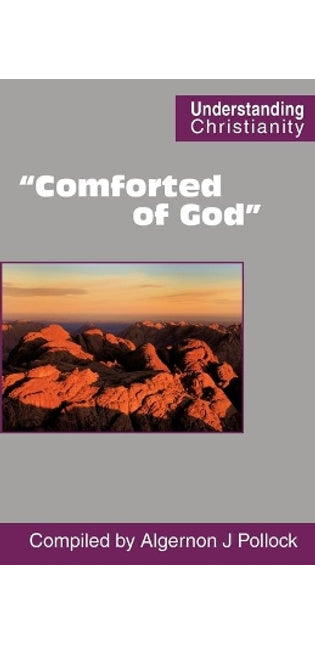
"Comforted of God"
This collection of Scripture texts, prose and poetry shines the light of God's Word into the darkness of disappointment, illness and bereavement. To those in such circumstances it provides encouragement, strength, illumination, understanding and comfort. Over thirty thousand copies were produced during the first half of the twentieth century, bringing relief to many. Over one hundred years have passed since the first edition was compiled, and yet the basic problems of the human condition remain essentially unchanged; and God's Word has as much to say to those facing the darkest of personal situations in the 21st Century as it ever did. Its message of hope still lifts the spirit and draws the stressed, the discouraged and the sorrowful to the Saviour, who is the Prince of Peace. The compiler, Algernon James Pollock (1864-1957), was the eldest son born to a Christian banker and his wife in Newcastle-upon-Tyne. At the age of eleven he made a profession of faith in Christ. Early in life he was introduced to leading figures amongst the Brethren (John Nelson Darby was entertained in the home when he was about fifteen). He followed his father into banking, but his true calling was to share the treasure he had found in heaven, and he left to become a full-time evangelist. He was an indefatigable apologist from the pulpit and in print wherever he saw the Christian faith under attack. He wrote several books, but he is probably best known for over fifty pamphlets containing critiques of deviations from Bible-based, Christ-centred Christianity.
R 291.24
Pollock and After
First published in 1985, "Pollock and After" is a collection of writings on abstract Expressionism. This revised edition, featuring ten new articles, takes account of new critical approaches to post-war American art. Section one examines the legacy of the influential Modernist critic, Clement Greenberg, including both Greenberg's own writings and the debate between T.J. Clark and Michael Fried over his contribution. Section two focuses on revisionist texts, questioning the adequacy of Modernist art history and examining the role of cultural institutions in the United States and the relationship between abstract expressionism and the politics of McCarthyism during the Cold War. The entirely new section three is devoted to recent developments of the critiques first raised by the revisionists. Contributors explore the work of Greenberg's contemporaries, the relationship between critical and institutional responses to art and perceptions of cultural value in the 1940s and 1950s. They also and challenge the unquestioned assumptions about ethnicity, gender and sexuality in the construction of the "post-war American artist".
R 9,379.78
R 1,274.24
R 165.00
Subjunctive Reasoning
I am indebted to many people for the help they gave me in the writing of this book. lowe a large debt to David Lewis and Robert Stalnaker, on both general and specific grounds. As becomes apparent from reading the notes, the book would not have been possible without their pioneering work on subjunctive conditionals. In addition, both were kind enough to provide specific comments on earlier versions of different parts of the book, and Stalnaker read and commented on the entire manuscript. Closer to home, I am indebted to my colleagues Rolf Eberle and Henry Kyburg, Jf. , my erstwhile colleague Keith Lehrer, and numerous graduate students for their helpful comments on various parts of the manuscript. Some of the material contained herein appeared first in the form of journal articles, and I wish to thank the journals in question for allowing the material to be reprinted here. Chapter One contains material taken from 'The "Possible Worlds" Analysis of Counter-factuals', published in Phil. Studies 29 (1976), 469 (Reidel); Chapter Two contains material much revised from 'Four Kinds of Conditionals', Am. Phil. Quarterly 12 (1975), and Chapter Three contains much revised material from 'Subjunctive Generaliza tions', Synthese 28 (1974), 199 (Reidel). CHAPTER I INTRODUCTION 1. SUBJUNCTIVE REASONING There exists quite a variety of statements which are in some sense 'subjunctive'.
R 3,032.31
R 557.00