



Search results for "Speed"
Items in stock - 4 working days delivery time

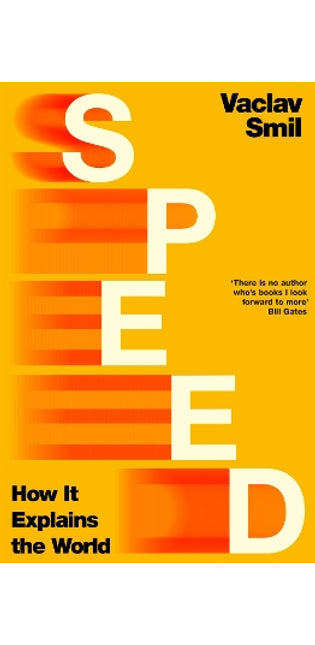
Speed
Prepare to view the world through a new lens – SPEED – a groundbreaking exploration that challenges your perceptions of life’s driving force, from the internationally bestselling author'There is no author whose books I look forward to more' Bill Gates‘There is perhaps no other academic who paints pictures with numbers like Smil’ GuardianIn a world that feels like it’s moving faster than ever, Smil examines how our relentless pursuit of speed – in areas such as production, travel and communication – shapes not only our technological landscape but also our social and environmental realities. And through engaging anecdotes and striking statistics, Smil challenges the assumption that faster is always better.He invites readers to reconsider the implications of our collective obsession with speed, and its intricate relationship with nature and innovation. For example, he highlights the surprising fact that erosion can actually accelerate mountain growth, and he points out that the rapid adoption of mobile phones – achieving 90 per cent penetration in just nineteen years – reflects historical patterns of technological adoption, suggesting that our world may not be moving significantly faster than in the past.Whether exploring the tiny mites that can traverse 300 times their body length in a second or the societal impacts of high-frequency trading, Speed invites readers to engage in a more balanced conversation about the role of speed in our lives, in an age defined by haste.
R 330.00
Speed
Prepare to view the world through a new lens – SPEED – a groundbreaking exploration that challenges your perceptions of life’s driving force, from the internationally bestselling author'There is no author whose books I look forward to more' Bill Gates‘There is perhaps no other academic who paints pictures with numbers like Smil’ GuardianIn a world that feels like it’s moving faster than ever, Smil examines how our relentless pursuit of speed – in areas such as production, travel and communication – shapes not only our technological landscape but also our social and environmental realities. And through engaging anecdotes and striking statistics, Smil challenges the assumption that faster is always better.He invites readers to reconsider the implications of our collective obsession with speed, and its intricate relationship with nature and innovation. For example, he highlights the surprising fact that erosion can actually accelerate mountain growth, and he points out that the rapid adoption of mobile phones – achieving 90 per cent penetration in just nineteen years – reflects historical patterns of technological adoption, suggesting that our world may not be moving significantly faster than in the past.Whether exploring the tiny mites that can traverse 300 times their body length in a second or the societal impacts of high-frequency trading, Speed invites readers to engage in a more balanced conversation about the role of speed in our lives, in an age defined by haste.
R 520.00
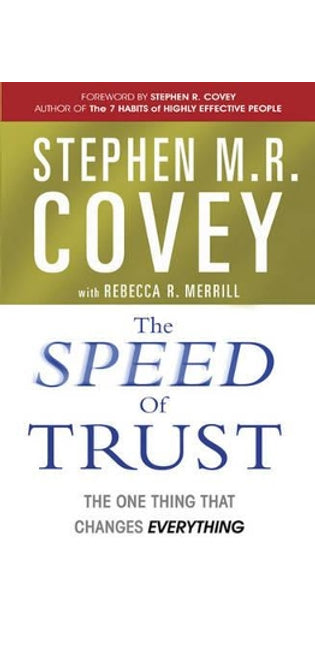
Speed of Trust
From Stephen R. Covey's eldest son come a revolutionary book that will guide business leaders, public figures and their organizations towards unprecedented productivity and satisfaction. Trust, says Stephen M. R. Covey, is the very basis of the 21st century's global economy, but its power is generally overlooked and misunderstood. Covey shows you how to inspire immediate trust in everyone you encounter - colleagues, constituents, the marketplace - allowing you to forego the time-killing and energy-draining check and balance bureaucracies that are so often relied upon in lieu of actual trust.
R 475.00

Items we need to order for you
Speed
Take the ride of your life with this dangerous romance overflowing with dark humor, intense heat, and tangible angst--the second spinoff novel after 44 CHAPTERS ABOUT 4 MEN, the book that inspired the hit Netflix original series SEX/LIFE. Ronald "Knight" McKnight was obsessive. Possessive. Downright psychopathic. But that didn't stop BB Easton from falling in love with him. . . or from falling apart when he joined the Marines. As he left, Knight told her to "find someone better," but she didn't. She found Harley instead. Harley James was a fun, flirty, tattooed mechanic whose face was as angelic as his secrets were sinful. He taught BB how to live again. How to laugh again. But would he teach her how to love again? Over Knight's dead body. "Raw, scorching, and totally addictive, Speed is an adrenaline-fueled ride." --Jamie Shaw, author of Mayhem To view a comprehensive content warning, please visit the author's website.
R 588.00
R 456.00
Speed
On the morning of December 22, 1964, at a small, closely guarded airstrip in the desert town of Palmdale, California, Lockheed test pilot Bob Gilliland stepped into a strange-looking aircraft and roared into aviation history.Developed at the super-secret Skunk Works, the SR-71 Blackbird was a technological marvel. In fact, more than a half century later, the Mach 3–plus titanium wonder, designed by Clarence L. “Kelly” Johnson, remains the world’s fastest jet.It took a test pilot with the right combination of intelligence, skill, and nerve to make the first flight of the SR-71, and the thirty-eight-year-old Gilliland had spent much of his life pushing the edge. In Speed, one of America’s greatest test pilots collaborates with acclaimed journalist Keith Dunnavant to tell his remarkable story: How he was pushed to excel by his demanding father. How a lucky envelope at the U.S. Naval Academy altered the trajectory of his life. How he talked his way into U.S. Air Force fighters at the dawn of the jet age, despite being told he was too tall. How he made the conscious decision to trade the security of the business world for the dangerous life of an experimental test pilot, including time at the clandestine base Area 51, working on the Central Intelligence Agency’s Oxcart program. The narrative focuses most intently on Gilliland’s years as the chief test pilot of the SR-71, as he played a leading role in the development of the entire fleet of spy planes while surviving several emergencies that very nearly ended in disaster. Waging the Cold War at 85,000 feet, the SR-71 became an unrivaled intelligence-gathering asset for the U.S. Air Force, invulnerable to enemy defenses for a quarter century.Gilliland’s work with the SR-71 defined him, especially after the Cold War, when many of the secrets began to be revealed and the plane emerged from the shadows—not just as a tangible museum artifact but as an icon that burrowed deep into the national consciousness.Like the Blackbird itself, Speed is a story animated by the power of ambition and risk-taking during the heady days of the American Century.
R 1,139.00
R 574.80
R 534.52
R 652.00
R 244.00
R 797.00
On Speed
An extensively researched account of the ups and downs in the history of uppers Uppers. Crank. Bennies. Dexies. Greenies. Black Beauties. Purple Hearts. Crystal. Ice. And, of course, Speed. Whatever their street names at the moment, amphetamines have been an insistent force in American life since they were marketed as the original antidepressants in the 1930s. On Speed tells the remarkable story of their rise, their fall, and their surprising resurgence. Along the way, it discusses the influence of pharmaceutical marketing on medicine, the evolving scientific understanding of how the human brain works, the role of drugs in maintaining the social order, and the centrality of pills in American life. Above all, however, this is a highly readable biography of a very popular drug. And it is a riveting story. Incorporating extensive new research, On Speed describes the ups and downs (fittingly, there are mostly ups) in the history of amphetamines, and their remarkable pervasiveness. For example, at the same time that amphetamines were becoming part of the diet of many GIs in World War II, an amphetamine-abusing counterculture began to flourish among civilians. In the 1950s, psychiatrists and family doctors alike prescribed amphetamines for a wide variety of ailments, from mental disorders to obesity to emotional distress. By the late 1960s, speed had become a fixture in everyday life: up to ten percent of Americans were thought to be using amphetamines at least occasionally.Although their use was regulated in the 1970s, it didn't take long for amphetamines to make a major comeback, with the discovery of Attention Deficit Disorder and the role that one drug in the amphetamine family—Ritalin—could play in treating it. Today’s most popular diet-assistance drugs differ little from the diet pills of years gone by, still speed at their core. And some of our most popular recreational drugs—including the "mellow" drug, Ecstasy—are also amphetamines. Whether we want to admit it or not, writes Rasmussen, we’re still a nation on speed.
R 1,509.00
R 183.00
R 336.00
Speed Handbook
Speed, the sensation one gets when driving fast, was described by Aldous Huxley as the single new pleasure invented by modernity. The Speed Handbook is a virtuoso exploration of Huxley’s claim. Enda Duffy shows how the experience of speed has always been political and how it has affected nearly all aspects of modern culture. Primarily a result of the mass-produced automobile, the experience of speed became the quintessential way for individuals to experience modernity, to feel modernity in their bones. Duffy plunges full-throttle into speed’s “adrenaline aesthetics,” offering deft readings of works ranging from F. Scott Fitzgerald’s The Great Gatsby, through J. G. Ballard’s Crash, to the cautionary consumerism of Ralph Nader. He describes how speed changed understandings of space, distance, chance, and violence; how the experience of speed was commodified in the dawning era of mass consumption; and how society was incited to abhor slowness and desire speed. He examines how people were trained by new media such as the cinema to see, hear, and sense speed, and how speed, demanded of the efficient assembly-line worker, was given back to that worker as the chief thrill of leisure. Assessing speed’s political implications, Duffy considers how speed pleasure was offered to citizens based on criteria including their ability to pay and their gender, and how speed quickly became something to be patrolled by governments. Drawing on novels, news reports, photography, advertising, and much more, Duffy provides a breakneck tour through the cultural dynamics of speed.
R 1,183.05
R 1,407.73
R 427.00
R 865.94
R 458.00
R 1,356.19
R 305.00
At Speed
At Speed is an irreverent but informed look at the colorful personalities, exciting places, and devoted fans of stock car racing. It is divided into six sections: "People" (the sport's key personalities), "Places" (its unique venues), "Fans" (its avid followers), "Opinions" (what is right and wrong about the NASCAR phenomenon), "Color" (a collection of humorous pieces), and "Scenes" (word pictures of the sport from different perspectives). "People" profiles Bobby Allison, Geoff Bodine, the Burton brothers, Ricky Craven, Dale Earnhardt, Bill Elliott, Jeff Gordon, Robby Gordon, Ernie Irvan, Kenny Irwin, Dale Jarrett, Junior Johnson, Richard Petty, Tony Stewart, Rusty Wallace, Darrell Waltrip, and many more NASCAR legends and legends-in-the-making. At Speed is this season's NASCAR book that will take the checkered flag.
R 455.00
Forged by Speed
In a little over two and a half minutes on 6 September 2009 Steve Peat cemented his place in mountain biking history, becoming downhill world champion at the seventeenth time of asking and by a winning margin of just five hundredths of a second. But ‘Peaty’s’ road to the coveted rainbow stripes began almost two decades earlier on the woodland trails of Northern England. Born and raised in Sheffield, he narrowly avoided going down the wrong track and instead chose to race cross-country mountain bikes before switching to the rapidly emerging discipline of downhill where he would compete alongside other young British racers including Rob Warner and the late, great, Jason McRoy. Since then, Steve has competed against the greatest riders of all time, including Nicolas Vouilloz, Shaun Palmer and Greg Minnaar, and his name has become synonymous around the world with downhill mountain biking. In Forged by Speed, Steve shares his incredible story, from the Steel City to the top step of the world championship podium. Honest, compelling and funny, it is the autobiography of a British sporting legend.
R 920.00
On Speed
An extensively researched account of the ups and downs in the history of uppers Uppers. Crank. Bennies. Dexies. Greenies. Black Beauties. Purple Hearts. Crystal. Ice. And, of course, Speed. Whatever their street names at the moment, amphetamines have been an insistent force in American life since they were marketed as the original antidepressants in the 1930s. On Speed tells the remarkable story of their rise, their fall, and their surprising resurgence. Along the way, it discusses the influence of pharmaceutical marketing on medicine, the evolving scientific understanding of how the human brain works, the role of drugs in maintaining the social order, and the centrality of pills in American life. Above all, however, this is a highly readable biography of a very popular drug. And it is a riveting story. Incorporating extensive new research, On Speed describes the ups and downs (fittingly, there are mostly ups) in the history of amphetamines, and their remarkable pervasiveness. For example, at the same time that amphetamines were becoming part of the diet of many GIs in World War II, an amphetamine-abusing counterculture began to flourish among civilians. In the 1950s, psychiatrists and family doctors alike prescribed amphetamines for a wide variety of ailments, from mental disorders to obesity to emotional distress. By the late 1960s, speed had become a fixture in everyday life: up to ten percent of Americans were thought to be using amphetamines at least occasionally.Although their use was regulated in the 1970s, it didn't take long for amphetamines to make a major comeback, with the discovery of Attention Deficit Disorder and the role that one drug in the amphetamine family—Ritalin—could play in treating it. Today’s most popular diet-assistance drugs differ little from the diet pills of years gone by, still speed at their core. And some of our most popular recreational drugs—including the "mellow" drug, Ecstasy—are also amphetamines. Whether we want to admit it or not, writes Rasmussen, we’re still a nation on speed.
R 3,149.00
R 1,244.31
R 764.00
R 611.00
R 396.00
Culture of Speed
"John Tomlinson′s book is an invitation to an adventure. It contains a precious key to unlock the doors into the unmapped and unexplored cultural and ethical condition of ′immediacy′. Without this key concept from now on it will not be possible to make sense of the social existence of our times and its ambivalences." - Ulrich Beck, University of Munich"A most welcome, stimulating and challenging exploration of the cultural impact and significance of speed in advanced modern societies. It successfully interweaves theoretical discourse, historical and contemporary analyses and imaginative use of literary sources, all of which are mobilised in order to provide an original, intellectually rewarding and critical account of the changing significance of speed in our everyday experience." - David Frisby, London School of Economics and Political ScienceIs the pace of life accelerating? If so, what are the cultural, social, personal and economic consequences?This stimulating and accessible book examines how speed emerged as a cultural issue during industrial modernity. The rise of capitalist society and the shift to urban settings was rapid and tumultuous and was defined by the belief in ′progress′. The first obstacle faced by societies that were starting to ′speed up′ was how to regulate and control the process. The attempt to regulate the acceleration of life created a new set of problems, namely the way in which speed escapes regulation and rebels against controls. This pattern of acceleration and control subsequently defined debates about the cultural effects of acceleration. However, in the 21st century ′immediacy′, the combination of fast capitalism and the saturation of the everyday by media technologies, has emerged as the core feature of control. This coming of immediacy will inexorably change how we think about and experience media culture, consumption practices, and the core of our cultural and moral values.Incisive and richly illustrated, this eye-opening account of speed and culture provides an original guide to one of the central features of contemporary culture and everyday life.
R 3,384.41
R 1,175.00
At Speed
From the lowest highway in North America to the highest, W. Scott Olsen takes readers on a journey that is more about going than about getting there. These are stories of travel as it is lived, essays about motion and the desire to keep moving. In a companionable style that puts readers in the passenger seat, Olsen describes his travels through the United States, observing the world close-up as it rushes toward and then away from his old Jeep. The Upper Peninsula in March, a one-day drive from Death Valley to Mount Evans, a harrowing trip from Fargo to Spokane in the dead of winter: these journeys and others offer opportunities for Olsen’s unconventional narrative to take flight in exploring the intricacies of America, its small towns, its people, its roads, its histories, and its landscapes in vistas long and short that might otherwise be overlooked. In Olsen’s hands, travels along the most American routes of the heartland become an addictive tale that will appeal to anyone who has ever wondered what lies over the next hill.
R 387.00
R 486.76
R 1,205.92
R 519.00
R 905.50
R 1,246.04
K-Speed
Korea was one of the poorest countries in the world up to the mid to late 20th century, but within less than half a century she emerged as an economic and cultural powerhouse. The US and World Report recently ranked Korea as 6th in global power. In terms of GNP and per capita income Korea became one of the most advanced countries in the world. This has been dubbed as the ‘Korean Miracle’. There may be several factors that could explain this outcome and this book argues that one of the most compelling reasons is the concept of speed in Korean society and its people, which is quite different from other countries. This take on speed can be considered from the perspective of anthropological and/or social DNA, tradition, cultural heritage. Therefore, this book names ‘K-speed’ as an unexpected factor which brought on the so-called ‘miraculous’ Korean economic growth. This book belongs to the field of economic development theory and applications. Written in an empirical and descriptive format, the book provides insights into economic and cultural development for students and scholars in international affairs, economics, politics, business, and Asian studies. Governments, international agencies and senior staff in large organizations will also find this book a useful reference.
R 3,008.00
Speed and Politics
With this book Paul Virilio inaugurated the new science whose object of study is the "dromocratic" revolution. Speed and Politics (first published in France in 1977) is the matrix of Virilio's entire work. Building on the works of Morand, Marinetti, and McLuhan, Virilio presents a vision more radically political than that of any of his French contemporaries: speed as the engine of destruction. Speed and Politics presents a topological account of the entire history of humanity, honing in on the technological advances made possible through the militarization of society. Paralleling Heidegger's account of technology, Virilio's vision sees speed-not class or wealth-as the primary force shaping civilization. In this "technical vitalism," multiple projectiles-inert fortresses and bunkers, the "metabolic bodies" of soldiers, transport vessels, and now information and computer technology-are launched in a permanent assault on the world and on human nature. Written at a lightning-fast pace, Virilio's landmark book is a split-second, overwhelming look at how humanity's motivity has shaped the way we function today, and what might come of it.
R 492.00
R 683.00
R 638.05
R 489.00
R 1,364.71
R 1,048.44
R 398.00


