



Search results for "Stephen Butler"
Items in stock - 4 working days delivery time

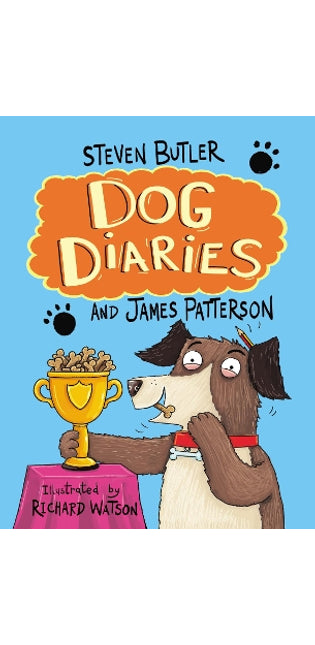
Dog Diaries
'A perfect story to tickle the funny bone of any young reader!' Megan RixOh boy, oh boy, oh boy!I’ve been waiting ages to tell my story, and now it’s finally happening!Being Rafe’s dog isn’t always easy, but it is always EXCITING!I’ve got so much to tell you about:The amazing Catch-A-Doggy-Bone kennelMy favorite places for hiding snacksAnd my ultimate nemesis – THE VACUUM CLEANER!All the most important parts of a dog’s life.
R 225.00
Items we need to order for you
R 458.00
«Fausts» of Gérard de Nerval
Gérard de Nerval’s French translations of Goethe’s Faust are key works in Franco–German cultural relations, but they have often been mythologized. This book presents a nuanced view of works that continue to be the principal conveyors in France of arguably the foremost work of German literature. Less well known than his translations, Nerval’s own Faustian dramas – the Faust fragment (c. 1827), Nicolas Flamel (1831), and L’Imagier de Harlem (1851) – have received little scholarly attention and yet reveal much about his, and indeed other, French interpretations of Faust. The author examines Nerval’s convergences with and divergences from Goethe diachronically in order to identify and compare what may be termed Goethean and Nervalian Faustian paradigms, thereby unravelling hitherto unknown facets of Nervalian aesthetics. Alongside Goethe and Nerval, the book investigates intercultural relations that have a bearing on Nerval’s Faustian writing in France during this dynamic period. It opens up new avenues for thinking about intertextuality, literary translation and adaptation through two major figures of European writing.
R 2,351.00
Crime Fiction
In the second decade of the twenty-first century, crime fiction remains one of the most popular genres among both readers and writers. This compilation of essays attempts to trace the reasons behind this ongoing popularity as well as to offer a closer reading of a number of crime fiction texts from English, American, Swedish, Italian, Japanese and other national literatures. It contains twenty-one original essays written by scholars and practitioners of crime fiction which discuss key concepts in the field of crime fiction studies: generic diversity, the evolution of characters, the growing significance of space and place and reader response.This book includes a short story by David Malcom.
R 2,351.00
R 611.00
R 455.70
R 611.00
R 714.35
R 458.00
R 754.36
R 452.17
R 458.00
R 610.00
R 1,737.00
Manufacturing the Future
This is a full-length history of the Western Electric Company, which was the manufacturing arm of the Bell System. As manufacturer in the communications revolutions in the nineteenth and twentieth centuries, Western Electric made products that accelerated society's pace, such as telegraphs, telephones, an early computing machine, radios, radar and transistors. Western's history offers numerous examples of the difference between innovation and implementation. The aftermath of Western's 1882 acquisition by Bell Telephone, for instance, reveals vertical integration as a lengthy process rather than a single event. Ironically, although Western transformed business worldwide with innovations in areas such as quality control and industrial psychology, the company was slow to implement these innovations itself. Western's dual role as captive supplier for a regulated monopoly and as government contractor led to its most rapid change, in the area of civil rights.
R 3,722.57
R 1,407.51
Samuel Butler: Characters and Passages from Note-Books
Originally published in 1908, as part of the Cambridge English Classics series, this volume of Samuel Butler's writings falls into two parts: the first part was derived from Thyer's edition of The Genuine Remains in Verse and Prose of Mr Samuel Butler; the second part contains previously unpublished material taken from the Butler Manuscripts in the British Library. The text is made up of a series of character sketches and essays on various subjects. An appendix of unclassified observations and an editorial notes section are also included. This book will be of value to anyone with an interest in the works of Butler, the development of satire and seventeenth-century literature in general.
R 2,766.10
Recycling George
Lots of kids think of running away from home. But what's a kid to do when his home runs away from him?That's what happens to twelve-year-old George Honiker when his sister and brother-in-law move out of the Versailles Trailer Park while George is at school. Is it the end of George's world? Well, hardly! For the quick-witted, resourceful, and upwardly mobile George, it's the chance of a lifetime. Faster than you can say "Lifestyles of the Rich and Famous," George bunks in with his classmate Rennie Whitfield. Rennie just happens to be the richest kid in town. A motorboat for his birthday. Thoroughbred horses. A butler. Really nice clothes. It's life at the top for George, and he's more than ready to have it all...until he finds that the Whitfields have some very big plans for him, too!Populated with a host of giddy, offbeat characters, Recycling George is a funny, exuberant story that also packs an emotional wallop.
R 235.00
Homer's Odyssey: as told by Nausikaa
SAMUEL BUTLER'S RADICAL REINTERPRETATION OF OUR OLDEST SAGAThe story of Odysseus and his ten-year struggle to return home after the Trojan War is one of the foundational works of Western literature. It has traditionally been read as a male story: the saga of one man’s heroic struggle against supernatural enemies and the threat of a violent death.But in 1900, the author and classical scholar Samuel Butler published a prose translation of The Odyssey that presented a very different picture.According to Butler, the poem’s repeated borrowings from Homer’s other poem, The Iliad, suggested that The Odyssey must be a later and deferential work. By extension, he said, it must also be by a different author. And when he looked at the language of the poem and its themes, he concluded that the author must have been a woman: specifically, a young, unmarried woman living near Trapani, in western Sicily. He went further, proposing that the author had written herself into the poem as Nausikaa, the Phaiakian princess who encounters the shipwrecked Odysseus by the shore.Butler’s translation and notes appeared at a historic moment in our culture, alongside the arrival of the New Woman and the growing campaign for women’s suffrage. Whether he welcomed such developments or indeed the consequences of his own theory is debatable. There are places where he seems frustrated by his conclusions: that this legendary masculine epic might be the product of a female imagination.His fellow critics scorned him for his literalism—his insistence that the text of The Odyssey could be taken at face value—and for what we would now call his gender stereotyping. Yet even if Butler’s analysis was unsound in some respects, he may still have noticed something in The Odyssey that generations of earlier readers had overlooked.Published three years after his study The Authoress of The Odyssey, this translation shows Butler engaged in an Odyssean struggle of his own: the attempt to come to terms with a proposition that troubled him but which was entirely original and which he wholly believed in. Welcome to the Butler edition of The Odyssey.With a new Preface and Introduction by Stephen Games.
R 555.00
R 783.64
Hand of Cicero
Hundreds perished in Rome's Second Proscription, but one victim is remembered above all others. Cicero stands out, however, not only because of his fame, but also because his murder included a unique addition to the customary decapitation. For his corpse was deprived not only of its head, but also of its right hand. Plutarch tells us why Mark Antony wanted the hand that wrote the Philippics. But how did it come to pass that Rome's greatest orator could be so hated for the speeches he had written?Charting a course through Cicero's celebrated career, Shane Butler examines two principal relationships between speech and writing in Roman oratory: the use of documentary evidence by orators and the 'publication' of both delivered and undelivered speeches. He presents this fascinating theory that the success of Rome's greatest orator depended as much on writing as speaking; he also argues against the conventional wisdom that Rome was an 'oral society', in which writing was rare and served only practical, secondary purposes.
R 3,333.86
Nothing to See Here Hotel
'This book is so good you won't blunking believe it!' Tom Fletcher 'Hilariously funny and inventive, and I love the extraordinary creatures and the one thirty-sixth troll protagonist...' Cressida Cowell 'A rip-roaring, swashbuckling, amazerous magical adventure. Comedy Gold.' Francesca Simon‘This hotel gets five stars from me’ Liz Pichon'A splundishly swashbungling tale of trolls, goblins and other bonejangling creatures. Put on your wellies and plunge into the strangest hotel you will ever encounter. This is a hotel I hope I never find! Wonderfully, disgustingly funny.' Jeremy Strong‘What a fun hotel! Book me in immediately!’ Kaye UmanskyWelcome to The Nothing to See Here Hotel! A hotel for magical creatures, where weird is normal for Frankie Banister and his parents who run the hotel. When a goblin messenger arrives at The Nothing to See Here Hotel, announcing the imminent arrival of the goblin prince Grogbah, Frankie and his family rush into action to get ready for their important guest. But it soon becomes obvious that the Banister family are going to have their work cut out with the demanding prince and his never-ending entourage, especially when it turns out the rude little prince is hiding a secret... The first book in a fabulously funny series by bestselling author Steven Butler, with a host of whacky characters brought to life with illustration from the wonderful Steven Lenton!
R 223.00
R 813.00
Next Word, Better Word
This accessible writer's guide provides a helpful framework for creating poetry and navigates contemporary concerns and practices. Stephen Dobyns, author of the classic book on the beauty of poetry, Best Words, Best Order, moves into new terrain in this remarkable book. Bringing years of experience to bear on issues such as subject matter, the mechanics of poetry, and the revision process, Dobyns explores the complex relationship between writers and their work. From Louise Gluck to Pablo Neruda to William Butler Yeats, every chapter reveals useful lessons in these renowned poets' work. Both enlightening and encouraging, Next Word, Better Word demystifies a subtle art form and shows writers how to overcome obstacles in the creative process.
R 719.33
Joseph Butler: The Analogy of Religion
Joseph Butler's The Analogy of Religion (1736) is an important work in terms of its historical influence and its contemporary relevance. In it, Butler defends Christian belief against many well-known objections: for instance, that the evidence for Christianity is weak; that it is impossible to believe in miracles; that if God existed he would have revealed himself clearly to everyone. The problems Butler discusses are current in contemporary philosophy of religion, but his answers are often ignored, or given short shrift. Butler argues that by examining this world we have reason to believe its Creator is both benevolent andjust; that virtue will be rewarded and vice punished. Even if we have doubts, we would be well advised to take Christianity seriously, given what is at stake. The work includes seminal discussions of life after death, personal identity, and the structure of our ethical thought. In addition to extensivenotes, David McNaughton's edition includes a detailed synopsis, a selection from the correspondence between Butler and Samuel Clarke, and an oveview of philosophical influences on Butler's thought.
R 4,061.00
R 958.00
British Moralists and the Internal 'Ought'
This book is a major work in the history of ethics, and provides the first study of early modern British philosophy in several decades. Professor Darwall discerns two distinct traditions feeding into the moral philosophy of the seventeenth and eighteenth centuries. On the one hand, there is the empirical, naturalist tradition, comprising Hobbes, Locke, Cumberland, Hutcheson, and Hume, which argues that obligation is the practical force that empirical discoveries acquire in the process of deliberation. On the other hand, there is a group including Cudworth, Shaftesbury, Butler, and in some moments Locke, which views obligation as inconceivable without autonomy and which seeks to develop a theory of the will as self-determining.
R 4,850.02
R 680.06
Transformative Politics
This comparative and theoretical account of the heritage and prospects of socialism in Western Europe characterises socialist political theory as transformative. Socialists counterpose objective social appraisal, such as the theory of capitalism, to implausibly ambitious agents of change - the proletariat or the interventionist state. This framework of analysis generates a comparative account of European socialist parties and their attitudes to international institutions - especially the European Union - and suggests a favourable prognosis for the future of socialism.
R 1,673.01
Transformative Politics
'A major contribution to the rethinking of the socialist project. The analysis is clear and profound and identifies the dilemmas but also the potential of contemporary socialism.' - Andrew Gamble, Professor of Politics, University of Sheffield;This comparative and theoretical account of the heritage and prospects of socialism in Western Europe characterises socialist political theory as transformative. Socialists counterpose objective social appraisal, such as the theory of capitalism, to implausibly ambitious agents of change - the proletariat or the interventionist state. This framework of analysis generates a comparative account of European socialist parties and their attitudes to international institutions - especially the European Union - and suggests a favourable prognosis for the future of socialism.
R 3,078.09
R 957.00
R 1,208.42
Erewhon
Erewhon, an anagram for “nowhere,” is a faraway land where citizens follow a unique set of rules disregarding conventional beliefs about money, health and science. Beneath the surface, Erewhon is fueled by hypocrisy and inhabitants are riddled with fear.A traveler stumbles across a remote country that appears to be a peaceful paradise. It’s a utopian society that doesn’t use or value money in a traditional way. Criminals are considered sick and treated as patients, while the ill are imprisoned and labeled as criminals. There’s also an overwhelming distrust of machines, which are outlawed due to their potential to evolve and overthrow their masters. Erewhon’s superficial qualities grow to become a source of contempt and distrust. Erewhon illustrates a world where an attempt to correct the ills of society causes more harm than good. It’s a profound examination of Victorian ethics, benefiting a minority over the majority. Butler’s groundbreaking novel has significantly influenced multiple writers in literature and beyond.With an eye-catching new cover, and professionally typeset manuscript, this edition of Erewhon is both modern and readable.
R 540.19
R 605.59
R 1,002.00
R 1,336.43
R 911.64
R 1,211.51
R 274.00
R 214.00


