Search results for "Thomas A Howe"
Items in stock - 4 working days delivery time

Surrounded by Idiots
Do you ever think you're the only one making any sense? Or tried to reason with your partner with disastrous results? Do long, rambling answers drive you crazy? Or does your colleague's abrasive manner get your back up? You are not alone. After a disastrous meeting with a highly successful entrepreneur, who was genuinely convinced he was 'surrounded by idiots', communication expert and bestselling author, Thomas Erikson dedicated himself to understanding how people function and why we often struggle to connect with certain types of people.Originally published in Swedish in 2014 as Omgiven Av Idioter, Erikson's Surrounded by Idiots is already an international phenomenon, selling over 1.5 million copies worldwide, of which over 750,000 copies have been sold in Sweden alone. It offers a simple, yet ground-breaking method for assessing the personalities of people we communicate with - in and out of the office - based on four personality types (Red, Blue, Green and Yellow), and provides insights into how we can adjust the way(s) we speak and share information. Erikson will help you understand yourself better, hone communication and social skills, handle conflict with confidence, improve dynamics with your boss and team, and get the best out of the people you deal with and manage. He also shares simple tricks on body language, improving written communication and advice on when to back away or when to push on, and when to speak up or indeed shut up. Packed with 'aha!' and 'oh no!' moments, Surrounded by Idiots will help you understand and influence those around you, even people you currently think are beyond all comprehension. And with a bit of luck you can also be confident that the idiot out there isn't you!
R 305.00

Items we need to order for you
R 841.37
R 520.00
R 716.24
R 520.00
R 367.00
I Want That!
Shopping has a lot in common with sex. Just about everybody does it. Some people brag about how well they do it. Some keep it a secret. And both provide ample opportunities to make foolish choices.Choosing and using objects is a primal human activity, and I Want That! is nothing less than a portrait of humanity as the species that shops. It explores the history of acquisition -- finding, choosing, spending -- from our amber-coveting Neolithic forebears to Renaissance nobles who outfitted themselves for power to twenty-first-century bargain hunters looking for a good buy on eBay. I Want That! explores the minds of shoppers in the quest to nourish and feed fantasies, to define individuality, to provide for family, and to satisfy the needs for celebration, power, and choice -- all of which lead us to malls, boutiques, websites, and superstores.
R 390.00
More Than a Numbers Game
The world certainly suffers no shortage of accounting texts. The many out there help readers prepare, audit, interpret and explain corporate financial statements. What has been missing is a book offering context and discussion for divisive issues such as taxes, debt, options, and earnings volatility. King addresses the why of accounting instead of the how, providing practitioners and students with a highly readable history of U.S. corporate accounting. More Than a Numbers Game: A Brief History of Accounting was inspired by Arthur Levitt's landmark 1998 speech delivered at New York University. The Securities and Exchange Commission chairman described the too-little challenged custom of earnings management and presaged the breakdown in the US corporate accounting three years later. Somehow, over a one-hundred year period, accounting morphed from a tool used by American railroad managers to communicate with absent British investors into an enabler of corporate fraud. How this happened makes for a good business story. This book is not another description of accounting scandals. Instead it offers a history of ideas. Each chapter covers a controversial topic that emerged over the past century. Historical background and discussion of people involved give relevance to concepts discussed. The author shows how economics, finance, law and business customs contributed to accounting's development. Ideas presented come from a career spent working with accounting information.
R 798.00
Unfreedom for All
It is often said that we live under systems of injustice. But if so, who ought to combat them, and why? Many in the world's liberal elite hold that only the perpetrators or the victims have such duties, because of their special connections to the injustice. Others hold that all of the privileged have them, because they have duties to relieve suffering or to redress their complicity in the injustice. This book challenges those answers. It argues that everyone livingunder such injustices ought to combat them: victim, perpetrator, and bystander alike. Moreover, they all have the same reason for doing so: such injustices suppress everyone's resistance to their workings. But there is a name for such suppression: "authoritarianism." Hence such injustices makeeveryone unfree, because they subject everyone to authoritarian tactics. The book thus reinterprets and defends a core doctrine of the global left, "No one is free while others are oppressed!" For it shows how oppression subjects everyone—including you—to arbitrary power. The book argues that systematic injustice occurs when one group finds that its political voice is unjustly marginalized, its members exploited and subject to systematic violence, and that society's dominant norms unjustly favor a privileged group. It diagnoses three global injustices of this kind: gender, race, and poverty. It then shows how such injustices always suppress everyone's resistance to them, making everyone unfree. But if so, it argues, then this shared unfreedom should be theground on which victims, bystanders, and perpetrators unite in solidarity against injustice.
R 3,614.63
American Museum of Natural History and How It Got That Way
Tells the story of the building of the American Museum of Natural History and Hayden Planetarium, a story of history, politics, science, and exploration, including the roles of American presidents, New York power brokers, museum presidents, planetarium directors, polar and African explorers, and German rocket scientists.The American Museum of Natural History is one of New York City’s most beloved institutions, and one of the largest, most celebrated museums in the world. Since 1869, generations of New Yorkers and tourists of all ages have been educated and entertained here. Located across from Central Park, the sprawling structure, spanning four city blocks, is a fascinating conglomeration of many buildings of diverse architectural styles built over a period of 150 years. The first book to tell the history of the museum from the point of view of these buildings, including the planned Gilder Center, The American Museum of Natural History and How It Got That Way contextualizes them within New York and American history and the history of science. Part II, “The Heavens in the Attic,” is the first detailed history of the Hayden Planetarium, from the museum’s earliest astronomy exhibits, to Clyde Fisher and the original planetarium, to Neil deGrasse Tyson and the Rose Center for Earth and Space, and it features a photographic tour through the original Hayden Planetarium. Author Colin Davey spent much of his childhood literally and figuratively lost in the museum’s labyrinthine hallways. The museum grew in fits and starts according to the vicissitudes of backroom deals, personal agendas, two world wars, the Great Depression, and the Cold War. Chronicling its evolution―from the selection of a desolate, rocky, hilly, swampy site, known as Manhattan Square to the present day―the book includes some of the most important and colorful characters in the city’s history, including the notoriously corrupt and powerful “Boss” Tweed, “Father of New York City” Andrew Haswell Green, and twentieth-century powerbroker and master builder Robert Moses; museum presidents Morris K. Jesup, Henry Fairfield Osborn, and Ellen Futter; and American presidents, polar and African explorers, dinosaur hunters, and German rocket scientists. Richly illustrated with period photos, The American Museum of Natural History and How It Got That Way is based on deep archival research and interviews.
R 1,937.00
War and Remembrance
"No soldier could ask for a sweeter resting place than on the field of glory where he fell. The land he died to save vies with the one which gave him birth in paying tribute to his memory, and the kindly hands which so often come to spread flowers upon his earthly coverlet express in their gentle task a personal affection." -- General John J. PershingTo remember and honor the memory of the American soldiers who fought and died in foreign wars during the past hundred years, the American Battle Monuments Commission (ABMC) was established. Since the agency was founded in 1923, its sole purpose has been to commemorate the soldiers' service and the causes for which their lives were given. The twenty-five overseas cemeteries honoring 139,000 combat dead and the memorials honoring the 60,314 fallen soldiers with no known graves are among the most beautiful and meticulously maintained shrines in the world.In the first comprehensive study of the ABMC, Thomas H. Conner traces how the agency came to be created by Congress in the aftermath of World War I, how the cemeteries and monuments the agency built were designed and their locations chosen, and how the commemorative sites have become important "outposts of remembrance" on foreign soil. War and Remembrance powerfully demonstrates that these monuments -- living sites that embody the role Americans played in the defense of freedom far from their own shores -- assist in understanding the interconnections of memory and history and serve as an inspiration to later generations.
R 1,547.00
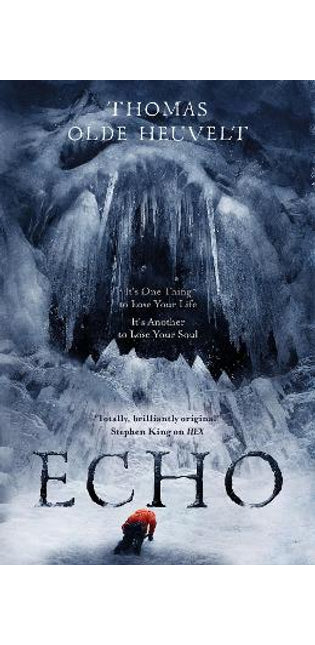
Echo
'Echo is a compulsive page turner mixing supernatural survival horror and pulp adventure' Paul Tremblay, author of A Head Full of Ghosts'Hallucinatory, eerie and terrifying' Catriona Ward, author of The Last House on Needless Street'Echo is a haunting contribution to the literature of folk horror' Ramsey Campbell'The most frightening opening scene ever written' The GuardianIt's One Thing to Lose Your LifeIt's Another to Lose Your Soul Travel journalist and mountaineer Nick Grevers awakes from a coma to find that his climbing buddy, Augustin, is missing and presumed dead. Nick's own injuries are as extensive as they are horrifying. His face wrapped in bandages and unable to speak, Nick claims amnesia - but he remembers everything. He remembers how he and Augustin were mysteriously drawn to the Maudit, a remote and scarcely documented peak in the Swiss Alps. He remembers an ominous sense that they were not alone. He remembers something waiting for them . . . Sam Avery wants to be glad that Nick is alive and coming home, but the accident has stirred up memories that Sam thought were long buried. Soon he realizes that it isn't just the trauma of the accident that haunts Nick. Something has awakened inside of him, something that endangers the lives of everyone around him . . .'This is totally, brilliantly original'Stephen King, on HEX 'Creepy and girpping and original' George R. R. Martin on HEX 'Reminiscent of vintage Stephen King' John Connolly on HEX 'The next genre superstar' Paul Cornell
R 314.00
Hoops
From its early days as a sport to build “muscular Christianity” among young men flooding nineteenth-century cities to its position today as a global symbol of American culture, basketball has been a force in American society. It grew through high school gymnasiums, college pep rallies, and the fits and starts of professionalization. It was a playground game, an urban game, tied to all of the caricatures that were associated with urban culture. It struggled with integration and representations of race. Today, basketball’s influence seeps into film, music, dance, and fashion. Hoops tells the story of the reciprocal relationship between the sport and the society that received it. While many books have celebrated specific aspects of the game, Thomas Aiello presents the only contemporary cultural history of the sport from the street to the highest levels of professional mens and womens competition. He argues that the game has existed in a reciprocal relationship with the broader culture, both embodying conflicts over race, class, and gender and serving a s public theater for them. Aiello places cultural icons like Bill Russell, Michael Jordan, and Kobe Bryant in the context of their times and explores how the sport negotiated controversies and scandals. Hoops belongs on the bookshelf of every reader interested in the history of basketball, sports, race, urban life, and pop culture in America.
R 1,393.00
In Search of Lost Roses
Once upon a time-before the 1860s-people loved old roses like "Pearl of Gold," "Marchionesse of Lorne," or "Autumn Damask." Then along came the hybrid tea roses, which were easier to arrange, more dramatic, and longer-blooming, and the old roses were all but forgotten. Now the lovely, subtle-hued, richly perfumed old roses are making a comeback, thanks to the efforts of a stubborn band of eccentric characters who rescued them from back alleys, ramshackle cottages, and overgrown graveyards across the country. Thomas Christopher tells us the fascinating stories of the old roses-how they were created and made their way to America-and the unforgettable people who "rustle" them from abandoned lots and secret gardens today, revelling in the mystery of an "unknown yellow."
R 813.00
Henry VIII and History
Henry VIII remains the most iconic and controversial of all English Kings. For over four-hundred years he has been lauded, reviled and mocked, but rarely ignored. In his many guises - model Renaissance prince, Defender of the Faith, rapacious plunderer of the Church, obese Bluebeard-- he has featured in numerous works of fact and faction, in books, magazines, paintings, theatre, film and television. Yet despite this perennial fascination with Henry the man and monarch, there has been little comprehensive exploration of his historiographic legacy. Therefore scholars will welcome this collection, which provides a systematic survey of Henry's reputation from his own age through to the present. Divided into three sections, the volume begins with an examination of Henry's reputation in the period between his death and the outbreak of the English Civil War, a time that was to create many of the tropes that would dominate his historical legacy. The second section deals with the further evolution of his reputation, from the Restoration to Edwardian era, a time when Catholic commentators and women writers began moving into the mainstream of English print culture. The final section covers the twentieth and twenty-first centuries, which witnessed an explosion of representations of Henry, both in print and on screen. Taken together these studies, by a distinguished group of international scholars, offer a lively and engaging overview of how Henry's reputation has been used, abused and manipulated in both academia and popular culture since the sixteenth century. They provide intriguing insights into how he has been reinvented at different times to reflect the cultural, political and religious demands of the moment; sometimes as hero, sometimes as villain, but always as an unmistakable and iconic figure in the historical landscape.
R 2,839.62
Last Navigator
The classic account of traditional Micronesian navigation and “the last navigator,” Mau Piailug, who fought to preserve it.For thousands of years, the peoples of Oceania have sailed unerringly across the Pacific without compass or charts, guided only by natural signs—stars, waves, and the flight paths of birds. In search of this secret knowledge, a young sailor, Steve Thomas, travelled to the tiny island of Satawal in Micronesia, home to Mau Piailug, one of the few surviving paliuw, or navigators. In The Last Navigator, Thomas tells how he convinced Piailug to accept him as his student and teach him the closely guarded Talk of Navigation. It is a remarkable book, offering at once a clear and precise account of Micronesian way-finding and the moving story of one man trying to preserve his culture against the tide of modernity.Now, 40 years after his original journey to study under Mau Piailug, Thomas has worked with a new generation of researchers, including natives of Satawal, to prepare this revised edition of The Last Navigator. All Satawalese words are rendered in the now-accepted orthography, and the islanders, originally identified by pseudonyms, appear under their true names. And throughout, Thomas has added a generous selection of colour photographs from his time on Satawal. The result is a lasting tribute to the spirit of the Satawalese, and to the Talk of Navigation.
R 455.00
From Infinite World
The Hammond organ has long distinguished the Black Church. Masters of the instrument, often Blackqueer men, invented and advanced gospel music, pioneered new modes of worship, and helped define black life in the twentieth century. But when the AIDS crisis struck, churches vociferously rejected all forms of queerness, even as musicians grew ill, rumors spread, and people died. Drawing on years of experience as a preacher, choir director, and organist, award-winning visual artist and scholar Ashon Thomas Crawley combines personal history and cultural analysis to tell an urgent story about how AIDS fundamentally changed gospel music and the sound of the church.From Infinite World immerses readers in the history of this pivotal instrument. Crawley profiles its inventor, a white supremacist named Laurens Hammond, and describes the vicious lawsuits fought over the organ’s unique sound. He also introduces little-known but foundational figures in the church and black life, such as Reverend Clarence Cobbs of Chicago and his First Church of Deliverance, where Black Gospel flourished alongside Blackqueer life in fascinating and complex ways. And he explores his own experience as a Blackqueer church musician learning the power of the Hammond organ even as a generation of elders perished in silence. A major work of scholarship and a deeply vulnerable performance of creative nonfiction, Crawley’s lyrical work offers a captivating new portrait of the Black church as a site of refuge and rejection for Blackqueer genius.
R 798.00
Great Catastrophe
The destruction of the Armenians of the Ottoman Empire in 1915-16 was the greatest atrocity of World War I. Around one million Armenians were killed, and the survivors were scattered across the world. Although it is now a century old, the issue of what most of the world calls the Armenian Genocide of 1915 is still a live and divisive issue that mobilizes Armenians across the world, shapes the identity and politics of modern Turkey, and has consumed the attention ofU.S. politicians for years. In Great Catastrophe, the eminent scholar and reporter Thomas de Waal looks at the aftermath and politics of the Armenian Genocide and tells the story of recent efforts by courageous Armenians, Kurds, and Turks to come to terms with the disaster as Turkey enters a new post-Kemalist era. The story of what happened to the Armenians in 1915-16 is well-known. Here we are told the "history of the history" and the lesser-known story of what happened to Armenians, Kurds, and Turks in thecentury that followed. De Waal relates how different generations tackled the issue of the "Great Catastrophe" from the 1920s until the failure of the Protocols signed by independent Armenia and Turkey in 2010. Quarrels between diaspora Armenians supporting and opposing the Soviet Union broke into violence andculminated with the murder of an archbishop in 1933. The devising of the word "genocide," the growth of modern identity politics, and the 50th anniversary of the massacres re-energized a new generation of Armenians. In Turkey the issue was initially forgotten, only to return to the political agenda in the context of the Cold War and an outbreak of Armenian terrorism. More recently, Turkey has started to confront its taboos. In an astonishing revival of oral history, the descendants of tens ofthousands of "Islamized Armenians," who have been in the shadows since 1915, have begun to reemerge and reclaim their identities.Drawing on archival sources, reportage and moving personal stories, de Waal tells the full story of Armenian-Turkish relations since the Genocide in all its extraordinary twists and turns. He looks behind the propaganda to examine the realities of a terrible historical crime and the divisive "politics of genocide" it produced. The book throws light not only on our understanding of Armenian-Turkish relations but also of how mass atrocities and historical tragedies shape contemporarypolitics.
R 940.00
Killing Machines
What causes a Western democratic leader to stop even feigning to value the law of war? Unlike past US presidents, who at least paid lip service to the law of armed conflict, Donald Trump has openly flouted it: pardoning war criminals; denigrating the Geneva Conventions; praising torture; and discarding military norms of restraint. This gripping account depicts how Trump has upended assumptions about America's outward commitment to the law of war, exposing the conditions that make such defiance possible. Drawing on in-depth case studies and original survey analysis, Thomas Gift explains how Trump has relied on right-wing media and allies in Congress to attack the law of war – not in the shadows, but in broad daylight. Killing Machines cautions that Trump's approach is not an aberration – it's a playbook other leaders could follow. This title is also available as Open Access on Cambridge Core.
R 4,022.19
Intelligence War against the IRA
The exposure of two senior republicans as informers for British intelligence in 2005 led to a popular perception that the IRA had 'lost' the intelligence war and was pressurised into peace. In this first in-depth study across the entire conflict, Thomas Leahy re-evaluates the successes and failures of Britain's intelligence activities against the IRA, from the use of agents and informers to special-forces, surveillance and electronic intelligence. Using new interview material alongside memoirs and Irish and UK archival materials, he suggests that the IRA was not forced into peace by British intelligence. His work sheds new light on key questions in intelligence and security studies. How does British intelligence operate against paramilitaries? Is it effective? When should governments 'talk to terrorists'? And does regional variation explain the outcome of intelligence conflicts? This is a major contribution to the history of the conflict and of why peace emerged in Northern Ireland.
R 3,890.54
Political Economy of American Hegemony
In A Political Economy of American Hegemony, Thomas Oatley explores how America's military buildups have produced postwar economic booms that have culminated in monetary and financial crises. The 2008 subprime crisis - as well as the housing bubble that produced it - was the most recent manifestation of this buildup, boom, and bust cycle, developing as a consequence of the decision to deficit-finance the wars in Afghanistan and Iraq. Earlier instances of financial crises were generated by deficit-financed buildups in the 1980s and the late 1960s. The buildup, boom, and bust pattern results from the way political institutions and financial power shape America's response to military challenges: political institutions transform increased military spending into budget deficits, and financial power enables the United States to finance these deficits by borrowing cheaply from the rest of the world. Oatley examines how this cycle has had a powerful impact on American and global economic and financial performance.
R 1,461.32
Joyce and the Invention of Irish History
This incisive study of James Joyce's work examines Finnegans Wake as a narrative response to acute problems of historical experience, especially issues of modern Irish identity implicit in historical writing about Ireland. Thomas C. Hofheinz shows how Joyce's narrative simulations of such problems enabled him to form startling linkages between public and private, objective and subjective Irish history. Hofheinz investigates Joyce's illumination of a wide range of issues - social, cultural, familial, psychological - by comparing Finnegans Wake with traditions of modern Irish historicism and historiography, including Ireland's place in the Catholic providential history of Vico's New Science; and he trenchantly challenges cultural-material methods of interpreting Joyce's historical 'subject', countering them with a reader-response philosophy owing much to the hermeneutics of Gadamer, Iser, and Ricoeur.
R 4,896.74
Darker Days
When the darker days fall, the debt must be paid, . . . get ready for the chilling new folk horror from the Hugo Award-winning, bestselling author of HEX - from the publisher of The Exorcist and perfect for fans of Shirley Jackson and Stephen King. ‘One of the most vital and exciting voices in modern horror.’ Mike Flanagan, award-winning director of ‘Doctor Sleep’ and ‘The Haunting of Hill House’'No one builds agonizing tension like Thomas Olde Heuvelt. Darker Days is his best yet.' Catriona Ward, bestselling author of The Last House on Needless StreetIn Lock Haven, a quiet little town in Washington State, there is a very special street.Bird Street. The residents of Bird Street are all successful, wealthy, healthy and happy. And their children are all well-mannered and smart and high achievers.At least they are for eleven months of the year.In November, however, the ‘Darker Days’ begin. For November’s the month when things take a turn for the worse: accidents, bad luck, familial conflict and illness take hold. And it is in November that a stranger comes to Bird Street to collect the debt owed by the residents.Because, you see, there is a price that must be paid for all the happiness and good fortune they enjoy for the other eleven months of year. And that price is one human life. Every November. Without fail.And so it has been for over a hundred years. To ease their guilt, the residents of Bird Street seek out individuals – usually the elderly or the terminally ill – who wish to die with dignity and are content to be helped on their way.But this year, things don’t go to plan. This year events take a terrifying turn . . .Propulsive and haunting, Darker Days is a devastating modern take on the Faustian pact, and begs the question: how far would you go for your own happiness?Praise for Darker Days and Thomas Olde Heuvelt‘Totally, brilliantly original’ Stephen King, bestselling author of It and Carrie‘Possibly the most frightening prologue ever written’ Guardian'This is Olde Heuvelt at the height of his powers.' Alma Katsu, award-winning author of The Hunger‘A daring and uncompromising jewel of horror fiction.’ Eric LaRocca, award-winning author of Things Have Gotten Worse Since We Last Spoke‘Creepy, gripping, and original.’ George R. R. Martin, bestselling author of Game of Thrones‘Takes the horror/thriller genre to a whole new level.' Sarah Lotz, award-winning author of The White Road
R 346.00
Spectres of False Divinity
Spectres of False Divinity presents a historical and critical interpretation of Hume's rejection of the existence of a deity with moral attributes. In Hume's view, no first cause or designer responsible for the ordered universe could possibly have moral attributes; nor could the existence (or non-existence) of such a being have any real implications for human practice or conduct. Hume's case for this 'moral atheism' is a central plank of both hisnaturalistic agenda in metaphysics and his secularizing program in moral theory. It complements his wider critique of traditional theism, and threatens to rule out any religion that would make claims on moral practice. Thomas Holden situates Hume's commitment to moral atheism in its historical and philosophical context, offers a systematic interpretation of his case for divine amorality, and shows how Hume can endorse moral atheism while maintaining his skeptical attitude toward traditional forms of cosmological and theological speculation.
R 4,834.00
Political Economy of American Hegemony
In A Political Economy of American Hegemony, Thomas Oatley explores how America's military buildups have produced postwar economic booms that have culminated in monetary and financial crises. The 2008 subprime crisis - as well as the housing bubble that produced it - was the most recent manifestation of this buildup, boom, and bust cycle, developing as a consequence of the decision to deficit-finance the wars in Afghanistan and Iraq. Earlier instances of financial crises were generated by deficit-financed buildups in the 1980s and the late 1960s. The buildup, boom, and bust pattern results from the way political institutions and financial power shape America's response to military challenges: political institutions transform increased military spending into budget deficits, and financial power enables the United States to finance these deficits by borrowing cheaply from the rest of the world. Oatley examines how this cycle has had a powerful impact on American and global economic and financial performance.
R 3,974.81
Spectres of False Divinity
Spectres of False Divinity presents a historical and critical interpretation of Hume's rejection of the existence of a deity with moral attributes. In Hume's view, no first cause or designer responsible for the ordered universe could possibly have moral attributes; nor could the existence (or non-existence) of such a being have any real implications for human practice or conduct. Hume's case for this 'moral atheism' is a central plank of both hisnaturalistic agenda in metaphysics and his secularizing program in moral theory. It complements his wider critique of traditional theism, and threatens to rule out any religion that would make claims on moral practice. Thomas Holden situates Hume's commitment to moral atheism in its historical and philosophical context, offers a systematic interpretation of his case for divine amorality, and shows how Hume can endorse moral atheism while maintaining his skeptical attitude toward traditional forms of cosmological and theological speculation.
R 2,089.00
Annals of the College of Fort William
Fort William College was an academy established in Calcutta in 1800 by the British colonial administrator Richard Wellesley (1760–1842). Its purpose was to train British officials in numerous oriental languages, which resulted in the publication of several pioneering reference works and thousands of translated texts. First published in 1819, this book was compiled by Thomas Roebuck (1781–1819), assistant secretary to the college's council, as a tribute to Lord Wellesley's work. It contains records of all the memorable events that had taken place at the college since its establishment; Roebuck believed this would help new students in learning the principles on which the college was founded, and how former students had benefited accordingly. Drawing on official documents and containing writings by Wellesley himself, the work offers historians and linguists a valuable insight into a highly influential institution in British India.
R 3,272.58
Beneath the Surface
For more than a century, skin lighteners have been a ubiquitous feature of global popular culture—embraced by consumers even as they were fiercely opposed by medical professionals, consumer health advocates, and antiracist thinkers and activists. In Beneath the Surface, Lynn M. Thomas constructs a transnational history of skin lighteners in South Africa and beyond. Analyzing a wide range of archival, popular culture, and oral history sources, Thomas traces the changing meanings of skin colour from precolonial times to the postcolonial present. From indigenous skinbrightening practices and the rapid spread of lighteners in South African consumer culture during the 1940s and 1950s to the growth of a billiondollar global lightener industry, Thomas shows how the use of skin lighteners and experiences of skin color have been shaped by slavery, colonialism, and segregation, as well as consumer capitalism, visual media, notions of beauty, and protest politics. In teasing out lighteners’ layered history, Thomas theorises skin as a site for antiracist struggle and lighteners as a technology of visibility that both challenges and entrenches racial and gender hierarchies.
R 560.00
Melancholia of Freedom
The end of apartheid in 1994 signaled a moment of freedom and a promise of a nonracial future. With this promise came an injunction: define yourself as you truly are, as an individual, and as a community. Almost two decades later it is clear that it was less the prospect of that future than the habits and horizons of anxious life in racially defined enclaves that determined postapartheid freedom. In this book, Thomas Blom Hansen offers an in-depth analysis of the uncertainties, dreams, and anxieties that have accompanied postapartheid freedoms in Chatsworth, a formerly Indian township in Durban. Exploring five decades of township life, Hansen tells the stories of ordinary Indians whose lives were racialized and framed by the township, and how these residents domesticated and inhabited this urban space and its institutions, during apartheid and after. Hansen demonstrates the complex and ambivalent nature of ordinary township life. While the ideology of apartheid was widely rejected, its practical institutions, from urban planning to houses, schools, and religious spaces, were embraced in order to remake the community.Hansen describes how the racial segmentation of South African society still informs daily life, notions of race, personhood, morality, and religious ethics. He also demonstrates the force of global religious imaginings that promise a universal and inclusive community amid uncertain lives and futures in the postapartheid nation-state.
R 1,775.39
Twenty-five Books That Shaped America
From the author of the New York Times bestselling How to Read Literature Like a Professor comes a highly entertaining and informative book on the twenty-five works of literature that have most shaped the American character. Thomas C. Foster applies his much-loved combination of wit, know-how, and analysis to explain how each work has shaped our very existence as readers, students, teachers, and Americans. He illuminates how books such as The Last of the Mohicans, Moby-Dick, My Ántonia, The Great Gatsby, The Maltese Falcon, Their Eyes Were Watching God, On the Road, The Crying of Lot 49, and others captured an American moment, how they influenced our perception of nationhood and citizenship, and what about them endures in the American character. Twenty-five Books That Shaped America is a fun and enriching guide to America through its literature.
R 411.00
Of Seven Fir Trees and the Snow
These newly translated stories chart the making of a literary provocateur, one experiment and ethical dilemma at a time. Before Thomas Bernhard became one of the most provocative voices in modern literature, he was a young writer testing the limits of form and subject. Of Seven Fir Trees and the Snow offers an unprecedented look at his evolution, from his earliest published work at nineteen to the emergence of his unmistakable voice. Translated into English for the first time, in these stories, Bernhard moves from stark naturalism to fairy-tale simplicity to the eerie, stripped-down surrealism reminiscent of science fiction. At the same time, he grapples with the fundamental ethical questions that would define his career: how does one navigate personal autonomy in a world fractured by the upheavals of the twentieth century? Selected and arranged in chronological order by Douglas Robertson, this collection traces Bernhard’s transformation from an ambitious chronicler of Austrian rural life to a writer in dialogue with the broader currents of world literature. A rare glimpse into the making of a literary icon, this volume is essential reading for both longtime admirers and those discovering Bernhard’s singular genius for the first time.
R 570.00
Death in the Strike Zone
He threw the first fastball. The first curveball. He was baseball’s first star—and its first tragedy.In Death in the Strike Zone, acclaimed historian Thomas W. Gilbert uncovers the forgotten life of James Creighton, the first American ballplayer to become a national sensation. On the eve of the Civil War, Creighton invented something utterly new in baseball – modern pitching. Creighton was so dominant, so mesmerizing, that the game had to rewrite the rulebook to catch up with him. He is the reason we have a strike zone. Then, in one fateful game he collapsed—and four days later, he was dead at the age of twenty-one.Was it a freak injury or was baseball somehow to blame? Was there a cover-up? Why has Creighton been denied the credit he deserves? Death in the Strike Zone is part biography, part detective story, and part time machine. With vivid storytelling and groundbreaking research, Gilbert revives a vanished era of barehanded fielders, heroes and gamblers, and the strange, thrilling beginnings of America’s pastime and sports stardom itself.Death in the Strike Zone is a remarkable journey into the past that will keep you on the edge of your seat and profoundly change how you see the game of baseball.
R 638.00
Newman and Heresy
This 1991 book describes the close relationship between the historical researches and the teeming world of early nineteenth-century controversy. The setting is Oxford between the 1820s and the 1840s, when Newman made his ambitious and doomed attempt to re-invent the 'catholicity' of the Church of England. The author shows that in Newman's battle against the Protestant wing of the Church of England, and the (to him) even more sinister 'liberals', he saw parallels with the struggle of the early Church against heresy. Newman's 'rediscovery' of ancient Patristic writers and heretics was thus part of a strategy to revive Catholicism within the Anglican Church. Dr Thomas shows how Newman's eventual conversion to Rome in 1845 may be understood as a change in his perception of heresy, and a realisation of the applicability of his own polemic to his Anglican self.
R 1,986.96
R 1,573.00
Snowshoe Country
Snowshoe Country is an environmental and cultural history of winter in the colonial Northeast, closely examining indigenous and settler knowledge of snow, ice, and life in the cold. Indigenous communities in this region were more knowledgeable about the cold than European newcomers from temperate climates, and English settlers were especially slow to adapt. To keep surviving the winter year after year and decade after decade, English colonists relied on Native assistance, borrowed indigenous winter knowledge, and followed seasonal diplomatic protocols to ensure stable relations with tribal leaders. Thomas M. Wickman explores how fluctuations in winter weather and the halting exchange of winter knowledge both inhibited and facilitated English colonialism from the 1620s to the early 1700s. As their winter survival strategies improved, due to skills and technologies appropriated from Natives, colonial leaders were able to impose a new political ecology in the greater Northeast, projecting year-round authority over indigenous lands.
R 1,408.71
Nature's Echo
Nature wants to heal, and we can help.When Earth's ecosystems fall out of harmony, the damage can spiral out of control. But what if we could help nature to regain its balance?As a leading ecologist, Professor Thomas Crowther studies not just how species work in isolation, but how complex ecosystems regulate themselves. When nature’s cycles are allowed to build momentum, each species can create the conditions to allow others to thrive. From the birth of galaxies to the creation of life, the greatest transformations in our universe have been driven by quiet, self-reinforcing processes known as feedback loops.Drawing on cutting-edge ecological science, gripping personal narrative and initiatives already happening around the world, Nature’s Echo shows how natural feedback loops have astonishing power to rebound, even with minor intervention. If we can only realize how integral we are to this highly interconnected natural world, we will re-discover the path to a better future.
R 691.00
Toppling the First Ministry
Toppling the First Ministry, by T. M. Thomas Isaac and Richard W. Franke, tells the story of the CIA's covert operations against India's first Communist ministry. When Kerala, the south-west Indian coastal province, established its first Communist ministry in 1957, it immediately drew up a development schema rooted in plans to redistribute land and provide public education and healthcare to all. But as quickly as it began executing its vision, Kerala's efforts were disrupted by anti-communist agitation that succeeded in toppling the ministry with the help of the CIA. To this day, the CIA has not claimed any direct role in toppling Kerala's government Kerala is not alone. From Guatemala to Iran to the Congo to Brazil, to Indonesia and beyond, the CIA put up the financing to generate street mobs, groomed thuggish political bosses to do the CIA's bidding, organized private armies that answered to the CIA, bought and controlled media and individuals, assassinated popular leaders, and toppled elected ministries in an effort to maintain or establish U.S. control of the political and economic systems. One could see the story of Kerala as just one more tragic example of the CIA's successful efforts to manipulate the course of history and disrupt everyday life in countless emerging post-colonial nations following WWII. And yet, Kerala stands apart as an exceptional case, remarkable for what it managed to achieve: a redistributive strategy of development and consequent high quality of life for its ordinary citizens, initially at a relatively low level of economic growth. Since then, bolstered by subsequent intermittent left-led governments, Kerala`s democratic development alternative has continued to flourish. Drawing upon the recent revelation of thousands of pages of documents via the Freedom of Information Act, Isaac and Franke offer a detailed examination of the internal workings of the CIA and its local Kerala allies in subverting and ultimately overthrowing the newly elected ministry. They also show how, against all odds, Kerala continues to be a stronghold of the left in India and even across the globe.
R 2,619.00
Golden Age
Moving between Spanish conquest abroad and the court of the astute Charles V, Hugh Thomas's The Golden Age: The Spanish Empire of Charles V is the second volume in a planned trilogy on the Spanish Empire. When the Spanish conquistadors arrived in South America in the sixteenth century, they swept across the continent in a blaze of imperial expansion and brutal savagery. Beginning with the return of the remnants of Magellan's circumnavigation in 1522 and ending with Charles's death in 1558, Hugh Thomas's masterful work brilliantly brings to life one of the most extraordinary periods of the Renaissance, revealing how the Spaniards were able to conquer Guatemala, Yucatan, Columbia, Venezuela, Peru and Chile; how the audacious conquistador Francisco de Orellana sailed down the Amazon, why Cabeza de Vaca walked from Florida to Mexico and what drove Hernando de Soto to pursue worldly riches in Florida, Mississippi and Georgia. While adventurers and explorers like Cortés and Pizarro build entire cities and amassed vast wealth from the treasures of the land, they also killed thousands, and left the indelible mark of Spain's language and religion for centuries to come. 'Thomas tells the story of missionary zeal and military plunder with a zest worthy of a swashbuckling historical novelist' The Times 'A riveting story of adventure and cruelty ... a considerable scholarly accomplishment' Ben Wilson, Daily Telegraph 'This monumental history is an extraordinary achievement ... A beguilingly-written account of a fascinating subject' Alexander Samson, The Times Higher Education Supplement Hugh Thomas is the author of, among other books, The Spanish Civil War (1962), which won the Somerset Maugham Award, Cuba: The Pursuit of Freedom (1971), An Unfinished History of the World (1979), and the first volume of his Spanish Empire trilogy, Rivers of Gold (2003).
R 628.00
More Than a Numbers Game
The world certainly suffers no shortage of accounting texts. The many out there help readers prepare, audit, interpret and explain corporate financial statements. What has been missing is a book offering context and discussion for divisive issues such as taxes, debt, options, and earnings volatility. King addresses the why of accounting instead of the how, providing practitioners and students with a highly readable history of U.S. corporate accounting. More Than a Numbers Game: A Brief History of Accounting was inspired by Arthur Levitt's landmark 1998 speech delivered at New York University. The Securities and Exchange Commission chairman described the too-little challenged custom of earnings management and presaged the breakdown in the US corporate accounting three years later. Somehow, over a one-hundred year period, accounting morphed from a tool used by American railroad managers to communicate with absent British investors into an enabler of corporate fraud. How this happened makes for a good business story. This book is not another description of accounting scandals. Instead it offers a history of ideas. Each chapter covers a controversial topic that emerged over the past century. Historical background and discussion of people involved give relevance to concepts discussed. The author shows how economics, finance, law and business customs contributed to accounting's development. Ideas presented come from a career spent working with accounting information.
R 820.00
Twice-Rescued Child: An orphan tells his story of double redemption
Aged eight, Thomas Graumann excitedly boarded a train in Prague, Czechoslovakia, to embark on what he believed was a three-month holiday. "Go to Britain, learn English, and when the Germans leave, you can come home again," his mother assured him. Thomas carried two suitcases and a bag of food. At the time he knew his country had been taken over by the Germans and now was under Nazi control. That was the last he would see of his mother and most of his Jewish family, who died in concentration camps. He had also never heard of Nicholas Winton, the hero who saved 669 children (Thomas was one of the last, #652), transporting them from Czechoslovakia to the UK to save their lives. This was Thomas' first rescue, aboard what became known as the Kindertransport.His second came a year later when an evangelist from the Scottish village he was taken to for safety shared the good news of Jesus Christ with him. Saying a prayer on bent knee, Thomas' soul was rescued, and he soon dedicated himself to missionary service, which he fulfilled as an adult in the Philippines, eventually moving to the U.S.But his missionary zeal returned after the fall of Communism-and the return of his grandmother's property to his family. Both actions ushered in a way for him to return to the Czech Republic. The former rescued child was now free to travel throughout his homeland, speaking in schools of how he was rescued ... not once, but twice.
R 594.67