



Search results for "Thomas Docherty"
Items in stock - 4 working days delivery time

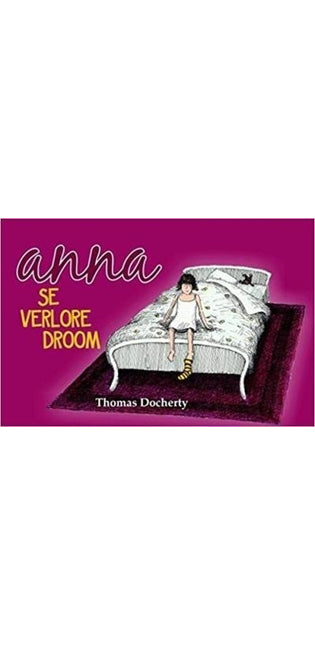
Anna se verlore droom
Anna het 'n lewendige verbeelding met drome wat vir haar werklik voel. Een oggend word sy wakker en besef dat sy haar droom nie kan onthou nie. Saam met haar hond reis sy deur haar drome op soek na die verlore droom. Hulle ontmoet reuse, vampiere, en 'n herhalende droom. Oplaas vind Anna die antwoord: haar droom was nader as wat sy gedink het. Sy klim weer in die snoesige bed en sien uit na nog interessante drome.
R 50.00
Items we need to order for you
Literature and Capital
What is the value of literature? In this important new work, Thomas Docherty charts a new economic history of literary culture and its institutions in the modern age. From the literary patronage of the early modern period, through the colonial exploitation of the 18th and 19th centuries to the institutionalisation of “literature” in the neoliberal university of the 21st century, Literature and Capital explores the changing ways in which literary culture has both resisted and become complicit with exploitative economic notions of value. Drawing on the work of economic and political thinkers such as Thomas Piketty, Naomi Klein, Edward Said and Raymond Williams, the book includes readings of work by a wide range of canonical authors from Shakespeare, Donne and Swift to Tolstoy, Woolf and Ishiguro.
R 3,825.00
Literature and Capital
What is the value of literature? In this important new work, Thomas Docherty charts a new economic history of literary culture and its institutions in the modern age. From the literary patronage of the early modern period, through the colonial exploitation of the 18th and 19th centuries to the institutionalisation of “literature” in the neoliberal university of the 21st century, Literature and Capital explores the changing ways in which literary culture has both resisted and become complicit with exploitative economic notions of value. Drawing on the work of economic and political thinkers such as Thomas Piketty, Naomi Klein, Edward Said and Raymond Williams, the book includes readings of work by a wide range of canonical authors from Shakespeare, Donne and Swift to Tolstoy, Woolf and Ishiguro.
R 1,117.00
Confessions
This book is available as open access through the Bloomsbury Open Access programme and is available on www.bloomsburycollections.com.This book explores what is at stake in our confessional culture. Thomas Docherty examines confessional writings from Augustine to Montaigne and from Sylvia Plath to Derrida, arguing that through all this work runs a philosophical substratum - the conditions under which it is possible to assert a confessional mode - that needs exploration and explication. Docherty outlines a philosophy of confession that has pertinence for a contemporary political culture based on the notion of 'transparency'. In a postmodern 'transparent society', the self coincides with its self-representations. Such a position is central to the idea of authenticity and truth-telling in confessional writing: it is the basis of saying, truthfully, 'here I take my stand'. The question is: what other consequences might there be of an assumption of the primacy of transparency? Two areas are examined in detail: the religious and the judicial. Docherty shows that despite the tendency to regard transparency as a general social and ethical good, our contemporary culture of transparency has engendered a society in which autonomy (or the very authority of the subject that proclaims 'I confess') is grounded in guilt, reparation and victimhood.
R 1,558.00
Confessions
This book explores what is at stake in our confessional culture. Thomas Docherty examines confessional writings from Augustine to Montaigne and from Sylvia Plath to Derrida, arguing that through all this work runs a philosophical substratum - the conditions under which it is possible to assert a confessional mode - that needs exploration and explication. Docherty outlines a philosophy of confession that has pertinence for a contemporary political culture based on the notion of 'transparency'. In a postmodern 'transparent society', the self coincides with its self-representations. Such a position is central to the idea of authenticity and truth-telling in confessional writing: it is the basis of saying, truthfully, 'here I take my stand'. The question is: what other consequences might there be of an assumption of the primacy of transparency? Two areas are examined in detail: the religious and the judicial.Docherty shows that despite the tendency to regard transparency as a general social and ethical good, our contemporary culture of transparency has engendered a society in which autonomy (or the very authority of the subject that proclaims 'I confess') is grounded in guilt, reparation and victimhood.
R 4,414.00
Complicity
Complicity argues that all existing modes of cultural critique are regarded as legitimate and productive if and only if they are complicit with the very ideologies and values that the criticism sets out to undermine. Through philosophical, literary and theoretical analysis, Thomas Docherty shows how easy it has been for criticism to become essentially an act of political collaboration with existing governmental power. The book explores the various ways in which, both historically and theoretically, critical activity has become complicit with the over-arching social and political norms that it aims to undermine. Philosophically, ethically and politically, criticism’s fundamental impulse is too often intrinsically negated. In extreme political form, this places criticism in line with collaborationist activity. Docherty then finds a productive way out of the double-bind in which criticism has traditionally found itself, through an idea of criticism as a mode of ‘reserve’, a mode of commitment that eschews fundamentalism of all kinds.
R 1,411.00
Complicity
Complicity argues that all existing modes of cultural critique are regarded as legitimate and productive if and only if they are complicit with the very ideologies and values that the criticism sets out to undermine. Through philosophical, literary and theoretical analysis, Thomas Docherty shows how easy it has been for criticism to become essentially an act of political collaboration with existing governmental power. The book explores the various ways in which, both historically and theoretically, critical activity has become complicit with the over-arching social and political norms that it aims to undermine. Philosophically, ethically and politically, criticism’s fundamental impulse is too often intrinsically negated. In extreme political form, this places criticism in line with collaborationist activity. Docherty then finds a productive way out of the double-bind in which criticism has traditionally found itself, through an idea of criticism as a mode of ‘reserve’, a mode of commitment that eschews fundamentalism of all kinds.
R 4,414.00
Political English
From post-truth politics to “no-platforming” on university campuses, the English language has been both a potent weapon and a crucial battlefield for our divided politics. In this important and wide-ranging intervention, Thomas Docherty explores the politics of the English language, its implication in the dynamics of political power and the spaces it offers for dissent and resistance. From the authorised English of the King James Bible to the colonial project of University English Studies, this book develops a powerful history for contemporary debates about propaganda, free speech and truth-telling in our politics. Taking examples from the US, UK and beyond - from debates about the Second Amendment and free-speech on campus, to the Iraq War and the Grenfell Tower fire - this book is a powerful and polemical return to Orwell’s observation that a degraded political language is intimately connected to an equally degraded political culture.
R 1,088.00
Moon Girl
Leila loves bright colours but finds the shadows a little scary. That's until she meets Moon Girl.Together they go on a night-time adventure, painting moonlight in the darkness and discoveringthe world after the sun sets. Thomas Docherty's stunning illustrations light up the night and turn it into a thing of beauty, curiosity,and wonder. From the author and illustrator of the critically acclaimed Into the Wild.
R 247.00
Political English
From post-truth politics to “no-platforming” on university campuses, the English language has been both a potent weapon and a crucial battlefield for our divided politics. In this important and wide-ranging intervention, Thomas Docherty explores the politics of the English language, its implication in the dynamics of political power and the spaces it offers for dissent and resistance. From the authorised English of the King James Bible to the colonial project of University English Studies, this book develops a powerful history for contemporary debates about propaganda, free speech and truth-telling in our politics. Taking examples from the US, UK and beyond - from debates about the Second Amendment and free-speech on campus, to the Iraq War and the Grenfell Tower fire - this book is a powerful and polemical return to Orwell’s observation that a degraded political language is intimately connected to an equally degraded political culture.
R 3,384.00
Aesthetic Democracy
Aesthetic Democracy argues that art and the aesthetic in general are the founding condition of the possibility of establishing social and political democracy. The book examines contemporary criticism and finds that it is historically shaped by colonialism, and that it sets up an opposition of east and west that shapes all contemporary cultural politics. The author argues for a way of outwitting this potentially dangerous struggle of east and west grounded in an aestheticism and a validation of sensory experience. Docherty proposes a new model of cultural critique, based on a revitalized and positively valorized notion of "hypocrisy," whose roots lie in Machiavelli, but whose contemporary strength lies in its potential for an ethical encounter with alterity as such.
R 713.00
Criticism and Modernity
Criticism and Modernity traces the conditions under which criticism emerges as a socio-cultural practice within the institutionalized forms of European modernity and democracy. It argues that criticism is born out of anxieties about national supremacy in the late seventeenth century, with the consequence that the emergent national cultures of the eighteenth century and since become sites for the regulation of the democratic subject through the academic formof arguments about the proper relations of aesthetics to ethics and politics. The central issue is that of legitimation: how can subjective aesthetic experiences regulate the norms of ethical justice? That question is posed not as an abstract philosophical issue, but rather as a question properly locatedwithin the struggles for national culture. The usual Germanic source of modern aesthetics and criticism is here placed in the broader European context, involving contests between England, France, Scotland, Ireland, and the emergent Germany and Italy. Writers addressed include Corneille, Dryden, Molière, Shaftesbury, Hutcheson, Hume, Rousseau, Kant, Schiller, Hegel, Schopenhauer; and, throughout, the legacy of these thinkers is found in the most recent contemporary theory, in work by Agamben, Badiou, Lyotard, MacIntyre, and others.A closing chapter considers the formation of the university across modern Europe, in Vico's Naples, Humboldt's Berlin, Newman's Dublin, Blair's Edinburgh, the France of Alain and Benda, the England of Leavis, as well as our contemporary institutional predicaments.
R 10,827.00
John Donne, Undone (Routledge Revivals)
Contemporary criticism of Donne has tended to ignore the historical culture and ideology that conditioned his writings, reinforcing the traditionally accepted model of the poet as a humanist of ethical, cultural and political individualism. In this title, first published in 1986, Thomas Docherty challenges this with a more rigorously theoretical reading of Donne, particularly in relation to the specific culture of the late Renaissance in Europe. Docherty locates Donne’s poetry at the crux of the various scientific, legal, domestic and rhetorical discourses that surrounded and informed it. With a broadly post-structuralist approach, this reissue will benefit literature students with an interest in the wider study and context of John Donne’s work.
R 9,314.53
Aesthetic Democracy
Aesthetic Democracy argues that art and the aesthetic in general are the founding condition of the possibility of establishing social and political democracy. The book examines contemporary criticism and finds that it is historically shaped by colonialism, and that it sets up an opposition of east and west that shapes all contemporary cultural politics. The author argues for a way of outwitting this potentially dangerous struggle of east and west grounded in an aestheticism and a validation of sensory experience. Docherty proposes a new model of cultural critique, based on a revitalized and positively valorized notion of "hypocrisy," whose roots lie in Machiavelli, but whose contemporary strength lies in its potential for an ethical encounter with alterity as such.
R 3,867.00
Universities at War
"Docherty is not only is a brilliant critic of those forces that would like to transform higher education into an extension of the market-place... he is also a man of great moral and civic courage, who under intense pressure from the punishing neoliberal state has risked a great deal to remind us that higher education is a civic institution crucial to creating the formative cultures necessary for a democracy to survive, if not flourish."- Henry Giroux, McMasters University"Docherty engages with the secular university in its present crisis, reflecting on its origins and on its role in the future of democracy. He tackles the urgent issue of inequality with a compelling denunciation of the ways of entrenched privilege; he offers a view of governance and representation from the perspective of those who are silenced; and exposes the fundamental damage done to thought by management-speak. Docherty is moral, passionate and committed and this is a fierce and important book."- Mary Margaret McCabe, King′s College LondonThere is a war on for the future of the university worldwide. The stakes are high, and they reach deep into our social condition.On one side are self-proclaimed modernisers who view the institution as vital to national economic success. Here the university is a servant of the national economy in the context of globalization, its driving principles of private and personal enrichment necessary conditions of ‘progress’ and modernity.Others see this as a radical impoverishment of the university’s capacities to extend human possibilities and freedoms, to seek earnestly for social justice, and to participate in the endless need for the extension of democracy.This book analyses the former position, and argues for the necessity of taking sides with the latter. It does so with a sense of urgency, because the market fundamentalists are on the march. The fundamental war that is being fought is not just for scholars, but for a better – more democratic, more just, more emancipatory – form of life.Choose sides.
R 2,882.38
Hare-Shaped Hole
"A beautiful, gentle, rhyming exploration of grief and mourning." - Joe Coelho, Waterstones Children's LaureateThe Hare-Shaped Hole is a beautiful, touching, and poignant picture book which gently explores themes of grief and loss.Hertle and Bertle were always a pair, though one was a turtle and one was a hare. They were utterly buddies, and best friends forever and whenever you looked, you would find them together... until quite unexpectedly... the end came. When Hertle disappears for good, Bertle can only see a Hertle-shaped hole where his friend should be. He pleads with it, get angry with it, but the hole still won't bring his Hertle back. It seems like hope is lost... until Gerda the kindly bear finds him. She explains that he must fill the hole with his memories of Hertle. And slowly... Bertle begins to feel a little bit better.Powerful and moving text from children's author and poet John Dougherty is paired perfectly with warm illustrations from the wonderfully talented Thomas Docherty in a thoughtful and sensitive approach to this difficult topic. This moving picture book can be used as part of a gentle conversation about death and grief with children.
R 247.00
Politics of Realism
Exploring the controversial history of an aesthetic – realism – this book examines the role that realism plays in the negotiation of social, political, and material realities from the mid-19th century to the present day.Examining a broad range of literary texts from French, English, Italian, German, and Russian writers, this book provides new insights into how realism engages with themes including capital, social decorum, the law and its politicisation, modern science as a determining factor concerning truth, and the politics of identity.Considering works from Gustave Flaubert, Charles Baudelaire, Émile Zola, Henry James, Charles Dickens, and George Orwell, Docherty proposes a new philosophical conception of the politics of realism in an age where politics feels increasingly erratic and fantastical.
R 3,973.00
If the Mute Timber
Tom Docherty's first collection, If the Mute Timber, begins 'not with a book / nor even an attentive ear', but with the elusive fragment of its title. The poems situate themselves in medias res: among birds or gravestones, between lines of prayer, in the flux of appearances. Places without words become focal points: the poems seek articulation in life before birth and after death; in animal and imagined lives; in works of music, painting, and architecture; and in the varied silences of human and divine relationships. In one sense, the poems are variations on the vanitas-but the transience of life and its artefacts is transposed to an offering, a potential key in which to register the work. When followed to their natural end, fragments become sentences, notes are sung. If the Mute Timber finds a range of forms-syllabics, near-sonnets, metrically shifting rhyme-patterns-that aim to bring particular sense to the 'sencelesse' (as the epigraph from Sidney has it). And not only sense but also sensuousness. The poems seem often to come so close to something as to touch it (or taste it or see it). But what? The sound 'in another place', the 'perfect ending / at which one never arrives'. In their balancing act, looking both back and ahead, these poems cannot end where they have begun; their phrasing brings about change, as to fragments on which new light is cast: 'yes, it is saying / then, then, then ...'.
R 520.11
John Donne, Undone (Routledge Revivals)
Contemporary criticism of Donne has tended to ignore the historical culture and ideology that conditioned his writings, reinforcing the traditionally accepted model of the poet as a humanist of ethical, cultural and political individualism. In this title, first published in 1986, Thomas Docherty challenges this with a more rigorously theoretical reading of Donne, particularly in relation to the specific culture of the late Renaissance in Europe. Docherty locates Donne’s poetry at the crux of the various scientific, legal, domestic and rhetorical discourses that surrounded and informed it. With a broadly post-structuralist approach, this reissue will benefit literature students with an interest in the wider study and context of John Donne’s work.
R 2,796.13
Mood
Mood is a phenomenon whose study is inherently interdisciplinary. While it has remained resistant to theorisation, it nonetheless has a substantial influence on art, politics and society. Since its practical omnipresence in every-day life renders it one of the most significant aspects of affect studies, it has garnered an increasing amount of critical attention in a number of disciplines across the humanities, sciences and social sciences in the past two decades. Mood: Interdisciplinary Perspectives, New Theories provides a comprehensive theoretical and empirical exploration of the phenomenon of mood from an interdisciplinary angle. Building on cutting-edge research in this emerging field and bringing together established and new voices, it bridges the existing disciplinary gap in the study of mood and further consolidates this phenomenon as a crucial concept in disciplinary and interdisciplinary study. By combining perspectives and concepts from the literary studies, philosophy, musicology, the social sciences, artistic practice and psychology, the volume does the complexity and richness of mood-related phenomena justice and benefits from the latent connections and synergies in different disciplinary approaches to the study of mood.
R 9,309.68
Dylan's Park
Edited by Helen Docherty, this picture book combines extracts from the works of Dylan Thomas that centre on his recollections of Cwmdonkin Park, Swansea. A boyhood adventure like no other, Dylan's words serve to bring to life the period, the environment and the very essence of what it is to be a child with a child's imagination.
R 402.00
Politics of Realism
Exploring the controversial history of an aesthetic – realism – this book examines the role that realism plays in the negotiation of social, political, and material realities from the mid-19th century to the present day.Examining a broad range of literary texts from French, English, Italian, German, and Russian writers, this book provides new insights into how realism engages with themes including capital, social decorum, the law and its politicisation, modern science as a determining factor concerning truth, and the politics of identity.Considering works from Gustave Flaubert, Charles Baudelaire, Émile Zola, Henry James, Charles Dickens, and George Orwell, Docherty proposes a new philosophical conception of the politics of realism in an age where politics feels increasingly erratic and fantastical.
R 1,205.00
R 1,323.99
R 839.77
R 780.00
Docherty
'His face made a fist at the world. The twined remnant of umbilicus projected vulnerably. Hands, feet and prick. He had come equipped for the job.'Newborn Conn Docherty, raw as a fresh wound, lies between his parents in their tenement room, with no birthright but a life's labour in the pits of his small town. But the world is changing, and, lying next to him, Conn's father Tam has decided that his son's life will be different from his own. Gritty, dark and tender, McIlvanney's Docherty is a modern classic.
R 309.00
Imitation of Christ
"What would Jesus do?" That's the primary question Thomas a Kempis answers in his universally acclaimed work, The Imitation of Christ. In 114 short chapters organised into four simple parts, this handbook on the spiritual life offers guidance on dozens of topics such as resisting temptation, avoiding hasty judgements, putting up with others' faults, remembering God's many blessings, self-surrender, minding our own business, and performing humble works. William Creasy succeeds in creating a dramatically different interpretation of The Imitation of Christ by working through its historical, cultural, and linguistic contexts. This book inspired the likes of St. Thomas More, St. Ignatius of Loyola, Therese of Lisieux, Dorothy Day, and Thomas Merton. Along with such classics as Augustine's Confessions, Teresa of Avila's Interior Castle, and Ignatius's Spiritual Exercises, The Imitation of Christ continues to confront each generation of readers with the perennial truths of the Gospel.
R 478.00
Show Trial
In 1947, the Cold War came to Hollywood. Over nine tumultuous days in October, the House Un-American Activities Committee held a notorious round of hearings into alleged Communist subversion in the movie industry. The blowback was profound: the major studios pledged to never again employ a known Communist or unrepentant fellow traveler. The declaration marked the onset of the blacklist era, a time when political allegiances, real or suspected, determined employment opportunities in the entertainment industry. Hundreds of artists were shown the door—or had it shut in their faces.In Show Trial, Thomas Doherty takes us behind the scenes at the first full-on media-political spectacle of the postwar era. He details the theatrical elements of a proceeding that bridged the realms of entertainment and politics, a courtroom drama starring glamorous actors, colorful moguls, on-the-make congressmen, high-priced lawyers, single-minded investigators, and recalcitrant screenwriters, all recorded by newsreel cameras and broadcast over radio. Doherty tells the story of the Hollywood Ten and the other witnesses, friendly and unfriendly, who testified, and chronicles the implementation of the postwar blacklist. Show Trial is a rich, character-driven inquiry into how the HUAC hearings ignited the anti-Communist crackdown in Hollywood, providing a gripping cultural history of one of the most transformative events of the postwar era.
R 942.00
R 1,247.53
Death Prefers the Minor Keys
In his twentieth book, most of which was first composed on the backs of medical forms while on break as a third-shift medical technician, Sean Thomas Dougherty brings us a memoir-like prose sequence reflecting on disability, chronic illness, addiction, survival, love, and parenthood. In Death Prefers the Minor Keys, Dougherty offers the reader collaged prose poems, stories and essays full of dreams, metaphors, aphorisms, parables and narratives of his work as a caregiver. Moving portraits of Dougherty’s residents, a series of letters to Death, invocations of Jewish ancestry through the photography of Roman Vishniac, imaginary treatments for brain injuries, and half translated short stories of lives both real and imagined populate this collection. Through these, Dougherty engages issues of labor, the ontology of disability, and the mysticism of life. Death Prefers the Minor Keys is most of all a kind of love letter to Dougherty’s wife, and her courage and complicity in the face of long-term illness and addiction. Ultimately, we see how the antidote to despair can reside in daily acts of caring for other human beings.
R 388.00
R 945.36
Imitation of Christ
One of the most influential and well-loved books of Christianity, The Imitation of Christ by Thomas à Kempis appears here in Penguin Classics in a new translation by Robert Jeffery, with an introduction by Max Von Habsburg, notes, a chronology and further reading.The Imitation of Christ is a passionate celebration of God's love, mercy and holiness, which has stimulated religious devotion for over five hundred years. With great personal conviction and deep humanity, Thomas à Kempis (1380-1471) demonstrates the individual's reliance on God and on the words of Christ, and the futility of a life without faith, as well as exploring the ideas such as humility, compassion, patience and tolerance. Thomas spent some seventy years of his life in the reclusive environment of monasteries, yet in this astonishing work he demonstrates an encompassing understanding of human nature, while his writing speaks to readers of every age and every nation.Thomas à Kempis was born at Kempen near Dusseldorf in 1380. He received the priesthood in 1413. Thomas wrote many other devotional works besides The Imitation of Christ, his masterpiece, as well as biographies of Gerald Groote and Florentius Radewyn. He died in 1471.The Very Revd Robert Jeffery was born in 1935 and ordained in 1959. He has written on matters of Church history, spirituality, mission and ecumenism. In 1978, he became Archdeacon of Salop, and was Dean of Worcester from 1987-96 and subsequently Canon and Sub-Dean of Christ Church, Oxford. He retired in 2002 and is an Hon Doctor of Divinity of Birmingham University.Max von Habsburg is the author of Catholic and Protestant Translations of the Imitatio Christi 1425-1650 (2011).
R 402.00
R 183.00
Knight Who Wouldn't Fight
Leo the mouse isn't like the other knights. While they like fighting, he'd rather read a book. Leo's parents are keen to turn him into a proper knight, so they pack him off on a mission to tame a dragon. But Leo knows that books are mightier than swords, and he tames not just the dragon, but a troll and a griffin, too - by reading them stories. With its witty rhyming text and glorious, detailed illustrations, THE KNIGHT WHO WOULDN'T FIGHT is a joyful, magical picture book about the power of stories.
R 247.00
Imitation of Christ; or, the Ecclesiastical Music
Originally published in 1908, this book presents an English translation of The Imitation of Christ by Thomas à Kempis (c.1380–1471), one of the most well-known Christian books of devotion. It will be of value to anyone with an interest in the writings of Kempis and the history of Christianity.
R 1,518.38
Read with Oxford: Stage 2: Julia Donaldson's Songbirds: Ron Rabbit's Egg and Other Stories
With a focus on building phonics skills, this collection includes seven fun stories with colourful illustrations. It is ideal for children who are developing early reading skills. Find out what's so important about Ron Rabbit's egg, what happens to the Doll in the in and learn about animals in the Animal Quiz! Tips for reading together explain the letter patterns that each story focuses on and identify any words children may find tricky, helping you to get the mostout of the collection.Former Children's Laureate and author of The Gruffalo, Julia Donaldson, has captivated children all over the world with her lively and engaging stories. Songbirds is a phonics programme carefully created by Julia to support children who are learning to read and is used in schools to inspire a love of reading. There are eight Songbirds story collections for you to enjoy.Featuring much-loved characters, great authors, engaging storylines and fun activities, Read with Oxford offers an exciting range of carefully levelled reading books to build your child's reading confidence.Find practical advice, free eBooks and fun activities to help your child progress on oxfordowl.co.uk. Let's get them flying!
R 371.00
R 1,209.29
Polly and the Puffin
Meet Polly and her puffin Neil in the debut children's book from Sunday Times bestselling novelist, Jenny Colgan. Illustrated throughout and with recipes, activities and rhymes in addition to the irresistible story.Polly heard a CRASH downstairs. Was it a monster? NO! Was it a spider alien? NO!It was a little puffin with a broken wing...When Polly discovers an injured puffin, she and her mummy look after him in their cottage by the sea.Slowly, Neil's wing heals and Polly must prepare herself to say goodbye to her new friend. Will she ever see him again? Perfect for bedtime stories and early readers. From the author of The Little Beach Street Bakery.Contains recipes, activities and jokes in addition to the story.
R 217.00
R 878.00


