



Search results for "Woolf"
Items in stock - 4 working days delivery time

Room of One's Own
'But, you may say, we asked you to speak about women and fiction - what has that got to do with a room of one's own?'A Room of One's Own grew out of a lecture that Virginia Woolf had been invited to give at Girton College, Cambridge in 1928 and became a landmark work of feminist thought. Covering everything from why a woman must have money and a room of her own if she is to write, to authors such as Jane Austen, Aphra Behn and the Brontë sisters, and the tragic story of Shakespeare's fictional sister Judith, it remains a passionate assertion for female creativity and independence in a world dominated by men. 'Fierce, energetic, humorous' Hermione Lee
R 225.00
Orlando
A beautiful deluxe gift edition of Woolf's delightful, boundary-pushing classic, with foiled covers, marbled endpapers, sprayed edges, beautiful paper and finished with a silk ribbon.As his tale begins, Orlando is a passionate young nobleman whose days are spent in rowdy revelry, filled with the colourful delights of Queen Elizabeth’s court. By the close, he will have transformed into a modern, thirty-six-year-old woman and three centuries will have passed. Orlando will not only witness the making of history from its edge, but will find that his unique position as a woman who knows what it is to be a man will give him insight into matters of the heart.This hardback is part of VINTAGE COLLECTOR’S CLASSICS, a series of luxurious books especially crafted for collectors and fans of beautiful special editions. Sumptuous design meets the highest quality production. Discover timeless classics beautifully bound for every bookshelf.
R 520.00
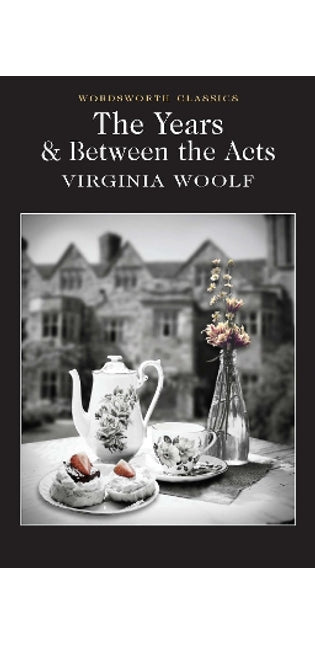
Years / Between the Acts
This volume brings together Virginia Woolf’s last two novels, The Years (1937) which traces the lives of members of a dispersed middle-class family between 1880 and 1937, and Between the Acts (1941), an account of a village pageant in the summer preceding the Second World War which successfully interweaves comedy, satire and disturbing observation.Rewriting the traditional family saga and the pageant, these unsettling novels provide extraordinary critiques of Englishness and English identity while pursuing compelling existentialist and psychological themes such as the nature of time, memory, personal relationships and sexual desire. Their tightly constructed narratives enable the reader to experience the fragmented lives of their characters and the difficulties that they have in communicating with each other and even understanding themselves. Read together, these novels illuminate each other in ways that will engage both the student and the general reader.
R 275.00
Room of One's Own & The Voyage Out
A Room of One’s Own (1929) has become a classic feminist essay and perhaps Virginia Woolf’s best known work; The Voyage Out (1915) is highly significant as her first novel. Both focus on the place of women within the power structures of modern society.The essay lays bare the woman artist’s struggle for a voice, since throughout history she has been denied the social and economic independence assumed by men. Woolf’s prescription is clear: if a woman is to find creative expression equal to a man’s, she must have an independent income, and a room of her own. This is both an acute analysis and a spirited rallying cry; it remains surprisingly resonant and relevant in the 21st century.The novel explores these issues more personally, through the character of Rachel Vinrace, a young woman whose ‘voyage out’ to South America opens up powerful encounters with her fellow-travellers, men and women. As she begins to understand her place in the world, she finds the happiness of love, but also sees its brute power. Woolf has a sharp eye for the comedy of English manners in a foreign milieu; but the final undertow of the novel is tragic as, in some of her finest writing, she calls up the essential isolation of the human spirit.
R 295.00



Items we need to order for you
Woolf
A wolf and a sheep fall in love. They have a son that they call Woolf – he’s half wolf, half woolly sheep! This is Woolf’s story.It’s not easy being different – not quite fitting in with one group or another. When Woolf tries to impress the wolves, he finds it fun for a while, but they’re a bit too wild. When when he tries to follow the sheep, he finds it all a bit, well, boring. Can Woolf find his own way in life and make his own friends that like him for who he is, not who he’s trying to be?
R 217.00
R 716.75
Jacob's Room
'What do we seek through millions of pages? Still hopefully turning the pages — oh, here is Jacob's room.'Who is Jacob Flanders? Virginia Woolf's third novel, published in 1922 alongside James Joyce's Ulysses and T.S. Eliot's The Waste Land, follows this elusive title character from a sunlit childhood on the Cornwall coast to adventures in Cambridge, London, and Athens. Women fall in love with Jacob; young men desire his company and conversation. But Woolf keeps her scornful, charming protagonist at a distance, enveloping Jacob in mystery as he enters adulthood and the Great Warthunders across Europe. A daring work that reimagines every element of the traditional novel, Jacob's Room tells a new story for a new century.In 1922, Lytton Strachey pronounced Jacob's Room 'a most wonderful achievement—more like poetry, it seems to me, than anything else, and as such I prophesy immortal.' One hundred years after its publication, Woolf's first full-length work of experimental fiction pulls us into the inexhaustible mysteries of intimacy and mortality.
R 278.00
Flush
'Things are not simple but complex. If he bit Mr. Browning he bit her too. Hatred is not hatred; hatred is also love.'Virginia Woolf's delightful biography of the poet Elizabeth Barrett Browning's spaniel, which asks what it means to be human - and to be dog.One of 46 new books in the bestselling Little Black Classics series, to celebrate the first ever Penguin Classic in 1946. Each book gives readers a taste of the Classics' huge range and diversity, with works from around the world and across the centuries - including fables, decadence, heartbreak, tall tales, satire, ghosts, battles and elephants.
R 124.00
R 1,303.00
R 434.00
Thinking in Literature: Joyce, Woolf, Nabokov
Thinking in Literature sets out to examine how the Modernist novel might be understood to be a machine for thinking, and further how it might offer means of coming to terms with what it means to think. It begins with a theoretical analysis of the concept of thinking in literature using Gilles Deleuze as a point of departure and returning directly to the work of the two philosophers who were most important to Deleuze's understanding of thinking in literature: Spinoza and Leibniz. Three elements are identified as crucial to aesthetic expression: relation; sensation; and composition. Yet in order to build a fuller understanding of these processes it is necessary to move from theory to specific readings of artistic practice. Uhlmann examines the aesthetic practice of three major Modernist writers: James Joyce, Virginia Woolf, and the young Vladimir Nabokov. Each can be understood as working with relation, sensation and composition, yet each emphasize the interrelations between them in differing ways in expressing the potentials for thinking in literature.
R 5,150.00
Room of One's Own/Three Guineas
'A landmark of feminist thought and a rhetorical masterpiece' GuardianRanging from the silent fate of Shakespeare's gifted imaginary sister to Jane Austen, Charlotte Brontë and the effects of poverty and sexual constraint on female creativity, A Room of One's Own, based on a lecture given by Woolf at Girton College, Cambridge, is one of the great feminist polemics. Published almost a decade later, Three Guineas breaks new ground in its discussion of men, militarism and women's attitudes towards war. These two pieces reveal Virginia Woolf's indomitable spirit, sophisticated wit and genius as an essayist.Edited with an Introduction and Notes by Michèle Barrett
R 309.00
Moments Of Being
Virginia Woolf's only autobiographical writing is to be found in this collection of five unpublished pieces. Despite Quentin Bell's comprehensive biography and numerous recent studies of her, the author's own account of her early life holds new fascination - for its unexpected detail, the strength of its emotion, and its clear-sighted judgement of Victorian values. In 'Reminiscences' Virginia Woolf focuses on the death of her mother, 'the greatest disaster that could happen', and its effect on her father, the demanding patriarch who took a high toll of the women in his household. She surveys some of the same ground in 'A Sketch of the Past', the most important memoir in this collection, which she wrote with greater detachment and supreme command of her art shortly before her death. Readers will be struck by the extent to which she drew on these early experiences for her novels, as she tells how she exorcised the obsessive presence of her mother by writing To the Lighthouse. The last three papers were composed to be read to the Memoir Club, a postwar regrouping of Bloomsbury, which exacted absolute candour of its members. Virginia Woolf's contributions were not only bold but also original and amusing. She describes George Duckworth's passionate efforts to launch the Stephen girls; gives her own version of 'Old Bloomsbury'; and, with wit and some malice, reflects on her connections with titled society.
R 402.00
R 1,904.00
Virginia Woolf, Literary Materiality and Feminist Aesthetics
This book interrogates the relationship between the material conditions of Woolf's writing practices and her work as a printer and publisher at the Hogarth Press. In bringing to light her embodied literary processes, from drafting and composition to hand-printing and binding, this study foregrounds the interactions between Woolf's modernist experimentation and the visual and material aspects of her printed works. By drawing on the field of print culture, as well as the materialist turn in Woolf scholarship, it explores how her experience in print, book-design and publishing underlines her experimental writing, and how her literary texts are conditioned by the context of their production. This book, therefore, provides new ways of reading Woolf's modernism in the context of twentieth-century print, material, and visual cultures. By suggesting that Woolf's work at the Hogarth Press sensitized her to the significant role the visual aspects of a text play in its system of representation, it also considers the extent to which materiality informs both her work, as well as her engagement with Bloomsbury formalist aesthetics, which often exaggerate the distinction between visual and verbal modes of expression.
R 3,294.95
Between the Acts
Between the Acts is Virginia Woolf's last novel, and in her own opinion it was `more quintessential' than any of her others. Set in the summer of 1939 on the day of the annual village pageant at Pointz Hall, the book weaves together the musings of several disparate characters and their reactions to the imminence of a war which is to change the pattern of history. Before the book was published in the spring of 1941, Virginia Woolf had taken her own life. ABOUT THE SERIES: For over 100 years Oxford World's Classics has made available the widest range of literature from around the globe. Each affordable volume reflects Oxford's commitment to scholarship, providing the most accurate text plus a wealth of other valuable features, including expert introductions by leading authorities, helpful notes to clarify the text, up-to-date bibliographies for further study, and much more.
R 247.00
Woolf: A Guide for the Perplexed
Virginia Woolf is one of the best-known and most influential modernist writers; an iconic figure, her image and reference to her work and life appear in the most varied of cultural sites. Her writing is, however, in many ways kaleidoscopic and has given rise to a diverse and, sometimes, conflicting body of critical work. Whilst Woolf envisaged that her readers could be ‘fellow-worker[s]' in the creative process, there is much to perplex any reader approaching her writing, especially for the first time. Drawing on some of the main critical debates and on Woolf's non-fictional writings, this guide untangles some of the difficulties and perplexities that can prove a barrier to understanding of Woolf's writing. These include aspects of the process of writing (such as narrative techniques, formal structures, characterisation), as well as the thematic concerns so central to Woolf's writing, the cultural context in which it emerged and to recent criticism, including representations of gender and sexuality, class and race.
R 3,384.00
Selected Essays
'A good essay must draw its curtain round us, but it must be a curtain that shuts us in, not out.'According to Virginia Woolf, the goal of the essay 'is simply that it should give pleasure...It should lay us under a spell with its first word, and we should only wake, refreshed, with its last.' One of the best practitioners of the art she analysed so rewardingly, Woolf displayed her essay-writing skills across a wide range of subjects, with all the craftsmanship, substance, and rich allure of her novels. This selection brings together thirty of her best essays, including the famous 'MrBennett and Mrs Brown', a clarion call for modern fiction. She discusses the arts of writing and of reading, and the particular role and reputation of women writers. She writes movingly about her father and the art of biography, and of the London scene in the early decades of the twentieth century.Overall, these pieces are as indispensable to an understanding of this great writer as they are enchanting in their own right. ABOUT THE SERIES: For over 100 years Oxford World's Classics has made available the widest range of literature from around the globe. Each affordable volume reflects Oxford's commitment to scholarship, providing the most accurate text plus a wealth of other valuable features, including expert introductions by leading authorities, helpful notes to clarify the text, up-to-date bibliographies for further study, and much more.
R 309.00
Woolf’s Ambiguities
In a book that compares Virginia Woolf's writing with that of the novelist, actress, and feminist activist Elizabeth Robins (1862–1952), Molly Hite explores the fascinating connections between Woolf's aversion to women's "pleading a cause" in fiction and her narrative technique of complicating, minimizing, or omitting tonal cues. Hite shows how A Room of One's Own, Mrs. Dalloway, and The Voyage Out borrow from and implicitly criticize Robins's work.Hite presents and develops the concept of narrative tone as a means to enrich and complicate our readings of Woolf's modernist novels. In Woolf's Ambiguities, she argues that the greatest formal innovation in Woolf's fiction is the muting, complicating, or effacing of textual pointers guiding how readers feel and make ethical judgments about characters and events. Much of Woolf's narrative prose, Hite proposes, thus refrains from endorsing a single position, not only adding value ambiguity to the cognitive ambiguity associated with modernist fiction generally, but explicitly rejecting the polemical intent of feminist novelists in the generation preceding her own. Hite also points out that Woolf reconsidered her rejection of polemical fiction later in her career. In the unfinished draft of her "essay-nove;" The Pargiters, Woolf created a brilliant new narrative form allowing her to make unequivocal value judgments.
R 1,882.00
Virginia Woolf and the Discourse of Science
Holly Henry investigates how advances in astronomy in the early twentieth century had a shaping effect on Woolf's literature and aesthetics as well as on the work of modernist British writers including Vita Sackville-West, H. G. Wells, Olaf Stapledon, Bertrand Russell, and T. S. Eliot. The 1920s and 30s witnessed a pervasive public fascination with astronomy that extended from the US, where Edwin Hubble in 1923 definitively determined that entire galaxies existed beyond the Milky Way, to England, where London's intellectuals discussed Sir James Jeans's popular astronomy books and the newly explored expanses of space. In re-evaluating the cultural context out of which Modernism emerged, Henry contends that Woolf, through her own fascination with astronomy, formulated a global vision that helped shape her fiction and her pacifist politics. Henry's study includes examinations of scientific and literary archival material and sheds light on Woolf's texts and recent re-evaluations of Modernism.
R 3,317.75
Virginia Woolf's Late Cultural Criticism
After the Modernist literary experiments of her earlier work, Virginia Woolf became increasingly concerned with overt social and political commentary in her later writings, which are preoccupied with dissecting the links between patriarchy, patriotism, imperialism and war. This book unravels the complex textual histories of The Years (1937), Three Guineas (1938) and Between the Acts (1941) to expose the genesis and evolution of Virginia Woolf’s late cultural criticism. Fusing a feminist-historicist approach with the practices and principles of genetic criticism, this innovative study scrutinizes a range of holograph, typescript and proof documents within their historical context to uncover the writing and thinking processes that produced Woolf’s cultural analysis during 1931-1941. By demonstrating that Woolf’s late cultural criticism developed through her literary experimentalism as well as in response to contemporary social, political and economic upheavals, this book offers a fresh perspective on her emergence as a cultural commentator in her final decade and paves the way for further genetic enquiries in the field.
R 5,591.00
Visuality and Spatiality in Virginia Woolf’s Fiction
This book offers an interpretative key to Virginia Woolf’s visual and spatial strategies by investigating their nature, role and function. The author examines long-debated theoretical and critical issues with their philosophical implications, as well as Woolf’s commitment to contemporary aesthetic theories and practices. The analytical core of the book is introduced by a historical survey of the interart relationship and significant critical theories, with a focus on the context of Modernism. The author makes use of three investigative tools: descriptive visuality, the widely debated notion of spatial form, and cognitive visuality. The cognitive and remedial value of Woolf’s visual and spatial strategies is demonstrated through an inter-textual analysis of To the Lighthouse, The Waves and Between the Acts (with cross-references to Woolf’s short stories and Jacob’s Room). The development of Woolf’s literary output is read in the light of a quest for unity, a formal attempt to restore parts to wholeness and to rescue Being from Nothingness.
R 2,674.00
Virginia Woolf and the Madness of Language
Originally published in 1990, Virginia Woolf and the Madness of Language explores the relationship between madness and the disruption of linguistic and structural norms in Virginia Woolf’s modernist novels, opening new ground in Woolfian studies, as well as in psychoanalytic criticism. Focusing on Mrs Dalloway, The Waves, To the Lighthouse and Between the Acts, it investigates narrative strategies, showing that Woolf’s writings question their own origins and connection with madness and suicide. By combining textual analysis with an original use of autobiographical material, the books cause us to reconsider the full complexity of the articulation between an author’s life and work.
R 2,149.99
Virginia Woolf – Objects, Things, Matter
Virginia Woolf's deep and creative interest in materiality is not only illuminated by but precedes current theorisations of objects, things and matter among them, new materialism, object-oriented ontology and thing theory. Through both critical and creative engagements, contributors explore the possibilities and limitations of these theoretical accounts: what new readings they afford; what they say that Woolf has already shown us; and how Woolf goes beyond or can't be fully captured by these ideas. This volume thus gathers various, sometimes even contradictory, approaches on the topic; in turn, it emphasises congruences and tensions in theoretical, literary and cultural interpretations of Woolf's material investments. What emerges in Virginia Woolf Objects, Things, Matter is an account of how Woolf reveals things to be vital, active and strange by refiguring the relationship between subject and object and, at times, even inverting, subverting or redefining those very terms.
R 4,834.00
Virginia Woolf
More than most novelists, Virginia Woolf benefits by an introducer. She is never, either by intention or equipment, the expected novelist. She chose the novel to adapt it deliberately and progressively to be the vehicle of her own subtle perception. Behind this study of the novels is an intense interest in the person revealed in the novelist. The criticism is warm as well as acute and the whole study is felt to be a tribute reasoned and justified - to a woman sensitive, compassionate, passionately honest and eager only for truth; to an artist quite unsparing of her own labour, finely gifted, self-effacing, serious and humourous. Mrs Bennett added two chapters on A Writer's Diary and on Virginia Woolf's critical essays for the second edition. Both can help our understanding of Virginia Woolf the novelist; the Diary by the insight it gives into her creative process and the fuller understanding we can gain of technical problems, the essays because they are about novels and novelists.
R 1,744.54
Virginia Woolf Collection
The Virginia Woolf Collection is comprised of six thought-provoking works. Classics such as Mrs Dalloway, Orlando, To the Lighthouse and many more delve into the historical, political and feminist issues prominent in the twentieth century. Woolf altered the course of modernist writing.This 6-Book Set includes: Mrs Dalloway, Orlando, To The Lighthouse, The Waves, Voyage Out, A Room of One's Own.
R 1,666.00
Virginia Woolf's Late Cultural Criticism
After the Modernist literary experiments of her earlier work, Virginia Woolf became increasingly concerned with overt social and political commentary in her later writings, which are preoccupied with dissecting the links between patriarchy, patriotism, imperialism and war. This book unravels the complex textual histories of The Years (1937), Three Guineas (1938) and Between the Acts (1941) to expose the genesis and evolution of Virginia Woolf’s late cultural criticism. Fusing a feminist-historicist approach with the practices and principles of genetic criticism, this innovative study scrutinizes a range of holograph, typescript and proof documents within their historical context to uncover the writing and thinking processes that produced Woolf’s cultural analysis during 1931-1941. By demonstrating that Woolf’s late cultural criticism developed through her literary experimentalism as well as in response to contemporary social, political and economic upheavals, this book offers a fresh perspective on her emergence as a cultural commentator in her final decade and paves the way for further genetic enquiries in the field.
R 1,558.00
Virginia Woolf in Context
As a paradigmatic modernist author, Virginia Woolf is celebrated for the ways her fiction illuminates modern and contemporary life. Woolf scholars have long debated how context - whether historical, cultural, or theoretical - is to be understood in relation to her work and how her work produces new insights into context. Drawing on an international field of leading and emergent specialists, this collection provides an authoritative resource for contemporary Woolf scholarship that explores the distinct and overlapping dimensions of her writings. Rather than survey existing scholarship, these essays extend Woolf studies in new directions by examining how the author is contextualised today. The collection also highlights connections between Woolf and key cultural, political and historical issues of the twentieth century such as avant-gardism in music and art, developments in journalism and the publishing industry, political struggles over race, gender and class and the bearings of colonialism, empire and war.
R 6,346.97
R 1,303.00
Room of One’s Own and Three Guineas
HarperCollins is proud to present its new range of best-loved, essential classics. ‘Lock up your libraries if you like; but there is no gate, no lock, no bolt that you can set upon the freedom of my mind…’ Based on a lecture given at Cambridge and first published in 1929, ‘A Room of One’s Own’ interweaves Woolf’s personal experience as a female writer with themes ranging from Austen and Brontë to Shakespeare’s gifted (and imaginary) sister. ‘Three Guineas’, Woolf’s most impassioned polemic, came almost a decade later and broke new ground by challenging the very notions of war and masculinity. This volume combines two inspirational, witty and urbane essays from one of literature’s pre-eminent voices; collectively they constitute a brilliant and lucid attack on sexual inequality.
R 278.00
Companion to Virginia Woolf
A Companion to Virginia Woolf is a thorough examination of her life, work, and multiple contexts in 33 essays written by leading scholars in the field. Contains insightful and provocative new scholarship and sketches out new directions for future researchApproaches Woolf's writing from a variety of perspectives and disciplines, including modernism, post-colonialism, queer theory, animal studies, digital humanities, and the lawExplores the multiple trajectories Woolf’s work travels around the world, from the Bloomsbury Group, and the Hogarth Press to India and Latin AmericaSituates Woolf studies at the vanguard of contemporary literature scholarship and the new modernist studies
R 1,953.00
Reception of Virginia Woolf in Europe
The intellectual scope and cultural impact of British writers cannot be assessed without reference to their European "fortunes". These essays, prepared by an international team of scholars, critics and translators, record the ways in which Virginia Woolf has been translated, evaluated and emulated in different national and linguistic areas of Europe. Diverse as her reception has been, as analyst of consciousness, as a decadent (censored and banned), as stylistic innovator of Modernism, as crusading feminist and socialist, and as a model for other writers, she has emerged as one of the foremost writers and principal icons of the century
R 16,036.00
Virginia Woolf A Literary Life
Virginia Woolf, said E.M. Forster, "liked writing with an intensity which few writers have attained or even desired". Writing was not an extra in her life, but the activity that allowed her to carry on living. In her career as a writer, Virginia Woolf, through her joint ownership of the Howgarth Press, had an usual degree of control over her own work. This made possible a career of extraordinary experimentation and formal inventiveness. No one of her works was like any other. She never settled on one way of writing because she never settled on one view about life. In her work, integration, meaning and belief are always counter-balanced by disintegration and scepticism. This book returns again and again to the questions of what Virginia Woolf herself took her purposes as a writer to be and to the changing and conflicting aims that she herself formulated in her essays as well as her fiction and her polemical works.;She wrote as a woman, as a psychologist, as an "outsider" and social critic, as a poet and a visionary. The story of her career, of her choices and her experiments in form does not end with her celebrated modernist works "Mrs.Dalloway", "To the Lighthouse" and "The Waves"
R 1,681.96
Virginia Woolf and the Poetry of Fiction
Originally published in 1990, Virginia Woolf and the Poetry of Fiction, provides a stylistic study of the fiction of Virginia Woolf. The book examines what is generally described as a ‘traditional novel’, examining such works as Jacob’s Room, and the way in which meaning is nonetheless conveyed poetically. The book argues that her early novels, are shown to contain writing of considerable sophistication and maturity and how her major works of fiction are approached in a more specific way: Mrs Dalloway through its poetic rhythms, To the Lighthouse as a multi-perspectival exploration of a reality embodied in a single image, and The Waves as a play-poem.
R 5,827.09
Mrs Dalloway
'One of the most moving, revolutionary artworks of the twentieth century' Michael CunninghamClarissa Dalloway, elegant and vivacious, is preparing for a party and remembering those she once loved. In another part of London, Septimus Warren Smith is suffering from shell-shock and on the brink of madness. Smith's day interweaves with that of Clarissa and her friends, their lives converging as the party reaches its glittering climax. Virginia Woolf's masterly novel, in which she perfected the interior monologue, brings past, present and future together on one momentous day in June 1923.
R 250.00
Room of One’s Own and Three Guineas
HarperCollins is proud to present its new range of best-loved, essential classics. ‘Lock up your libraries if you like; but there is no gate, no lock, no bolt that you can set upon the freedom of my mind…’ Based on a lecture given at Cambridge and first published in 1929, ‘A Room of One’s Own’ interweaves Woolf’s personal experience as a female writer with themes ranging from Austen and Brontë to Shakespeare’s gifted (and imaginary) sister. ‘Three Guineas’, Woolf’s most impassioned polemic, came almost a decade later and broke new ground by challenging the very notions of war and masculinity. This volume combines two inspirational, witty and urbane essays from one of literature’s pre-eminent voices; collectively they constitute a brilliant and lucid attack on sexual inequality.
R 124.00
R 4,914.00
Selected Short Stories
'Woolf is modern ... With Joyce and Eliot she has shaped a literary century' Jeanette WintersonVirginia Woolf tested the boundaries of fiction in these short stories, developing a new language of sensation, feeling and thought, and recreating in words the 'swarm and confusion of life'. Defying categorization, the stories range from the more traditional narrative style of 'Solid Objects' through the fragile impressionism of 'Kew Gardens' to the abstract exploration of consciousness in 'The Mark on the Wall'.Edited with an Introduction and Notes by Sandra Kemp
R 340.00
Room of One's Own and Three Guineas (Vintage Classics Woolf Series)
'Brilliant interweaving of personal experience, imaginative musing and political clarity' Kate Mosse Virginia Woolf exposes the prejudices and constraints against which women writers struggled for centuries, and argues for a more equal literary establishment. This volume combines two books which were among the greatest contributions to feminist literature this century. Together they form a brilliant attack on sexual inequality. A Room of One's Own, first published in 1929, is a witty, urbane and persuasive argument against the intellectual subjection of women, particularly women writers. The sequel, Three Guineas, is a passionate polemic which draws a startling comparison between the tyrannous hypocrisy of the Victorian patriarchal system and the evils of fascism. WITH AN INTRODUCTION BY HERMIONE LEE
R 309.00
Thinking in Literature: Joyce, Woolf, Nabokov
Thinking in Literature sets out to examine how the Modernist novel might be understood to be a machine for thinking, and further how it might offer means of coming to terms with what it means to think. It begins with a theoretical analysis of the concept of thinking in literature using Gilles Deleuze as a point of departure and returning directly to the work of the two philosophers who were most important to Deleuze's understanding of thinking in literature: Spinoza and Leibniz. Three elements are identified as crucial to aesthetic expression: relation; sensation; and composition. Yet in order to build a fuller understanding of these processes it is necessary to move from theory to specific readings of artistic practice. Uhlmann examines the aesthetic practice of three major Modernist writers: James Joyce, Virginia Woolf, and the young Vladimir Nabokov. Each can be understood as working with relation, sensation and composition, yet each emphasize the interrelations between them in differing ways in expressing the potentials for thinking in literature.
R 1,205.00
Virginia Woolf and the Visible World
In Virginia Woolf and the Visible World, Emily Dalgarno examines Woolf's engagement with notions of the subject and codes of the visible. Dalgarno examines how Woolf's writing engages with visible and non-visible realms of experience, and draws on ideas from the diverse fields of psychoanalytic theory, classical Greek tragedy, astronomy, photography and photojournalism. The solar eclipse of 1927 marks a dividing line in Woolf's career, after which she portrayed the visible world in terms of light, and shifted her interest from painting to photography. Dalgarno offers textual analyses of Woolf's individual works, including To the Lighthouse, The Waves and Three Guineas, arguing for the importance of her ongoing interest in Greek translation. In later chapters, she explores the theory of the subject that emerges from Woolf's representation of the visible in her autobiography.
R 4,432.28
Virginia Woolf and the Discourse of Science
Holly Henry investigates how advances in astronomy in the early twentieth century had a shaping effect on Woolf's literature and aesthetics as well as on the work of modernist British writers including Vita Sackville-West, H. G. Wells, Olaf Stapledon, Bertrand Russell, and T. S. Eliot. The 1920s and 30s witnessed a pervasive public fascination with astronomy that extended from the US, where Edwin Hubble in 1923 definitively determined that entire galaxies existed beyond the Milky Way, to England, where London's intellectuals discussed Sir James Jeans's popular astronomy books and the newly explored expanses of space. In re-evaluating the cultural context out of which Modernism emerged, Henry contends that Woolf, through her own fascination with astronomy, formulated a global vision that helped shape her fiction and her pacifist politics. Henry's study includes examinations of scientific and literary archival material and sheds light on Woolf's texts and recent re-evaluations of Modernism.
R 2,217.97
R 977.00
Virginia Woolf and the Madness of Language
Originally published in 1990, Virginia Woolf and the Madness of Language explores the relationship between madness and the disruption of linguistic and structural norms in Virginia Woolf’s modernist novels, opening new ground in Woolfian studies, as well as in psychoanalytic criticism. Focusing on Mrs Dalloway, The Waves, To the Lighthouse and Between the Acts, it investigates narrative strategies, showing that Woolf’s writings question their own origins and connection with madness and suicide. By combining textual analysis with an original use of autobiographical material, the books cause us to reconsider the full complexity of the articulation between an author’s life and work.
R 6,653.42
To the Lighthouse
Celebrate a captivating novel with this special edition featuring the original cover created by Virginia Woolf's sister, Vanessa Bell, and the original text first published by The Hogarth Press.There were little daily miracles, illuminations, matches struck unexpectedly in the dark.The Ramseys have always spent their holidays at their summer house on Skye – holidays filled with noise, joy and the stuff of family life that might go on forever. But as time passes, bringing with it war and death, the summer home stands empty until one day the family return to make the long-postponed visit to the lighthouse.To the Lighthouse was published in 1927 and was more commercially successful than any of Woolf’s previous novels. Woolf herself thought it ‘easily the best of my books’. The book printed three times in its first year and went on to become one of Woolf’s best-loved works.The text of this edition of To the Lighthouse is based on the original Hogarth Press edition, published by Virginia and Leonard Woolf on 5 May 1927. The dust jacket features the original cover created by Virginia Woolf’s sister, Vanessa Bell, for the Hogarth Press. Beneath the cover ‘bright blue’ boards printed in gilt take inspiration from the finish of the first trade edition.'My mind was warped into a new shape by her prose and it will never be the same again' Greta Gerwig‘Woolf’s groundbreaking novel is still one of the best available accounts of self-mythologising middle-class family life’ Rachel Cusk‘I reread this book every once in a while, and every time I do I find it more capacious and startling. It’s so revolutionary and so exquisitely wrought that it keeps evolving on its own somehow, as if it’s alive’ Alison Bechdel
R 619.00


