



Search results for "brain"
Items in stock - 4 working days delivery time

Brain
CAN YOU BOOST YOUR IQ? WHAT IF YOU COULDN'T FORGET ANYTHING? WHAT HAPPENS IN YOUR BRAIN WHEN YOU GET AN IDEA? COULD YOU BE A PSYCHOPATH? . . . NEW SCIENTIST HAS ALL THE ANSWERSFrom the strange ways to distort what we think of as 'reality' to the brain hacks that can improve memory, The Brain takes you on a journey through intelligence, memory, creativity, the unconscious and beyond to help you understand your brain - and show you what it's truly capable of.
R 450.00
Brain
Become body literate with Brain: An Owner's Guide, the next book in The Body Literacy Library, an enlightening series that will democratise health for a new generation of readers. Brain: An Owner's Guide is an informative and practical guide to all aspects of brain health, from maximising your mental wellbeing today to protecting your brain against future serious health issues. Leading neuroscientist Eli Ricker explains how the brain works, how you can look after and protect your brain, and explains what you can do to improve your memory and concentration at any age. Ricker also looks at what constitutes mental "wellbeing", and the science behind a positive mindset, resilience, concentration and memory, as well as low mood, depression and brain fog. Dementia and other brain disorders are a huge concern for many and Ricker looks at how these occur, the latest medical research, and what you can do to protect your brain for life.From the importance of sleep and stress management to why dementia is a feminist issue, this hard-working book applies science to the everyday, with simple illustrations, checklists, FAQs, and myth busters, all supported by the latest medical research. Brain: An Owner's Guide can help you to better understand your mind and aims to enhance your long-term quality of life.
R 405.00


Items we need to order for you
Brain
What is the principle purpose of a brain? A simple question, but the answer has taken millennia for us to begin to understand. So critical for our everyday existence, the brain still remains somewhat a mystery. Gary L. Wenk takes us on a tour of what we do know about this enigmatic organ, showing us how the workings of the human brain produce our thoughts, feelings, and fears, and answering questions such as: How did humans evolve such a big brain? What is an emotionand why do we have them? What is a memory and why do we forget so easily? How does your diet affect how you think and feel? What happens when your brain gets old? Throughout human history, ignorance about the brain has caused numerous non-scientific, sometimes harmful, interventions to be devised based on interpretations of scientific facts that were misguided. Wenk discusses why these neuroscientific myths are so popular, and why some of the interventions based on them are a waste of time and money. With illuminating insights, gentle humor, and welcome simplicity, The Brain: What Everyone Needs to Know makes the complex biology of our brains accessibleto the general reader.
R 513.98
Brain
It has been remarked that if the brain were so simple we could understand it, we would be so simple we couldn’t. Commencing with a brief history of neuroscience, from the ancient practice of drilling holes in the head to relieve headaches to the latest results from MRI and CT scans, this accessible guide sets out to explore exactly what we do know about the brain. Including the most up-to-date research on the cerebral processes behind a wide array of human activity – from our capacity for language to how we remember – this lively and entertaining introduction assumes no previous scientific knowledge and offers a tantalizing glimpse into man’s most complex organ.
R 1,183.18
R 1,766.00
Your Brain, Explained
Sleep. Memory. Pleasure. Fear. Language. We experience these things almost every day, but how do our brains create them?Your Brain, Explained is a personal tour around your gray matter. Neuroscientist Marc Dingman gives you a crash course in what goes on in your brain and explains the latest research on the brain functions (and malfunctions) that affect you on a daily basis.You'll also discover what happens when these systems don't work the way they should, causing problems such as insomnia, ADHD, depression or addiction, how neuroscience is working to fix these problems, and how you can build up your defences against the most common faults of the mind.Along the way you'll find out:·Why brain training games don't prevent dementia (and what does)· What it's like to remember every day of your life as if it were yesterday· Which mental ailment used to be treated with German rocket fuel· What triggers sleep loss, or lapses in concentrationDrawing on the author's popular YouTube series, 2-minute Neuroscience, this is a friendly, engaging introduction to the human brain and its quirks from the perspective of a neuroscientist - using eye-opening illustrations and real-life examples. Your brain is yours to discover.
R 340.00
R 1,131.92
R 562.00
R 912.00
Brain
One of the vastly exciting areas in modern science involves the study of the brain. Recent research focuses not only on how the brain works but how it is related to what we normally call the mind, and throws new light on human behavior. Progress has been made in researching all that relates to interior man, why he thinks and feels as he does, what values he chooses to adopt, and what practices to scorn. All of these attributes make us human and help to explain art, philosophy, and religions. Motion, sight, and memory, as well as emotions and the sentiments common to humans, are all given new meaning by what we have learned about the brain. In an introductory essay, Vernon B. Mountcastle traces the progress made in brain science during this century. Gerald M. Edelman touches upon features of the brain that challenge the picture of the brain as a machine. Semir Zeki discusses artists and artistic expression as an extension of the function of the brain. Richard S. J. Frackowiak probes the functional architecture of the brain. Mark F. Bear and Leon N Cooper explore whether complex neural systems can be illuminated by theoretical structures. Jean-Pierre Changeux sheds light on the knowledge gained in recent years concerning the neurobiology and pharmacology of drug action and addiction. Alexander A. Borbuly and Giulio Tononi ponder the quest for the essence of sleep, illuminating its complex dynamic process. George L. Gabor Miklos examines variations in neuroanatomies and sensory systems between individuals of the same species as well as variations across the evolutionary spectrum. Emilio Bizzi and Ferdinando A. Mussa-Ivaldi explain how scientists have approached the study of movement, the problems encountered, and the solutions proposed. Marcel Kinsbourne explores the unity and diversity in the human brain. In the concluding essay, Andy Clark points to recent work in neuroscience, robotics, and psychology that stresses the unexpected intimacy of brain, body, and world, supporting his belief that the mind is best understood as a brain at home in its proper bodily cultural and environmental niche. The breadth and scope of subjects covered in this volume attest to the extraordinary progress taking place in the study of the brain. This brilliant collection of essays by those at the forefront of research in this area will be of interest to all those interested in human behavior. Gerald M. Edelman is director of the Neurosciences Institute and chairman of the Department of Neurobiology at the Scripps Research Institute. Jean-Pierre Changeux is professor at the Collbge de France and the Institute Pasteur.
R 2,843.59
Brain
Become body literate with Brain: An Owner's Guide, the next book in The Body Literacy Library, an enlightening series that democratizes health for a new generation of readers.Brain: An Owner’s Guide is an informative and practical guide to all aspects of brain health, from maximizing your mental well-being today to protecting your brain against future serious health issues. Leading neuroscientist Eli Ricker explains how the brain works, discusses how you can take care of and protect your brain, and explains what you can do to improve your memory and concentration at any age. Ricker also looks at what constitutes mental "well-being" and the science behind a positive mindset, resilience, concentration, and memory, as well as low mood, depression, and brain fog. Dementia and other brain disorders are a huge concern for many, and Ricker looks at how these occur, the latest medical research, and what you can do to protect your brain for life.Author Elizabeth Ricker is an engaging and media-friendly neuroscientist who specializes in brain health research, with a particular emphasis on brain "hacking," memory, and concentration. She translates medical jargon into simple, clear prose, answering frequently asked patient queries, such as "How can I improve my concentration?," "Do brain games work?," "Is dementia hereditary?," "What is good brain food?," "Why do I have brain fog?," and much more.From the importance of sleep and stress management to why dementia is a feminist issue, this hardworking book applies science to the everyday, with simple illustrations, checklists, FAQs, and myth busters, all supported by the latest medical research. Brain: An Owner’s Guide can help you better understand your mind and aims to enhance your long-term quality of life.
R 456.00
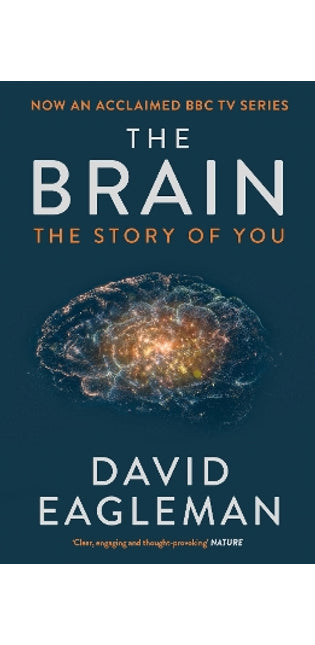
Brain
'This is the story of how your life shapes your brain, and how your brain shapes your life.' Join renowned neuroscientist David Eagleman on a whistle-stop tour of the inner cosmos. It's a journey that will take you into the world of extreme sports, criminal justice, genocide, brain surgery, robotics and the search for immortality. On the way, amidst the infinitely dense tangle of brain cells and their trillions of connections, something emerges that you might not have expected to see: you.
R 402.00
R 1,563.95
How the Brain Works
Delve into the intricacies of the human mind with this engaging and insightful guide to how the brain works. Written in a playful style and beautifully illustrated, this book is designed to support you as you embark on the beginning of your psychology degree. It provides an accessible guide to how the brain’s structures and functions determine how the mind works, and how this fits into the bigger picture of our evolution and biology as a species. From focus boxes that delve into specific topics to entertaining puzzles that bring the subject to life, this book will captivate your imagination while building your understanding of biological and cognitive psychology. This is an essential read for undergraduate psychology students. Michael S.C. Thomas is Professor of Cognitive Neuroscience at Birkbeck, University of London. Simon Green is a Chartered Psychologist and retired Senior Lecturer in Psychology at Birkbeck, University of London.
R 1,461.66
R 870.37
R 365.00
R 585.00
R 878.00
R 434.00
Brain
In order to supplement Dr. Johnson's review we wish to make two points: I) not all grossly similar lesions should be considered t. o be due to the same etiology, even if experimentally documented, and 2) relatively few infections (syphilis, toxoplasmosis, cytomegalovirus, herpesvirus and rubella) and no immunologic disorders (except for kernicterus due to hyperbilirubinemia) are known to affect the developing human nervous system. Admittedly, since most human malformations are of unproven cause, these two points are not mutually exclusive. Rather, the challenge remains to show that any of the experimental models relates to any of the human diseases. In particular, the porencephaly-hydranencephaly spectrum could be due to ischemia in the watershed distribution of one or more branches of the internal carotid ar- teries; and aqueductal stenosis could be due to secondary blockage by blood clots or debris related to hemorrhage or necrosis in the germinal matrix or periventricular white matter, lesions most likely due to hypoxia-acidosis in premature infant, who die most often of the concomitant respiratory distress syndrome. REFERENCES Altshuler. G.: Toxoplasmosis as a cause of hydranencephaly. Am. l. Dis. Child. 125: 251-252 (1973). Beer. A. E. and Billingham. R. E. : Immunobiology of mammalian reproduction. Adv. Immunol. 14: 1-84 (1971). Berenberg. W. and Nakervis. G. : Long-term follow-up of cytomegalic inclusion disease of in- fancy. Pediatrics 46: 403-410 (1970). Boniuk. M. and Zimmerman. L. E. : Ocular pathology in the rubella syndrome. Arch. Ophthalmo!. 77: 455-473 (1967).
R 1,567.38
R 1,052.55
R 911.00
R 813.00
R 244.00
R 1,073.00
R 1,008.00
R 911.00
R 550.00
R 305.00
Brain, In Theory
Why engineering and computational analogies are poorly suited to the study of biological cognitionMainstream theories of the brain are often expressed through engineering concepts—computation, code, control, reverse-engineering, optimization. These theories cast the living organism as a machine and the brain as a computer. The fact that cognition is a biological phenomenon seems merely anecdotal; biology is considered just “implementation.” In The Brain, In Theory, Romain Brette argues that the brain is not a “biological computer” because living organisms are not engineered. Engineering is the use of knowledge to solve technical problems, to build an artifact with a plan. But, Brette reminds us, Darwin’s insight is precisely that evolution is not a case of engineering. Unlike engineering, evolution has no predetermined goals, plans, or knowledge.Brette reviews the main theoretical frameworks for thinking about the brain, including computation, neural representations, information, and prediction, and finds them poorly suited to the study of biological cognition. He proposes understanding the brain as a self-organized, developing community of living entities rather than an optimized assembly of machine components. With this new perspective, Brette brings life back to the study of the brain and cognition.
R 3,678.00
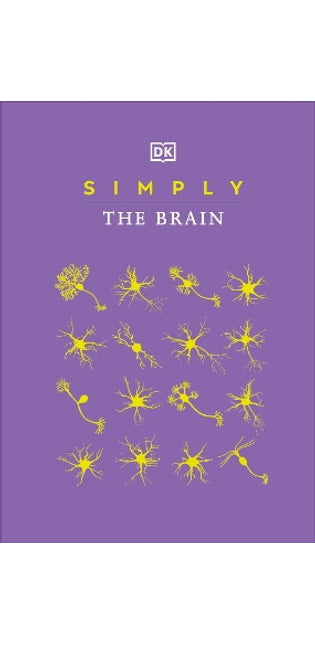
Simply The Brain
The human brain is a most remarkable organ, but how well do we really understand the way it works?What is a brain and what is the mind? Do you only use 10% of your brain? Why do some people hear colour? If you find yourself seeking the answers to these questions and many more, then Simply The Brain may be the book for you!Simply The Brain explores everything that goes on in the brain when you think, feel, and perceive the world around you. If you're seeking a guide that breaks down the inner workings of the mind and the brain, in a way that is easy to understand and jargon-free, then this essential guide is packed with everything you need to understand the basics quickly and easily. Covering more than 90 key ideas from neurons and nerves to forming memories and brain implants, each pared-back entry explains the concept more clearly than ever before.Dive straight in to discover:- Simple, easy-to-understand graphics help to explain more than 90 key concepts- Covers all aspects the brain to give a brief overview of this complex subject- Concise explanations quickly convey the most important informationCombining bold, elegant graphics with easy-to-understand text, Simply The Brain is the perfect introduction to the subject for those who are short of time but hungry for knowledge, so if you're interested in neuroscience or curious about how the mind works - then this is the book for you!
R 402.00
Pleasures of the Brain
Pleasure is fundamental to well-being and the quality of life, but until recently, was barely explored by science. Current research on pleasure has brought about ground-breaking developments on several fronts, and new data on pleasure and the brain have begun to converge from many disparate fields. The time is ripe to present these important findings in a single volume, and so Morten Kringelbach and Kent Berridge have brought together the leading researchers toprovides a comprehensive review of our current scientific understanding of pleasure. The authors present their latest neuroscientific research into pleasure, describing studies on the brain's role in pleasure and reward in animals and humans, including brain mechanisms, neuroimaging data, andpsychological analyses, as well as how their findings have been applied to clinical problems, such as depression and other disorders of hedonic well-being. To clarify the differences between their views, the researchers also provide short answers to a set of fundamental questions about pleasure and its relation to the brain. This book is intended to serve as both a starting point for readers new to the field, and as a reference for more experienced graduate students and scientists from fieldssuch as neuroscience, psychology, psychiatry, neurology, and neurosurgery.
R 6,881.64
Brain, Emotion, and Depression
There are myriad questions that emerge when one considers emotions and decision-making: What produces emotions? Why do we have emotions? How do we have emotions? Why do emotional states feel like something? What is the relationship between emotion, reward value, and subjective feelings of pleasure? How is the value of 'good' represented in the brain? Will neuroeconomics replace classical microeconomics? How does the brain implement decision-making? Are gene-definedrewards and emotions in the interests of the genes? Does rational multistep planning enable us to go beyond selfish genes to plans in the interests of the individual?The Brain, Emotion, and Depression addresses these issues, providing a unified approach to emotion, reward value, economic value, decision-making, and their brain mechanisms. The evolutionary, adaptive value of the processes involved in emotion, the neural networks involved in emotion and decision making, and the issue of conscious emotional feelings are all considered.The book will be valuable for those in the fields of neuroscience, neurology, psychology, psychiatry, biology, animal behaviour, economics, and philosophy from the advanced undergraduate level upwards, and for all interested in emotion and decision-making.
R 2,089.00
Brain and Behavior
Brain and Behavior: A Cognitive Neuroscience Perspective captures the excitement of cognitive and behavioral neuroscience by focusing on fundamental scientific principles, patterns, and ways of thinking. Brain and Behavior is clear and vibrant writing, with fascinating real-life examples and applications that help to emphasize the dynamically changing nature of the brain. This text covers a wide territory critical for understanding the brain, from the basics of the nervous system to the sensory and motor systems, sleep, language, memory, emotions and motivation, social cognition, and brain disorders. Throughout the narrative, the authors emphasize the dynamically changing nature of thebrain, through the mechanisms of neuroplasticity. The text pulls together the best current knowledge about the brain while acknowledging current areas of ignorance and pointing students toward the most promising directions for future research.
R 5,267.00
Brain, Behaviour and Evolution
Originally published in 1979, this book provides students with an example of the ways in which an evolutionary perspective can rephrase and clarify traditional questions and issues in psychology. The format provides the student firstly with the minimal amount of basic information in neuroanatomy, genetics and modern evolutionary theory in a form which is readily related to the remainder of the volume. The book then goes on to consider the relationships between different forms of explanation in biology, and the role of brain behaviour students in these relationships. Finally, the reader is given an opportunity to follow the reasoning which stems from a biological approach when applied to topics in human behaviour such as learning, dreaming, sleeping, exploration, anxiety, reasoning, intelligence and consciousness. Modern evolutionary biology places man in a broader context than does traditional psychology, and this new perspective reduces our tendency to view life solely from a human standpoint. The significance as well as the uniqueness of some traditionally ‘human’ attributes are challenged by this approach.
R 2,122.69
How Your Brain Works
Ever wondered what's going on inside your head?You are your brain. Everything that makes you you, and all your experiences of the world, are somehow conjured up by 1.4 kilograms of grey matter inside your skull. That might seem impossible, but science has advanced so much that we now understand not just its structures and inner workings but also how it can give rise to perception, consciousness, emotions, memories, intelligence, sleep and more. HOW YOUR BRAIN WORKS explores the amazing world inside your head. Discover the evolution and anatomy of the brain. Learn how we can peer inside it and watch it at work, and how the latest technology can allow us to control our minds and those of others. ABOUT THE SERIESNew Scientist Instant Expert books are definitive and accessible entry points to the most important subjects in science; subjects that challenge, attract debate, invite controversy and engage the most enquiring minds. Designed for curious readers who want to know how things work and why, the Instant Expert series explores the topics that really matter and their impact on individuals, society, and the planet, translating the scientific complexities around us into language that's open to everyone, and putting new ideas and discoveries into perspective and context.
R 341.00
Functions of the Brain
Considering how computational properties of the brain inform cognitive functions, this book presents a unique conceptual introduction to cognitive neuroscience. This essential guide explores the complex relationship between the mind and the brain, building upon the authors’ extensive research in neural information processing and cognitive neuroscience to provide a comprehensive overview of the field.Rather than providing detailed descriptions of different cognitive processes, Functions of the Brain: A Conceptual Approach to Cognitive Neuroscience focuses on how the brain functions using specific processes. Beginning with a brief history of early cognitive neuroscience research, Kok goes on to discuss how information is represented and processed in the brain before considering the underlying functional organization of larger-scale brain networks involved in human cognition. The second half of the book addresses the architecture of important overlapping areas of cognition, including attention and consciousness, perception and action, and memory and emotion. This book is essential reading for upper-level undergraduates studying Cognitive Neuroscience, particularly those taking a more conceptual approach to the topic.
R 3,114.00
Brain Computations
In order to understand how the brain works, it is essential to know what is computed by different brain systems, and how those computations are performed. Brain Computations: What and How elucidates what is computed in different brain systems and describes current computational approaches and models of how each of these brain systems computes. This approach has enormous potential for helping us understand ourselves better in health. Potential applications of this understanding are to the treatment of the brain in disease, as well as to artificial intelligence, which will benefit from knowledge of how the brain performs many of its extraordinarily impressive functions. Pioneering in its approach, Brain Computations: What and How will be of interest to all scientists interested in brain function and how the brain works, whether they are from neuroscience, or from medical sciences including neurology and psychiatry, or from the area of computational science including machine learning and artificial intelligence, or from areas such as theoretical physics.
R 3,867.00
Human Brain
This book seeks to present, through a combination of morphological data and physiological and neurological studies, a comprehensive survey of our knowledge of the human brain. The major emphasis is upon structural organisation, based upon the evolution of this most complex of organs. However, functional aspects, including experimental research and clinical findings, have also been incorporated, broadening the interest for students of neurobiology and clinical medicine.
R 1,765.00
Unlocking the Brain
Neuroscience has made considerable progress in figuring out how the brain works. We know much about the molecular-genetic and biochemical underpinnings of sensory and motor functions, and recent neuroimaging work has opened the door to investigating the neural underpinnings of higher-order cognitive functions, such as memory, attention, and even free will. In these types of investigations, researchers apply specific stimuli to induce neural activity in the brain andlook for the function in question. However, there may be more to the brain and its neuronal states than the changes in activity we induce by applying particular external stimuli. In Volume 1 of Unlocking the Brain, Georg Northoff presents his argument for how the brain must code the relationship between its resting state activity and stimulus-induced activity in order to enable and predispose mental states and consciousness. By presupposing such a basic sense of neural code, the author ventures into different territories and fields of current neuroscience, including a comprehensive exploration of the features of resting state activity as distinguishable fromand stimulus-induced activity; sparse coding and predictive coding; and spatial and temporal features of the resting state itself. This yields a unique and novel picture of the brain, and will have a major and lasting impact on neuroscientists working in neuroscience, psychiatry, and relatedfields.
R 6,367.66
Mental Processes in the Human Brain
The scientific study of the human mind and brain has come of age with the advent of technologically advanced methods for imaging brain structure and activity in health and disease, plus computational theories of cognition. These advances are leading to sophisticated new accounts for how mental processes are implemented in the human brain, but they also raise new challenges.Mental Processes in the Human Brain provides an integrative overview of the rapid advances and future challenges in understanding the neurobiological basis of mental processes that are characteristically (and in some cases, perhaps uniquely) human, including: language; thought; understanding of others; attention; planning and decision-making; emotion; memory; prediction; and awareness itself. The book also presents the latest insights into how these various processes can break downafter brain injury. With chapters from some of leading figures in the brain sciences, this book will be essential for all those in the cognitive and brain sciences.
R 6,381.00
Culture, Mind, and Brain
Recent neuroscience research makes it clear that human biology is cultural biology - we develop and live our lives in socially constructed worlds that vary widely in their structure values, and institutions. This integrative volume brings together interdisciplinary perspectives from the human, social, and biological sciences to explore culture, mind, and brain interactions and their impact on personal and societal issues. Contributors provide a fresh look at emerging concepts, models, and applications of the co-constitution of culture, mind, and brain. Chapters survey the latest theoretical and methodological insights alongside the challenges in this area, and describe how these new ideas are being applied in the sciences, humanities, arts, mental health, and everyday life. Readers will gain new appreciation of the ways in which our unique biology and cultural diversity shape behavior and experience, and our ongoing adaptation to a constantly changing world.
R 5,723.00






-
, by Justine Stevens Giveaway Winners
Keep an eye on our social media pages for regular, fantastic giveaways! 2026 November TBC- TBC- TBC- October My Battlefield by Joyce Meyer- Sandy Phillips...
-
, by sungano kanjere Enjoy shopping on Exclusive Books Online with Float!
Exclusive Books is excited to introduce new payment methods for you to have more ways to treat your shelf. Manage your money while making shopping...


