



Search results for "reading"
Items we need to order for you

Reading Lessons
SHORTLISTED FOR THE INDIE BOOK AWARDS 2025An English teacher's love letter to reading and the many ways literature can make us, and our lives, better.How can a Victorian poem help teenagers understand YouTube misogyny? Can Jane Eyre encourage us to speak out? What can Lady Macbeth teach us about empathy? Should our expectations for our future be any greater than Pip’s? And why is it so important to make space for these conversations in the first place?In a career spanning almost three decades, English teacher Carol Atherton has taught generations of students texts that will be familiar to many of us from our own schooldays. But while the staples of exam syllabuses and reading lists remain largely unchanged, their significance – and their relevance – evolves with each class, as it encounters them for the first time.Each chapter of Reading Lessons invites us to take a fresh look at these novels, plays and poems, revealing how they have shaped our beliefs, our values, and how we interact as a society. As she recalls her own development as a teacher, Atherton emphasizes the vital, undervalued role a teacher plays, illustrates how essential reading is for developing our empathy and makes a passionate case for the enduring power of literature.'Atherton must be an inspiring teacher if her marvellous book is anything to go by' The Independent'Beautifully written, sensitive and full of warmth ... A vital point of reflection for anyone who has taught, or been taught, English literature' Jeffrey Boakye'A love letter to literature itself ... At a time when English is under attack as an academic subject, Carol Atherton’s powerful defence of it reminds us what we are in danger of losing' Robert Douglas-Fairhurst, author of The Turning Point
R 408.00
Reading
Develop key reading skills and become more confident when reading in English. If you want to understand everything you read in English, you need to practise reading different kinds of texts. With Collins Reading (A2) you will learn how to get the information you need from every text you read. Includes both authentic and adapted texts in a wide variety of styles:• signs and labels • timetables and tickets • advertisements • newspapers and magazines • brochures • social networking sites • blogs • Twenty units with a clear design in full colour.Appendices contain detailed advice targeting specific reading skills.Mini-dictionary with definitions of the most difficult words in each unit, taken from the Collins COBUILD dictionary.Answer key Collins Reading (A2) is part of the English for Life series. It is suitable for self-study and classroom use, and can help towards Cambridge KET preparation. Suitable for pre-intermediate learners of English (CEF level A2). The English for Life series uses authentic material from the Collins Corpus. The 4.5-billion-word Collins Corpus is the world’s largest database of the English language and is updated every month. Also available in the Collins English for Life series: For Pre-Intermediate (A2) learners:Writing • Listening • Speaking For Intermediate (B1+) learners:Reading • Writing • Listening • Speaking
R 408.00
Reading
The field of reading is a compelling one, characterised by many debates and discussions. It is also amenable to investigations through a range of theories and research studies. In this book, eight leading authorities provide a ‘state-of-the-art’ overview of reading, using perspectives that have informed their work. There are overviews from linguistic, psychological, sociological and literary viewpoints, as well as more hybrid ones from investigations of digital literacy and multi-modality. This book celebrates what has already been achieved by bridging research, scholarship and practice; it also suggests what still needs to be done to bring the positive rewards from reading to greater numbers of young people. It also recognises that the benefits of reading extend beyond the personal. Accomplished reading skills empower people to meet the challenges of everyday life: making decisions, solving problems, and dealing with unexpected events. The need to refresh and renew our knowledge of reading has gained further impetus in the ‘information age’. New technologies for information and communication continually appear: manifestations of ‘fake news’, disinformation and conspiracy theories spread rapidly across the globe. The book underlines the importance not only of reading, but also the fact that reading between and beyond the lines is more important than ever, in print and across multiple media platforms. The chapters in this book were originally published as a special issue of Education 3–13: International Journal of Primary, Elementary and Early Years Education.
R 2,235.00
Reading Skills for Success
In this new edition, Reading Skills for Success continues to help students develop the reading skills and strategies they need to transition to reading material in mainstream academic settings. Designed for precollege readers and non-native speakers of English alike, the fully revised book focuses on the text-based, linguistic preparedness necessary to quickly spot key information and organizational structure in texts and avoid miscomprehension.Written by academic experts who are practicing teachers in ESL intensive English, the book is grounded in sound pedagogical methods. Teachers will work through specific reading strategies with students; use the general activities and sample academic chapters in the book to practice the strategies being taught; and then have the students turn to outside readings, like their academic textbooks, to practice the strategies they are learning. Accessible for teachers and students, Reading Skills for Success provides a guide for developing text-based processing skills to improve reading confidence.In Reading Skills for Success, 2nd Edition, students will:Learn to use word-level clues to increase reading comprehension.Recognize different types of expository text structures.Develop study skills for intensive analytical reading of academic prose.Practice reading strategies for in-depth, long-term understanding of complex academic texts.Apply skills to excerpts from actual textbooks used in first-year college courses representing a wide variety of fields in the humanities, social sciences, and sciences.CEFR level: A1-B1
R 1,029.00
Study Reading
Study Reading is a course for learners of intermediate level or above who need to advance their reading skills for study purposes. Study Reading: * adopts a learner centred approach suitable for classroom as well as self-study use. * has clearly labelled sections which allow users to select and focus on the skills areas most appropriate to their needs. * includes authentic texts from textbooks, journals, reference works and study guides currently used in universities, colleges, and other institutions of higher learning. * encourages students to refine their reading strategies through a variety of task-based and problem-solving activities. * gives direct advice on how to improve reading efficiency. This Second edition has been updated to include not only more recent texts in the disciplines represented but also to take account of new media with the growth of on-line resources. For the first time too, activities are included for IELTS practice.
R 1,934.00
Reading - From Words to Multiple Texts
Increasing the mastery of reading and text literacy in the general population is one of the most important challenges faced by both developed and developing societies. Providing a new reference for researchers and practitioners involved in this domain, this book brings together empirical research on the multiple levels of language that are involved in reading. It emphasizes the concrete outcomes of scientific research, and illustrates the continuity among levels. The chapters deal with clearly articulated questions, provide up-to-date reviews of the literature, and include discussions of the impacts of research outcomes for the practice of reading instruction. Furthermore, the volume addresses the gap between restricted and more functional approaches to reading competency. Finally, it addresses some of the new issues that arise from the rapid changes in reading practices that are related to the diffusion of digital technologies. Featuring contributions from authors who are among the acknowledged leaders in the field and presenting the state of the art and current controversies in reading and literacy research, this volume honors the profound impact of Charles Perfetti on reading research.
R 9,309.68
Mere Reading
Named a Choice Outstanding Academic Title of the Year Mere Reading argues for a return to the foundations of literary study established nearly a century ago. Following a recent period dominated by symptomatic analyses of fictional texts (new historicist, Marxist, feminist, identity-political), Lee Clark Mitchell joins a burgeoning neo-formalist movement in challenging readers to embrace a rationale for literary criticism that has too long been ignored—a neglect that corresponds, perhaps not coincidentally, to a flight from literature courses themselves. In close readings of six American novels spread over the past century—Willa Cather’s The Professor’s House, Vladimir Nabokov’s Lolita, Marilynne Robinson’s Housekeeping, Cormac McCarthy’s Blood Meridian and The Road, and Junot Díaz’s The Brief Wondrous Life of Oscar Wao—Mitchell traces a shifting strain of late modernist innovation that celebrates a species of magic and wonder, of aesthetic “bliss” (as Barthes and Nabokov both coincidentally described the experience) that dumbfounds the reader and compels a reassessment of interpretive assumptions. The novels included here aspire to being read slowly, so that sounds, rhythms, repetitions, rhymes, and other verbal features take on a heightened poetic status—in critic Barbara Johnson’s words, “the rigorous perversity and seductiveness of literary language”—thwarting pressures of plot that otherwise push us ineluctably forward. In each chapter, the return to “mere reading” becomes paradoxically a gesture that honors the intractability of fictional texts, their sheer irresolution, indeed the way in which their “literary” status rests on the play of irreconcilables that emerges from the verbal tensions we find ourselves first astonished by, then delighting in.
R 3,973.00
Bloomsbury Handbook of Reading Perspectives and Practices
Shortlisted for the UK Literacy Association's Academic Book Award 2021The Bloomsbury Handbook of Reading Perspectives and Practices focuses on the experiences of reading from a young age to maturity and the different ways reading is encountered: in other words, the processes involved as well as the outcomes. The international group of experts, within both teaching and academia, focuses on reading in school: how is it taught? What is taught? How is it assessed? Controversial issues are explored: the acquisition of phonics; teaching the canon, including or ignoring digital texts; the advent of standards-based tests. The contributions also consider people’s biographies of reading, their memories of reading in school and their current views on literature. Together, this well-edited volume provides a more complete view of reading than is currently on offer, exploring all aspects of what it means to be literate and how we define being literate.
R 1,735.00
Science of Reading
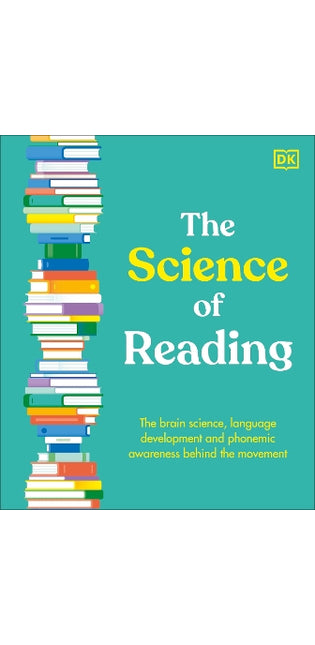
How we learn to read is not a secret formula, it’s a science.More than five decades of research conducted across the world informs the Science of Reading. This one-stop guide examines the crucial aspects of literacy development.Uncover the workings of the brain in processing language stimuli and print information, bridging the gap between sound and text for effective reading. Delve into language development, drawing parallels with oral language acquisition while addressing the challenges of learning to read.Navigate the Reading Rope model, a practical framework illustrating the intertwined processes of word recognition and language comprehension. Journey through essential reading skills, from foundational elements like phonemic awareness and phonics to advanced aspects like decoding, sight recognition, and fluency development. Gain practical insights into comprehension challenges and the complexities of addressing dyslexia.Additionally, the book explores the concept of reading ages, offering a pragmatic understanding of the Science of Reading. Written by Science of Reading experts, including Kareem Weaver, Wiley Blevins, and Chase Young as Series Editor, this valuable resource for educators, caregivers, and enthusiasts, will help unlock the full reading potential of every child.
R 530.00
R 479.00
Comprehensive Learning through Reading
This book presents a comprehensive and multidisciplinary journey through the concept and practice of reading, offering perspectives from various disciplines such as psychology, pedagogy, and technology. It explores what it means to be literate in the contemporary world, where digital technology and screen-based media are reshaping the engagement with texts. The volume examines how literacy has evolved across different historical periods and cultural contexts, highlighting the ways in which reading strategies have adapted to new media environments. Contributors revisit traditional approaches to reading while designing and proposing new digital tools that support a new model of transliteracy, which encompasses multiple platforms, formats, and modes of communication. The book offers both a critical reflection on the implications of digital technologies for reading and learning, and a hopeful outlook on the integration of traditional and emerging literacies in education.
R 2,677.00
Reading- The Grand Illusion
What is reading? In this groundbreaking book, esteemed researchers Ken Goodman, Peter Fries, and Steven Strauss, explain not only what reading really is but also why common sense makes it seem to be something quite different from that reality. How can this grand illusion be explained? That is the purpose of this book. As the authors show, unraveling the secrets of the grand illusion of reading teaches about far more than reading itself, but also about how remarkable human language is, how the brain uses language to navigate the world, what it means to be human.Each author brings a different perspective, but all share a common view of the reading process. Together they provide a clear and surprising exposition of the reading process, in which they involve readers of this book in exploring the ways they themselves read and make sense of written language while their eyes fixate on fewer than 70 percent of the words in the text. In addition, the authors engage in a cross-disciplinary discussion about how readers use the brain, eyes, and language in reading. The different perspectives provide depth to the authors’ description of reading. The information presented in this book will be new to many teachers, researchers, teacher educators, and the public alike. The final chapter draws on the understandings from the book to challenge the treatment of reading and writing as school subjects and offers the basis for supporting literacy development as a natural extension of oral language development.
R 9,301.47
Reading Work
Reading Work: Literacies in the New Workplace explores changing understandings of literacy and its place in contemporary workplace settings. It points to new questions and dilemmas to consider in planning and teaching workplace education. By taking a social perspective on literacies in the workplace, this book challenges traditional thinking about workplace literacy as functional skills, and enables readers to see the complexity of literacy practices and their embeddedness in culture, knowledge, and action. A mixture of ethnographic studies, analysis, and personal reflections makes these ideas accessible and relevant to a wide range of readers in the fields of adult literacy and language education and helps to bridge the divide between theory and practice in the field of workplace education.Reading Work: Literacies in the New Workplace features: *four distinct but related ethnographies of literacy use in contemporary workplaces;*a social practice view of literacy brought to the workplace;*collaborative research undertaken by experienced workplace educators and academics working in the areas of adult literacy and second language learning;*implications chapters for both practice and theory--presented not as a series of steps but rather as reflections by seasoned educators on shared dilemmas; and*engaging, accessible writing that encourages workplace practitioners to read, learn from, and do their own research.This book is an important resource for practicing workplace educators, trainers, and instructors; academics who teach workplace educators; unionists, policymakers, human resource managers, supervisors, or quality coordinators who believe education can make a difference and are interested in seeing maximum results from workplace learning. Visit the In-Sites Research Group Web site: http://www.nald.ca/insites/.
R 3,278.36
Theories of Reading
Why do literary theorists see reading as an act of dispassionate textual analysis and meaning production, when historical evidence shows that readers have often read excessively, obsessively, and for sensory stimulation? Posing these and other questions, this is the first major work to bring insights from book history to bear on literary history and theory. In so doing, the book charts a compelling and innovative history of theories of reading. While literary theorists have greatly contributed to our understanding of the text-reader relation, they have rarely taken into account that the relation between a book and a reader is also a relation between two bodies: one made of paper and ink, the other flesh and blood. This is why, Karin Littau argues, we need to look beyond the words on the page, and pay attention to the technical innovations in the physical format of the book. Only then is it possible to understand more fully how media technology has changed our experience of reading, and why media history presents a challenge to our conceptions of what reading is. Each chapter places the reader in specific disciplinary and historical contexts: literature, criticism, philosophy, cultural history, bibliography, film, new media. Overall, the history recounted in this book points to a split between modern literary study which regards reading as a reducibly mental activity, and a tradition reaching back to antiquity which assumed that reading was not only about sense-making but also about sensation. Theories of Reading: Books, Bodies and Bibliomania will be essential reading for all students and scholars of literary theory and history as well as of great interest to students of the history of the book and new media.
R 1,026.00
Readings
Through a series of short essays, Readings traces the consideration given to the act of close reading in literary criticism and theory over the last thirty years. Focusing on short passages from a number of critical works, including those by Barthes, Cixous, de Man, Derrida, Foucault, Kristeva, Lacan and J. Hillis Miller amongst others, the essays enact close readings of the trope of reading - its movements and performances in each of the passages in question - so as to offer a more detailed comprehension of the nature of reading, and the ways in which critical thinking has transformed our understanding of what it means to read. Readings addresses in a lively and engaging manner the varying rhythms and articulations made possible through the careful tracing of the process of critical reading which literary theory has made available.
R 2,127.00
R 1,405.00
Reading and Understanding
Reading and Understanding presents a review of current thinking about the psychology of reading, introducing the nature of problems facing the reader who is to extract meaningful information from the printed symbols. It is suitable for use as an advance text for psychology, education and linguistics students.
R 1,764.00
Practice of Reading
The Practice of Reading is a lucid and lively examination of the art of interpreting the novel in the context of recent developments in literary theory and criticism. Believing that reading is - or should be - a pleasurable, creative activity, the authors analyse a range of seven novels from the eighteenth century to the present, focusing upon the experiential dimensions of the reading process. What is the role of the reader? What happens when a novel is read? How far does meaning depend on the reader, and how far on the text? These and other related questions are explored in readings of novels as diverse as Tristram Shandy, Pride and Prejudice, Great Expectations, Daniel Deronda, A Portrait of the Artist as a Young Man, Beckett's Trilogy and Possession.In its insistence upon a return to the practice of close reading, the book represents a timely intervention in current literary debates. An accessible, informative and above all stimulating text for all university and college students of literature.
R 1,617.00
R 487.00
Basic Processes in Reading
Originally published in 1977, this volume contains the most recent theoretical views and experimental findings by prominent psychologists at the time, working in areas they considered to be most basic to the reading processes. The material will still be of value to people interested in applied and basic aspects of reading, as well as those concerned with language processing and information processing in general.The volume divides conveniently into two areas, perception and comprehension. The initial chapters deal with the perceptual processes involved in reading. The second half of the volume delves into the area of comprehension. The interested reader will find a wide variety of topics covered in the volume that reflect the amazingly wide range of cognitive functions that are part of the reading process.
R 8,572.00
Unread
As a result of childhood learning disabilities and educational neglect, Oliver James graduated from high school and became one of approximately 45 million functionally illiterate Americans. However, at age 32, with big dreams and few tools to actualize them, he dedicated himself to learning the key skill that had evaded him his entire life: reading. Oliver has become a TikTok/BookTok sensation for the way he's candidly documented his decision to learn to read as an adult, and his struggles and triumphs along the way. Here, he tells the full story behind his journey for the first time through the 21 key books that shaped and informed his experience. His story reveals the ways in which reading can teach each of us how to be better, more empathetic people. In just 365 days, Oliver went from barely being able to read a restaurant menu to closing in on his goal of finishing 100 books in a year. Unread is a moving reminder to all of us that words and stories have power, and that, no matter our past, it's never too late to grow.
R 639.00
Look Closer
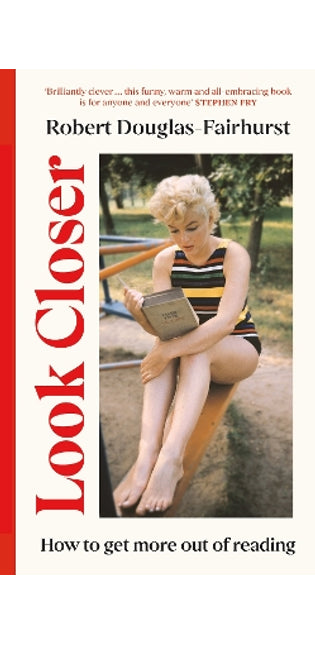
'The best book about reading I have read for a very long time' STEPHEN FRY'A glittering gem of a book' NATALIE HAYNESA joyful and enlightening masterclass in how reading attentively can change our livesAs an English literature professor, Robert Douglas-Fairhurst has delighted in sharing his love of reading with his students. Bringing together more than twenty years of teaching, Look Closer explores the iconic works of literature that have formed, sustained and entertained him, from timeless classics like Wuthering Heights and Dracula to modern masterpieces such as Normal People and The Handmaid’s Tale, as well as children’s books, poetry, plays, short stories and comics.By revealing the simple techniques to slow down, take note and bring a text to life, Look Closer makes clear how literature works and why, in these turbulent times, reading is more relevant than ever. Funny, illuminating and personal, this book ultimately shows us how great writing can change a person’s life. It is a celebration of the simple joy of reading, and how becoming more attentive readers can open up worlds and bring us closer to ourselves in delightful and unexpected ways.
R 628.00
R 720.34
Reading at a Crossroads?
The Internet is transforming the experience of reading and learning-through-reading. Is this transformation effecting a radical change in reading processes as readers synthesize understandings from fragments across multiple texts? Or, conversely, is the Internet merely a new place to use the same reading skills and processes developed through experience with traditional print-based media? Are the changes in reading processes a matter of degree, or are they fundamentally new? And if so, how must reading theory, research, and instruction adjust? This volume brings together distinguished experts from the fields of reading research, teacher education, educational psychology, cognitive science, rhetoric and composition, digital humanities, and educational technology to address these questions. Every question is not answered in every chapter. How could they be? But every contributor has many thoughtful things to say about a subset of these important questions. Together, they add up to a comprehensive response to the issues the field faces as it approaches what may well be—or not —a crossroads. A website devoted to extending discussion around the book in creative (and disjunctive) ways [readingatacrossroads.net] moves it beyond the printed page.
R 9,935.41
R 482.61
Theories of Reading
Why do literary theorists see reading as an act of dispassionate textual analysis and meaning production, when historical evidence shows that readers have often read excessively, obsessively, and for sensory stimulation? Posing these and other questions, this is the first major work to bring insights from book history to bear on literary history and theory. In so doing, the book charts a compelling and innovative history of theories of reading. While literary theorists have greatly contributed to our understanding of the text-reader relation, they have rarely taken into account that the relation between a book and a reader is also a relation between two bodies: one made of paper and ink, the other flesh and blood. This is why, Karin Littau argues, we need to look beyond the words on the page, and pay attention to the technical innovations in the physical format of the book. Only then is it possible to understand more fully how media technology has changed our experience of reading, and why media history presents a challenge to our conceptions of what reading is. Each chapter places the reader in specific disciplinary and historical contexts: literature, criticism, philosophy, cultural history, bibliography, film, new media. Overall, the history recounted in this book points to a split between modern literary study which regards reading as a reducibly mental activity, and a tradition reaching back to antiquity which assumed that reading was not only about sense-making but also about sensation. Theories of Reading: Books, Bodies and Bibliomania will be essential reading for all students and scholars of literary theory and history as well as of great interest to students of the history of the book and new media.
R 2,665.00
Reading- The Grand Illusion
What is reading? In this groundbreaking book, esteemed researchers Ken Goodman, Peter Fries, and Steven Strauss, explain not only what reading really is but also why common sense makes it seem to be something quite different from that reality. How can this grand illusion be explained? That is the purpose of this book. As the authors show, unraveling the secrets of the grand illusion of reading teaches about far more than reading itself, but also about how remarkable human language is, how the brain uses language to navigate the world, what it means to be human.Each author brings a different perspective, but all share a common view of the reading process. Together they provide a clear and surprising exposition of the reading process, in which they involve readers of this book in exploring the ways they themselves read and make sense of written language while their eyes fixate on fewer than 70 percent of the words in the text. In addition, the authors engage in a cross-disciplinary discussion about how readers use the brain, eyes, and language in reading. The different perspectives provide depth to the authors’ description of reading. The information presented in this book will be new to many teachers, researchers, teacher educators, and the public alike. The final chapter draws on the understandings from the book to challenge the treatment of reading and writing as school subjects and offers the basis for supporting literacy development as a natural extension of oral language development.
R 2,348.30
R 432.06
Reading Matters
Traces earlier revolutions in the history of reading to orient our shift to the digital ageConsidered one of the greatest inventions of human civilization, writing has served as a pathway to culture and education through history. The digital revolution has ushered in a dramatic transformation, leading to growing concern over the effects and possible detriments of algorithms, information overload, and fake news. In Reading Matters, Joel Halldorf makes the case that in order to navigate the upheavals of the digital age, we must understand prior technical revolutions and the transformations they engendered. He shows how our ways of reading are inseparable from the media we use, and that the decline of deep, attentive reading may be the most serious consequence of our move from page to screen.Originally published in Swedish in 2023, this newly revised volume presents a sweeping history of transformations in reading and writing, tracing precedents in the invention of writing, the shift from clay tablets to papyrus and from scrolls to codices, the advent of printing, and the development of industrial printing. It explores how each new format of writing has encouraged new ways to think, relate, and organize the world. Essentially, it is not only what we read that is important, but how we read.Moving through key historical events including the rise of Christianity, the scientific revolution, and the development of democracy, Halldorf explores how changes in the physical book reflected major cultural and historical shifts of the time. By tracing how new media forms have impacted human attention, authority, and community, the volume equips readers to better understand our own digital habits today. Detailing the riveting cultural history of reading technologies, book revolutions, and cultural upheavals, Reading Matters showcases the massive power of reading, writing, and books in helping us understand who we are.
R 1,211.00
Reading
First Published in 2004. The No Child Left Behind legislation signed into law in January 2002 provides guidelines for educational reform and accountability for all student learning. This legislation includes students with disabilities in all of its mandates including Reading First, state-wide assessments, and annual progress reports. Based on the belief that research from the special education community provides an excellent resource of scientifically based reading research that can influence instruction for students with disabilities as well as other students at risk for reading difficulties. This special issue features the work of four researchers and their teams who have contributed to the excellent research base on reading practices for students with disabilities and those at risk for reading difficulties.
R 1,237.24
Extensive Reading
Extensive Reading is an innovative resource bridging theory and practice for those seeking to learn about extensive reading (ER) for L2 students' language development, including ways to motivate students to read extensively and to assess learning. Grounded in contemporary theory and the latest research both on ER and motivation, experts Sue Leather and Jez Uden offer a rich array of original activities to help teachers in the classroom and beyond with this effective but difficult-to-implement pedagogical tool. Advanced students, researchers, teacher trainers, and pre- and in-service teachers – and ultimately their students themselves – will benefit from this book.
R 2,382.95
Practical Faster Reading
Practical Faster Reading provides the basis for a reading improvement course lasting a total of 30 class hours and has proved popular with students and teachers in a variety of settings. Thirty passages covering a wide range of topics of general interest and accompanying exercises give practice in the reading skills needed at upper-intermediate and more advanced levels. Substantial increases in reading speed are usually attained with improvements in comprehension and vocabulary. The full answer key for self-checking also makes this useful for the student working alone.
R 257.00
R 399.57
Reading for Pleasure: International Perspectives
Growing evidence of the vital role reading for pleasure plays in children and young people’s academic outcomes and socio-emotional wellbeing has placed it high on the agenda in both educational policy and practice.This valuable collection draws upon a range of disciplinary perspectives and methodological approaches, to explore how reading for pleasure is experienced and enacted, and highlights the implications and benefits of such volitional reading in the lives and learning of children and young people. It offers contributions from leading international researchers on current evidence and literature within the field, identifying the causes and consequences of reading for pleasure, and framing this within the context of understanding readers and applying this to developing effective pedagogical practices. With chapters examining how we may shape the reading experience, this book is divided into four sections:Understanding readers, including factors such as motivation, gender and identityThe nature of texts, including fiction, sensory and digital textsPedagogies and practices, exploring agency, book talk and reading aloudEnvironments conducive to reading for pleasure, including homes, school libraries, classrooms and communitiesPresenting diverse and interdisciplinary perspectives, this will be a key text for researchers, teacher educators and policy-makers who wish to become better informed in their thinking, discourse and practice when supporting children and young people in learning to read for pleasure.
R 9,391.82
Interactive Approaches to Second Language Reading
This text presents up-to-date theory, research, and classroom applications in second language reading from an interactive perspective. The paperback edition presents up-to-date theory, research, and classroom applications in second language reading from an interactive perspective. The book supports the view that reading in a second language involves more than decoding; instead, reading is seen as an interactive process whereby the learner's own background and knowledge contribute to understanding reading material. These articles are written by experts in the reading field, who present process models and discuss classroom applications. The book examines traditional approaches that focus on text and decoding skills, as well as more contemporary theories that consider the reader's base knowledge.
R 1,750.00
R 495.00
R 768.16
Active Reading Skills
Active Reading Skills focuses on essential skill areas for college-reading success, and improves students' reading through concise instruction, and extensive practice and testing. Each chapter focuses on a specific reading and thinking skill, and contains exercises that get students applying the learned skill to textbooks and ends with a vocabulary enrichment exercise.
R 5,492.00
Reading to Learn
Originally published in 1982. This book is concerned with the new kinds of demands on our reading ability made by the work we undertake for A-level, or in college, or at university, or indeed at work. It is not a speed reading book, or a reading skills book. Anyone with a lot of reading to get through may not want to read all of it quickly. Some things can be skimmed through; others take a lot of reading. This book helps readers discriminate and gives techniques to assume responsibility for their own reading.The book takes the form of a reading workbook, and consists of a number of exercises together with an interleaving commentary, along with suggestions for further work. It can be used by the individual student, by students in groups or with a teacher, and as a sourcebook for courses in study skills.
R 2,022.64
R 670.25
Active Reading
This book highlights the value of creative and re-creative transformational writing in learning and teaching and provides practical examples of its application.The subject of this book is the crossover between critical study and creative writing. 'Active reading' is a structured process of writing activities using imitation, variation and experimentation. Through practical composition techniques such as 'transformational writing', 're-writing' or 'translation', students can use writing activities to develop their critical imagination.This book bridges the gap between theories of learning and Literary studies in Higher Education. Setting the argument in an historical and theoretical context, it outlines the importance of writing as a medium of learning and argues for its usefulness in aiding English students' understanding of theoretical as well as literary and cultural texts.The authors provide a reflective account of teaching and assessment methods using writing activities and critical thinking techniques and the forms of learning they promote.In the last section, they explore the connections with other forms of writing practice in related disciplines and argue for the role of transformational writing in promoting independent learning.Appendices provide examples of the range of activities that can be used and an indicative list of literary examples.
R 2,647.00






-
, by sungano kanjere Read an extract from It Always Seems Impossible: The Journey of James Urdang
When James Urdang sat down to write his memoir, It Always Seems Impossible, he wasn’t only telling the story of a life devoted to education.He...
-
, by sungano kanjere Celebrate Literacy Month and Heritage Month with top reads from Exclusive Books Recommends!
Get the top reads and recommendations for the month from Exclusive Books Recommends.

