


BESTSELLERS

R 303.00
"Beowulf"
The play tells the story, in the form of a rock musical, of the great hero of Viking times, Beowulf. The first half concentrates on his battle with the loathsome monster, Grendel, and his marriage to Hygd, daughter of the Danish King Hrothgar.4 women, 9 men
R 408.00
"Beowulf" and Other Old English Poems
The best-known literary achievement of Anglo-Saxon England, Beowulf is a poem concerned with monsters and heroes, treasure and transience, feuds and fidelity. Composed sometime between 500 and 1000 C.E. and surviving in a single manuscript, it is at once immediately accessible and forever mysterious. And in Craig Williamson's splendid new version, this often translated work may well have found its most compelling modern English interpreter.Williamson's Beowulf appears alongside his translations of many of the major works written by Anglo-Saxon poets, including the elegies "The Wanderer" and "The Seafarer," the heroic "Battle of Maldon," the visionary "Dream of the Rood," the mysterious and heart-breaking "Wulf and Eadwacer," and a generous sampling of the Exeter Book riddles. Accompanied by a foreword by noted medievalist Tom Shippey on Anglo-Saxon history, culture, and archaeology, and Williamson's introductions to the individual poems as well as his essay on translating Old English, the texts transport us back to the medieval scriptorium or ancient mead hall to share an exile's lament or herdsman's recounting of the story of the world's creation. From the riddling song of a bawdy onion that moves between kitchen and bedroom, to the thrilling account of Beowulf's battle with a treasure-hoarding dragon, the world becomes a place of rare wonder in Williamson's lines. Were his idiom not so modern, we might almost think the Anglo-Saxon poets had taken up the lyre again and begun to sing after a silence of a thousand years.
R 908.00
R 857.00
R 807.00
R 651.00
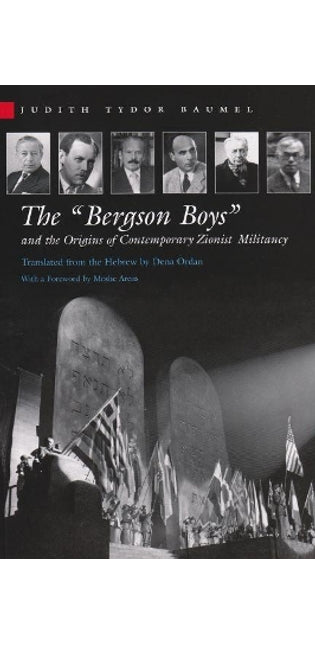
"Bergson Boys" and the Origins of Contemporary Zionist Militancy
Tells the remarkable story of six young men and the organizations they founded between 1939 and 1948 that would set the stage for the militant Zionist activism of today. During and shortly after the Second World War, six young men - emissaries of the revisionist-Zionist ""Irgun"" military movement in Palestine - revolutionized the American-Jewish and Zionist scene. Judith Tydor Baumel provides the complete story of the role the Bergson group played in raising American public consciousness of Jewish and Zionist concerns. After founding a series of pro-Zionist and rescue organizations, they initiated a new form of fundraising that used the media to turn the spotlight on their activities, gaining adherents and supporters from both ends of the political and social spectrum. Long before the protest movements of the 1950s and 1960s, members of this group learned the art of courting the media in order to bring word of their existence to every part of the United States. Having energized politicians, gangsters, Hollywood moguls, and ultra-Orthodox rabbis, the handful of young men taught other Zionist and American-Jewish groups not only how the media was the message but how it could and should be used. A guiding force behind the creation of the War Refugee Board, the group served as a beacon for contemporary Zionist militancy while ultimately laying the groundwork for other organizations to utilize the media in future political campaigns.
R 729.00
R 773.00
R 1,999.00
R 379.00
R 451.00
R 178.00
R 178.00
R 243.00
R 243.00
R 636.00
R 485.00
R 546.00
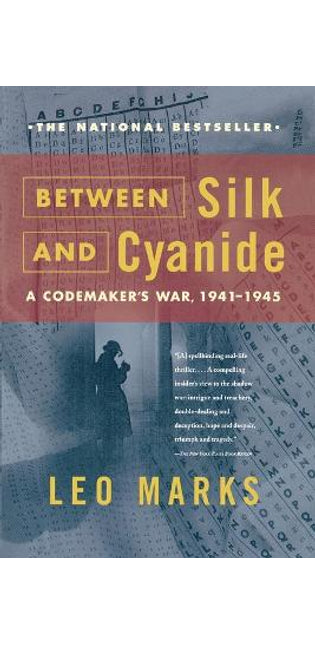
"Between Silk and Cyanide: A Codemaker's War, 1941 to 1945 "
In 1942, Leo Marks left his father's famous bookshop, 84 Charing Cross Road, and went off to fight the war. He was twenty-two. Soon recognized as a cryptographer of genius, he became head of communications at the Special Operations Executive (SOE), where he revolutionized the codemaking techniques of the Allies and trained some of the most famous agents dropped into occupied Europe, including "the White Rabbit" and Violette Szabo. As a top codemaker, Marks had a unique perspective on one of the most fascinating and, until now, little-known aspects of the Second World War. Writing with the narrative flair and vivid characterization of his famous screenplays, Marks gives free rein to his keen sense of the absurd and his wry wit, resulting in a thrilling and poignant memoir that celebrates individual courage and endeavor, without losing sight of the human cost and horror of war.
R 931.00
R 455.00
R 517.00
R 424.00
R 858.00
R 687.00
"Beverly Hills, 90210"
In 1990 the fledgling Fox television network debuted its prime-time soap opera Beverly Hills, 90210, which was intended to appeal to viewers in their late teens and early twenties. Before long, not only did the network have a genuine hit with a large and devoted audience but the program had evolved into a cultural phenomenon as well, becoming a lens through which its youthful viewers defined much of their own sense of themselves. By an overwhelming majority the fans were female-young women between eleven and twenty-five whose experience of the program was addictive and intensely communal. They met in small groups to watch the program, discussing its plot and characters against the backdrops of their own ongoing lives. Wondering what this talk accomplished and what role it played in the construction of young female viewers' identities, Graham McKinley found several groups who watched the program and questioned them about the program's significance. Extracting generously from actual interviews, McKinley's investigation has the urgency of a heart-to-heart conversation, with rich anecdotal moments and revelations of self.
R 908.00
R 584.00
R 243.00
R 243.00
R 273.00
R 322.00
R 258.00
R 424.00
R 393.00
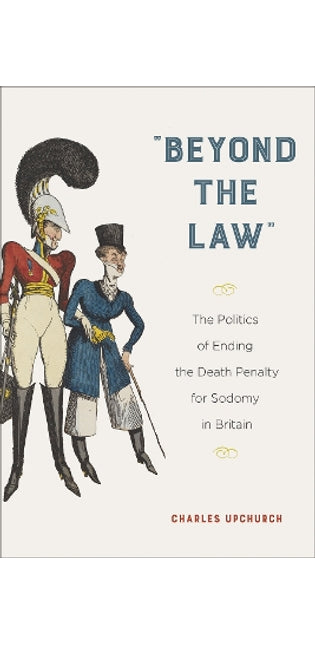
"Beyond the Law"
In nineteenth-century England, sodomy was punishable by death; even an accusation could damage a man’s reputation for life. The last executions for this private, consensual act were in 1835, but the effort to change the law that allowed for those executions was intense and precarious, and not successful until 1861. In this groundbreaking book, “Beyond the Law,” noted historian Charles Upchurch pieces together fragments from history and uses a queer history methodology to recount the untold story of the political process through which the law allowing for the death penalty for sodomy was almost ended in 1841.Upchurch recounts the legal and political efforts of reformers like Jeremy Bentham and Lord John Russell—the latter of whom argued that the death penalty for sodomy was “beyond the law and above the law.” He also reveals that a same-sex relationship linked the families of the two men responsible for co-sponsoring the key legislation. By recovering the various ethical, religious, and humanitarian arguments against punishing sodomy, “Beyond the Law” overturns longstanding assumptions of nineteenth-century British history. Upchurch demonstrates that social change came from an amalgam of reformist momentum, family affection, elitist politics, class privilege, enlightenment philosophy, and personal desires.
R 3,571.00