


BESTSELLERS

R 455.00
R 514.00
R 1,000.00
R 303.00
R 516.00
"Mr. Taxpayer versus Mr. Tax Spender"
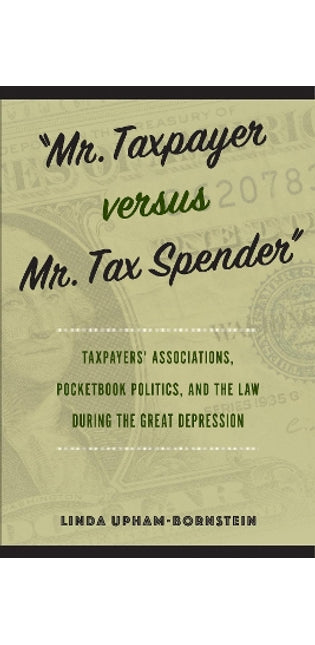
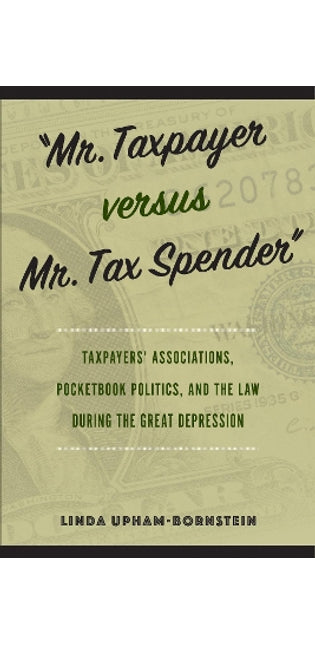
During the Great Depression, the proliferation of local taxpayers’ associations was dramatic and unprecedented. The justly concerned members of these organizations examined the operations of state, city, and county governments, then pressed local officials for operational and fiscal reforms. These associations aimed to reduce the cost of state and local governments to make operations more efficient and less expensive. “Mr. Taxpayer versus Mr. Tax Spender” presents a comprehensive overview of these grassroots taxpayers’ leagues beginning in the 1860s and shows how they evolved during their heyday in the 1930s. Linda Upham-Bornstein chronicles the ways these taxpayers associations organized as well as the tools they used—constructive economy, political efforts, tax strikes, and tax revolt through litigation—to achieve their objectives. Taxpayer activity was a direct consequence of—and a response to—the economic crisis of the Great Depression and the expansion of the size and scope of government. “Mr. Taxpayer versus Mr. Tax Spender” connects collective tax resistance in the 1930s to the populist tradition in American politics and to other broad impulses in American political and legal history.
R 1,065.00
"Mr. Taxpayer versus Mr. Tax Spender"
During the Great Depression, the proliferation of local taxpayers’ associations was dramatic and unprecedented. The justly concerned members of these organizations examined the operations of state, city, and county governments, then pressed local officials for operational and fiscal reforms. These associations aimed to reduce the cost of state and local governments to make operations more efficient and less expensive. “Mr. Taxpayer versus Mr. Tax Spender” presents a comprehensive overview of these grassroots taxpayers’ leagues beginning in the 1860s and shows how they evolved during their heyday in the 1930s. Linda Upham-Bornstein chronicles the ways these taxpayers associations organized as well as the tools they used—constructive economy, political efforts, tax strikes, and tax revolt through litigation—to achieve their objectives. Taxpayer activity was a direct consequence of—and a response to—the economic crisis of the Great Depression and the expansion of the size and scope of government. “Mr. Taxpayer versus Mr. Tax Spender” connects collective tax resistance in the 1930s to the populist tradition in American politics and to other broad impulses in American political and legal history.
R 3,377.00
R 839.00
R 455.00
R 758.00
R 1,484.00
R 429.00
R 212.00
R 320.00
R 606.00
R 333.00
R 606.00
R 516.00
R 451.00
R 1,065.00
R 1,453.00
"Music's Obedient Daughter"
A libretto is an indispensable part of an opera as a musical genre: with few exceptions, operas have been the subject of musicological studies, and instrumental versions of sung or unsung opera numbers may be heard, but we never listen to libretto texts being performed without the music. Thus as a literary form the libretto is a highly specific genre with its own particular attributes. This volume offers an approach to the libretto through the discussion of these attributes in many different examples. It explores what may be expected of a librettist in response to the demands of the genre’s characteristics, his trials and tribulations, his exchanges with the composer while adapting or converting a source, almost always a literary source, into the eventual libretto, and about the different musical ways of dealing with the text. In this way the volume clarifies the fundamental differences between the libretto and other literary genres.
R 7,328.00
"Musica" of Hermannus Contractus
The renowned treatise on music, by an eleventh-century monk, in a critical edition with annotated English translation, introduction, and detailed indexes.Long recognized as one of the most important medieval treatises on music, the Musica of Hermannus Contractus is here presented in a newly revised translation, with commentary reflecting the best current scholarship.A polymath and monk, Hermannus Contractus (1013-54) contributed to the important advancements made in European arts and sciences in the first half of the eleventh century, writing on history, astronomy, and time-keeping devices,among other topics, and composing several chants. His music theory, founded on a systematic treatment of traditional concepts and terminology dating back to the ancient Greeks, is concerned largely with the organization of pitchin Gregorian chant. Hermann's approach stems from Germanic species-based thought, and is marked by a distinction between aspects of form and aspects of position, privileging the latter. He expresses this in terms imported from then-new developments in Italian music theory, thus acting as a nexus for the two traditions. Numerology and number symbolism play significant roles in Hermann's theories, and his critiques of other theorists offer insights into medieval intellectual life. Hermann also uses chant citations and exercises to help his readers apply theory to practice. John L. Snyder's revised edition of Ellinwood's long-standard 1952 text and translation offers a new introduction, including codicological descriptions of the sources; a critical edition of the Latin text with an annotated English translation on facing pages; appendices detailing the documents pertaining to Hermann's life, his citations of plainsong, and his original diastematic notation system; and greatly expanded indexes. Snyder's Musica will serve as the standard version of this major historical document for years to come. Leonard Ellinwood (1905-94) served in the Library of Congress cataloging divisions in music and in the humanities for thirty-five years. He published scholarly works and editions of both medieval music and church music. John L. Snyder is Professor of Music Theory and Musicology at the University of Houston's Moores School of Music.
R 4,604.00
R 1,880.00
R 1,573.00
R 176.00
R 362.00
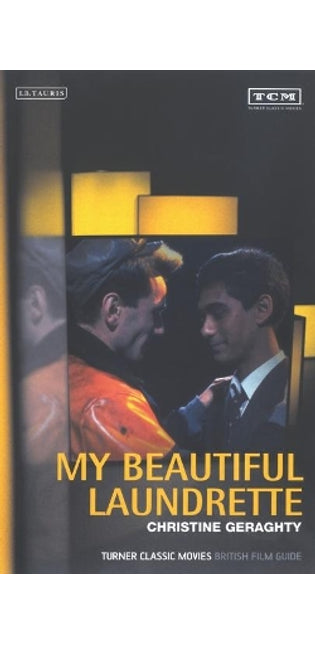
"My Beautiful Laundrette"
Described by Stuart Hall as 'one of the most riveting and important films produced by a black writer in recent years', My Beautiful Laundrette was a significant production for its director Stephen Frears and its writer Hanif Kureshi. Omar, member of a Pakistani family 'getting ahead' in 1980s Thatcher's Britain is charged to make over a rundown launderette, and in the process falls in love with the brooding Johnny (Daniel Day Lewis in career-making form). Christine Geraghty interrogates My Beautiful Laundrette as a crossover film: between television and cinema, realism and fantasy, and as an independent film targeting a popular audience. She deftly shows how it has remained an important and watchable film in the 1990s and early 2000s and her exploration of the film itself is a remarkable, original and entertaining achievement.
R 962.00
R 613.00
R 1,033.00
R 1,033.00