


BESTSELLERS

R 757.00
R 796.00
R 1,162.00
R 776.00
R 388.00
R 1,364.00
R 303.00
R 765.00
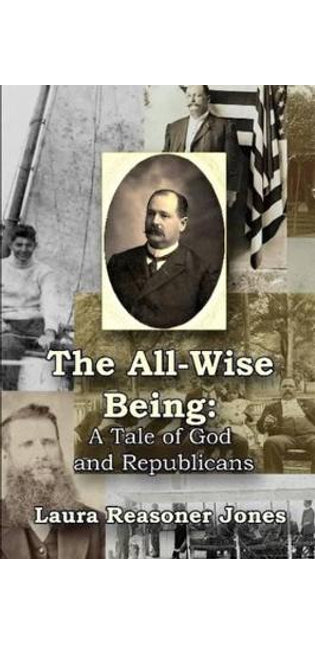
"The All-Wise Being" A Tale of God and Republicans
The All-Wise Being" A Tale of God and Republicans by Laura Reasoner Jones
R 874.00
R 303.00
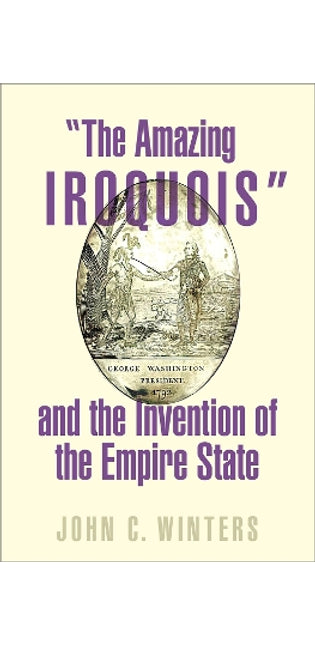
"The Amazing Iroquois" and the Invention of the Empire State
In America's collective unconscious, the Haudenosaunee, known to many as the Iroquois, are viewed as an indelible part of New York's modern and democratic culture. From the Iroquois confederacy serving as a model for the US Constitution, to the connections between the matrilineal Iroquois and the woman suffrage movement, to the living legacy of the famous "Sky Walkers," the steelworkers who built the Empire State Building and the George Washington Bridge, theIroquois are viewed as an exceptional people who helped make the state's history unique and forward-looking. John C. Winters contends that this vision was not manufactured by Anglo-Americans but was created and spread by an influential, multi-generational Seneca-Iroquois family. From the American Revolution to the Cold War, Red Jacket, Ely S. Parker, Harriet Maxwell Converse (adopted), and Arthur C. Parker used the tools of a colonial culture to shape aspects of contemporary New York culture in their own peoples' image. The result was the creation of "The Amazing Iroquois," an historical memory thatentangled indigenous self-definition, colonial expectations about racial stereotypes and Native American politics, and the personalities of the people who cultivated and popularized that memory. Through the imperial politics of the eighteenth century to pioneering museum exhibitions of the twentieth,these four Seneca celebrities packaged and delivered Iroquoian stories to the broader public in defiance of the contemporary racial stereotypes and settler colonial politics that sought to bury them. Owing to their skill, fame, and the timely intervention of Iroquois leadership, this remarkable family showcases the lasting effects of indigenous agents who fashioned a popular and long-lasting historical memory that made the Iroquois an obvious and foundational part of New Yorkers' conception of their own exceptional state history and self-identity.
R 1,592.00
R 362.00
R 303.00
R 679.00
"The Anatomy of Faith" Remedies to Prevent Spiritual Flat Lining
"The Anatomy of Faith" (TAF) has been authored to prescribe various remedies to the life of the Christian who has lost faith in God or who has yet to identify their purpose for living.
R 327.00
R 612.00
R 485.00
R 1,097.00
R 1,097.00
R 742.00
R 455.00
R 394.00
R 303.00
R 394.00
R 182.00
R 652.00
R 243.00
R 2,090.00
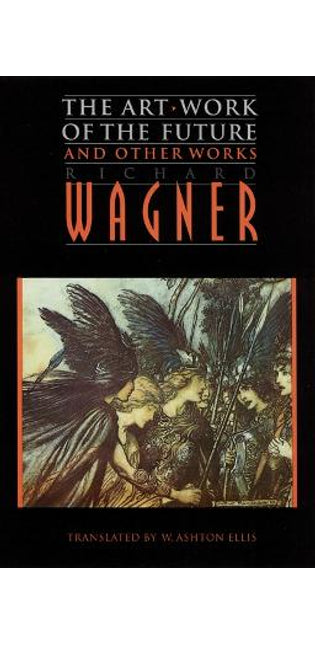
"The Art-Work of the Future" and Other Works
Poor, frustrated, and angered by the “fashion-mongers and mode-purveyors” of art, Richard Wagner published The Art-Work of the Future in 1849. It marked a turning point in his life: an appraisal of the revolutionary passions of mid-century Europe, his farewell to symphonic music, and his vision of the music to come. Beethoven’s Ninth Symphony was unsurpassable, he wrote. Henceforth "The Folk must of necessity be the Artist of the Future," and only artists who were in harmony with the Folk could know what harmony was for. The essay became a touchstone for Wagner, his family, friends, and followers, as he sought to produce works that thoroughly combined music, dance, drama, and national saga. In addition to Wagner’s epoch-defining essay, this volume includes his "Autobiographical Sketch," "Art and Climate"; his libretto for an opera, "Wieland the Smith"; and his notorious "Art and Revolution." The concluding piece, "A Communication to My Friends (1851), explains his views on his first successes—The Flying Dutchman, Lohengrin, and Tannhäuser—and defines his agenda for later works. As spokesman for the future, Wagner spoke most of himself. In these works he set forth his ambitions, identified his enemies, and began a campaign for public attention that made him a legend in his own time and in ours.
R 1,285.00
R 455.00
R 328.00
R 743.00
R 184.00
"The Bagnios of Algiers" and "The Great Sultana"
Best known today as the author of Don Quixote—one of the most beloved and widely read novels in the Western tradition—Miguel de Cervantes Saavedra (1547-1616) was a poet and a playwright as well. After some early successes on the Madrid stage in the 1580s, his theatrical career was interrupted by other literary efforts. Yet, eager to prove himself as a playwright, shortly before his death he published a collection of his later plays before they were ever performed.With their depiction of captives in North Africa and at the Ottoman court, two of these, "The Bagnios of Algiers" and "The Great Sultana," draw heavily on Cervantes's own experiences as a captive, and echo important episodes in Don Quixote. They are set in a Mediterranean world where Spain and its Muslim neighbors clashed repeatedly while still remaining in close contact, with merchants, exiles, captives, soldiers, and renegades frequently crossing between the two sides. The plays provide revealing insights into Spain's complex perception of the world of Mediterranean Islam.Despite their considerable literary and historical interest, these two plays have never before been translated into English. This edition presents them along with an introductory essay that places them in the context of Cervantes's drama, the early modern stage, and the political and cultural relations between Christianity and Islam in the early modern period.
R 764.00
R 356.00