


BESTSELLERS

R 4,672.00
R 452.00
R 840.00
R 484.00
R 909.00
R 485.00
"Genius"
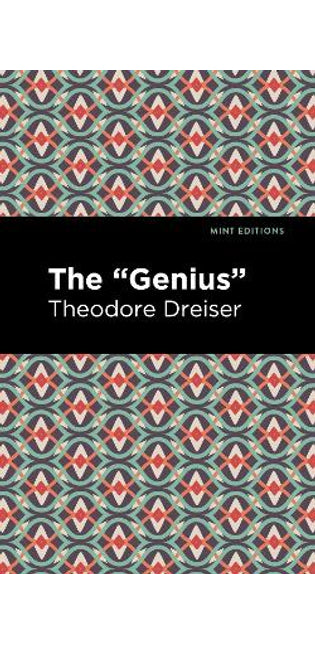
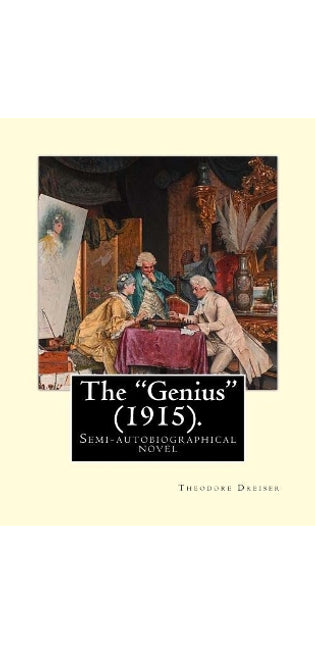
The “Genius” (1915) is a novel by Theodore Dreiser. Based partly on his own experience as an artist from the Midwest, The “Genius” examines the nature of talent, the difficulty of desire, and the meaning of faith itself. Although he had high hopes for the novel, reviews were mixed, and sales suffered due to charges of obscenity. Some critics, however, praised Dreiser’s openness on sex and desire, opposing the censorship targeting the author’s work. Eugene Witla may have been born in a small Midwestern town, but his dreams look past the farmland and fields of his youth to the towers and streets of Chicago. He enrolls at the Chicago Art Institute to study painting, but ultimately spends more time with women than he does in class. Despite his desire to continue his faithless ways, Eugene agrees to marry his lover Angela. Together, they move to New York City, where Eugene’s urban realist style is in high demand from critics and galleries alike. At every turn, however, he feels held back by his obligation to Angela, who has no creative inclination and seems happy to live a simple, anonymous life. On a trip to Europe, Eugene suffers a breakdown and ultimately decides to abandon his art, turning to advertising instead. Although he claims to be satisfied, his behavior soon proves otherwise. The “Genius” is a story of romance, heartache, and betrayal that says as much about a single man as it does about the values of an entire society. With a beautifully designed cover and professionally typeset manuscript, this edition of Theodore Dreiser’s The “Genius” is a classic of American literature reimagined for modern readers.
R 679.00
R 545.00
"Genius"
The “Genius” (1915) is a novel by Theodore Dreiser. Based partly on his own experience as an artist from the Midwest, The “Genius” examines the nature of talent, the difficulty of desire, and the meaning of faith itself. Although he had high hopes for the novel, reviews were mixed, and sales suffered due to charges of obscenity. Some critics, however, praised Dreiser’s openness on sex and desire, opposing the censorship targeting the author’s work. Eugene Witla may have been born in a small Midwestern town, but his dreams look past the farmland and fields of his youth to the towers and streets of Chicago. He enrolls at the Chicago Art Institute to study painting, but ultimately spends more time with women than he does in class. Despite his desire to continue his faithless ways, Eugene agrees to marry his lover Angela. Together, they move to New York City, where Eugene’s urban realist style is in high demand from critics and galleries alike. At every turn, however, he feels held back by his obligation to Angela, who has no creative inclination and seems happy to live a simple, anonymous life. On a trip to Europe, Eugene suffers a breakdown and ultimately decides to abandon his art, turning to advertising instead. Although he claims to be satisfied, his behavior soon proves otherwise. The “Genius” is a story of romance, heartache, and betrayal that says as much about a single man as it does about the values of an entire society. With a beautifully designed cover and professionally typeset manuscript, this edition of Theodore Dreiser’s The “Genius” is a classic of American literature reimagined for modern readers.
R 905.00
R 3,541.00
R 1,453.00
R 1,065.00
R 1,065.00
R 510.00
R 485.00
R 665.00
R 696.00
"Genizat Germania" - Hebrew and Aramaic Binding Fragments from Germany in Context
“Genizat Germania” is a project at the Johannes Gutenberg University in Mainz focused on the search for and analysis of Hebrew and Aramaic binding fragments found in the books and files of archives and libraries. In recent years this systematic search has revealed several hundred new fragments, including some rare Talmudic, Midrashic and liturgical fragments. The new discoveries both in Germany and elsewhere in Europe have broadened the knowledge of Jewish literature in the Middle Ages and Early Modern periods. This volume collects the papers of international scholars which cover recent discoveries in Germany, the “European Genizah” or fragments found in Italy, Poland, Great Britain and Austria, the approaches of similar projects in Austria and the Czech Republic, as well as an extensive bibliography.
R 8,978.00
R 687.00
R 393.00
R 212.00
R 451.00
R 364.00
R 362.00
R 606.00
R 3,796.00
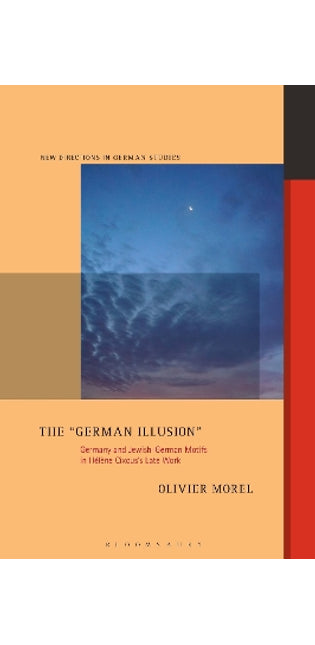
"German Illusion"
Examines Jewish-German “tropes” in Hélène Cixous’s oeuvre and life and their impact on her work as a feminist, poet, and playwright.Hélène Cixous is a poet, philosopher, and activist known worldwide for her manifesto on Écriture feminine (feminine writing) and for her influential literary texts, plays, and essays. While the themes were rarely present in her earlier writings, Germany and Jewish-German family figures and topics have significantly informed most of Cixous’s late works. Born in Algeria in June 1937, she grew up with a mother who had escaped Germany after the rise of Nazism and a grandmother who fled the racial laws of the Third Reich in 1938. In her writing, Cixous refines the primitive scene of a “German” upbringing in French-occupied colonial, antisemitic Algeria.Scholar and filmmaker Olivier Morel delves into the signs and influences that “Germany,” “German,” and “Osnabrück” have exerted over Cixous’s work. Featuring an exclusive interview with Hélène Cixous and stills from their travel together to Osnabrück in Morel’s 2018 documentary, Ever, Rêve, Hélène Cixous, Morel’s The “German Illusion” examines the unique literary meditation on the Holocaust sustained throughout her later texts. Morel helps us to understand an uncannily original oeuvre that embodies the complexities of modernity’s genocidal history in a new way.
R 1,167.00
R 1,616.00
R 667.00
R 252.00
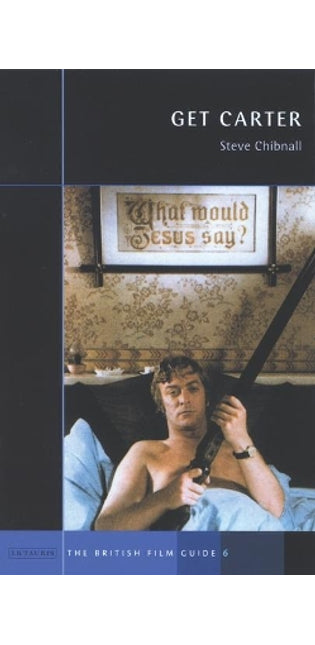
"Get Carter"
"Get Carter" is now widely acknowledged as the finest British gangster film of all time. Released in 1971, the film fell out of fashion until the cultural changes of the 1990s gave a new currency to its pessimistic vision of a doomed male within a decaying social order. Before its re-release in 1999, Mike Hodges' fusion of the crime genre with social realism received surprisingly little critical attention. Steve Chibnall's book now gives "Get Carter" the consideration it demands. With the co-operation of Hodges and access to rare documents, including an early draft of the script, Chibnall places the film in its social context, describes its making, discusses its characteristics, scene by scene, and charts its changing status since the 1970s.
R 1,079.00