Politics and Current Affairs

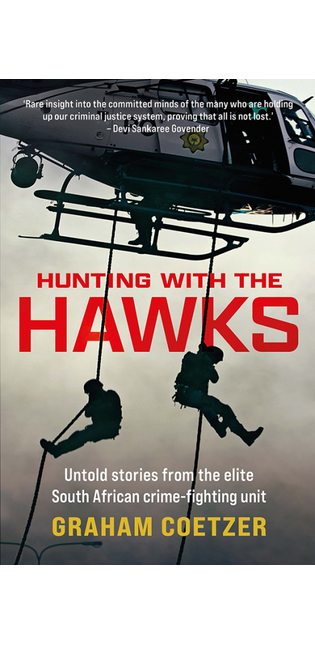
Hunting With The Hawks
The Hawks, South Africa’s elite crime-fighting force, have put scores of our worst criminals behind bars. In this book, investigative journalist Graham Coetzer offers us a rare glimpse into the secretive world of this top police unit.While exposing the deviousness of South Africa’s dangerous criminals, Hunting with the Hawks is also an ode to the hard work and dedication of the best of our police service.
R 350.00
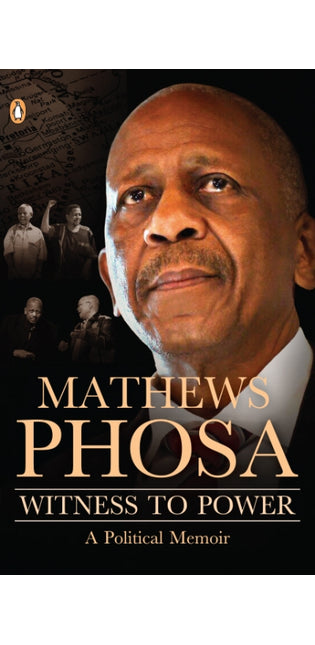
Witness to Power
Mathews Phosa has been an eyewitness to the dramatic shifts of political power in South Africa. He was involved in the Black Consciousness Movement, the UDF and the ANC, before fleeing into exile in 1985 and becoming an Umkhonto weSizwe commander in Mozambique. A lawyer by training, he was one of the first ANC members to return to South Africa to prepare the way for negotiations. He was premier of Mpumalanga during the presidency of Nelson Mandela, with whom he had a strong relationship. Under Thabo Mbeki, whom he had known in exile, Phosa was pushed to the sidelines, with false accusations that he was involved in a ‘plot’ to overthrow the president. Phosa had served under Jacob Zuma as an MK field commander in Mozambique, and he became treasurer-general of the ANC when Zuma became its president at Polokwane. But Phosa later became a vocal critic of Zuma, and they didn’t speak for years, until the night before Zuma’s resignation. Phosa and Cyril Ramaphosa had studied law together at the University of the North in the 1970s, and fifty years later Phosa played a key role in advising him over the Phala Phala report that threatened to end his presidency. Witness to Power is a gripping story of underground activities, military operations, negotiations, political conflict and intrigue. It provides fascinating new insights into the ruling party and its leaders by an ANC elder who worked with them all.
R 330.00
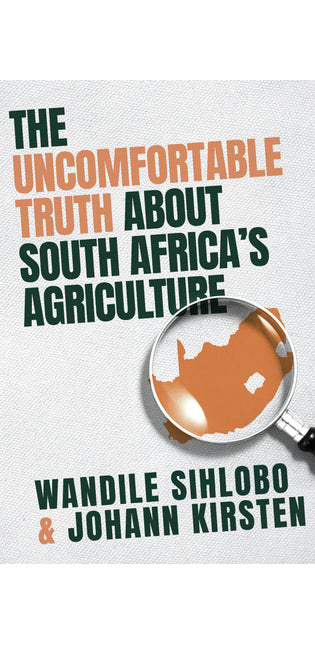
The Uncomfortable Truth about South Africa’s Agriculture
Wandile Sihlobo and Johann Kirsten chose to write The Uncomfortable Truth about South Africa’s Agriculture in a candid, direct and unfiltered tone, not out of disregard, but with the hope of stirring South African agricultural stakeholders from inertia that may have taken hold over time. One clear example of inertia is the endless policy discussions. When the government proposes policy positions – either good or bad – time is spent discussing these policies instead of anything substantive being done. The divisions amongst South African farmer organisations is the core issue behind the interminable conversations and this results ina ‘performance of productivity’ among participants in these meetings, creating an impression of progress simply because discussions are taking place. While politicians and farmer representatives debate, farmers suffer, the unemployed languish, and small towns crumble. Poor roads and rising costs choke market access, while collapsing municipalities pile pressure on agribusinesses. Things don’t have to be this way, and the South African agricultural sector still has great potential to grow, increase employment, and revitalise the rural economy. This book will empower the reader with a clearer understanding of the agricultural constraints and how to overcome them and mobilise the much-needed sectorial focus to implementation. While the contents may be uncomfortable for some, this book is intended to ignite an urgent call for decisive policy and programme implementation and to demand stronger collaboration among social partners.
R 300.00
R 360.00
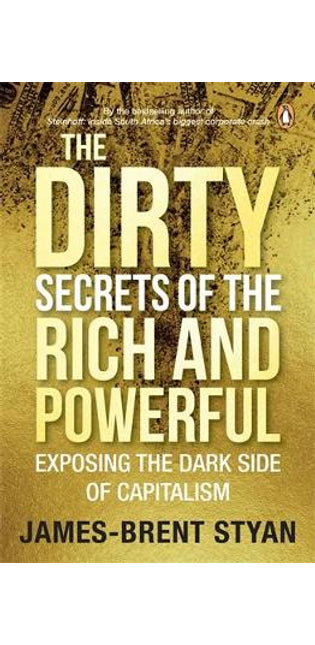
Dirty Secrets of the Rich and Powerful
In 2018 the world watched as 82 per cent of all wealth created was claimed by the top 1 per cent of the global population. The bottom 50 per cent of humanity saw no increase at all. While one new billionaire was created every two days, one in every four South Africans were living on less than R18 per day not enough to buy a loaf of bread. Inequality has always been part of the world we live in, but in the past twenty years the situation has worsened. We have seen the rise of mega corporations, where regional companies have become global players: power brokers that are richer and more powerful than most countries. This has seen businesses record ever-increasing profits while they pay ever-decreasing taxes. How is this happening? In South Africa, millions of people depend on the services and products of mega corporations, but to what extent do these corporations influence and affect the lives of their consumers? What do these companies do with all the power that is in their hands? In The Dirty Secrets of the Rich and Powerful, James-Brent Styan casts the spotlight on economic inequality and unpacks historical and ongoing business practices that have a real influence on people today. This book takes you right into the corridors of power and behind the closed doors of the boardrooms of the rich and powerful to show you how, and why, the status quo seems so unfair.
R 330.00
R 320.00
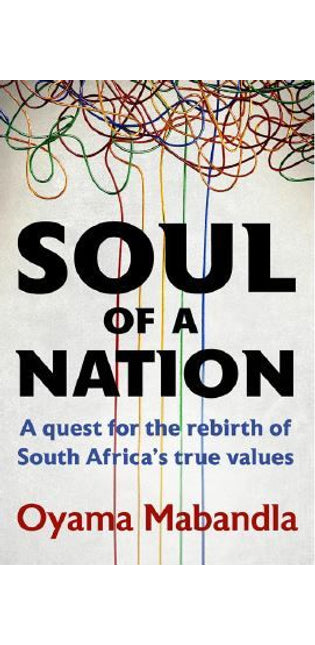
Soul of a Nation
There is lament about how and why the ANC have so quickly become preoccupied with material enrichment. Former MK, business leader and political commentator, Oyama Mabandla, excavates the values that created a steady flow of pioneering South Africans under impossible circumstances, bolstered a liberation ethic and championed a leadership that made individual nobility and excellence aspirational. These values, maligned in 94, can still recapture the nation's best trajectory.
R 330.00
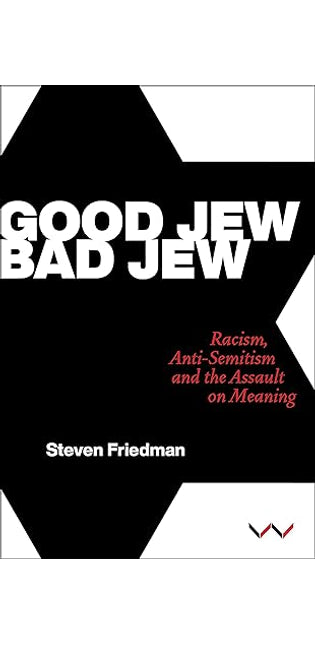
Good Jew, Bad Jew
Good Jew, Bad Jew is a critique by one of South Africa’s foremost political theorists of mainstream understandings of Jewishness. Steven Friedman offers a searing analysis of the weaponisation of anti-Semitism in service of political objectives that support the Israeli state and global white supremacy. Looking specifically at the way in which language is used to shape identities, Friedman uses many examples to illustrate how anyone that opposes the interests and policies of the Israeli state is increasingly defined as anti-Semitic. The use of anti-racist language to defend racial domination distorts not only the meaning of what it is to be Jewish, but sheds light on how all dogmatic nationalisms function. Friedman uses India and South Africa as examples, but the analysis applies across the world too. This is a detailed, deeply researched and critical work that will appeal to both specialists and general readers looking for a considered view on how language shapes belief systems, and how the powerful forces of racism and nationalism – and their opponents – are being misrepresented.
R 360.00