


BESTSELLERS

R 696.00
R 614.00
R 1,000.00
R 580.00
R 1,194.00
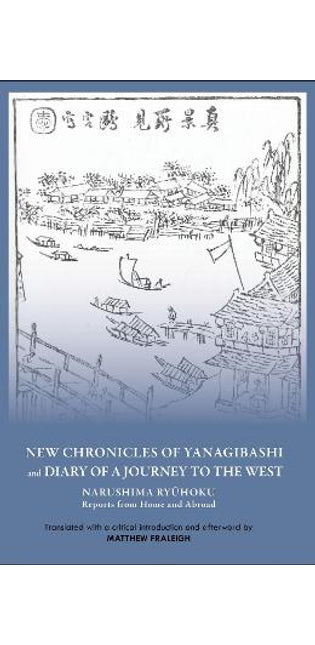
"New Chronicles of Yanagibashi" and "Diary of a Journey to the West"
This book features complete annotated translations of Narushima Ryuhoku's two most widely read and influential texts, both of which showcase the innovative and experimental use of Chinese-language discourse taking place in Japan during the nineteenth century. Focused on one of the capital city's celebrated geisha districts, the satirical New Chronicles of Yanagibashi serves as both a documentary record of changing customs during the tumultuous 1850s–70s and an amusingly nuanced social critique. Banned multiple times, the work nevertheless became a favorite of the Meiji reading public. This text is paired with Diary of a Journey to the West, Ryuhoku's travelogue from his world tour of 1872–1873.
R 876.00
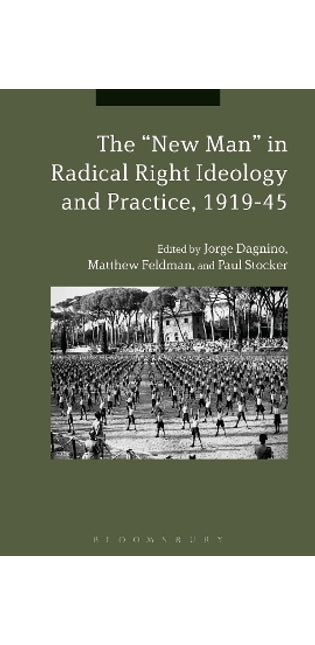
"New Man" in Radical Right Ideology and Practice, 1919-45
Bringing together an expert group of established and emerging scholars, this book analyses the pervasive myth of the ‘new man’ in various fascist movements and far-right regimes between 1919 and 1945. Through a series of ground-breaking case studies focusing on countries in Europe, but with additional chapters on Argentina, Brazil and Japan, The "New Man" in Radical Right Ideology and Practice, 1919-45 argues that what many national forms of far-right politics understood at the time as a so-called ‘anthropological revolution’ is essential to understanding this ideology’s bio-political, often revolutionary dynamics. It explores how these movements promoted the creation of a new, ideal human, what this ideal looked like and what this things tell us about fascism's emergence in the 20th century. The years after World War One saw the rise of regimes and movements professing totalitarian aims. In the case of revolutionary, radical-right movements, these totalising goals extended to changing the very nature of humanity through modern science, propaganda and conquest. At its most extreme, one of the key aims of fascism – the most extreme manifestation of radical right politics between the wars – was to create a ‘new man’. Naturally, this manifested itself in different ways in varying national contexts and this volume explores these manifestations in order to better comprehend early 20th-century fascism both within national boundaries and in a broader, transnational context.
R 5,109.00
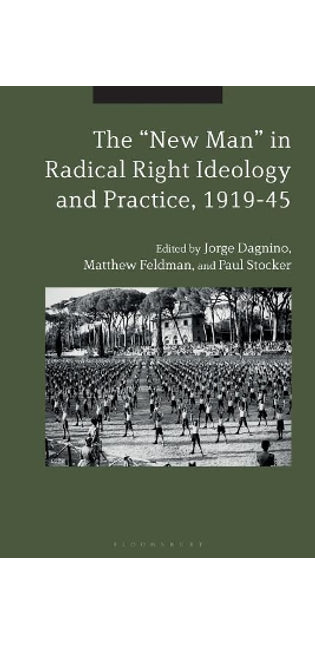
"New Man" in Radical Right Ideology and Practice, 1919-45
Bringing together an expert group of established and emerging scholars, this book analyses the pervasive myth of the ‘new man’ in various fascist movements and far-right regimes between 1919 and 1945. Through a series of ground-breaking case studies focusing on countries in Europe, but with additional chapters on Argentina, Brazil and Japan, The "New Man" in Radical Right Ideology and Practice, 1919-45 argues that what many national forms of far-right politics understood at the time as a so-called ‘anthropological revolution’ is essential to understanding this ideology’s bio-political, often revolutionary dynamics. It explores how these movements promoted the creation of a new, ideal human, what this ideal looked like and what this things tell us about fascism's emergence in the 20th century.The years after World War One saw the rise of regimes and movements professing totalitarian aims. In the case of revolutionary, radical-right movements, these totalising goals extended to changing the very nature of humanity through modern science, propaganda and conquest. At its most extreme, one of the key aims of fascism – the most extreme manifestation of radical right politics between the wars – was to create a ‘new man’. Naturally, this manifested itself in different ways in varying national contexts and this volume explores these manifestations in order to better comprehend early 20th-century fascism both within national boundaries and in a broader, transnational context.
R 1,400.00
R 517.00
R 364.00
R 580.00
R 2,068.00
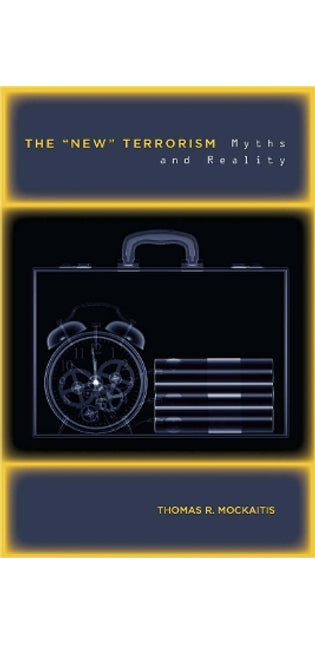
"New" Terrorism
As shocking as the attacks of 9/11 were, we have been too quick to view the post-9/11 struggle against terrorism as entirely new and unprecedented. Without denying certain novel aspects of Al Qaeda and its affiliates, the "newness" of its purpose and methods has been overemphasized. Many aspects of contemporary terrorism bear a striking resemblance to past movements. Others represent the culmination of trends evolving over decades. Even seemingly novel characteristics of terrorist methods may be more the outcome of earlier developments than a truly new phenomenon. The increased lethality of terrorist attacks is a case in point. Usually attributed to lack of restraint brought on by religious extremism, the emphasis on body count may owe as much to a kind of threshold phenomenon. Numbed by decades of violence, people do not shock as easily as they once did. It now takes thousands of deaths to produce the same effect once caused by a relative handful. This book examines the nature of the contemporary threat within a historical context to discern continuities and change in terrorist behavior. It challenges the idea of a global war on terrorism and suggests that the United States, or any threatened country, would be better served by a policy aimed at reducing the risk of terrorist attack to an acceptable level at a reasonable cost. The book concludes by proposing a workable strategy for achieving this reasonable level of security.
R 566.00
R 485.00
R 516.00
R 1,519.00
R 1,519.00
R 13,812.00
R 402.00
R 182.00
R 485.00
R 848.00
R 617.00
R 485.00
R 667.00
R 243.00